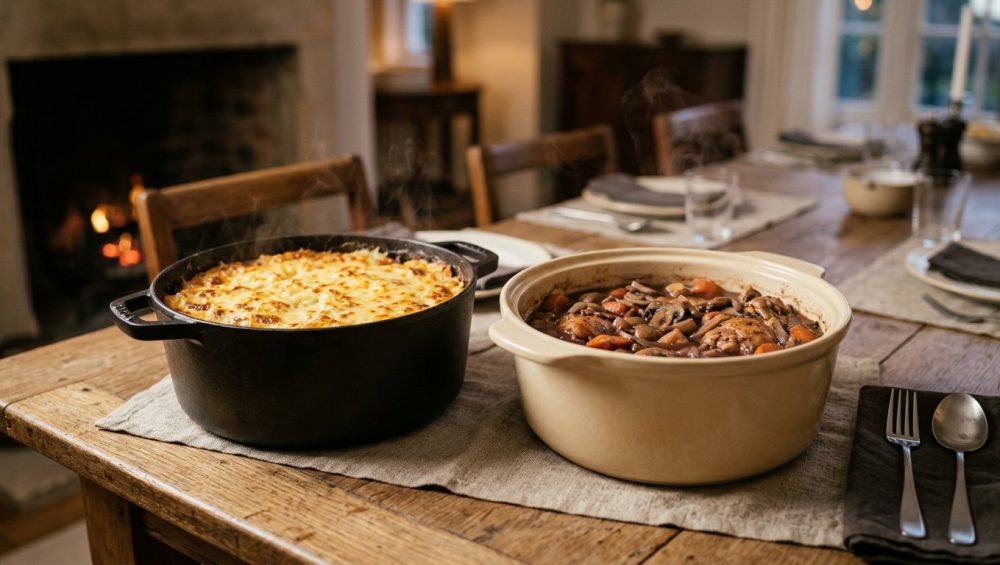
Let’s set the scene: You have spent the last three days prepping, chopping, marinating, and stressing over a spectacular weekend feast. You have timed the roast perfectly, the sauce is glossy and rich, and your dining table looks like a spread from a high-end lifestyle magazine. You call your guests to the table, but because human beings are easily distracted creatures, it takes them fifteen minutes to actually sit down, pour their wine, and pass the serving dishes. By the time that beautifully seared protein and luxurious puree make it onto their plates, the food is lukewarm, the fats have congealed into a sad, sticky paste, and your culinary masterpiece tastes like a cafeteria leftover.
Meanwhile, you are sweating through your nice shirt, vibrating with hosting anxiety, and mentally calculating how fast you can run back to the kitchen to microwave the gravy without anyone noticing.
We have all been there, and frankly, I am entirely over it. You cannot host a meaningful dinner party if you are trapped in a cycle of culinary panic, constantly jumping up from the table to reheat dishes. You deserve to sit down, sip your wine, and actually enjoy the exquisite meal you just cooked. The secret to achieving this doesn’t require a culinary degree or a commercial kitchen equipped with heat lamps and chafing dishes. It requires a fundamental understanding of thermodynamics, specifically the thermal retention properties of your serving vessels.
Today, we are skipping the pretentious chef-speak and diving deep into the hard science of heat transfer. We are going to break down the thermodynamic properties of high-fire ceramic versus cast-iron serving vessels, focusing on specific heat capacity and emission rates. By the time we are done, you will know exactly how to turn your serving bowls into thermal batteries, keeping your food piping hot and perfectly safe for extended, leisurely meals. Let’s get into it.
The Dinner Party Dilemma: Why Your Food is Always Cold
To solve the problem of cold food, we first have to understand why it gets cold in the first place. When you take a hot piece of food out of the oven or off the stove, it immediately begins to lose its thermal energy to the surrounding environment through three primary mechanisms: conduction, convection, and radiation.
Conduction is the transfer of heat through direct physical contact. When you place a piping hot scoop of mashed potatoes into a room-temperature serving bowl, the bowl aggressively steals the heat from the potatoes until both the food and the vessel reach thermal equilibrium. If the bowl is heavy and cold, it will suck an enormous amount of thermal energy out of your food before it even hits the dining table.
Convection is the transfer of heat through the movement of fluids or gases—in this case, the ambient air in your dining room. As the hot food warms the air immediately above it, that warm air rises, and cooler air rushes in to take its place, creating a continuous cycle that rapidly strips heat away from the surface of your meal.
Finally, radiation is the emission of energy as electromagnetic waves. Every object above absolute zero radiates heat, and your hot roast chicken is practically beaming its hard-earned thermal energy out into the cold, uncaring universe.
When you combine a heat-stealing cold serving platter, the convective airflow of a drafty dining room, and the natural radiant heat loss of the food itself, you have a thermodynamic perfect storm. The ultimate goal here is to facilitate stress-free mindful gatherings where your kitchenware actively fights back against this energy loss. To do that, we have to stop treating our serving vessels as mere decorative plates and start treating them as active thermal management tools.
The Science of the “Danger Zone”: Why 140°F is the Magic Number
Before we start geeking out over the specific heat capacities of different materials, we need to establish our baseline goal. Why do we care so much about keeping food hot? Aside from the obvious fact that cold gravy is a crime against humanity, there are strict, scientifically validated food safety parameters we must adhere to.
According to the United States Department of Agriculture (USDA) and the Food and Drug Administration (FDA), the “Temperature Danger Zone” is the specific range between 40°F and 140°F. Within this thermal window, harmful bacteria—such as Salmonella, E. coli, and Staphylococcus aureus—can multiply at an astonishing rate, literally doubling in number in as little as 20 minutes. If perishable hot food is left out in this zone for more than two hours (or just one hour if the ambient temperature is above 90°F), it must be discarded to prevent foodborne illness.
Therefore, keeping your hot food at or above 140°F is not just a culinary preference; it is a strict biological necessity. But as a home cook who demands perfection, you should also care about the sensory degradation that occurs when food drops below this threshold. Maintaining proper holding temperatures is essential for preserving the intended texture and mouthfeel of your dishes.
Animal fats, such as butter, beef tallow, and pork lard, have specific melting points. When a beautiful, butter-mounted pan sauce or a rich, braised short rib drops below 130°F to 140°F, those lipids begin to solidify. The sauce loses its glossy, velvety emulsion and turns into a dull, greasy slick. The starches in your pasta and potatoes begin to retrograde and crystallize, turning gummy and stiff. The proteins seize up, losing their tender, juicy bite. To preserve both the safety and the soul-stirring quality of your weekend culinary projects, we must engineer a way to keep that food well above 140°F for the duration of a long, leisurely communal meal.
Thermodynamics 101: Specific Heat Capacity and Thermal Mass
To keep food in the safe zone without utilizing active reheating equipment like chaotic chafing dishes or tacky electric warming trays, we have to rely on the inherent physical properties of our serving ware. This brings us to the two most important concepts in culinary thermodynamics: specific heat capacity and thermal mass.
Specific heat capacity is a scientific measurement that defines how much thermal energy (in Joules) is required to raise the temperature of one gram of a given substance by one degree Kelvin (or Celsius). Think of specific heat capacity as the size of a material’s “thermal gas tank.” Materials with a low specific heat capacity heat up very quickly because it doesn’t take much energy to change their temperature, but they also lose that heat just as fast. Materials with a high specific heat capacity require a massive amount of energy to get hot, but once they are hot, they hold onto that energy stubbornly and release it very slowly over a long period of time.
Thermal mass is simply the specific heat capacity of a material multiplied by its total physical mass (its weight). A heavy object made of a material with a high specific heat capacity will have an enormous thermal mass, acting as a highly efficient battery for heat storage. When you are optimizing thermal mass in your serving vessels, you are essentially buying yourself time. You are loading the vessel with thermal energy in the oven, and then allowing that vessel to slowly, continuously pump that stored energy back into your food while it sits on the dining table, perfectly offsetting the heat being lost to the ambient air.
High-Fire Ceramic vs. Cast Iron: The Heavyweight Material Matchup
When weekend hobbyists want to keep food hot, they instinctively reach for their heaviest cookware. Usually, this means a showdown between bare or enameled cast iron and high-fire ceramics (like stoneware or porcelain). Both materials are heavy, both feel substantial, and both have a reputation for heat retention. But from a purely thermodynamic perspective, they behave very differently, and one is vastly superior for the specific task of prolonged table serving.
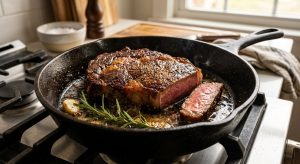
Let us look at the raw data. The specific heat capacity of iron is roughly 0.450 Joules per gram Kelvin (J/g·K). This is actually quite low. We often discuss carbon steel skillet thermodynamics and cast iron properties when we want to aggressively sear a steak because metals are highly conductive; they transfer heat rapidly into the food. But because iron has a low specific heat capacity, it doesn’t actually store as much total thermal energy per gram as you might think. It feels hot because it is dumping its heat into your hand (or your food, or the air) very quickly.
High-fire clay, stoneware, and porcelain, on the other hand, are non-metallic insulators. The specific heat capacity of fired clay and ceramic is significantly higher than that of iron—often cited as being three to four times greater, depending on the exact mineral composition. Furthermore, the thermal conductivity of ceramic is incredibly low (around 1.5 Watts per meter Kelvin, compared to cast iron’s 80 Watts per meter Kelvin).
What does this mean for your dinner party? It means that if you heat a cast-iron Dutch oven and a high-fire ceramic casserole dish to the exact same temperature, the ceramic dish is holding significantly more total heat energy. Because ceramic is a poor conductor, it acts as a bottleneck, releasing that massive reserve of stored heat very, very slowly. Cast iron, conversely, will radiate and conduct its heat away much faster, cooling down more rapidly when removed from the heat source.
We must also consider thermal emissivity, which is the measure of a material’s effectiveness in emitting energy as thermal radiation, scaled from 0 to 1. Fired clay and ceramics have an incredibly high emissivity rating, generally around 0.90 to 0.93. Cast iron also has a high emissivity (ranging from 0.81 for rough castings up to 0.95 depending on oxidation and seasoning). Both materials will radiate heat effectively, but because the ceramic vessel holds a much larger total reservoir of energy (thanks to its high specific heat capacity) and conducts it slower, it will provide a much longer, steadier, and more gentle radiant heat to the food sitting inside it over a two-hour meal.
For aggressive stovetop cooking, cast iron is king. But for elegant, prolonged, anxiety-free serving at the dining table, high-fire ceramic is the ultimate thermal battery.
The “No-Go” Rule: Banishing Toxic Kitchen Gear from Your Table
Before we go any further into the methodology of heating these vessels, I need to pause and address a non-negotiable rule in my kitchen. As a home cook who values both health and culinary excellence, I have absolutely zero patience for cheap, toxic, corner-cutting kitchenware. I have spoken at length about banishing toxic kitchen gear from your home, and the dining table is no exception.
Far too many home cooks spend a fortune on organic, high-quality ingredients, only to serve them in cheap, mass-produced melamine bowls, mystery-metal platters with peeling chemical coatings, or low-fired novelty ceramics glazed with heavy metals. When you are applying ambient pre-heating techniques to your serving ware, you are subjecting these vessels to significant thermal stress. If you put a cheap, chemically coated pan or a low-quality, poorly glazed bowl into a 250°F oven to pre-heat, you risk off-gassing toxic fumes, leaching chemicals into your beautiful food, or having the vessel violently crack on your counter.
This is why I rigorously advocate for investing in high-quality, high-fire ceramics (like true stoneware and porcelain) or premium enameled cast iron. These materials are inert, stable at high temperatures, and built to last generations. They do not react with acidic foods like tomato sauces or wine reductions, and they do not flake mystery polymers into your mashed potatoes. You deserve a beautifully organized dream kitchen filled with tools that actually work for you, protect your health, and elevate your food. Stop buying cheap garbage that you have to replace every year. Buy heavy, safe, high-quality ceramic serving vessels, and let their massive thermal retention properties do the heavy lifting for your dinner parties.
Ambient Pre-Heating Techniques: Charging Your Thermal Batteries
Now that we have established that heavy, high-fire ceramic is our material of choice, we must learn how to properly “charge” it. Pouring hot food into a room-temperature ceramic bowl is a catastrophic mistake. Because ceramic has such a high specific heat capacity, it requires a massive amount of energy to warm up. If you don’t pre-heat the bowl, it will aggressively steal that energy directly from your food, instantly dropping the temperature of your meal well below the 140°F safety zone.
We must pre-heat the vessels, but we must do so safely. Ceramics are susceptible to thermal shock—a physical phenomenon where a rapid, uneven change in temperature causes the material to expand or contract differentially, resulting in catastrophic cracking or shattering. You cannot take a cold ceramic bowl and throw it under a 500°F broiler, nor can you place it directly on a gas burner. Here are the scientifically validated, safe methods for ambient pre-heating.
The Gentle Oven Method
The most effective way to deeply and evenly charge the thermal mass of your ceramic serving ware is the ambient oven method. The key here is gradual heating. Place your clean, empty ceramic serving bowls and platters into a completely cold oven. Turn the oven on and set the temperature to a low, gentle heat—ideally between 200°F and 250°F.
Allow the ceramics to come up to temperature with the oven, and let them sit at that temperature for at least 10 to 15 minutes. This slow, ambient saturation ensures that the heat penetrates all the way through the thick walls of the clay without causing stress fractures. When you are ready to plate, use thick oven mitts to remove the vessels. They will be incredibly hot to the touch, and they will hold that heat for a remarkably long time, creating a perfect, 140°F+ micro-climate for your food.
The Boiling Water Method
If your oven is entirely occupied by a massive standing rib roast and three different casseroles, you can utilize the boiling water method. This is a brilliant, highly efficient hack for weekday dinners or crowded weekend kitchens.
Boil a large kettle of water. Place your room-temperature ceramic serving bowls on the counter (preferably on a wooden cutting board or a folded kitchen towel to prevent the cold granite countertop from acting as a heat sink). Carefully pour the boiling water directly into the bowls, filling them to the brim. Let the hot water sit in the vessels for 5 to 10 minutes. The high specific heat capacity of the water will rapidly transfer its thermal energy into the ceramic walls. Right before you are ready to serve, dump the water into the sink, quickly and thoroughly wipe the bowls completely dry with a clean towel, and immediately plate your food. The bowls will be radiating beautiful, gentle heat.
The Microwave Method
I offer this method with a massive caveat: you must be absolutely certain that your ceramic ware is microwave-safe and completely free of any metallic glazes, decorative gold rims, or hidden moisture pockets. If the manufacturer confirms it is safe, you can heat damp (not dripping wet) ceramic plates or shallow bowls in the microwave for 30 to 60 seconds. The microwave radiation excites the water molecules on the surface of the ceramic, rapidly heating the dish. While this method is fast, it does not provide the deep, penetrating thermal saturation of the oven method, meaning the heat retention will not last nearly as long. Use this only in an absolute pinch.
Menu Engineering: Designing Food for Thermal Retention
Even with a perfectly charged ceramic thermal battery, the thermodynamic properties of the food itself play a massive role in how well it holds temperature on the table. Smart menu design helps eliminate bottlenecks during the final moments of plating and ensures your meal stays in the safe zone.
Water has one of the highest specific heat capacities of any common substance (4.18 J/g·K, which is nearly ten times higher than iron and roughly four times higher than ceramic). Therefore, foods that are dense, heavy, and contain a high percentage of water or liquid fat will inherently hold their heat much longer than dry, airy foods.
A dense, creamy risotto, a rich braised stew, or a heavy potato gratin are thermal champions. Because they are packed with moisture and fat, and because they are served in a compact mass, they have a low surface-area-to-volume ratio. They lose heat very slowly to the ambient air. Conversely, a pile of dry-roasted asparagus spears or a thinly sliced, fanned-out flank steak has a massive amount of exposed surface area relative to its total mass. These foods will hemorrhage heat into the atmosphere almost instantly, regardless of how hot your serving platter is.
If you are serving highly exposed, dry foods, you must use culinary thermal blankets. Sauces, gravies, and hot emulsions are not just flavor enhancers; they are functional thermodynamic tools. By pouring a generous amount of piping hot, fat-rich demi-glace over your sliced steak, or tossing your roasted vegetables in a hot brown-butter emulsion right before they hit the pre-heated ceramic bowl, you are physically coating the food in a high-heat-capacity liquid that shields it from convective heat loss.
The Step-by-Step Blueprint for a Stress-Free, Extended Communal Meal
We have covered the physics, the materials, and the menu engineering. Now, let us put it all together into a practical, actionable timeline. These staging strategies will completely eliminate kitchen chaos when your guests arrive, allowing you to execute a flawless, extended dinner party without ever breaking a sweat.
T-Minus 60 Minutes: Your heavy cooking is wrapping up. Your roasts are resting, and your side dishes are being held in the oven on low heat.
T-Minus 30 Minutes: Begin charging your thermal batteries. If your oven has space and can be dropped to 250°F, place your heavy, high-fire ceramic serving bowls and platters inside. If the oven is occupied, boil your kettle and fill the serving bowls with boiling water on the counter.
T-Minus 15 Minutes: Call your guests to the table. Do not plate the food yet. Let them take their time finding their seats, pouring their drinks, and settling in. You know they are going to dawdle, so plan for it.
T-Minus 5 Minutes: The guests are finally seated. Now, and only now, do you extract your ceramics from the oven (using heavy mitts) or dump and dry your water-filled bowls.
T-Minus 2 Minutes: Transfer your hot food into the heavily pre-heated ceramic vessels. Ensure that the food covers as much of the interior surface area of the bowl as possible to maximize thermal contact and prevent localized thermal shock. Pour your boiling-hot sauces and gravies over the exposed proteins and vegetables to act as a thermal blanket.
Zero Hour: Carry the steaming, heavy ceramic vessels to the dining table. Because you have utilized a high-mass, high-specific-heat material, and because you have fully saturated it with thermal energy, that bowl will act as a slow-release radiator for the next hour. It will gently and continuously pump heat back into your food, easily maintaining the core temperature well above the 140°F FDA danger zone.
Conclusion: Reclaiming Your Seat at the Table
You do not need a culinary degree to cook like an expert, and you certainly do not need a commercial kitchen to host a flawless dinner party. What you need is a refusal to accept mediocre results, a strict ban on toxic, inefficient kitchenware, and a basic understanding of how heat actually works in the physical world.
By upgrading to heavy, high-fire ceramic serving vessels, understanding their massive specific heat capacity, and taking the extra ten minutes to properly ambiently pre-heat them, you are taking complete control over the thermodynamics of your dining room. Your food will remain safe, your sauces will remain glossy, and your proteins will remain tender long after the first bottle of wine has been emptied. Once you understand the physics of your cookware, you will truly master the art of effortless hosting. Now, stop stressing, go pre-heat your bowls, and finally sit down to enjoy the incredible food you just made. You have earned it.