The Wallpaper Paste Predicament: Why Your Rice Is Ruining Dinner
Listen, I get it. It’s a random Tuesday night, you’re exhausted from answering emails that could have been a single sentence, and all you want is a simple, comforting bowl of chicken and rice. You measure the water, you dump in the grains, you set the heat, and you walk away. Twenty minutes later, you lift the lid, expecting a cloud of perfectly separated, fluffy grains. Instead, you are greeted by a dense, gelatinous block of carbohydrate that looks less like a culinary triumph and more like industrial spackle. You try to fluff it with a fork, but the entire mass just rotates in the pot as a single, defiant puck of starch.
It is infuriating. It is demoralizing. And frankly, it is one of those rookie kitchen mistakes that can instantly break your spirit and have you reaching for your phone to order overpriced Thai food. But here is the brutally honest truth: you don’t need a culinary degree, a Michelin-starred mentor, or a $400 smart-cooker to make perfect rice. You just need to understand a tiny bit of science and commit exactly sixty seconds of your life to a preventative measure.
We are talking about rinsing your rice. Yes, that step you always skip because you think it doesn’t matter. I am here to tell you, with absolute certainty, that it matters more than almost anything else you do in the kitchen. If you want to know why your rice is gummy, heavy, and glued together, the answer is hiding in plain sight on the surface of every single grain you pour out of that plastic bag.
Today, we are going to dive deep into the botanical anatomy of a rice grain, the thermodynamics of starch gelatinization, and the chemical reactions that happen when you apply heat to unwashed grains. By the time we are done, you will never look at a bag of jasmine or basmati the same way again, and you will finally have the knowledge to transform your daily meals from stressful chores into predictable, restaurant-quality victories.
The Culprit: Meet Amylose and Amylopectin, the Enemies of Fluffy Rice
To understand why your rice is turning into glue, we have to travel back to the source: the milling process. The rice you buy at the grocery store didn’t come out of the ground looking like a pristine, pearlescent little oval.
Anatomy of a Milled Rice Grain
When rice is harvested from the paddy, it is encased in an inedible hull. Once that hull is removed, you are left with brown rice—a whole grain that still retains its nutrient-dense bran layer and germ. But to get the soft, quick-cooking white rice that most of us keep in our pantries, the grain has to go through a rigorous mechanical milling process.
Inside industrial milling facilities, the brown rice is passed through powerful abrasive friction polishers. These machines literally grind away the outer bran layer and the germ, revealing the starchy endosperm underneath. This process is violent. The friction generates heat and mechanical stress, and while it successfully produces a beautifully polished white grain, it leaves behind a microscopic casualty: starch dust.
This fine, powdery residue coats every single grain of milled white rice. It is practically invisible to the naked eye, but if you run your fingers through a bag of raw white rice, you will feel a faint, chalky film. That film is the enemy. That film is the exact reason your rice always turns out mushy.
The Science of Starch Gelatinization
Let’s get into the chemistry, because I promise you, understanding this will make you a vastly better cook. Rice starch is primarily composed of two different types of carbohydrate molecules: amylose and amylopectin.
Amylose is a long, straight-chain molecule. Because of its linear structure, it packs tightly and doesn’t easily break down or dissolve in water. Rice varieties that are high in amylose—like long-grain basmati or jasmine—tend to cook up firm, distinct, and fluffy.
Amylopectin, on the other hand, is a highly branched, chaotic molecule. Its bushy structure prevents it from packing tightly, making it highly soluble in water and prone to turning incredibly sticky when heated. Short-grain rice, like the kind used for sushi, is packed with amylopectin, which is why it naturally clings together.
But here is the critical problem: that fine, powdery dust left on the outside of the grain from the milling process? It is pure, pulverized starch, highly concentrated with readily available amylopectin. When you take unwashed rice, throw it in a pot, add water, and turn on the heat, you are setting off a thermodynamic disaster.
Starch undergoes a process called gelatinization when exposed to heat and water. For rice, this gelatinization temperature window typically sits between 60°C and 70°C (140°F to 158°F). As the water in your pot heats up, it hits this critical temperature range long before it reaches a boil. Because the surface starch dust is so fine and fully exposed, it gelatinizes instantly, swelling and melting into a viscous, sticky gel.
This happens before the actual intact rice grain has even had a chance to absorb water and cook properly. You have essentially created a pot of hot starch glue, and your rice grains are trapped inside it. As the cooking process continues, the water evaporates or is absorbed, and that glue sets, cementing the grains together into the dense, gummy block you know and hate.
The Magic of the Cold-Water Rinse: A 60-Second Masterclass
The solution to this chemical catastrophe is almost insultingly simple: wash the dust off before you apply heat. A quick, thorough rinse physically detaches the loose amylopectin debris from the surface of the grains and flushes it down the drain, leaving you with clean, intact endosperms that can absorb water and cook independently of one another.
Why Cold Water is Non-Negotiable
If there is one absolute, unbreakable rule in this masterclass, it is this: you must use cold water to wash your rice.
I have seen well-meaning home cooks use warm or even hot tap water to rinse their grains, thinking it will “clean” them faster. This is a fatal error. Remember that gelatinization temperature we just talked about? If you run hot water over raw rice, you are prematurely triggering the gelatinization of the surface starch. Instead of washing the dust away, you are instantly turning it into glue right there in the strainer. The water will turn thick, the grains will become tacky, and you will have ruined the texture before the pot even hits the stove.
Cold water keeps the starch granules in their dormant, crystalline state. It acts purely as a mechanical vehicle to sweep away the dust without initiating any chemical changes.
The Friction Factor: Agitation is Key
Simply running water over a pile of rice is not enough. The starch dust is stubbornly clinging to the microscopic crevices of the milled grain. To effectively remove it, you need mechanical agitation. You need friction.
Think of it like washing your hands. If you just hold your hands under a running faucet, the dirt doesn’t magically fall off. You have to rub them together. The same principle applies here. You need to use your fingers to gently massage the grains against one another. The friction of the rice grains rubbing together in the water is what ultimately dislodges the powdery residue.
Step-by-Step: How to Wash Rice Like You Actually Care
Since we are aiming to completely fix your food and eliminate the guesswork from your weeknight dinners, let’s break down the exact, foolproof method for washing rice. It takes less than a minute, but the technique matters.
Step 1: The Initial Flood
Place your measured, raw rice into a large bowl. Do not use the pot you plan to cook it in just yet, unless you are incredibly careful about draining. Pour in enough cold tap water to completely submerge the rice by at least two inches.
Immediately, you will see the water turn a milky, opaque white. This is the visual proof of your enemy. That cloudiness is the pulverized surface starch dissolving into the water. If you were to cook the rice in that water, you’d be eating paste.
Step 2: The Swirl and Massage
Plunge your hand into the cold water. Spread your fingers out like a claw and begin to vigorously swirl the rice in a circular motion. Do this for about ten to fifteen seconds.
Next, scoop up a handful of the submerged grains and gently rub them between your palms or against your fingers. You are not trying to crush or break the grains—rice is fragile, especially when raw. You are simply providing enough gentle friction to polish the remaining dust off the surface.
Step 3: The Rinse and Repeat
Carefully tilt the bowl and pour out the milky water, using your hand to hold the rice back so it doesn’t escape down the drain. (If you are clumsy, use a fine-mesh strainer).
Once the bowl is mostly drained, refill it with fresh cold water. You will notice that the water is slightly less cloudy this time. Repeat the swirling and massaging process. Drain again.
You typically need to perform this cycle three to five times. You are not looking for the water to be perfectly, crystal clear—that is a myth that will have you standing at the sink for twenty minutes. You are looking for the water to be mostly clear, to the point where you can easily see the individual grains resting at the bottom of the bowl. Once the water looks like heavily diluted lemonade rather than a thick glass of milk, you are done.
Drain the rice as thoroughly as possible. Excess water clinging to the grains will throw off your meticulously measured water-to-rice cooking ratio.
The Gear Check: Ditch the Toxic Cookware
As your resident sassy culinary guide, I would be failing you if I didn’t address the hardware you are using to cook this newly pristine rice. Because honestly, you can wash your grains until your fingers prune, but if you dump them into a toxic, degraded pot, you are still ruining your dinner.
Why Your Peeling Non-Stick Pot is a Health Hazard
I have zero patience for cheap, mystery-metal cookware coated in flimsy non-stick chemicals. We need to talk about banishing toxic kitchen gear from your life forever.
Far too many home cooks rely on $20 bargain-bin rice cookers or scratched-up Teflon pots that have been hiding in their cupboards since college. When non-stick coatings are subjected to high heat, metal utensils, and acidic environments, they degrade. They blister, they flake, and they leach per- and polyfluoroalkyl substances (PFAS)—so-called “forever chemicals”—directly into your food.
If the inside of your rice cooker looks like a peeling sunburn, throw it away immediately. You are quite literally feeding yourself plasticized chemical flakes. Rice is a staple food; you eat it constantly. You should be cooking it in a vessel that respects your health and your palate.
Invest in a high-quality stainless steel saucepan with a heavy, thick base (which prevents scorching and distributes heat evenly), an enameled cast-iron Dutch oven, or a premium rice cooker with a ceramic or uncoated stainless steel inner pot. These materials are safe, durable, and rely on proper temperature control rather than toxic chemicals to prevent sticking.
The Beauty of a Dedicated Washing Bowl
While you can absolutely wash rice in a standard mixing bowl or a fine-mesh sieve, if you are someone who cooks rice multiple times a week, I highly recommend investing in a Japanese wash bowl.
These specialized bowls are brilliant in their simplicity. They feature a solid bottom for soaking and massaging, but the side of the bowl is perforated with tiny, laser-cut drainage slits. This allows you to flood the bowl, agitate the rice, and then simply tilt the bowl to drain the starchy water without losing a single grain down the sink. It eliminates the need for a separate colander, streamlines the process, and ensures you get maximum drainage so your water ratios remain perfectly accurate. Having the right essential tools every beginner needs makes building a daily cooking habit infinitely easier.
Debunking the “Lost Nutrients” Myth
Inevitably, whenever I aggressively advocate for washing rice, someone chimes in with a panicked comment about “washing away all the nutrients.” Let’s clear the air and look at the actual science, because this is a misunderstanding born from mid-century food processing policies.
Enriched Rice vs. Culinary Perfection
In the United States and several other countries, a lot of commercial white rice is labeled as “enriched.” Because the milling process strips away the highly nutritious bran and germ, manufacturers attempt to compensate by spraying the polished white grains with a synthetic powder coating of vitamins and minerals—typically iron, niacin, thiamin, and folic acid.
If you read the back of a bag of enriched rice, it will often explicitly instruct you not to wash the rice before cooking. This is because that synthetic vitamin powder is water-soluble. If you rinse the rice, you wash the added vitamins down the drain.
So, are you losing nutrients? Technically, yes. You are losing the synthetic spray-on vitamins. But here is my sassy, professional stance: you should not be relying on a bowl of processed white carbohydrates as your primary source of essential vitamins. Eat a vegetable. Have a salad. Roast some broccoli.
The culinary trade-off is absolutely not worth it. If you skip the wash to save a microscopic dusting of synthetic niacin, you are resigning yourself to eating a gluey, unappetizing bowl of mush. I will gladly get my vitamins from a side of spinach if it means my rice is fluffy, distinct, and a joy to eat.
The Arsenic Argument: A Welcome Bonus of Rinsing
If you need a health-based reason to justify washing your rice, let’s talk about heavy metals. Rice is a unique crop in that it is grown in flooded paddies. Because of the anaerobic conditions of the flooded soil and the specific physiology of the rice plant, it acts like a sponge for inorganic arsenic—a naturally occurring heavy metal and known Class I carcinogen.
Rice absorbs arsenic from the soil and water at a rate 10 to 20 times higher than other cereal grains. Recent data from the FDA confirms that trace amounts of inorganic arsenic are present in virtually all commercial rice samples tested in the United States.
While the levels are generally low enough to avoid acute toxicity, chronic exposure is a genuine concern, especially for infants and young children. But here is the good news: comprehensive testing has shown that thoroughly rinsing your rice before cooking can reduce the total concentration of inorganic arsenic by up to 25% to 30%.
So, by taking 60 seconds to wash away the surface starch, you are not only guaranteeing a vastly superior culinary texture, but you are actively mitigating your exposure to toxic heavy metals. It is a win-win scenario that requires almost zero effort.
When NOT to Rinse Your Rice (Yes, There Are Exceptions)
Because cooking is an art as much as it is a science, there are always exceptions to the rules. I have spent the last two thousand words telling you that surface starch is the enemy, but in a few very specific culinary applications, that sticky, gelatinous starch is actually the star of the show.
Risotto and Paella: Where Starch is the Star
If you are making an authentic Italian risotto, you are typically using Arborio, Carnaroli, or Vialone Nano rice. These are short-to-medium grain varieties that are exceptionally high in amylopectin.
The entire technique of making risotto involves slowly toasting the raw grains in fat, and then gradually adding hot broth while stirring constantly. Why? Because you are intentionally trying to coax that surface starch off the grains and into the cooking liquid. The mechanical friction of your spoon, combined with the heat and the gradual addition of liquid, causes the amylopectin to gelatinize and emulsify with the fat, creating that luxuriously rich, creamy sauce that defines a perfect risotto.
If you were to wash Arborio rice before making risotto, you would flush away the very starch needed to build the sauce. You would end up with a watery, sad pot of wet rice. The same principle applies to Spanish Paella, made with Bomba rice. While you don’t stir paella (to preserve the crispy, caramelized crust on the bottom), the residual starch is necessary to bind the dish together slightly and absorb the intense flavors of the saffron broth.
Sushi Rice: A Different Kind of Washing
Sushi rice is a short-grain Japanese rice that is naturally very sticky. While you do wash sushi rice—in fact, sushi masters wash it with an obsessive, highly regimented precision—the goal is slightly different.
You still want to remove the loose milling dust to prevent a gummy texture, but you rely on the internal amylopectin of the short grain to provide the necessary cling so the sushi holds its shape. Sushi rice is washed gently, soaked to ensure even hydration, and then seasoned with vinegar, sugar, and salt after cooking. The washing process is crucial, but it is a delicate balance of removing the excess dust while preserving the structural integrity of the grain.
The Meal-Prep Payoff: Why Fluffy Rice Matters for Your Week
For those of us who rely on Sunday meal prep to survive the chaos of the workweek, mastering the art of the rice wash is nothing short of life-changing. It is the foundation of a peaceful daily habit that prevents midweek culinary meltdowns.
Reheating Realities
When you cook unwashed rice, the gelatinized starch glue sets as the rice cools in the refrigerator. By Tuesday, that container of rice is a solid brick. When you try to microwave it, the heat doesn’t penetrate evenly. The outside gets dry and hard, while the inside remains a dense, lukewarm paste.
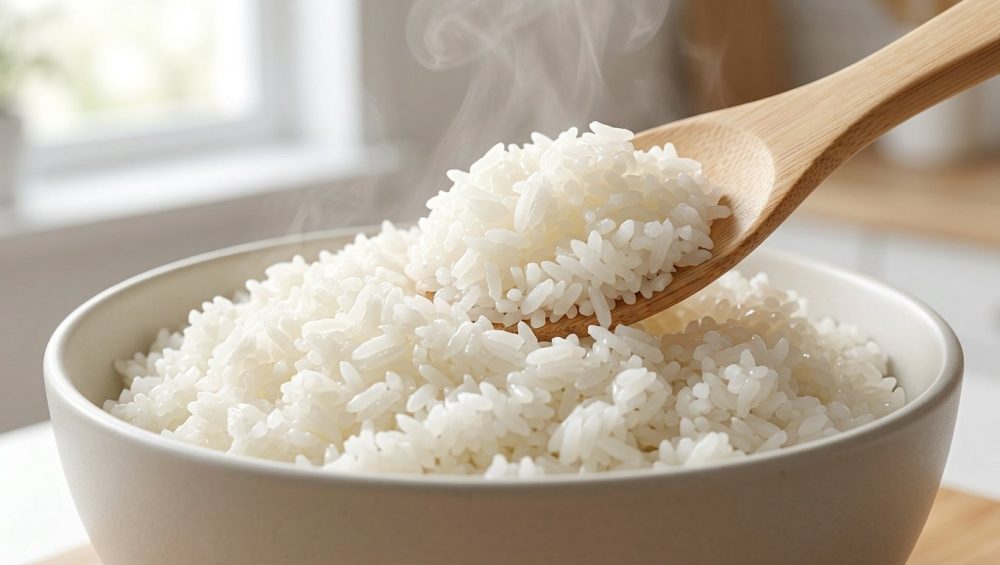
Washed rice behaves entirely differently. Because the grains are distinct and independent, they cool down without fusing together. When you reheat washed rice, the individual grains plump right back up, tasting almost exactly as fresh and fluffy as they did the day you cooked them.
Preventing the Dreaded Clump
This independence of grains is also the absolute secret to making incredible fried rice. If you have ever tried to make fried rice with a fresh, unwashed batch, you know it turns into a greasy, mushy disaster. The starch glue binds the grains, trapping moisture and preventing the rice from frying properly in the oil.
This is why every decent recipe on earth demands that you use leftover, day-old rice. The resting period in the fridge allows the starches to undergo a process called retrogradation, where they recrystallize and firm up. But if you didn’t wash the rice in the first place, retrogradation just turns your glue into a harder glue.
By thoroughly washing your rice, cooking it perfectly, and letting it chill overnight, you are setting yourself up for success. The grains will separate easily in the wok, allowing the high heat to sear each individual kernel, resulting in the smoky, distinct texture you get at your favorite takeout spot. If you want to avoid mushy fried rice, the preparation starts at the sink, not at the stove.
And while we are on the subject of storing leftovers, make sure you know how to clean stained plastic containers properly, because nothing ruins the aesthetic of your beautifully prepped, perfectly fluffy rice like storing it in a tub that smells like last month’s leftover chili.
Final Thoughts: Reclaim Your Carb Independence
Cooking should not be a source of stress, and your side dishes should not feel like a gamble. The difference between a heavy, gummy disaster and a light, restaurant-quality bowl of rice comes down to understanding the basic chemistry of what you are putting in your pot.
Amylopectin is a powerful force. Left unchecked on the surface of your milled grains, it will gelatinize, bind, and ruin your dinner. But armed with cold water, a little bit of friction, and sixty seconds of patience, you can wash away the dust, mitigate your heavy metal exposure, and reclaim the texture of your food.
Stop treating the rinsing step as an optional suggestion or an annoying chore. Treat it as the foundational technique it truly is. Ditch the peeling, toxic cookware, invest in a proper heavy-bottomed pot or a safe rice cooker, and start treating your ingredients with the respect they deserve.
You don’t need a culinary degree to make mind-blowing food in a standard home kitchen. You just need to stop skipping the small steps that make the biggest difference. Now go turn on the cold tap, wash your rice, and enjoy a dinner that actually tastes like you know what you’re doing. You’ve got this.