You’ve been there. It’s a random Tuesday night, you’re exhausted, and you just want a comforting, zero-effort dinner. You grab a bag of premium frozen potstickers from the freezer. Or maybe it’s a Sunday, and you’ve spent three painstaking hours folding beautiful, delicate little dough pockets by hand. You place them lovingly into your expensive stainless steel steamer basket, set the timer, and pour yourself a glass of wine. Ten minutes later, you lift the lid and gasp.
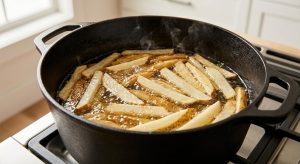
Instead of plump, perfectly cooked culinary masterpieces, you are staring at a sloppy, gelatinous tragedy. The dough is waterlogged. The pleats have melted into a sad, gummy puddle. And the second you try to rescue one with your chopsticks, the bottom rips wide open, spilling your beautiful pork and chive filling into the boiling abyss below.
If you are tired of wondering why your dumplings fall apart the moment they finish cooking, I have some brutally honest news for you: it is not your folding technique. It is not the brand of frozen food you bought. It is your equipment.
The global market for frozen dumplings is absolutely exploding. In 2025, the frozen dumpling industry hit a staggering $8.2 billion, and it is projected to skyrocket to $16.3 billion by 2034. This means millions of home cooks are currently standing in their kitchens, staring at soggy, ruined dinners, completely unaware that their shiny metal cookware is actively sabotaging them.
You do not need a culinary degree to fix this, and you certainly do not need to drop $200 on a bulky, countertop electric appliance. You just need a $25 basket made of woven grass and a basic understanding of high school physics. Welcome to the masterclass on the magic of the traditional bamboo steamer.
The Thermodynamics of Steaming: Why Your Dumplings Are Drowning
Let’s get nerdy for a second, because understanding the problem is the only way to permanently fix it. Steaming is often praised as the ultimate healthy cooking method, but it is actually a highly volatile thermodynamic process. When water reaches 212°F (100°C), it vaporizes into steam, expanding rapidly and carrying an immense amount of thermal energy.
As this hot vapor rises, it cooks your food gently and evenly. But what goes up must come down.
The Condensation Conundrum
When that 212°F steam hits the lid of your steamer, it encounters a cooler surface. The vapor rapidly loses its thermal energy, undergoes a phase change, and turns back into liquid water. This is condensation. In a perfect world, this moisture would simply vanish. In reality, it pools together, and gravity inevitably takes over.
The “Rain Effect” in Metal and Glass Cookware
Here is where your expensive stainless steel pots and tempered glass lids betray you. Metal and glass are entirely non-porous and impermeable. When condensation forms on the underside of a metal lid, the water molecules have nowhere to go. They cling to the metal, pooling together until they become too heavy for surface tension to hold them.
Then, the disaster strikes. Massive, heavy droplets of boiling-hot water rain directly back down onto your food. When your dumpling wrappers tear, it is almost always because they have been subjected to this relentless, soggy downpour. The dough absorbs the excess water, gelatinizes too rapidly, and loses all structural integrity. You aren’t steaming your food; you are drowning it in a localized thunderstorm.
Enter the Bamboo Steamer: A Masterclass in Moisture Mechanics
The solution to this thermodynamic nightmare was invented thousands of years ago. The bamboo steamer, known as a zhēnglóng, originated in Southern China during the Han dynasty and has been the undisputed backbone of dim sum culture ever since. According to historical texts, General Han Xin used bamboo and wood to cook food with steam to avoid filling military barracks with smoke. What started as a military necessity evolved into a culinary icon.
The Hygroscopic Magic of Cellulose
Bamboo is not just a cheap substitute for wood; it is a botanical marvel. As a natural grass, bamboo is highly hygroscopic, meaning it actively absorbs moisture from its surrounding environment. The structure of bamboo consists of a complex, interwoven cellulose lattice.
When steam rises and hits the woven bamboo lid, the condensation doesn’t pool into heavy droplets. Instead, the bamboo fibers literally drink the excess water. The moisture is absorbed into the material itself, preventing the dreaded rain effect. Your food cooks in a perfect, humid cloud without ever getting directly wet.
Breathability and Vapor Pressure
But the magic doesn’t stop at moisture absorption. Have you ever watched your gorgeous steamed buns deflate the moment you take the lid off your metal pot? That happens because metal steamers create an airtight seal, trapping intense pressure and causing violent temperature spikes.
Bamboo breathes. The woven lid allows just enough steam to escape to regulate the internal vapor pressure, maintaining a gentle, laminar steam flow. This micro-environment of stable, moist heat prevents the violent pressure fluctuations that cause delicate doughs to expand too rapidly and collapse.
The Ugly Truth About Modern Electric and Metal Steamers
As your resident Sassy Sous-Chef, I have zero patience for the kitchen appliance industry trying to sell you “upgraded” versions of ancient tools that actually perform worse.
The “No-Go” Rule on Toxic Plastics and Mystery Metals
I am deeply committed to banishing toxic kitchen gear from my home, and you should be, too. Those bulky, multi-tiered electric plastic steamers are my ultimate nemesis. Exposing cheap polycarbonate plastics to 212°F steam day in and day out is a recipe for chemical leaching. Heating plasticizers and synthetic materials to the boiling point right next to your dinner is a fundamental violation of my kitchen rules.
We’ve all noticed when our silicone spatulas taste like soap after a harsh run through the dishwasher; imagine what an actively melting plastic steamer is doing to the flavor profile of your food. Natural bamboo is entirely non-toxic, sustainable, and naturally antimicrobial.
Nutrient Degradation: Why Your Veggies Taste Sad
Beyond the toxicity, metal and plastic steamers actively destroy the nutritional value of your food. Laboratory studies have verified that bamboo steamers retain up to 89% of the Vitamin C in vegetables like broccoli during a 5-minute steam, whereas stainless steel steamers only retain about 72%.
Why? Because the harsh, localized heat spikes in metal steamers accelerate thermal degradation, and that aggressive condensation drip physically leaches the water-soluble vitamins right out of your greens. If you want to stop eating mushy veggies that have been stripped of their color, crunch, and vitamins, you need to ditch the metal insert immediately.
How to Choose the Perfect Bamboo Steamer (A Buyer’s Guide)
Do not just buy the first cheap bamboo basket you see online. A good bamboo steamer should last you for years, provided you buy one made with actual craftsmanship.
Sizing It Right for Your Wok or Skillet
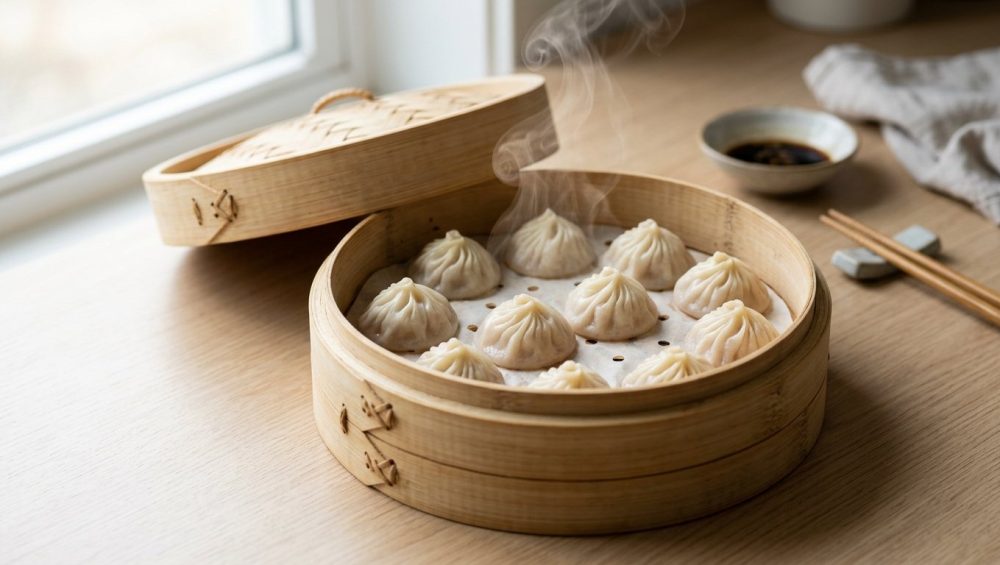
The standard size for home kitchens is 10 inches in diameter. This size is incredibly versatile. Whether you are using a carbon steel wok or a standard 12-inch stainless steel skillet, a 10-inch steamer will sit perfectly inside the rim without touching the bottom of the pan. It also provides enough surface area to steam about 10 to 12 standard potstickers per tier. Most sets come with two tiers and one lid, allowing you to cook a massive batch of food simultaneously.
Craftsmanship and Materials
When shopping, look closely at how the steamer is held together. You want to avoid any steamer that uses industrial glues or copper wiring. Glue will melt and off-gas when exposed to high-heat steam, and copper wire will eventually rust and snap.
The best bamboo steamers are constructed using traditional methods: woven bamboo ties and wooden pegs. Unlike cheap tupperware where those plastic containers stay greasy forever, bamboo is natural, porous, and responsive to its environment. You want a product that is 100% bamboo, top to bottom.
Prepping and Lining Your Bamboo Steamer Like a Pro
You have your beautiful new steamer. Now, we need to talk about preparation, because throwing naked dumplings directly onto raw bamboo is a rookie mistake that will end in tears.
The First-Use Ritual
Bamboo steamers require a brief initiation before their maiden voyage. When you first unpack it, wash it gently with warm water. Do not use dish soap. Soap will absorb into the porous cellulose and ruin the flavor of your food.
Once rinsed, place the empty steamer over a wok of boiling water and let it steam for about 30 minutes. This purges the bamboo of any lingering raw, woody flavors and sanitizes the basket. Do not soak the entire basket in water before using it. Laboratory testing shows that pre-soaking causes irreversible fiber delamination and swelling, which warps the weave and ruins the steamer’s structural integrity.
The Science of Liners
You must line your steamer. When food sticks to your stainless steel cookware, it’s usually a temperature issue, but when food sticks to bamboo, it is a chemical reaction. At 65–75°C, the starches in dumpling dough gelatinize and form reversible hydrogen bonds with the hydroxyl groups on the bamboo’s cellulose. This molecular adhesion will weld your food to the slats.
To prevent this, you need a food-grade, breathable barrier. Napa cabbage leaves, untreated banana leaves, or perforated parchment paper are the gold standards. Place them loosely over the slats. Do not tuck them in tightly, as you need to maintain that laminar steam flow we talked about earlier.
And whatever you do, never use aluminum foil or plastic wrap. Foil traps the steam and promotes mold, completely neutralizing the breathability of the bamboo.
Step-by-Step: Steaming Dumplings to Restaurant Perfection
We are finally ready to cook. This is your foolproof weeknight shortcut for taking frozen dumplings from the freezer to the plate in under 15 minutes, with zero stress.
The Water Level Rule
Fill your wok or wide skillet with about 1 to 1.5 inches of water. Place the bamboo steamer into the pan. The bottom rim of the steamer should be submerged in the water, but the actual slatted floor where the food sits must remain at least half an inch above the water line. If the boiling water bubbles up and touches your food, you are no longer steaming; you are aggressively boiling.
Temperature Control and Timing
Bring the water to a rolling boil over high heat. Once you see a robust plume of steam escaping the pan, carefully place your lined tiers of dumplings into the steamer and cover with the bamboo lid.
Immediately drop the heat to medium. You want a steady, gentle simmer, not a violent, rolling eruption. Just like how your chicken breast turns out dry when you ignore temperature control, your dumplings will turn gummy if you blast them with too much heat.
For standard frozen dumplings, set your timer for 10 to 12 minutes. Because the bamboo absorbs the condensation and regulates the pressure, you do not need to constantly lift the lid to check on them. In fact, lifting the lid releases the trapped thermal energy and ruins the cooking environment. Trust the process. When the timer goes off, carefully remove the steamer from the heat.
Beyond Dumplings: Unlocking the Full Potential of Your Steamer
While dumplings are the gateway drug to bamboo steamers, this tool is an absolute powerhouse for everyday cooking.
Tender Vegetables and Nutrient Retention
Remember those statistics about Vitamin C retention? Your bamboo steamer is about to become your best friend for weeknight vegetable prep. Tender greens like spinach, bok choy, and asparagus cook to vibrant, crisp-tender perfection in just 3 to 5 minutes. Because the bamboo prevents the harsh temperature spikes of metal steamers, your broccoli will emerge bright green and snappy, rather than olive-drab and mushy.
Delicate Fish and Poultry
Steaming is a highly underrated method for cooking proteins. A fillet of white fish, placed on a bed of scallions and ginger inside a bamboo steamer, cooks gently and evenly without ever drying out. The bamboo imparts a very subtle, earthy fragrance to the food, elevating simple ingredients into a fragrant, restaurant-quality meal. You can even steam marinated chicken thighs; the moist environment ensures they remain incredibly juicy.
Cleaning, Maintenance, and Mold Prevention
The only catch to owning a natural, porous kitchen tool is that you have to care for it properly. Bamboo is incredibly durable, but it has one mortal enemy: mold.
The Cleaning Protocol
Never, under any circumstances, put your bamboo steamer in the dishwasher. The extreme heat, harsh chemical detergents, and prolonged soaking will destroy the fibers and warp the wood instantly.
Instead, clean it immediately after use. While the bamboo is still warm, rinse it under hot water. Use a soft nylon brush or a dedicated bamboo wok brush to gently scrub away any food residue. If you used a proper liner, there should be virtually nothing to scrub. If you encounter a stubborn spot of grease, you can use a tiny drop of mild soap, but rinse it obsessively to ensure no soapy residue absorbs into the wood.
The Drying Rule
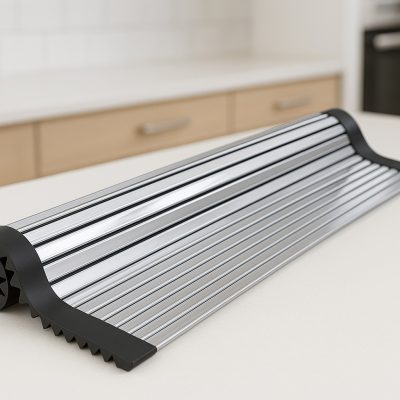
This is the most critical step. After washing, pat the steamer dry with a clean towel. Then, you must let it air dry completely before putting it away. I recommend leaving it out on a well-ventilated dish rack for at least 48 hours.
If you stack the tiers and put them in a dark, enclosed cabinet while they are even slightly damp, they will grow mold. Bamboo thrives on moisture, and dark cabinets are breeding grounds for spores. Let it breathe. Once it is bone dry, store it in a well-ventilated spot.
The Sassy Sous-Chef’s Final Verdict
Cooking shouldn’t be a source of stress, and it certainly shouldn’t require a kitchen full of expensive, toxic, single-use gadgets. The reason your dumplings have been turning into waterlogged disasters isn’t a lack of culinary skill; it’s simply a failure of modern equipment trying to outsmart ancient physics.
A $25 bamboo steamer is an investment in your sanity, your health, and your Tuesday night dinners. It absorbs the moisture, regulates the heat, preserves the nutrients, and looks incredibly chic sitting on your stovetop. Ditch the metal insert, embrace the bamboo, and get ready to eat the best homemade dumplings of your life.