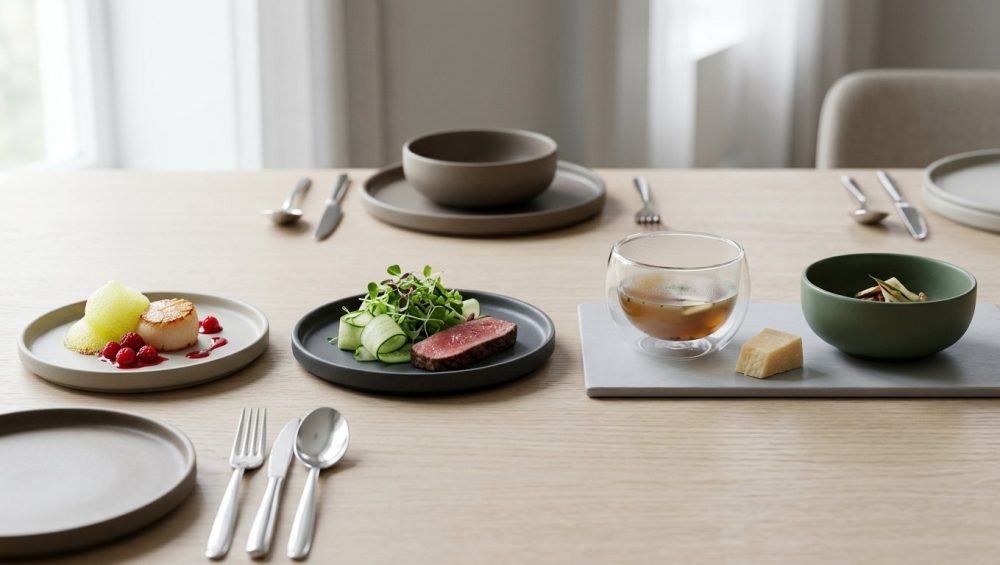
Let’s get one thing straight before we even turn on the stove: your dinner guests are not bottomless garbage disposals, and they are certainly not immune to the laws of human biology. Have you ever spent three grueling days prepping a stunning, multi-course weekend feast, only to watch your friends push their food around their plates with glazed-over eyes by the time the main course arrives? It is not because your cooking is bad. It is because you completely ignored the chemistry of flavor pacing, and you accidentally subjected your guests to a phenomenon known as palate fatigue.
During the week, I am all about survival. I will happily use every shortcut and time-saving hack in the book to get dinner on the table before I collapse. But the weekend? The weekend is when we don our aprons, banish the pretentious chef-speak, and engineer a dining experience with absolute, unapologetic perfectionism. When you set out to host a meaningful dinner party, the goal isn’t just to shovel calories into your friends’ faces. The goal is to manipulate their sensory receptors, control their salivary responses, and guide their palates through a meticulously curated journey that keeps them engaged from the first amuse-bouche to the final digestif.
You do not need a culinary degree to pull this off. You just need a healthy respect for science, a bit of strategic planning, and the absolute refusal to serve your hard work on toxic, cheap cookware. Put down the truffle oil, grab a glass of wine, and let’s dive into the definitive masterclass on the chemistry of flavor pacing.
The Physiology of Palate Fatigue: Why Your Guests Stop Caring by Course Three
To understand how to pace a menu, you first need to understand why palates fail. The human body is hardwired to seek out novelty. When you bombard the tongue and the olfactory bulb with the exact same heavy, rich, salty stimuli course after course, the brain simply stops registering the pleasure.
Sensory Adaptation and the Olfactory Bulb
This neurological phenomenon is scientifically known as Sensory-Specific Satiety (SSS). It refers to the rapid decline in pleasure derived from consuming a specific food—or a specific flavor profile—as we continue to eat it, even while our appetite for entirely different flavors remains completely intact. If you have ever wondered why a child (or let’s be honest, you) can be “too full” to take another bite of a savory steak, but suddenly finds a magical “second stomach” when a cold, sweet bowl of ice cream appears, you have witnessed SSS in action.
Your taste receptors and your olfactory bulb physically adapt to constant stimulation. Think of it like walking into a room with a strong perfume; after ten minutes, you don’t smell it anymore. The initial bite of a rich, buttery risotto sends a massive spike of dopamine and intense electrical signals to the brain. By the tenth bite, those receptors have downregulated their sensitivity to that specific combination of fat and salt. If your next course is a heavy, cream-based braised short rib, your guests’ receptors are already exhausted. They will perceive the dish as flat, heavy, and uninteresting, regardless of how flawlessly you executed the braise.
The Law of Diminishing Marginal Flavor Returns
One of the most tragic rookie kitchen mistakes you can make is blasting every single dish with maximum salt and butter right out of the gate. We call this the law of diminishing marginal flavor returns. If you season your first course to the absolute maximum limit of palatability, you leave yourself nowhere to go.
A multi-course dinner must be structured as a bell curve of intensity. The early courses should tease the palate with light, volatile aromas and crisp textures. You slowly build the sodium and fat content, peaking at the main course, and then gracefully descending into lighter, contrasting flavors. If you flatline the flavor trajectory by making every dish a heavy-hitting umami bomb, you will induce a savory coma. Your guests will feel bloated, lethargic, and completely desensitized to your culinary flex.
Manipulating pH Levels: The Acid Trip Your Menu Needs
Acidity is the unsung, heavy-lifting hero of the kitchen. While salt amplifies flavor and fat carries it, acid is what cuts through the noise, resets the biological machinery of the mouth, and forces the salivary glands to wake up and pay attention. If your menu feels sluggish, it is almost certainly lacking a strategic application of pH manipulation.
How Acidity Resets the Salivary Glands
When acidic food enters the mouth, it triggers an immediate physiological defense mechanism: the parotid glands pump out saliva to buffer the acid and protect the enamel of your teeth. But not all acids behave the same way. The science of titratable acidity tells us that it isn’t just about the raw pH number; it is about the total concentration of available acid molecules.
For example, a commercial cola might have a highly acidic pH of 2.5, but the salivary pH in the human mouth recovers and neutralizes it in about 30 seconds. On the other hand, orange juice, which contains complex citric acid, might have a higher (less acidic) pH of 3.5, but its high titratable acidity means the mouth takes up to 90 seconds to fully buffer and recover. This prolonged parotid gland response literally washes the palate clean, flushing out residual fats and proteins from the previous course. Understanding how to balance these acids is the secret to surviving kitchen disasters when a dish turns out overwhelmingly rich or heavy; a sharp hit of citric or tartaric acid can instantly rescue a muddy flavor profile.
Strategic Placement of Acidic Intermezzos
This is exactly why high-end tasting menus utilize palate cleansers, or intermezzos, between heavy courses. You are deliberately dropping the pH of the mouth to trigger a salivary flush. A tart green apple sorbet, a splash of a sharp vinaigrette, or a lacto-fermented pickle acts as a biological reset button.
Interestingly, recent sensory science regarding wine tasting has shown that palate cleansers are highly category-specific. While water and crackers mechanically cleanse the mouth, they do not bind to the astringent polyphenols left behind by heavy red wines or deeply roasted meats. Studies have demonstrated that milk or pectin-based solutions are uniquely capable of reducing quantifiable polyphenols in expectorated saliva, significantly reducing the feeling of astringency. If you are serving a highly tannic wine pairing or a heavily smoked brisket, a small, cleverly designed dairy-based or pectin-rich acidic bite (like a sharp yogurt foam or a tart fruit gelee) will chemically bind to those lingering compounds and strip them from the tongue, leaving the palate pristine for the next course.
Temperature Gradients: Waking Up the Trigeminal Nerve
If you serve a dinner party where every single dish is lukewarm, I will personally come to your house and confiscate your spatulas. Temperature is not just a measure of thermal energy; it is a fundamental driver of how the human nervous system perceives flavor.
The Thermodynamics of Taste Perception
Just as you would master the thermodynamics of carbon steel pans for a perfect sear, you must master the thermodynamics of the human mouth to maximize flavor perception. The sensation of sweet, bitter, and umami tastes is heavily regulated by microscopic cation channels in our taste buds known as TRPM5.
Here is where the biology gets fascinating: the TRPM5 channel is highly temperature-sensitive. At a cool 15°C (59°F), the channel scarcely opens, meaning the electrical signals sent to your brain are weak. But as the temperature of the food increases toward 35°C to 37°C (body temperature), the sensitivity of the TRPM5 channels increases by more than 100 times. The warmer the food, the stronger the electrical signal. This is exactly why melted ice cream tastes sickeningly sweet compared to frozen ice cream, and why a cold slice of pizza tastes less salty and savory than a piping hot one.
Furthermore, temperature dictates the volatility of aromatic compounds. Warmth literally vaporizes the essential oils and fats in your food, pushing them up through the back of the throat into the nasal cavity (retronasal olfaction). If you want a dish to smack your guests in the face with complex aromas, it must be served hot.
Structuring the Hot-Cold-Hot Progression
To prevent sensory fatigue, you must violently swing the temperature pendulum between courses. This wakes up the trigeminal nerve—the nerve responsible for sensing temperature, pain, and texture in the face and mouth.
If your first course is a chilled, acidic crudo (low TRPM5 activation, high trigeminal contrast), your second course should be a steaming, aromatic broth (massive TRPM5 activation, high retronasal volatility). The brain registers this stark temperature contrast as a completely novel experience, effectively bypassing the sensory-specific satiety that would have built up if you served two cold salads in a row. Force your guests’ nervous systems to constantly adapt to new thermal realities, and they will never get bored.
Glutamates and Umami Pacing: Avoid the Savory Coma
Let’s talk about umami, the fifth basic taste. Umami is the deep, savory, mouth-coating deliciousness that makes roasted meats, aged cheeses, and rich broths so irresistible. But umami is a double-edged sword. Used correctly, it makes your food taste like it was cooked by a Michelin-starred deity. Used poorly, it exhausts the palate and leaves your guests feeling uncomfortably heavy.
The Chemistry of Synergistic Umami
Umami is primarily triggered by the presence of free glutamates, an amino acid found abundantly in nature (and commercially known in its sodium salt form as MSG). But the real magic—the secret weapon of every great chef—is a phenomenon known as “umami synergy”.
When you are stocking your pantry with beginner cooking essentials, you should always include ingredients rich in naturally occurring glutamates, inosinates, and guanylates. Why? Because while the nucleotides inosinate (IMP, found in meat and fish) and guanylate (GMP, found in mushrooms) do not taste like much on their own, combining them with glutamate creates an explosive chemical reaction on the tongue.
Scientific studies have proven that combining glutamate with IMP or GMP doesn’t just add the flavors together; it multiplies the umami perception by up to fifteen-fold. This synergistic effect produces an umami sensation that is not only exponentially stronger but also significantly longer-lasting. This is the exact chemical reason why Japanese dashi (glutamate-rich kombu paired with IMP-rich bonito flakes) is so profoundly savory. It is why a cheeseburger (glutamate in the cheese, IMP in the beef) hits the brain so hard, and why tomato sauce (glutamate) simmered with meat (IMP) is a global obsession.
Dosing Glutamates Across Multiple Courses
Because synergistic umami is so powerful, you must pace its delivery. If you serve a massive, umami-bomb appetizer—say, a wild mushroom and parmesan tart—you will blow out the T1R1 and T1R3 umami receptors on your guests’ tongues before the main course even arrives.
Instead, dose your glutamates on a rising curve. Start with a dish that has zero umami—perhaps a bitter greens salad with a sharp, acidic vinaigrette. For the second course, introduce a baseline glutamate, like a light tomato consommé. Save the synergistic explosion (the combination of glutamate, IMP, and GMP) for the absolute climax of the meal: the main course. By withholding the ultimate savory satisfaction until the peak of the dinner, you keep the palate chasing the flavor, rather than overwhelming it prematurely.
Material Science: Serving Vessels That Don’t Poison Your Food (or Your Guests)
Now, we need to have a serious talk about the toxic wasteland that might be lurking in your cabinets. I have zero patience for fluff, but I have even less patience for mystery metals and peeling chemical coatings. You can meticulously calculate the pH, temperature, and umami synergy of your menu, but if you serve it out of a scratched, reactive, toxic pan, you have failed before the food even hits the table.
The Danger of Reactive and Toxic Kitchenware
If you are still cooking on a scratched-up, peeling non-stick pan from 2012, we need to have an intervention. Cheap non-stick coatings are notorious for degrading under high heat, potentially leaching per- and polyfluoroalkyl substances (PFAS)—so-called “forever chemicals”—into your food. Furthermore, highly reactive metals like cheap, unlined aluminum or low-grade cast iron can chemically react with the carefully balanced acids (like the citric and tartaric acids we discussed earlier) in your food. This reaction strips a metallic, highly astringent off-taste into your sauces, completely ruining the delicate flavor pacing you worked so hard to build.
I will scream this from the rooftops until I lose my voice: you absolutely must invest in safe serving ware that won’t leach mystery chemicals into your beautifully curated meals. As home cooks, we do not have the luxury of commercial kitchen ventilation or industrial dishwashers, so our equipment must be incredibly durable, completely non-toxic, and chemically inert.
Non-Reactive Heroes: High-Fired Ceramics and Borosilicate Glass
When structuring a multi-course dinner, you need serving vessels that respect the chemistry of your food. High-fired ceramics (like porcelain and premium stoneware) and borosilicate glass are the absolute gold standards for safe, non-reactive cooking and serving. These materials are fired at temperatures that vitrify their surfaces, meaning they are completely non-porous. You can serve a highly acidic, pH 2.5 ceviche in a porcelain bowl, and it will not react, stain, or alter the flavor profile of the dish by a single molecule.
Furthermore, these materials are completely free of PFAS, PFOA, lead, and cadmium, provided you source them from reputable, high-quality manufacturers. They offer peace of mind, allowing you to focus entirely on the gastronomy rather than worrying about heavy metal contamination.
Thermal Mass and Holding Temperatures
Beyond being non-toxic, high-fired ceramics and thick glass possess incredible thermal mass. Remember our discussion on the TRPM5 taste receptors and the importance of temperature gradients? If you want to maintain these precise temperatures without losing your mind, you need to employ scientific food staging techniques.
You can pre-heat a thick ceramic platter in a low oven, and its high thermal mass will hold your synergistic umami main course at the perfect 37°C+ temperature for an extended period, ensuring maximum TRPM5 activation while it sits on the table. Conversely, you can chill borosilicate glass bowls in the freezer, and they will keep your acidic intermezzos ice-cold, ensuring the trigeminal nerve gets that sharp, refreshing shock. The right material science doesn’t just keep you safe; it actively enhances the physiological perception of your food.
The Masterclass Menu: Putting the Science into Practice
Theory is great, but we are practical cooks. How do we take the physiology of the olfactory bulb, the thermodynamics of the TRPM5 channel, the chemistry of synergistic umami, and the material science of non-reactive ceramics, and turn it into a dinner party? You don’t need a culinary degree to pull this off, but having the right beginner kitchen tools will certainly make the prep work less maddening. Here is the definitive blueprint for a scientifically paced, palate-fatigue-proof five-course menu.
Course 1: The Acidic Awakening
The Goal: Trigger parotid saliva flow, wake up the palate, and introduce high volatility without umami.
The Execution: A chilled, raw crudo of white fish, dressed aggressively with a high-titratable-acidity citrus vinaigrette (using yuzu or lemon). Served on a freezing cold, non-reactive glass plate. The cold temperature suppresses early satiety, while the sharp citric acid forces the salivary glands to flush the mouth, preparing the biological canvas for the meal.
Course 2: The Thermal Shock
The Goal: Spike the TRPM5 receptors, activate retronasal olfaction, and introduce baseline glutamates.
The Execution: A piping hot, clear tomato and roasted vegetable consommé. Served in a pre-warmed, high-fired ceramic bowl. The sudden shift from a cold, acidic crudo to a hot, aromatic broth shocks the trigeminal nerve. The natural glutamates in the clarified tomato gently introduce umami without overwhelming the palate.
Course 3: The Umami Peak
The Goal: Maximum synergistic umami, high fat, peak thermal activation.
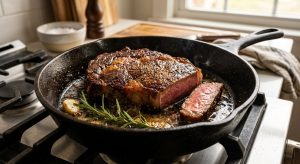
The Execution: The climax. A beautifully seared cut of beef (rich in IMP) served alongside a deeply roasted wild mushroom puree (rich in GMP) and a dusting of aged parmesan (massive glutamate). By combining all three, you achieve the 15-fold umami amplification. Serve this hot on a heavy, heat-retaining stoneware platter to keep the volatile aromas punching into the nasal cavity.
Course 4: The Palate Cleanser
The Goal: Break the savory coma, strip astringent polyphenols, and reset sensory-specific satiety.
The Execution: Do not serve another heavy dish here. Instead, serve a tart, slightly sweet cultured dairy intermezzo—like a sharp kefir or a yogurt-based sorbet with green apple. The lactic acid drops the pH, while the milk proteins actively bind to and strip away the heavy tannins and meat fats left on the tongue, completely resetting the mouth.
Course 5: The Gentle Descent
The Goal: Satisfy the “dessert stomach” via sensory contrast without inducing a sugar crash.
The Execution: A well-paced menu requires a permanently organized kitchen so you can plate and serve without frantic, last-minute scrambling. Pull your pre-staged dessert: a moderately sweet, texturally complex dish, such as a dark chocolate tart with a bitter espresso foam. The bitterness provides a final, sophisticated contrast to the sweetness, ensuring the meal ends on an elegant, balanced note rather than a cloying sugar high.
Conclusion: You Are Now the Architect of Dinner
Cooking a beautiful dish is an act of love, but structuring a multi-course menu that respects human biology is an act of sheer culinary mastery. By understanding how to manipulate pH to trigger salivary flushes, utilizing temperature gradients to shock the trigeminal nerve, and weaponizing synergistic umami to prevent palate fatigue, you elevate your cooking from mere food preparation to applied gastronomy.
Throw out your toxic, peeling pans. Invest in non-reactive, high-thermal-mass serving ware. Stop blasting your guests with salt in the first course, and start treating their sensory receptors with the strategic respect they deserve. With this scientific framework in your back pocket, you can confidently host a relaxed dinner party that leaves your guests energized, satisfied, and completely in awe of your culinary prowess. Now get into the kitchen, turn on the heat, and let’s make some magic happen.