The Reality Check: Why Your Kitchen Hates You (And How to Fix It)
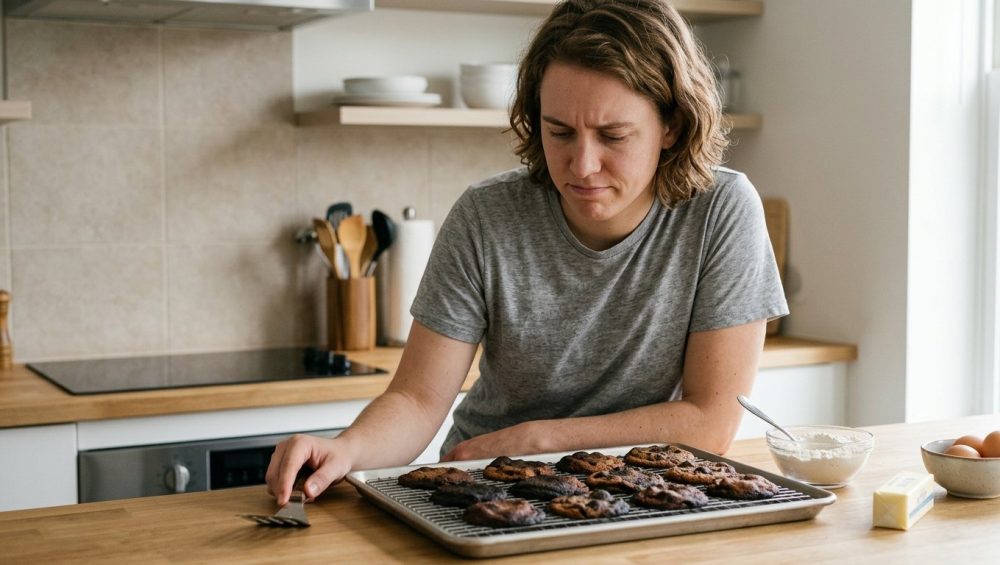
Let us get one thing straight right out of the gate: nobody is born knowing how to julienne a carrot, perfectly sear a scallop, or intuitively understand the chaotic chemistry of baking powder. If you are currently staring at a scorched pan, a deflated soufflé, or a piece of chicken that is somehow burnt on the outside and frozen on the inside, take a deep breath. You are not cursed. You are just a beginner.
I am a firm believer that absolutely anyone can produce mind-blowing food in a standard home kitchen without a culinary degree. But I also know the journey is paved with setting off the smoke detector a few too many times. I learned to cook through sheer stubbornness, trial, error, and a few minor grease fires that we do not need to tell my landlord about. Today, I survive my busy weekdays using clever, aggressive time-saving hacks so that I can afford to be an absolute, unapologetic perfectionist with my elaborate weekend culinary projects.
This masterclass is a candid, brutally honest, journalist-style dive into the most catastrophic early culinary failures I experienced—and the practical, everyday, science-backed solutions I discovered to fix them. We are stripping away the pretentious chef-speak and getting down to the raw reality of home cooking. We will tackle the heat miscalculations, the toxic cookware epidemic (don’t even get me started), the dull knife dangers, and the sheer panic of an over-salted stew. By the time you finish reading this, you will be equipped to handle any disaster your kitchen throws at you, seamlessly transforming your daily cooking from a stressful chore into kitchen artistry.
Disaster 1: The Great Pan Fire (And Other Heat Miscalculations)
When you first start cooking, the stove knobs seem to have only two settings in your mind: “Off” and “Blast Furnace.” You are hungry, you are impatient, and you assume that cranking the heat to the absolute maximum will simply make your food cook faster. This is the single fastest way to trigger a kitchen disaster.
The Myth of “High Heat Fixes Everything”
Here is a terrifying reality check: according to the National Fire Protection Association (NFPA), cooking activities are the primary cause of home structure fires, responsible for a staggering 44% of reported residential fires in the United States. Fire departments respond to an estimated 178,600 cooking fires annually, which is more than five times higher than heating fires. And if you think your modern electric stove is safer than an open gas flame, think again—electric ranges are actually more than twice as likely to cause a kitchen fire than gas stoves.
The leading culprit? Unattended cooking and heat miscalculations. When you blast a pan with high heat and turn your back to chop an onion, the cooking oil rapidly passes its smoke point and reaches its flash point. Suddenly, your Tuesday night stir-fry is a localized inferno. High heat does not fix everything; it destroys delicate proteins, turns garlic into bitter charcoal in seconds, and vaporizes the moisture needed to actually cook the center of your food.
Rescue Protocol: Burnt Food and Scorched Bottoms
So, what happens when you inevitably misjudge the heat and scorch the bottom of your soup, stew, or sauce? Your first instinct is usually to grab a spoon and frantically scrape the bottom of the pot to save it.
Stop. Do not stir.
The moment you scrape that blackened, carbonized layer off the bottom of the pan, you distribute the acrid, bitter taste of burnt carbon throughout the entire dish, ruining it completely. Instead, immediately remove the pot from the heat. Carefully pour or ladle the unburnt top layer of the food into a brand-new, clean pot. Leave the burnt layer glued to the bottom of the original pan. To salvage the rescued portion, add a splash of acid (like a teaspoon of apple cider vinegar or lemon juice) or a dollop of fat (like heavy cream or butter) to help mask any residual smoky flavor before returning it to a gentle, controlled simmer.
Disaster 2: The Toxic Pan Epidemic
If there is one hill I will absolutely die on as a home cook, it is this: I despise cheap, toxic kitchenware. I have zero patience for the flimsy, mystery-metal pans you bought for five dollars at a discount store, and I harbor a fiery hatred for peeling non-stick coatings. If you are cooking on a pan that leaves black confetti in your scrambled eggs, you are not just ruining your breakfast—you are actively poisoning yourself.
Why Cheap Non-Stick is Ruining Your Food and Health
Let us talk about PFAS (per- and polyfluoroalkyl substances), notoriously known as “forever chemicals.” These synthetic compounds are used to create the slippery PTFE (Polytetrafluoroethylene, commonly known as Teflon) coatings on cheap non-stick pans. The science surrounding these chemicals in 2025 and 2026 is damning. In late 2023, the International Agency for Research on Cancer classified PFOA—a chemical historically used in PTFE manufacturing—as a Group 1 carcinogen, meaning it is definitively carcinogenic to humans.
While many brands now slap a “PFOA-Free” label on their boxes, a recent Ecology Center study found that 79% of tested non-stick cooking pans were still coated with PTFE. The problem with PTFE is that it begins to degrade at temperatures above 260°C (500°F)—a temperature easily reached in a few minutes on a standard gas or electric burner. When it degrades, it releases toxic PFAS molecules and microplastics directly into your food and the air you breathe. The risks are so severe that Minnesota became the first U.S. state to outright ban PFAS-containing cookware in January 2025, with several other states rolling out similar bans through 2028.
Investing in Safe, Lifelong Kitchenware
You cannot achieve culinary greatness on toxic trash. The “No-Go” rule in my kitchen is simple: if the coating can be scratched off with a fork, it does not belong in my house.
Instead, you need to invest in safe, durable beginner cooking essentials. High-quality stainless steel, properly seasoned cast iron, and pure carbon steel are your best friends. Yes, there is a learning curve to cooking eggs on stainless steel (hint: it requires proper pre-heating and a sufficient layer of fat), but these materials will last longer than you will. If you absolutely must have a non-stick option for delicate fish or eggs, look for true ceramic-coated cookware manufactured entirely free of PFAS, lead, and cadmium. Surrounding yourself with the beginner kitchen tools you actually need is the first step to disaster-proofing your kitchen.
Disaster 3: The Soggy, Sad Vegetable Syndrome
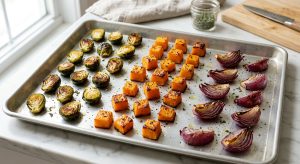
We have all been there. You want to be healthy, so you chop up a mountain of broccoli, zucchini, and bell peppers, toss them on a baking sheet, and throw them in the oven. Forty minutes later, instead of the beautifully caramelized, crispy-edged roasted vegetables you see in magazines, you pull out a tray of grey, mushy, waterlogged sadness.
The Enemy of the Roast: Overcrowding
The scientific difference between roasting and steaming comes down to airflow and moisture evaporation. Vegetables are composed mostly of water. When they hit a hot oven, that water begins to evaporate. If your vegetables are packed shoulder-to-shoulder on a baking sheet, the evaporating moisture gets trapped between them. The ambient temperature around the vegetables drops, and instead of roasting in dry heat, they end up steaming in their own collective sauna.
This is one of the most common rookie kitchen mistakes out there. You cannot cheat the laws of thermodynamics.
The Fast-Track Fix for Weekday Veggies
Because time is money on a Tuesday evening, you do not have the luxury of roasting two separate batches of vegetables. To get perfectly crispy veggies in record time, follow this fast-track fix:
First, place your empty baking sheet into the oven while it preheats. You want that metal to be screaming hot. Second, make sure your vegetables are bone-dry after washing them; use a salad spinner or a clean kitchen towel. Third, toss them in a high-smoke-point oil (like avocado oil) and season them. Finally, carefully pull the hot baking sheet from the oven and spread the vegetables out so there is visible breathing room between every single piece. The moment the vegetables hit the hot metal, the bottom layer will immediately begin to sear and caramelize. You will cut your cooking time down by 20% and achieve that perfect, restaurant-quality crunch.
Disaster 4: The Over-Salted Catastrophe
Salt is the magical mineral that makes food taste like a better version of itself. But the line between “perfectly seasoned” and “tastes like a gulp of seawater” is dangerously thin. When you accidentally dump a tablespoon of kosher salt into your simmering chili instead of a teaspoon, panic sets in.
The Science of Salt and How We Mess It Up
Human taste receptors respond to sodium chloride logarithmically, not arithmetically. This means a dish with 1.8% salt by weight tastes roughly three times saltier than one at 0.6%, even though the absolute difference is tiny. High sodium levels suppress our ability to detect umami and sweetness while dramatically amplifying bitterness, which is why an over-salted soup tastes incredibly harsh.
For decades, culinary folklore has told beginners to drop a raw, peeled potato into an over-salted soup to “absorb” the excess salt. Let me debunk this right now: the potato trick is largely a myth. Rigorous, food-science-based lab trials have proven that potatoes absorb a negligible amount of salt—less than 0.3% of the total sodium chloride by mass after 15 minutes of simmering. The potato absorbs liquid, yes, but it absorbs the salty water as a whole, meaning the concentration of salt in the remaining soup barely changes at all.
Neutralizing the Salt Bomb: Acid, Fat, and Starch
If you cannot magically extract the salt, you have to outsmart your own palate using peer-reviewed culinary physics. Here are the actual, science-backed ways to fix an over-salted disaster:
1. Dilution (The Gold Standard):
If you are making a liquid-dominant dish like a soup, stew, or sauce, you must dilute it. Add unsalted broth, tomato passata, or plain water at or near boiling (never cold, to avoid thermal shock) and let it simmer to re-equilibrate the flavors.
2. Acid Modulation:
Acid does not remove salt, but it fundamentally resets your taste receptors. Adding citric acid (like a squeeze of fresh lemon or lime juice) or acetic acid (a splash of apple cider vinegar) lowers the pH of the dish. This shifts the sodium ion activity and can reduce perceived salinity by up to 35%.
3. Fat-Binding:
Sodium ions bind weakly to lipid molecules. By stirring in an unsalted fat—like a drizzle of cold-pressed avocado oil, a splash of heavy cream, or a dollop of full-fat yogurt—you create competing binding sites. The fat coats your palate and acts as a physical barrier against the salt, reducing the free sodium available to interact with your taste buds.
4. Sweetness Calibration:
As a last resort for glazes or marinades, a tiny pinch of white or brown sugar can compete for water molecules, slightly dampening the neural firing in your salt-sensitive taste cells. Just be careful not to turn your savory dinner into dessert.
Disaster 5: The Dull Knife Danger Zone
There is an old kitchen adage that says, “A falling knife has no handle.” But the truth is, the knife sitting innocently on your cutting board is far more dangerous if it hasn’t been sharpened since the Obama administration.
Why Blunt Blades Are Your Worst Enemy
Kitchen knives are responsible for injuring an estimated 350,000 to 434,000 people annually in the United States, sending hundreds of thousands to the emergency room. A staggering 66% of these injuries occur to the fingers and thumbs, primarily resulting in severe lacerations.
The vast majority of these accidents are not caused by razor-sharp professional blades; they are caused by dull, neglected knives. When a blade is blunt, it cannot effortlessly bite into the skin of an onion or the tough exterior of a butternut squash. Instead, you are forced to apply excessive downward physical pressure. The moment that blunt edge meets resistance, it slips sideways, and all that built-up force goes directly into your guiding hand. Dull knives are the ultimate kitchen hazard.
Essential Knife Skills for the Clumsy Cook
To survive the chopping block, you must learn the “Claw Grip.” When holding the food you are cutting, tuck your fingertips inward like a bear claw, resting your knuckles against the flat side of the knife blade. The blade should glide up and down against your knuckles, making it physically impossible to slice your fingertips off.
Furthermore, stop using your expensive knife blade to scrape chopped vegetables off the cutting board and into the pan. Scraping the delicate metal edge against a hard board rolls the microscopic burr of the blade, dulling it instantly. Instead, flip the knife over and use the spine, or better yet, invest in a cheap stainless steel bench scraper. While you might think it is just for baking bread, there are countless unexpected uses for your kitchen’s unsung hero, including safely transporting massive piles of diced onions without dulling your chef’s knife.
Disaster 6: The “I Have No Time” Weekday Meltdown
We all have grand visions of simmering a complex ragù for four hours on a Wednesday evening, but the reality of modern life usually involves staring into the fridge at 7:00 PM, exhausted, hungry, and dangerously close to ordering expensive takeout for the third time this week.
Efficiency Over Perfection
Weekday cooking is not about securing a Michelin star; it is about survival, nutrition, and efficiency. Time is money, and your sanity is priceless. The biggest mistake beginners make is attempting weekend-level culinary projects on a Tuesday.
To avoid the weekday meltdown, you need an arsenal of high-impact, low-effort recipes that rely on technique rather than time. Throwing together a perfect 30-minute meal is entirely possible if you understand how to multitask. While your protein is searing in the pan, your vegetables should be roasting, and your sauce should be reducing.
Time-Saving Shortcuts That Actually Work
Efficiency in the kitchen starts before you even turn on the stove. If you are constantly rummaging through chaotic drawers looking for a spatula while your garlic burns, you are losing the battle. Establishing a permanently organized kitchen workflow is non-negotiable.
Keep your salt in a wide-mouth cellar next to the stove, not hidden in a shaker in the pantry. Keep your cooking oils in squeeze bottles for lightning-fast dispensing. Wash your cutting board and knife the absolute second you finish using them, rather than letting them crust over in the sink. And crucially, clear off your countertops. Even if you live in a tiny apartment, learning how to make your kitchen feel brighter and more spacious by removing visual clutter will dramatically lower your stress levels when you are rushing to get dinner on the table.
Disaster 7: The Entertaining Fiasco (When Science Refuses to Cooperate)
There is a special kind of panic reserved for the moment you realize the dinner you are cooking for six guests is actively falling apart. The roast is dry, the sauce has broken into a greasy, separated mess, and the dessert refuses to set.
Precision vs. Intuition
Cooking is an art, but baking and sauce-making are hard sciences. When you try to double a baking recipe by “eyeballing” the flour, or when you dump cold heavy cream into a bubbling hot wine reduction, science will violently rebel against you. Emulsions break when temperature shocks occur, and cakes collapse when leavening agents are miscalculated.
When you want to host a relaxed dinner party, the golden rule is this: never, ever cook a brand-new recipe for the first time for guests. Stick to the dishes you have already ruined in private and subsequently mastered.
Salvaging the Un-Salvageable
But what happens when you do mess up in front of an audience? You pivot.
If your beautiful hollandaise or pan sauce breaks and turns into a separated oil slick, do not throw it away. Take a tablespoon of boiling water (or heavy cream) in a clean bowl, and vigorously whisk the broken sauce into it, drop by drop. The intense mechanical shearing will force the fat and water molecules back into a stable emulsion.
If your cake cracks down the middle or gets stuck in the pan, you do not cry. You crumble it up, layer it in wine glasses with whipped cream and fresh berries, and call it a “deconstructed rustic trifle.” Confidence is 90% of the battle when you want to master the art of effortless hosting. Your guests do not know what the food was supposed to look like; they only know how it tastes and how you present it.
The Ultimate Beginner’s Toolkit for Disaster Prevention
You cannot build a house with a toy hammer, and you cannot learn to cook efficiently with a dull paring knife and a warped, toxic frying pan. The kitchen industry makes billions of dollars selling single-use gadgets—avocado slicers, strawberry hullers, garlic presses—that only serve to clutter your drawers and distract you from mastering actual technique.
Gear That Guards Against Failure
To truly disaster-proof your culinary journey, you need to ruthlessly curate your equipment. Prioritize quality over quantity. A heavy-bottomed stainless steel skillet will prevent the hot spots that scorch your food. A thick, sturdy wooden cutting board will provide a stable foundation that prevents your knife from slipping. A digital instant-read meat thermometer will completely eliminate the guesswork of cooking chicken and pork, ensuring you never serve a dry, chalky chicken breast or a dangerously undercooked roast again.
When you strip away the gimmicks and rely on high-quality, safe, and durable tools, you remove the variables that cause failures. You stop fighting your equipment and start focusing on the food.
Embracing the Chaos: Moving from Panic to Kitchen Artistry
The secret that professional chefs do not want you to know is that they still make mistakes. They still burn toast, they still over-salt stocks, and they still occasionally slice their fingers. The difference between a novice and an expert is not the absence of failure; it is the speed of the recovery.
Every kitchen disaster is simply a masterclass in disguise. When you scorch a pan, you learn the limits of heat. When you over-salt a stew, you learn the complex chemistry of flavor balancing. When you ruin a non-stick pan, you learn the value of investing in safe, lifetime-quality gear.
Do not let the fear of a ruined dinner keep you out of the kitchen. Embrace the chaos, keep a fire extinguisher handy, throw away your toxic Teflon, and remember that every burnt offering is just a stepping stone on your path to culinary greatness. Grab your apron, sharpen your knife, and get cooking.