Listen up, weekend culinary warriors. You know the exact sound I am talking about. It is that tragic, wet splat followed by the immediate, heartbreaking sizzle of a perfectly good, farm-fresh egg yolk bleeding out onto hot stainless steel. You stand there, staring down at the mangled, rubbery disaster in your skillet, mourning the loss of what was supposed to be a flawless, Instagram-worthy sunny-side-up masterpiece. You immediately blame yourself. You assume you lack the delicate wrist action or the refined culinary finesse of a professional line cook. You assume that beautiful, unbroken eggs are a luxury reserved only for people who went to culinary school.
I am here to tell you to stop being so hard on yourself. It is not your fault. You do not lack skill; you lack the proper equipment. You are actively handicapping yourself by trying to perform delicate culinary surgery with a blunt instrument. If you are still using that thick, chewed-up, melted plastic paddle you bought for three dollars in a college starter pack, we need to have a serious talk.
You cannot expect professional-level results in your home kitchen if you are using garbage gear. I firmly believe that anyone can cook like an absolute expert and produce mind-blowing food without a degree, but you have to respect the physics of cooking. Today, we are going to throw that plastic monstrosity into the trash where it belongs, and we are going to introduce you to the unsung hero of the professional kitchen: the flexible slotted fish spatula.
The Blunt Instrument: Why Your Current Spatula is Sabotaging You
Before we can appreciate the brilliant engineering of a proper metal fish turner, we must first understand why your current plastic or thick silicone spatula is your worst enemy. It all comes down to the physics of the leading edge.
Take a close look at your standard plastic turner. The front edge is likely two to three millimeters thick. When you attempt to slide that thick, blunt wall of synthetic material under a delicate, lacey fried egg, it does not glide. It acts like a snowplow. Instead of cleanly separating the coagulated egg white from the surface of the pan, the blunt edge pushes the food forward. This immense friction causes the delicate protein lattice to buckle, tear, and fold over on itself. By the time you finally force the spatula underneath the egg, the structural integrity of the yolk has been fatally compromised. You end up scrambling to fix your food before it turns into an unpresentable, rubbery mess.
You are essentially bringing a plastic spoon to a sword fight. Interestingly, the etymology of the word “spatula” dates back to the ancient Latin word spatha, which translates to a broad sword. When linguists added the diminutive suffix “-ula,” it created a word that literally means “little sword”. A true spatula is meant to be a precision blade, not a blunt club. When you try to flip a delicate piece of food with a thick plastic paddle, you are violating the very definition of the tool.
The Toxic Truth About Melting Plastic Kitchenware
If the sheer mechanical failure of plastic spatulas is not enough to convince you to upgrade, let’s talk about the sinister chemistry happening in your skillet. I have a strict, non-negotiable rule in my kitchen when it comes to toxic kitchen gear: if it melts, peels, or leaches mystery chemicals into my dinner, it is immediately banished.
In late 2024 and early 2025, a massive, peer-reviewed study published in the journal Chemosphere sent shockwaves through the culinary world when it revealed a horrifying truth about those ubiquitous black plastic spatulas. Have you ever wondered how those cheap utensils are manufactured? It turns out that the recycling industry has a massive blind spot. The carbon black pigment used to dye plastics black makes the material completely invisible to the optical sorting sensors used in standard recycling facilities. To meet the demand for black plastic, manufacturers began sourcing recycled electronic waste—specifically the crushed plastic casings from old computer monitors, televisions, and smartphones.
Because electronics are legally required to be fire-resistant, this e-waste is heavily treated with highly toxic chemical flame retardants, such as decabromodiphenyl ether. The study found that when these recycled black plastic spatulas are exposed to high cooking heat or hot oil, these dangerous flame retardants rapidly leach directly into your food.
Furthermore, the German Federal Institute for Risk Assessment (BfR) has issued stark warnings about the degradation of standard plastic utensils. They found that consuming as little as 90 micrograms of degraded plastic from cooking utensils can pose significant health risks. When you leave a cheap nylon spatula resting against the lip of a hot frying pan, it doesn’t just melt; it releases incompletely polymerized monomers and chemical byproducts like caprolactam, which can severely irritate the respiratory system and cause long-term damage to the liver and kidneys.
Every time you scrape a hot pan with a frayed, melting plastic turner, you are quite literally ruining your dinners with a garnish of microscopic plastic shards, chemical oligomers, and endocrine-disrupting flame retardants. It is absolutely inexcusable. Throw them away. Your health, and your eggs, deserve better.
The Anatomy of Precision: Engineering the Perfect Fish Spatula
Now that we have cleared the toxic plastic out of your kitchen, let’s introduce you to a tool of pure, uncompromising precision. The modern slotted fish spatula—sometimes referred to by chefs as a Pelton turner—is a masterclass in culinary engineering.
To understand its brilliance, we must look at its history. The ancestor of this tool was known as the “fish slice,” which first appeared in the dining rooms of the wealthy in the 1730s. Originally, these utensils were strictly serving pieces, meticulously crafted from pure silver or Sheffield plate. Why silver? Because the standard metals of the era, like copper or tinned iron, would chemically react with the delicate flesh of the fish and ruin its flavor. By the early 1800s, the fish slice had evolved into a standard piece of flatware, featuring wide, pierced blades designed to lift poached fish without retaining water.
Today, the modern fish spatula has evolved from a silver serving piece into a high-performance, heat-resistant cooking weapon. It is defined by four critical design pillars:
The Blade Material and Unmatched Flexibility
Unlike the rigid, unyielding nature of a wooden spoon or a thick silicone paddle, a premium fish spatula is forged from highly tempered spring steel or high-carbon stainless steel. This specific metallurgical choice gives the tool a rigid, supportive backbone near the handle, but an incredibly flexible, springy tip. When you press the spatula down into a skillet, the metal blade actually bends and conforms to the curvature of the pan. This allows the tool to sneak completely underneath the food before you apply any lifting force. It cradles the ingredient rather than shoving it.
The Razor-Thin Bevel
The leading edge of a high-quality metal fish turner is ground to a razor-thin bevel. For instance, the legendary Wüsthof Gourmet offset spatula boasts a blade that is precision-calibrated to an exact 72-degree angle. This microscopic edge acts like a scalpel, cleanly severing the microscopic bonds between the seared food and the hot metal of the pan. It does not push; it glides.
The Strategic Slots
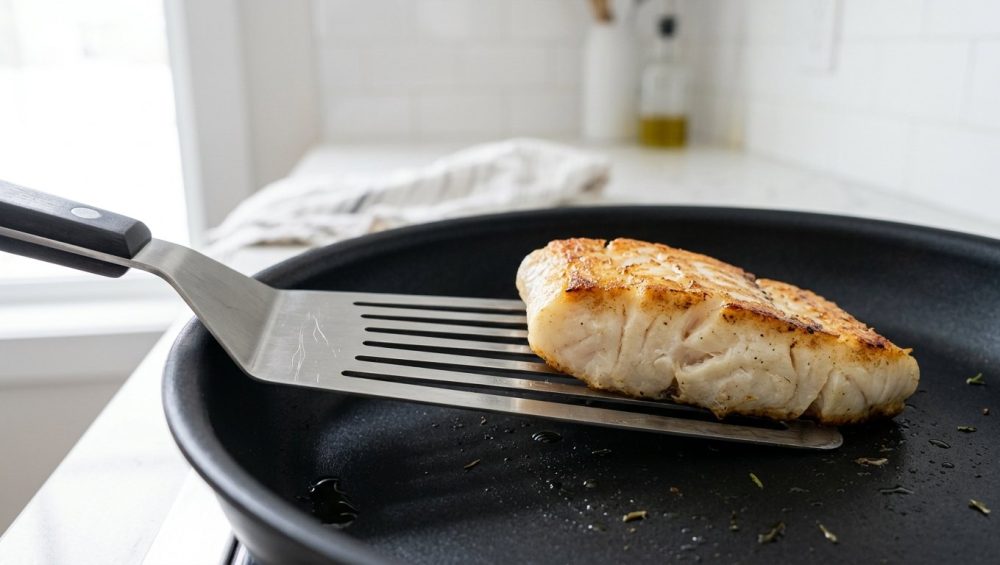
The wide, elongated slots running down the length of the blade serve two vital thermodynamic functions. First, they drastically reduce surface tension and physical drag when sliding the blade under wet, sticky batters or delicate proteins. Second, they act as an instant drainage system. When you lift a fried egg or a piece of battered cod out of a shallow fry, the excess hot oil immediately falls through the slots, ensuring your food stays impossibly crispy rather than soaking in a puddle of grease.
The Offset Angle and Asymmetry
Look at the neck of a fish spatula. You will notice that the blade is bent upward at an offset angle from the handle. This ergonomic genius allows you to keep your hand comfortably elevated above the searing heat of the pan, reducing wrist strain while keeping your knuckles safe from popping grease. Furthermore, the blade itself is usually asymmetrical. The right side of the blade is typically longer and more dramatically angled than the left side. This accommodates the natural sweeping motion of a right-handed cook approaching a pan. (If you are a southpaw, fear not—specialty left-handed fish spatulas are manufactured specifically to mirror this geometry).
Because of this flawless, purpose-driven design, the fish spatula is unequivocally one of the most important beginner cooking essentials you will ever add to your culinary arsenal.
The Masterclass: How to Flawlessly Flip a Fried Egg
If you want to permanently stop breaking your eggs and start plating breakfast like a seasoned diner chef, you need to pair your new, precision-engineered fish spatula with the correct technique. Here is your definitive, no-nonsense masterclass on flipping the perfect sunny-side-up or over-easy egg.
Step 1: The Thermal Foundation
You cannot flip an egg that is chemically welded to the pan. Place your stainless steel or carbon steel skillet over medium heat. Do not rush this step. Allow the metal to expand and the heat to distribute evenly. To ensure the pan is ready, perform the water drop test. Flick a tiny drop of water into the skillet; if it immediately shatters into a dozen tiny beads that dance and glide across the surface like mercury, your pan has achieved the Leidenfrost effect. It is completely non-stick.
Step 2: The Fat and The Crack
Add a generous pat of high-quality butter or a slick of olive oil. The moment the butter stops foaming—indicating the water content has cooked off—gently crack your room-temperature egg into the center of the pan. Let it sit undisturbed. Do not poke it. Do not agitate it. Let the heat do the work of coagulating the albumen (the egg white).
Step 3: The Approach
Once the edges of the white turn opaque and begin to crisp into a beautiful, golden-brown lace, it is time to make your move. Take your fish spatula and approach the egg from a shallow, low angle. Because the leading edge of the stainless steel is paper-thin, you will not need to apply forward force. Simply let the beveled edge slip between the hot fat and the crispy egg white.
Step 4: The Cradle and The Flip
Push the spatula completely under the egg. The wide, six-inch slotted blade will support the entire surface area of the egg, meaning the heavy, liquid yolk is fully stabilized. Lift the egg gently from the pan. The excess butter will drain through the slots. With a swift, confident flick of the wrist, turn the egg over. Because the spatula is so thin, the egg does not have to drop from a high altitude; it simply rolls off the metal and kisses the pan. Perfection. Every single time.
Conquering Culinary Intimidation: The Delicate Fish Fillet
Cooking fish at home terrifies people. Fish is expensive, and ruining a beautiful, thirty-dollar piece of wild-caught King Salmon because your spatula tore the crispy skin clean off is a genuine tragedy. The fish spatula was literally engineered to cure cooking anxiety when it comes to intimidating, expensive proteins.
When you sear a skin-on fish fillet in a hot pan, the proteins in the skin initially bind to the metal. As the fat renders and the skin crisps, it will naturally release itself from the pan. However, there is always a micro-layer of resistance. When you attempt to flip the fish with a thick silicone paddle, the blunt edge catches on the delicate skin, ripping it away from the flesh and leaving a sticky, burnt mess in your skillet.
With a flexible fish spatula, you utilize the spring steel to your advantage. You press the front third of the blade firmly down against the bottom of the pan, causing the spatula to bow and flex. As you push forward, the razor-thin bevel acts like a chisel, perfectly sliding under the crispy skin without tearing it. The elongated head of the spatula—usually measuring between 6.5 and 7.5 inches—is long enough to support the entire length of the fillet, preventing the flaky, tender meat from breaking in half as you lift it. You get a restaurant-quality, shatteringly crisp skin, and your dignity remains intact.
Beyond the Sea: The Unsung Versatility of the Slotted Turner
Despite its highly specific name, the fish spatula is the ultimate multi-tasking workhorse of the modern kitchen. Do not let the nomenclature fool you; this tool is rarely used just for seafood. In fact, many professional chefs refer to it simply as a “slotted turner” because its applications are practically endless.
The Ultimate Pancake Flipper
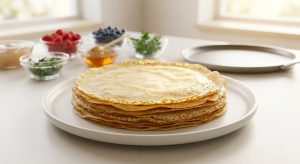
Flipping pancakes with a thick plastic spatula often results in disaster. The blunt edge pushes the raw batter on top, causing it to spill over the sides and ruin the perfectly round shape. The razor-thin edge of a fish spatula easily slips under wet, aerated batter to deliver perfectly fluffy pancakes without deflating their delicate structure. The wide base supports the entire pancake, ensuring a clean, splash-free flip.
The Smash Burger Scraper
If you are making authentic, diner-style smash burgers in a cast-iron skillet, the entire goal is to maximize the Maillard reaction by fiercely pressing the ground beef into the hot metal. This creates a deeply caramelized, flavorful crust. When it is time to flip, you need a tool that can scrape every single millimeter of that crust off the pan. A flimsy plastic spatula will just glide over the crust, leaving the best part of the burger stuck to the iron. The rigid spine and sharp bevel of a metal fish spatula allow you to scrape the pan clean, keeping the crust firmly attached to the patty.
The Baking Sheet Savior
When you pull a tray of freshly baked chocolate chip cookies out of the oven, they are soft, molten, and structurally fragile. Trying to pry them off the baking sheet with a thick turner will just mash them into doughy accordions. The fish spatula slides delicately under the cookies, lifting them cleanly without altering their shape, allowing you to transfer them to a wire cooling rack flawlessly. It is equally brilliant for lifting sticky roasted vegetables, like caramelized sweet potatoes, off a sheet pan without leaving the delicious, crispy edges behind.
The Weeknight Workhorse
When you are rushing to throw together simple weeknight dinners, this single tool can sauté vegetables, flip chicken thighs, and aggressively deglaze the pan. Because the leading edge is straight and sharp, you can use it to scrape up the fond—those deeply flavorful browned bits stuck to the bottom of the pan—while you pour in a splash of wine or broth. It acts as a spatula, a scraper, and a whisk all at once.
The Curator’s Guide to Buying Your First Fish Spatula
By now, you should be thoroughly convinced that you need a flexible fish spatula in your life. But not all tools are created equal. When shopping for your new favorite kitchen weapon, there are a few specific criteria you must look for to ensure you are getting a professional-grade instrument.
1. The Flex Test:
The magic of the spatula lies in its spring steel. If you are shopping in a physical store, press the tip of the spatula firmly against the counter. It should yield smoothly, bowing at the neck, but it should snap back to its original shape instantly the moment you release the pressure. If it feels overly stiff, it won’t glide under delicate foods. If it feels flimsy and stays bent, it is made of cheap, low-grade metal.
2. The Handle Material:
Because you will be using this tool over high heat, the handle material is crucial. Look for handles made from POM (polyoxymethylene), which is a highly durable, heat-resistant, and moisture-resistant polymer used in high-end knife handles. Alternatively, sealed hardwood handles offer a beautiful, classic aesthetic and excellent grip.
3. The Top Contenders:
If you want the absolute best value on the market, the OXO Good Grips Stainless Steel Fish Turner is a legendary piece of equipment. It features a generously sized 7-inch blade, perfect flexibility, and a soft, non-slip grip that stays comfortable even when your hands are covered in olive oil.
If you are a culinary perfectionist who appreciates German engineering, the Wüsthof Gourmet 6.5-inch Offset Slotted Spatula is a masterpiece. Forged from high-carbon stainless steel, it holds its razor-sharp 72-degree beveled edge forever and offers unparalleled precision.
For the home cook who wants the exact tool used by restaurant line cooks, the Victorinox Slotted Fish Turner with a wooden handle is an industry standard. It is lightweight, incredibly nimble, and beloved by professionals for its perfectly angled 11-inch overall profile.
And if you are looking for an absolute heirloom splurge, the Hestan Provisions 13-inch flexible fish spatula is designed to the exacting standards of Michelin-starred chefs, featuring a brushed spring steel blade and a jewelry-grade polished handle.
4. The Handedness Check:
Remember, the blade of a traditional fish spatula is asymmetrical. If you are right-handed, any standard fish spatula will work perfectly. If you are left-handed, you must specifically search for a “left-handed fish spatula.” If you try to use a standard right-handed model in your left hand, the angle of the blade will be entirely backward, and you will end up fighting the tool rather than working with it.
Maintenance and Care: Respecting the Blade
Once you have acquired your glorious new kitchen sword, you must treat it with respect. A high-quality fish spatula is a precision instrument, and it requires basic maintenance to ensure it lasts a lifetime.
First and foremost, if you purchase a model with a wooden handle, keep it far away from your dishwasher. The intense heat, harsh alkaline detergents, and prolonged moisture of a dishwasher cycle will strip the natural oils from the wood, causing the handle to dry out, warp, and eventually crack. Take thirty seconds to hand-wash your spatula in hot, soapy water, and dry it immediately with a clean towel.
If you opt for a sleek, POM-handled or all-stainless steel version, you can certainly run it through the dishwasher, but be mindful of how you load it. Do not jam the delicate, beveled edge into a crowded silverware basket where it can get dinged and bent by heavy forks and knives.
Better yet, treat this beautiful tool as functional art. Because the blade is crafted from high-carbon or stainless steel, it is highly magnetic. You can proudly hang it directly on a wall-mounted magnetic knife strip as one of your aesthetic kitchen upgrades. Not only does this keep the delicate edge safe from the chaotic jumble of a utensil drawer, but it also ensures your most versatile tool is always exactly within arm’s reach when a searing piece of salmon demands your immediate attention.
The Final Flip
Cooking should never be a source of stress. It should be a joyful, empowering process. But you cannot experience that joy if you are constantly battling against cheap, poorly designed, toxic equipment that actively ruins your food.
Stop accepting broken yolks, torn fish skin, and mangled pancakes as an inevitable part of home cooking. Your time is valuable, your ingredients are expensive, and your meals deserve respect. By upgrading from a blunt, melting plastic paddle to a precision-engineered, flexible metal fish spatula, you are not just buying a new kitchen utensil. You are buying control. You are buying confidence. And most importantly, you are buying the absolute guarantee that you will never have to eat a sad, broken, scrambled-when-it-should-have-been-fried egg ever again. Now, get back in the kitchen, heat up that skillet, and go flip something beautiful.