Listen to me. Put down the colander, step away from the sink, and let’s have a serious talk. If you are still boiling a beautiful pot of spaghetti, carrying it over to the sink, and aggressively dumping every last drop of that cloudy, boiling water straight down the drain, you are committing a culinary felony. You are literally pouring the single most valuable ingredient of your dinner into the municipal sewer system. And then you wonder why your marinara is sliding off your noodles like water off a freshly waxed car.
I get it. For decades, home cooks have been taught that pasta water is merely a useless byproduct of boiling noodles—toxic waste to be discarded as quickly as humanly possible. But professional chefs and Italian nonnas know the absolute truth: that murky, unremarkable liquid is actually “liquid gold.” It is the fundamental secret that stands between a mediocre, watery bowl of weekday carbs and a glossy, cohesive, restaurant-quality masterpiece.
As a busy professional who learned to cook through trial, error, and setting off the smoke detector more times than I care to admit, I firmly believe that time is money. Weekday meals need to be ruthlessly efficient. But saving your pasta water takes literally zero extra seconds and costs absolutely nothing. It is the ultimate zero-cost kitchen hack. Today, we are going to dive deep into the molecular biology and food physics of why your sauce refuses to cling to your pasta. We will explore the magical binding properties of starch, how to properly execute a pan emulsion, and why you need to stop sabotaging your own dinners. By the end of this masterclass, you will never look at a kitchen drain the same way again, and you will finally cure cooking anxiety when it comes to hosting Italian night.
The Anatomy of a Pasta Disaster: Why Your Sauce is Slipping
Let us paint a tragic but familiar picture. You have spent an hour simmering a beautiful, fragrant tomato sauce. You boiled your pasta, drained it bone-dry in a colander, piled the naked noodles onto a plate, and ladled a generous scoop of sauce right on top. You carry it to the dining table, take your first bite, and immediately notice the problem. The noodles are completely dry, and at the bottom of your bowl sits a sad, watery puddle of separated tomato juice and olive oil.
Why does this happen? It all comes down to the fundamental laws of chemistry, specifically the oil and water conundrum.
The Oil and Water Conundrum
At its core, almost every pasta sauce is a mixture of water-based liquids (like the juice from crushed tomatoes, wine, or stock) and fats (like olive oil, butter, guanciale fat, or heavy cream). As anyone who has ever taken a middle school science class knows, oil and water naturally and aggressively repel each other. They are immiscible. If you simply toss hot pasta with olive oil and tomato puree, the fat will coat the noodles and slide right off, taking the flavor with it and leaving a greasy pool at the bottom of your dish. To make them play nicely together, you need an emulsifier—a binding agent that forces the fat and water to hold hands and form a cohesive, suspended mixture. Without an emulsifier, you are just eating oily, wet noodles.
The Colander Crime
This brings us to the most egregious offense in the home kitchen: the aggressive use of the colander. When you dump your pasta into a strainer and shake it dry—or worse, rinse it with cold water—you are stripping the pasta of its surface starch. You are washing away the very glue that is designed by nature to bind your sauce to your food. This aggressive draining is one of the most common rookie kitchen mistakes that separates amateur home cooks from the pros. Your pasta should never be left naked and shivering in a strainer. It needs to be transferred directly from the boiling water into the simmering sauce, carrying that starchy liquid with it.
The Science of Starch Gelatinization (Nerd Alert, But Keep It Sassy)
I promised you no pretentious chef-speak, but we do need to put on our lab coats for just a minute to understand why this works. The magic of pasta water isn’t just an old wives’ tale; it is rigorously backed by modern food science.
What Actually Happens When Pasta Boils?
Pasta is primarily made of wheat flour, which is packed with complex protein networks (gluten) and dense starch granules. These starches consist of two distinct microscopic molecules: amylose (which is linear in structure) and amylopectin (which is highly branched). When you drop dried pasta into boiling salted water, the heat and hydration trigger a process known as starch gelatinization.
Recent 2025 and 2026 food science studies on durum wheat semolina have pinpointed the exact mechanics of this thermal intervention. As the water temperature hits the crucial gelatinization window—typically between 55°C and 66°C (131°F to 150°F) for standard wheat pasta—the tightly packed starch granules begin to absorb water like microscopic sponges. They swell, expand, and eventually burst open, violently releasing their amylose and amylopectin payloads directly into the surrounding water. This is exactly why your boiling pasta water turns cloudy and opaque. That cloudiness is not dirt; it is pure, unadulterated functional starch.
The Temperature and Acidity Factors
Now, you might be tempted to mess with the boiling chemistry, but let me stop you right there. Do not add vinegar or lemon juice to your pasta boiling water. Recent laboratory tests have shown that while acid lowers the starch gelatinization temperature, it also aggressively hydrolyzes the gluten network. The result? Your pasta will literally disintegrate into a mushy disaster by the time the water reaches a rolling boil. Stick to heavy amounts of salt and nothing else.
The Whole Wheat and Gluten-Free Curveballs
If you are trying to be healthy and cooking whole wheat pasta, you need to adjust your expectations. Whole wheat pasta contains upwards of 30% bran, and this extra fiber actively interferes with water-binding during the boil. It requires roughly 1.5 extra minutes of boiling time to achieve the same level of starch release and al dente texture as refined semolina. Gluten-free pastas, typically made from corn, rice, or quinoa blends, release starch much faster and have a higher tendency to turn the water into a thick, gummy sludge if overcooked. You have to watch them like a hawk. Mastering these subtle timing differences is a crucial chapter in any essential kitchen survival guide.
Emulsion Chemistry 101: The Magic Binding Agent
So, we have a pot full of cloudy, starchy water. Why does this matter for your sauce? Because that starchy water is one of the most powerful natural emulsifiers on the planet.
Surfactants vs. Mechanical Emulsifiers
In the culinary world, there are generally two ways to force oil and water to mix. The first is by using a chemical surfactant, like the lecithin found in egg yolks, which has a water-loving head and a fat-loving tail. The second is through mechanical stabilization. Starchy pasta water falls into the latter category, functioning as what physicists call a Pickering emulsion stabilizer.
How Starch Granules Build a Wall
When you add a splash of starchy pasta water to a pan containing fat (like olive oil) and liquid (like tomato juice), and you vigorously agitate it by tossing or stirring, the magic happens. The amylose chains and burst starch granules physically wedge themselves between the microscopic droplets of oil and water. They act as a mechanical barrier, literally building a microscopic wall around the oil droplets so they cannot bump into each other and coalesce back into a greasy puddle.
At the same time, the highly branched amylopectin molecules act as a powerful thickening agent. As the sauce cools slightly upon hitting your plate, the amylopectin sets, delivering a smooth, velvety, mouth-coating body without turning gummy. This dual action—mechanical blocking by amylose and thickening by amylopectin—is the foundational science behind foolproof cooking secrets that make simple dishes like Aglio e Olio or Cacio e Pepe possible.
Stabilizing the Infamous Cacio e Pepe
Let’s talk about Cacio e Pepe, a dish that strikes fear into the hearts of home cooks. It is nothing but pasta, Pecorino Romano cheese, black pepper, and pasta water. When it fails, it turns into a stringy, clumpy, greasy nightmare. According to a landmark 2024 phase behavior study published in the journal Physics of Fluids, the starch in pasta water is the sole buffer that prevents the cheese proteins from aggregating. The starch physically mitigates the protein clumping, shifts the breaking point of the sauce to a much higher temperature, and makes the emulsion vastly less sensitive to temperature control errors. Without the starchy water, the cheese fat separates instantly. With it, you get a glossy, luxurious cream.
The “No-Go” Rule on Toxic Cookware: Why Your Gear Matters
Before we get into the exact step-by-step method of marrying your pasta and sauce, we need to have a very blunt conversation about the equipment you are using. I have absolutely zero patience for cheap, toxic kitchenware, and I am a relentless advocate for banishing toxic kitchen gear from your home immediately.
The Danger of Peeling Non-Stick
If you are planning to vigorously toss acidic tomato sauce, starchy water, and hard pasta in a $15 scratched Teflon skillet, you need to stop. The mechanical action of tossing pasta and scraping the bottom of the pan to emulsify the sauce will inevitably degrade cheap non-stick coatings. You will end up scraping microscopic flakes of PFAS (forever chemicals) and mystery metals directly into your beautiful dinner. Non-stick pans are meant for gently folding omelets, not for high-heat, aggressive sauce emulsification.
The Superiority of Stainless and Carbon Steel
To properly execute a pan sauce emulsion, you need cookware that can handle intense heat, mechanical agitation, and acidic ingredients without leaching toxins. You need high-quality, fully clad stainless steel or a well-seasoned carbon steel skillet.
A heavy-bottomed, tri-ply stainless steel pan provides the precise thermal conductivity required to rapidly boil off excess water while maintaining the heat necessary to force the emulsion. Yes, people complain that stainless steel sticks, but if you understand basic thermodynamics and the Leidenfrost effect (heating the pan until a drop of water glides across the surface like a mercury bead before adding oil), sticking is never an issue. Investing in a safe, durable, heavy-duty skillet is a non-negotiable step in transforming your daily cooking from a stressful, toxic chore into an elevated culinary experience.
The Foolproof Method: How to Actually Emulsify Your Pan Sauce
We understand the science, and we have the right pans. Now, let’s execute. This is the definitive, step-by-step, bulletproof method for emulsifying any pasta sauce so it clings to your noodles with a brilliant, glossy sheen.
Step 1: The Boiling Phase (Less is Actually More)
For generations, recipe writers have blindly commanded us to “bring 4 to 6 quarts of heavily salted water to a rolling boil.” This is outdated nonsense. If you use a massive cauldron of water for a standard pound of pasta, you are severely diluting the starch concentration.
Food science legends like J. Kenji López-Alt have definitively proven that you can, and should, cook your pasta in significantly less water. Using just enough water to comfortably submerge the noodles—about 2 to 3 quarts for a pound of pasta—results in a highly concentrated, ultra-starchy liquid that is infinitely more effective at binding sauces. Plus, a smaller volume of water boils in half the time, making this a crucial time-saver for busy weeknights.
Step 2: The Extraction (Scooping the Liquid Gold)
Do not wait until the pasta is fully cooked to think about your water. When your pasta is about two minutes away from being al dente (it should still have a noticeable, chalky bite in the center), take a heat-proof measuring cup or a ladle and carefully scoop out at least one to two cups of the cloudy pasta water. Set this liquid gold aside. Only then should you drain your pasta—or better yet, use a stainless steel spider skimmer or kitchen tongs to transfer the noodles directly from the boiling pot into your waiting sauce skillet.
Step 3: The Pan Toss (Marrying the Elements)
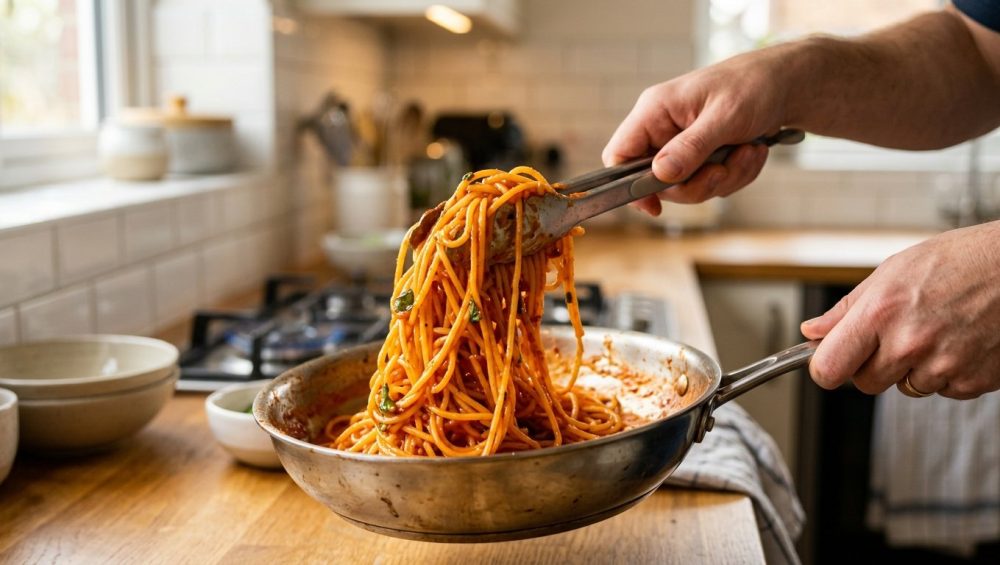
This is where the magic happens. Your skillet should contain your base sauce (whether that is marinara, browned butter, or garlic and oil) over medium-high heat. Drop the undercooked pasta directly into the skillet. Immediately pour in about half a cup of your reserved starchy water.
Now, you must agitate. Toss the pasta vigorously with tongs, or use your wrist to flip the contents of the pan. The pasta will finish its last two minutes of cooking directly in the sauce, absorbing the flavors of the liquid rather than just plain tap water. As the liquid reduces, the mechanical action of your tossing forces the starch granules to crash into the fat droplets, binding them together. If the pan looks too dry, add another splash of the starchy water. Keep tossing until the liquid reduces into a thick, glossy glaze that completely coats every single noodle. When you pull a noodle away, the sauce should cling to it desperately, leaving no watery puddle in the pan.
Advanced Starch Water Strategies for the Weekend Warrior
Once you master the basic pan toss, you can start utilizing advanced techniques to push your culinary hobby even further. Building a peaceful daily habit around smart, efficient cooking means learning how to manipulate ingredients to your advantage.
The Low-Water Concentration Technique
If you want to achieve the absolute maximum starch concentration, you can bypass the traditional boiling pot entirely. This method is often referred to as the frying pan pasta trick. You place your dried pasta flat in a wide skillet, cover it with just an inch of cold water, and turn the heat to high. As the water comes to a boil, you stir frequently to prevent sticking. Because the water volume is so incredibly low, by the time the pasta is cooked, the remaining liquid in the pan is essentially a thick starch syrup. You can then build your sauce directly in that same skillet, resulting in the most cohesive, creamy emulsion imaginable.
Storing and Freezing Pasta Water
Can you save pasta water for later? Yes and no. In professional restaurant kitchens, the pasta boiler runs all night, accumulating ridiculous amounts of starch. For the home cook, if you have leftover heavily starchy water, you can technically freeze it in ice cube trays to pop into future pan sauces.
However, be warned: 2026 laboratory analyses using gas chromatography-mass spectrometry (GC-MS) have shown that freezing can irreversibly rupture starch granules and promote lipid oxidation if stored for too long. If you freeze your pasta water, use it within a week. Otherwise, it may develop off-flavors and fail to emulsify properly upon thawing. Honestly, since you boil water every time you make pasta anyway, fresh is always best.
Troubleshooting Your Emulsions: When Good Sauces Go Bad
Even with the best intentions and the starchiest water, sometimes things go sideways. Knowing how to fix a breaking sauce on the fly is what separates a panicked amateur from a confident home cook. If you ever find yourself staring at a pan where your pasta sauce separates into a greasy, curdled mess, don’t throw it in the trash just yet.
Sauce Too Thin or Watery?
If you added too much pasta water and your sauce looks like soup, do not panic. Simply turn the heat up to medium-high and keep tossing. You need to evaporate the excess water. As the water boils off, the ratio of starch and fat will balance out, and the amylopectin will rapidly thicken the remaining liquid. Just be careful not to overcook your pasta during this reduction phase; this is exactly why we pull the pasta from the boiling pot two minutes early.
Sauce Broken and Oily?
If your sauce has split—meaning the oil has completely separated from the liquid and is pooling at the edges—you have likely suffered a temperature shock or a lack of mechanical agitation. Emulsions are fragile. If you add ice-cold heavy cream to a screaming hot pan, or if you dump a mountain of cold cheese into hot oil without enough starch buffer, the emulsion shatters.
To rescue a broken pan sauce, remove the skillet from the heat immediately. Add a fresh, vigorous splash of hot starchy pasta water (about a quarter cup) and stir like your life depends on it. The sudden influx of fresh water and starch, combined with a drop in temperature and aggressive mechanical whisking, will usually force the fat droplets back into suspension, smoothing out the sauce.
Beyond Pasta: Other Uses for “Liquid Gold”
Once you realize the thickening and emulsifying power of starchy water, you will start finding excuses to use it everywhere. It is not just for spaghetti and linguine.
Upgrading Pan Sauces for Meats
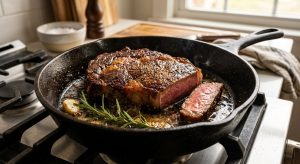
Let’s say you are executing a perfect 30-minute meal on a Tuesday night, like a beautifully pan-seared steak or skin-on chicken thighs. After you remove the meat from the skillet to rest, you are left with a pan full of rendered fat and browned fond. If you deglaze that pan with a splash of wine and then add a ladle of leftover hot pasta water, the starch will immediately bind with the meat fats. A quick whisk, and you instantly have a rich, glossy, restaurant-caliber pan gravy without having to make a flour roux or use heavy cream.
Thickening Soups and Stews
If you are making a minestrone or a brothy bean stew that feels a little too thin and watery, a cup of highly concentrated pasta water can provide exactly the right amount of body. The starch gives the broth a velvety texture that coats the spoon, elevating a simple peasant dish into something deeply comforting and luxurious.
Conclusion
Cooking incredible, mind-blowing food at home does not require a degree from Le Cordon Bleu, nor does it require expensive, pretentious ingredients. It requires an understanding of basic techniques, a refusal to use toxic garbage equipment, and a healthy respect for the ingredients you already have in your kitchen.
Pasta water is the ultimate testament to this philosophy. By simply rescuing a cup of cloudy water from the drain, you are harnessing the raw chemical power of starch to transform disparate ingredients into a unified, glossy, professional-grade sauce. It is the easiest, cheapest, and most effective culinary upgrade in existence. So the next time you make pasta, treat that boiling water with the respect it deserves. Scoop out the liquid gold, toss your noodles with authority, and watch as your weekday dinners transform into absolute perfection. Now go pour yourself a glass of wine, get out your stainless steel skillet, and show those carbs who is boss.