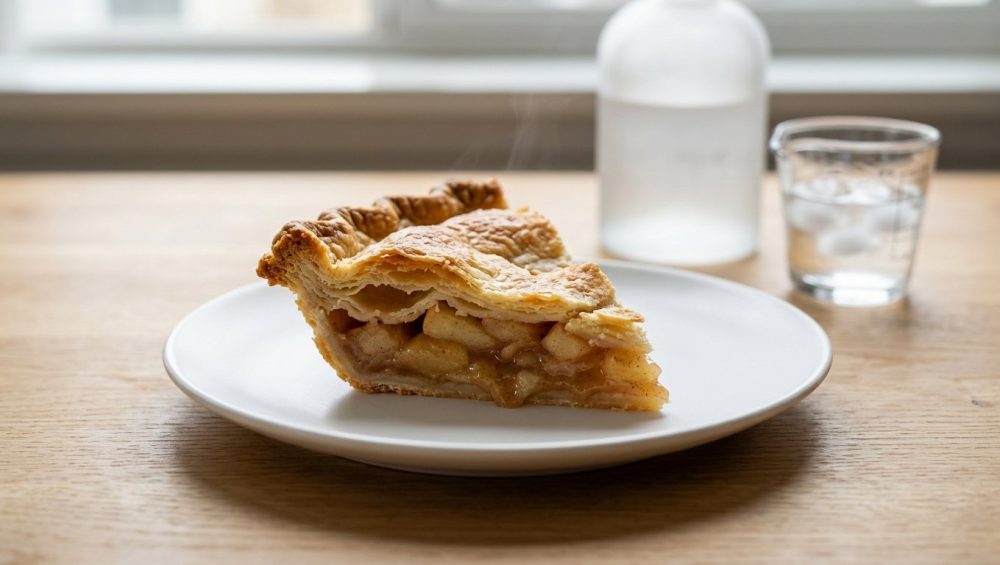
Listen, I know exactly why you are here. You have foolishly volunteered to bring the dessert to a weekend dinner party, and now you are staring at a bag of all-purpose flour with a mounting sense of existential dread. Pie crust is the ultimate culinary boogeyman. It smells your fear. If you overwork the dough by a fraction of a second, or look at it the wrong way, you end up with a dense, chewy disk that closely resembles a medieval weapon. I have been there. Before I figured out the actual food science of baking, I served pies with crusts so tough they required a steak knife and a formal apology to my guests. But you do not need a culinary degree, a pristine marble countertop, or the blessing of a French pastry chef to master this. You just need a little bit of foundational science, a refusal to use toxic kitchen gear, and a bottle of vodka. Yes, vodka.
If you are a busy home cook who relies on efficient shortcuts to survive the weekday dinner rush, the weekend is your time to slow down, embrace the process, and be an absolute perfectionist. We are going to permanently eliminate the frustration of dense, chewy pies by introducing a foolproof, science-backed trick that yields a tender, melt-in-your-mouth crust every single time. Grab a glass of wine, take a deep breath, and let us break down the fascinating chemistry of pastry dough.
The Anatomy of a Pie Crust: Why You Keep Messing It Up
Let us cut the pretentious chef-speak and get down to brass tacks. A standard pie crust only contains four ingredients: flour, fat, salt, and liquid. That is it. So why is it so obscenely difficult to get right? Because baking is chemistry, and when you blindly mix these ingredients together without understanding how they interact on a molecular level, you are setting yourself up for failure. To fix the problem, we first have to understand the components.
The Role of Flour and Fat
Flour provides the structural backbone of your pie. It gives the dough its shape and allows it to hold a heavy fruit or custard filling without collapsing. Fat, on the other hand, provides the rich flavor and the highly coveted flakiness. The type of fat you choose drastically alters the final product. Lard makes an incredibly flaky crust but lacks the sweet, nuanced dairy flavor of butter. Vegetable shortening has a high melting point, making the dough very forgiving and easy to work with, but it can leave a greasy film on the roof of your mouth. Butter is the undisputed holy grail because it is composed of roughly 80% fat and 20% water.
When you cut cold butter into your flour, you are essentially coating the flour proteins in a protective barrier of grease. As the pie goes into a hot oven, the water trapped inside those chunks of butter rapidly heats up and turns to steam. This steam expands, pushing the layers of dough apart and creating tiny, glorious pockets of air. That is literally what “flakiness” is. If the butter melts into the flour before it hits the oven—because your kitchen is too hot or you overworked it with your warm hands—you lose those pockets, and the crust becomes dense. If you want a brilliant shortcut to ensure perfectly even fat distribution without melting it, you can always grate your frozen butter on a box grater right into your mixing bowl.
The Nemesis: Gluten Formation
Here is where things go completely off the rails for most home bakers. Wheat flour contains two distinct proteins: glutenin and gliadin. Sitting dry in a bag in your pantry, they are completely harmless. But the second you introduce a liquid—specifically water—they wake up, link arms, and form a strong, elastic network called gluten. Glutenin provides elasticity (the ability of the dough to snap back), while gliadin provides extensibility (the ability to stretch).
In bread baking, gluten is your absolute best friend. It is what gives a sourdough boule its majestic chew, its open crumb, and its sturdy structure. In pie crust, however, gluten is public enemy number one. Too much gluten development results in a leathery, shrinking crust that practically bounces when you drop it. To stop this from happening, we need to minimize the amount of water that touches the flour. But there is a massive catch.
The Science of Hydration: Water is the Enemy
If water causes gluten, and gluten ruins pie crust, why not just leave the water out entirely? Well, good luck rolling out a pile of greasy flour dust.
Why Dough Needs Liquid in the First Place
Dough requires hydration to become a cohesive, workable mass. Without sufficient liquid, the dough simply will not hold together when you try to transfer it from the bowl to your counter. It will crack, crumble, and cause you to question all of your life choices as you desperately try to patch it together in the pie tin. This is the ultimate paradox of pastry baking: you need liquid to make the dough malleable, but liquid (water) creates the gluten that makes the dough tough.
The Tug-of-War: Malleability vs. Toughness
For decades, traditional recipes have tried to solve this paradox by instructing you to use “ice-cold water” and to “add it one tablespoon at a time until the dough just comes together.” They warn you to handle it as little as humanly possible. This leaves the everyday home cook in a state of sheer panic, trying to roll out a dry, crumbly mess that splits at the edges, all because they were too terrified to add that extra tablespoon of water. It is a miserable, stressful experience that makes people swear off baking entirely. We need a liquid that hydrates the dough enough to make it beautifully easy to roll, but actively refuses to trigger gluten formation.
Enter Vodka: The Ultimate Pastry Hack
In 2007, the culinary genius J. Kenji López-Alt, working for Cook’s Illustrated at the time, popularized a revolutionary solution to this exact problem: replacing half of the water in a pie dough recipe with vodka. It is, without a doubt, the greatest trick a home baker can have in their arsenal, and it completely changed the way modern food science approaches pastry hydration.
How Ethanol Sabotages Gluten
Standard vodka is typically 80 proof, which means it is composed of 40% ethanol (alcohol) and 60% water. The magic lies entirely in the molecular chemistry of ethanol. Water is a highly polar molecule, which is exactly why it interacts so aggressively with the proteins in flour to form gluten. Ethanol, however, is significantly less polar. It does not cause glutenin and gliadin proteins to bond.
When you swap out a portion of your recipe’s water for vodka, you are adding a liquid that provides the physical moisture needed to make the dough cohesive and easy to roll out, without contributing to the tough gluten network. You get a highly hydrated dough that feels almost like playdough—a dream to work with—but bakes up as tender, crisp, and flaky as if you barely used any liquid at all. It is completely foolproof.
Does the Alcohol Really Bake Off?
This is the part where nervous hosts start wringing their hands. “Will my apple pie get my grandmother drunk?” The short answer is no. The long, scientifically accurate answer is a bit more nuanced.
There is a persistent kitchen myth that 100% of alcohol “burns off” during the cooking process. This is factually incorrect. According to the USDA’s Table of Nutrient Retention Factors, the amount of alcohol retained in a dish depends heavily on the cooking method and the duration of heat exposure. If you bake a dish containing alcohol for 15 minutes, about 40% of the alcohol remains. After an hour of baking (which is a standard time for a fruit pie), roughly 25% of the alcohol is still present in the food. Even after two and a half hours of simmering or baking, 5% of the alcohol stubbornly lingers.
However, let us do the math and apply some common sense. A standard vodka pie crust recipe uses about a quarter cup (4 tablespoons) of vodka for the entire double-crust pie. That vodka is only 40% alcohol to begin with. By the time you divide that pie into eight slices, and factor in the 75% evaporation rate during an hour of baking, the amount of residual alcohol per slice is so microscopically low that it is completely negligible. It will not intoxicate anyone. Furthermore, because vodka is a neutral spirit, it leaves absolutely zero flavor behind. You get all of the structural benefits with none of the boozy consequences.
The Masterclass: Step-by-Step Vodka Pie Crust
Let us put the science into practice. I am going to walk you through exactly how to execute this, step-by-step. No fluff, no skipping vital details. If you follow this method to the letter, you will have a perfect crust that rivals any professional bakery.
Gathering Your Arsenal
First, evaluate your equipment. I actively avoid cheap glass baking pans for pies when possible, as they can heat unevenly and often lack the intense, immediate heat-conducting power of metal needed to crisp the bottom crust. Invest in a heavy-duty aluminum or aluminized steel pie tin. Alternatively, a high-quality, thick ceramic dish works wonders for prolonged, even heat distribution.
Next, accuracy is everything. If you are still scooping your flour directly out of the bag with a measuring cup, you are packing up to 30% more flour into your recipe than the author intended. This ruins the delicate hydration ratio immediately, rendering the vodka trick useless because you have introduced too much dry matter. You absolutely need a digital kitchen scale. Weighing your ingredients in grams is the only way to guarantee consistent success.
The “Keep It Cold” Mandate
Temperature control is non-negotiable. The butter must be freezing cold. The water must have actual ice cubes floating in it. The vodka should be pulled directly from the freezer (because of its high alcohol content, it will not freeze solid). Why? Because if the butter warms up and melts into the flour before it hits the oven, you lose those distinct pockets of fat that create flakiness. Heat also accelerates gluten formation. Keep everything as cold as possible. If your kitchen is hot, chill your mixing bowl and your pre-measured flour in the refrigerator for 15 minutes before you start.
Mixing the Dough: The Food Processor vs. Hand Blending
You can certainly make pie dough by hand using a traditional pastry blender, but a food processor is vastly superior because it is faster and keeps the ingredients colder by eliminating the heat from your hands.
- Combine 2 ½ cups (315g) of all-purpose flour, 1 teaspoon of kosher salt, and 1 tablespoon of granulated sugar in the bowl of your food processor. Pulse twice just to combine the dry ingredients.
- Add 2 sticks (226g) of freezing cold, cubed unsalted butter. Pulse the machine about 10 to 12 times until the butter is broken down into pieces the size of small peas. Do not over-process; you want visible, distinct chunks of butter remaining in the flour.
- Transfer the dry mixture to a large, chilled mixing bowl. Why? Because adding liquid while the food processor is running often leads to aggressive over-mixing and tough dough. Use a sturdy stainless steel bench scraper or a stiff rubber spatula to fold the dough by hand from here on out.
The Vodka-Water Ratio
In a small bowl, combine ¼ cup (4 tablespoons) of ice water and ¼ cup (4 tablespoons) of freezer-cold vodka. Sprinkle this liquid mixture evenly over your flour and butter. Use your spatula to gently fold and press the mixture together. Thanks to the vodka, you are adding a full ½ cup of liquid, which is significantly more than traditional recipes allow. The dough will look slightly wetter and shaggier than you might be used to, but it will come together quickly without turning into a dry, crumbly mess.
Divide the dough in half, form each half into a flat disk, wrap them tightly in plastic wrap, and place them in the refrigerator. Chilling your dough for at least one hour (or up to two days) is mandatory. It allows the flour to fully hydrate, cools the butter back down, and gives the newly formed gluten strands time to relax, preventing the crust from shrinking aggressively in the oven.
Rolling and Troubleshooting
When you are ready to roll, lightly flour your work surface. Take out one disk of dough and let it sit at room temperature for about 5 minutes just to take the chill off. Because of the high hydration from the vodka, it should roll out smoothly without cracking aggressively at the edges. I highly recommend using a wooden French rolling pin (the tapered kind without handles). It gives you infinitely more tactile feedback and control over the thickness of the dough.
Roll from the center outward, applying even pressure, and rotating the dough a quarter-turn after every few rolls to ensure it is not sticking to the counter. If the dough starts to feel too soft, or the butter looks greasy and begins to smear, stop immediately. Transfer the dough to a baking sheet and slide it into the fridge for 10 minutes to firm back up. Never fight warm dough; you will lose every time.
Frequently Asked Questions (and Excuses)
I can hear the complaints and the “what ifs” already. Let us address them before you try to outsmart the recipe.
Can I Use Bourbon, Gin, or Tequila?
Technically, yes. The science of ethanol inhibiting gluten formation works regardless of the specific spirit, as long as it is high proof (around 40% ABV). However, unlike vodka, dark liquors and botanical spirits will leave a distinct flavor behind in your baked crust. If you are making a rich pecan pie or a spiced apple pie, a splash of bourbon in the crust is a phenomenal flavor pairing. If you are making a delicate lemon meringue or a subtle berry tart, bourbon or gin will completely ruin the flavor profile. Stick to vodka for a purely neutral, all-purpose crust.
What If I Can’t Use Alcohol at All?
If you cannot use alcohol for dietary, religious, or personal reasons, you cannot simply swap the vodka for more water. Doing so will result in a tough, over-hydrated, high-gluten mess. Instead, you must revert to a traditional recipe: use only ice water, start with just 3 to 4 tablespoons, and accept that the dough will be slightly more difficult to roll out. You can also experiment with substituting a small portion of the water with a liquid fat, like buttermilk or sour cream, which tenderizes the dough slightly, though it will not be quite as flaky as the vodka method.
Does the Crust Taste Like a Martini?
No. Not even slightly. Vodka is odorless and flavorless by design. Once the pie is baked, even the most sensitive palate will not be able to detect a hint of alcohol. It serves a purely structural and chemical purpose.
Beyond the Crust: Elevating Your Weekend Baking Game
You have mastered the dough. Now, let us make sure you do not ruin it during the baking process.
Blind Baking Like a Pro
If you are making a custard pie (like pumpkin) or a cream pie, you must blind bake the crust first. This means baking the crust completely without the filling so the bottom does not turn into a soggy, undercooked sponge.
Dock the bottom of the chilled crust with a fork to allow steam to escape. Line the inside tightly with crumpled parchment paper, and fill it to the brim with ceramic pie weights (or dried beans). Bake at 400°F (200°C) for 15 to 20 minutes, then carefully remove the weights and bake for another 5 to 10 minutes until the bottom is deeply golden brown. Be incredibly careful with your equipment here. I have seen cheap, thin metal pans twist under high heat, and I have received countless panicked messages about warped baking sheets ruining the structural integrity of a delicate tart shell. Worse, sudden temperature changes when blind baking can lead to shattering glass baking dishes. Stick to high-quality, heavy-gauge metal or thermally shock-resistant ceramics to ensure your beautiful crust survives the oven.
Storing and Freezing Dough
This highly hydrated vodka dough freezes beautifully. Because you are already taking the time to measure ingredients and make a mess in the kitchen, you should always make a double batch. Wrap the extra disks tightly in two layers of plastic wrap and place them in a heavy-duty freezer bag to prevent freezer burn. They will keep perfectly for up to three months. When you are ready to bake, let the dough thaw overnight in the refrigerator—never on the warm counter, or you will melt the butter and ruin the flakiness you worked so hard to build.
Conclusion
There is absolutely no badge of honor in suffering through a frustrating, overly complicated recipe just because it is the “traditional” way. Professional-level results in a standard home kitchen come from working smarter, understanding the underlying chemistry of your ingredients, and refusing to settle for mediocre techniques. The vodka pie crust trick is the ultimate testament to this philosophy. It takes the fear out of baking, outsmarts the gluten, and guarantees a melt-in-your-mouth, shatteringly flaky crust every single time.
Stop letting a mixture of flour and butter intimidate you. You are in control of your kitchen. So pour yourself a glass of wine, grab that bottle of vodka from the freezer, and go show that pie who is boss. You have absolutely got this.