Welcome to the Kitchen: Pour a Drink and Take a Breath
Let us get one thing straight right out of the gate: you do not need a fancy culinary degree, a starched white chef’s coat, or a kitchen that looks like a sterile operating room to make mind-blowing, restaurant-quality food. I am the Sassy Sous-Chef, and I am here to tell you that “kitchen artistry” has been hopelessly overcomplicated by pretentious food bros with expensive tweezers and too much free time.
If you are a new cook, you are probably standing in your kitchen right now, staring at a raw chicken and a pile of vegetables, feeling a mild sense of dread. I get it. I learned to cook through sheer stubbornness, trial, error, and setting off my apartment’s smoke detector so many times that my neighbors thought I was running a highly localized firework testing facility. But here is the secret the culinary elite do not want you to know: cooking is just applied physics, basic chemistry, and a whole lot of tasting as you go.
This masterclass is your definitive, no-nonsense guide to transforming your daily cooking from a stressful chore into an absolute art form. We are going to cover the mindset shifts, the gear you need (and the toxic garbage you need to throw away immediately), the knife skills that will keep your digits attached to your hands, and the flavor-balancing secrets that are currently dominating the culinary world. Grab a glass of wine, tie your apron, and let us get to work.
The Mindset Shift: From Chore to Canvas
Before we even touch a stove, we need to fix your brain. Most new cooks approach the kitchen with a deep-seated fear of failure. You view a recipe as a legally binding contract, and any deviation from the text is a breach that will result in inedible garbage. Stop that.
A recipe is not a rigid set of rules; it is a polite suggestion. It is a roadmap, but you are the one driving the car, and you are fully allowed to take a scenic detour. The first step to kitchen artistry is embracing the fact that you are going to mess up. You will burn the garlic. You will over-salt the soup. You will attempt to flip a pancake and end up with a scrambled dough-pile. Congratulations, you are officially a cook. The smoke detector is just a loud, obnoxious kitchen timer.
Interestingly enough, if you are feeling the urge to get into the kitchen, you are part of a massive cultural shift. According to the Food Industry Association’s 2025 research, Gen Z actually enjoys cooking more than any other generation, with 51% stating they “like” or “love” meal preparation. The 2025-2026 HelloFresh State of Home Cooking Report also highlights that a staggering 93% of adults plan to cook at least as much as they did last year. People are realizing that cooking at home is not only a survival skill but a creative outlet.
Kitchen artistry is about intuition. It is about smelling the onions as they turn from pungent to sweet and caramelized. It is about listening to the sound of a steak searing—it should sound like aggressive radio static, not a sad, wet sizzle. Once you shift your mindset from “I have to feed myself so I don’t die” to “I am going to create something delicious out of raw materials,” the entire game changes.
The Gear Reality Check: Burn Your Cheap Teflon
We need to have a serious talk about your equipment. As your resident culinary cheerleader and tough-love advocate, I have a strict “No-Go” rule when it comes to toxic, cheap kitchenware. If you are currently cooking on a $15 non-stick pan that you bought at a discount store four years ago, and the black coating is actively flaking off into your scrambled eggs, I need you to march into your kitchen and throw it in the trash. Right now. I will wait.
The PFAS Problem and the 2026 Regulations
I absolutely despise cheap, mystery-metal pans coated in toxic chemicals. For decades, the cookware industry has been pumping out non-stick pans coated with PFAS (per- and polyfluoroalkyl substances), commonly known as “forever chemicals.” These chemicals do not break down in the environment or in your body.
Thankfully, the law is finally catching up to the science. As of January 1, 2026, states like Colorado have enacted outright bans on the sale and distribution of cookware containing intentionally added PFAS. Minnesota and Maine have also led the charge with similar sweeping bans that kicked in between 2025 and 2026, and a massive patchwork of state regulations is currently forcing manufacturers to completely overhaul how they make pans.
Why does this matter for your kitchen artistry? Because you cannot create a masterpiece on a toxic, degrading canvas. Cheap non-stick pans cannot handle high heat without releasing harmful fumes, which means you can never get a proper, crusty sear on a piece of meat or a beautiful char on your vegetables. You are fundamentally limiting your culinary potential while simultaneously ingesting flaking polymer.
The Holy Trinity of Safe, Durable Cookware
You do not need a 14-piece cookware set. You need three good pans. If you invest in high-quality, safe materials, they will outlive you.
- The Carbon Steel Skillet: This is the darling of professional restaurant kitchens and my absolute favorite pan for the home cook. It is lighter than cast iron but behaves similarly. Once properly seasoned (which just means baking thin layers of oil onto it until it turns black and slick), it becomes naturally non-stick. You can blast it with high heat to sear a steak, and it transitions beautifully from the stovetop to the oven.
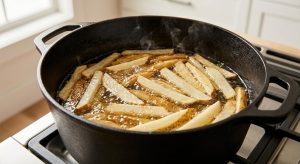
- The Enameled Cast Iron Dutch Oven: If you want to make soups, braises, stews, or bake crusty artisan bread, you need a heavy-bottomed Dutch oven. The thick cast iron retains heat brilliantly, and the enamel coating means you do not have to worry about acidic ingredients (like tomatoes) stripping the seasoning.
- The Stainless Steel Sauté Pan (Fully Clad): For pan sauces, sautéing vegetables, and achieving the perfect golden-brown crust on chicken thighs, stainless steel is your best friend. Look for “tri-ply” or “fully clad,” which means there is a core of aluminum sandwiched between the steel for even heat distribution. Yes, food will stick to it if you use it wrong. The secret? Heat the pan before adding the oil, and let the food cook undisturbed until it naturally releases from the metal.
Knife Skills for Mere Mortals
Let us move on to the most dangerous, yet most empowering, tool in your kitchen: the chef’s knife. If you want to cook like a pro, you have to prep like a pro.
Before we get into technique, let us look at the grim reality of kitchen accidents. According to the U.S. Consumer Product Safety Commission, an estimated 350,000 to 434,000 people end up in the emergency room every single year due to knife-related injuries, and a whopping 66% of those injuries occur to the fingers. The vast majority of these bloody disasters are caused by two things: using a dull knife, and using terrible technique.
A dull knife requires you to apply excessive force to push through the food. When that dull blade inevitably slips off the skin of an onion, all that force sends the blade directly into your hand. Always keep your knives sharp. A sharp knife does the work for you; it glides through a tomato without crushing it.
The Only Knives You Actually Need
Much like the pots and pans, you do not need that massive wooden block containing 15 identical, serrated knives that you will never use. You need exactly three knives to achieve kitchen artistry:
- An 8-inch Chef’s Knife: This is your workhorse. You will use this for 90% of your cutting, chopping, and slicing. Invest in a good one, hold it in your hand to make sure it feels balanced, and treat it like a prized possession. Do not put it in the dishwasher. Ever.
- A Paring Knife: A small, 3-to-4-inch blade for delicate tasks like peeling apples, mincing garlic, or hulling strawberries.
- A Serrated Bread Knife: Essential for slicing through crusty sourdough without crushing the crumb, and surprisingly great for slicing delicate tomatoes.
The Claw Grip: Keeping Your Digits Attached
The reason 66% of knife injuries happen to the fingers is because people leave their fingertips exposed on the cutting board like little sausages waiting to be chopped.
To chop safely and efficiently, you must master the “Claw Grip.” The hand that is holding the food (your non-dominant hand) should be curled into a claw. Tuck your fingertips completely under your knuckles. Your thumb should be tucked safely behind the fingers, pushing the food forward. When you bring the knife down, the flat side of the blade should rest gently against your protruding knuckles. Your knuckles act as a physical shield and a guide for the blade. As long as the blade does not rise above your knuckles, it is physically impossible to cut your fingers.
The Anatomy of a Proper Chop
Do not hold the knife handle with your fist like you are starring in a slasher film. You want to “choke up” on the blade. Grip the handle with your bottom three fingers, and pinch the actual metal base of the blade (the heel) between your thumb and index finger. This pinch grip gives you infinitely more control and stability.
When cutting, do not use a harsh, vertical chopping motion that sounds like a lumberjack hacking at a tree. A chef’s knife has a curved blade for a reason. Keep the tip of the knife resting on the cutting board, and use a fluid, circular rocking motion—pushing the blade down and forward through the food, then pulling the heel back up while the tip remains anchored. It is a smooth, rhythmic dance. Once you master this, you will prep vegetables in half the time, and they will all be uniform in size, which means they will cook evenly. Uniformity is the first visual hallmark of a kitchen artist.
The Art of Flavor Balancing: Why Your Food Tastes “Blah”
You have prepped your ingredients safely, you are cooking in a high-quality, non-toxic pan, and yet, you sit down to eat your creation, and it just tastes… boring. It is flat. It is missing something.
This is where the true artistry happens. Cooking is not just about applying heat; it is about balancing the core elements of human taste. Professional chefs do not have magical palates; they just understand how to manipulate Salt, Fat, Acid, and Umami. When a dish is failing, it is almost always because one of these elements is missing or out of balance.
Salt: The Great Enhancer
Salt is not just a flavor; it is a flavor amplifier. It reduces bitterness and enhances sweetness and savory notes. Most new cooks drastically under-salt their food out of a misplaced fear of sodium. If you are cooking from scratch using whole ingredients, you actually need to add a significant amount of salt just to make the food taste like itself.
Do not use iodized table salt for cooking; it tastes metallic and the grains are too fine, making it easy to over-salt. Use Kosher salt. The large, flaky crystals are easy to pinch between your fingers, giving you tactile control over your seasoning. You should be salting your food at every stage of the cooking process, not just at the end. Salt the onions when they hit the pan to draw out their moisture. Salt the meat hours before cooking to allow it to penetrate the muscle fibers.
Acid: The Brightness Factor
If your soup, stew, or sauce tastes heavy, muddy, or dull, you probably do not need more salt. You need acid. Acid is the most underutilized tool in the home cook’s arsenal. It cuts through richness, cleanses the palate, and makes all the other flavors pop.
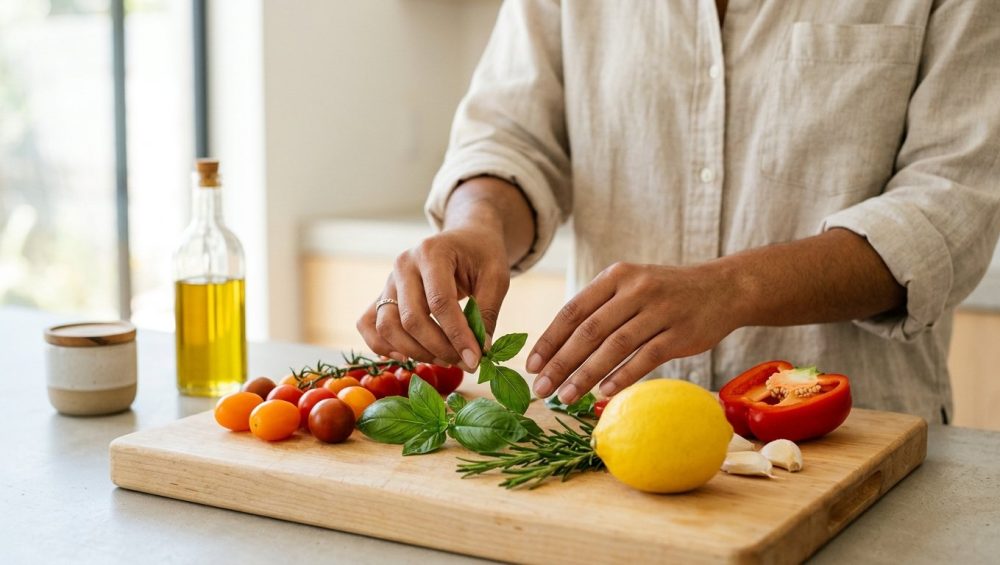
A squeeze of fresh lemon juice over a rich, buttery pan sauce right before serving will elevate it from “heavy” to “vibrant.” A splash of apple cider vinegar in a long-simmered chili will wake up the earthy spices. Keep an arsenal of acids on hand: lemons, limes, balsamic vinegar, rice vinegar, and white wine vinegar. When a dish feels like it is missing that elusive “something,” it is almost always acid.
Fat: The Flavor Carrier
Fat is what carries flavor compounds across your tongue. It provides a luxurious mouthfeel and helps achieve browning (the Maillard reaction), which is where complex savory flavors are born. Do not fear fat. Use a high-quality extra virgin olive oil for finishing dishes, butter for pan sauces, and neutral oils (like avocado or grapeseed) for high-heat searing.
Umami: The Secret Weapon of 2026
If you really want to elevate your kitchen artistry, you need to master umami. Umami is the elusive “fifth taste”—a deep, savory, meaty, mouth-watering richness. According to 2025 and 2026 food science and flavor trend reports, umami-driven formulations are absolutely dominating the culinary landscape, outshining basic sweet and salty profiles.
In 2025, TikTok saw explosive year-over-year growth for umami-heavy recipes, with viral trends like Japanese-style mushroom wafu pasta, doenjang (fermented soybean paste) salmon, and umami-enhanced bean burgers. The global flavor industry is currently obsessed with balancing heat, acidity, and umami depth using ingredients like lion’s mane mushrooms, miso, and complex fermented sauces.
How do you harness this at home? Start building a pantry of “umami bombs.” Keep a tube of tomato paste in the fridge (and caramelize it in the pan before adding liquids to unlock its savory depth). Buy a jar of white miso paste and whisk a spoonful into your salad dressings or pan sauces. Keep soy sauce, Worcestershire sauce, and fish sauce on hand. A few drops of fish sauce in a beef stew will not make it taste like fish; it will just make it taste impossibly rich and meaty. Mushrooms—particularly porcini, shiitake, and the highly-trending lion’s mane—are pure, natural umami powerhouses. By layering these umami elements, you create a dish that leaves people craving another bite without knowing exactly why.
Weekday Hacks vs. Weekend Masterpieces
As a busy professional, I operate on a very strict philosophy: Time is Money. Your approach to kitchen artistry must adapt to the reality of your schedule. You cannot treat a Tuesday night dinner after a grueling nine-hour workday the same way you treat a lazy Sunday afternoon.
The 2025 data shows that while people want to cook at home, they are exhausted. A significant portion of Millennials and Gen Z heavily rely on shortcuts, meal prep kits, and ready-to-eat components during the week just to survive. There is zero shame in this. Artistry does not require suffering.
The Weekday Hustle: Ruthless Efficiency
During the week, your goal is maximum flavor with minimum active time. This is where you deploy your smart shortcuts.
- Embrace the Rotisserie Chicken: Buying a pre-cooked rotisserie chicken is not cheating; it is a tactical advantage. Shred the meat for tacos, toss it into a quick stir-fry, or simmer it with some boxed broth, fresh ginger, and noodles for a 15-minute restorative soup.
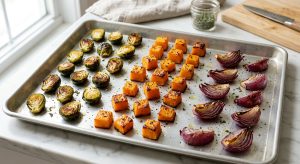
- The Sheet Pan Masterpiece: Chop your vegetables, toss them with olive oil, salt, and smoked paprika, throw some sausage or chicken thighs on the same pan, and roast it at 400°F (200°C). The oven does the work, the flavors meld, and you only have one pan to clean.
- Pre-Chopped is Okay: If buying pre-minced garlic or pre-chopped butternut squash is the difference between you cooking a meal or ordering expensive, lukewarm takeout, buy the pre-chopped vegetables.
The Weekend Project: Culinary Meditation
The weekend is when you get to slow down and truly flex your artistic muscles. This is when cooking transitions from a necessary hustle into a form of culinary meditation.
According to market research, older generations like Baby Boomers still highly value the “Sunday Dinner” ritual, cooking from scratch to create a shared experience. Younger generations are adopting this too, using weekends to tackle viral, complex recipes they saw online.
Use your Saturdays and Sundays to learn a new, intimidating technique. Bake a loaf of crusty artisan bread. Spend three hours slowly braising short ribs in red wine until the meat collapses at the touch of a fork. Make pasta dough from scratch using just flour and eggs, and feel the satisfaction of rolling it through a machine. These weekend projects build your culinary intuition and teach you the patience required for true artistry.
Plating Like a Pro (Without the Tweezers)
We eat with our eyes first. You can cook the most perfectly balanced, umami-rich, perfectly seasoned dish in the world, but if you slop it onto a paper plate so it looks like a pile of beige mush, your brain will preemptively decide it is unappetizing.
You do not need to construct towering, gravity-defying architectural structures on your plate, nor do you need to use micro-tweezers to carefully place a single edible flower petal on a scallop. Plating artistry for the home cook is about simple, elegant visual psychology.
The Rule of Odds
In art and photography, there is a concept called the “Rule of Odds.” The human eye finds odd numbers more visually appealing and dynamic than even numbers. If you are serving scallops, meatballs, or shrimp, plate them in threes or fives, never twos or fours. It creates a sense of movement and natural imperfection on the plate.
Color and Texture Contrast
A plate of mashed potatoes, boiled chicken breast, and cauliflower is a visual nightmare. It is a monochromatic sea of sadness. You need contrast.
If your main components are brown or beige (like a beautifully seared steak or a rich stew), you must introduce a pop of vibrant color. A handful of bright green, freshly chopped parsley or cilantro scattered over the top completely changes the visual dynamic.
Texture is equally important. If you have a bowl of creamy, velvety butternut squash soup, it needs a garnish that provides a visual and textural crunch—toasted pumpkin seeds, a drizzle of chili oil, or crispy fried sage leaves. The contrast makes the dish look intentional.
The Humble “Swoosh”
Want to look like a Michelin-starred chef with exactly two seconds of effort? Master the swoosh. If you are serving a puree, a thick sauce, or mashed potatoes, place a dollop slightly off-center on a wide, flat plate. Take the back of a large spoon, press it gently into the center of the dollop, and drag it in a quick, confident semi-circle. Place your protein or vegetables nestled into the curve of the swoosh. It utilizes negative space (leaving parts of the plate empty so the food stands out) and immediately elevates a basic Tuesday night dinner into an event.
The Pantry Foundation: Stocking Your Secret Arsenal
A painter is only as good as their paints. To be a kitchen artist, you need to curate a pantry that allows you to add spontaneous bursts of flavor to any dish. You do not need to buy the entire grocery store, but you do need to invest in a few high-quality secret weapons.
The Oils and Vinegars
Stop cooking with the same bottle of cheap olive oil you use for everything. You need two types of olive oil. First, a neutral, everyday cooking oil (like a light olive oil, avocado oil, or grapeseed oil) for sautéing and roasting. Second, you need a “finishing oil”—a high-quality, cold-pressed Extra Virgin Olive Oil that tastes grassy, peppery, and rich. You never heat this oil. You drizzle it over a finished pasta dish, a bowl of soup, or a fresh tomato salad right before serving.
Likewise, keep a good balsamic vinegar, a sharp white wine vinegar, and a rice vinegar on hand to deploy that crucial acid balance we talked about earlier.
The Flavor Bombs
We already discussed the umami powerhouses (miso, soy sauce, tomato paste, fish sauce). But you should also stock up on flavor-packed condiments that do the heavy lifting for you.
- Dijon Mustard: The ultimate emulsifier for homemade vinaigrettes and a sharp, tangy addition to pan sauces.
- Chili Crisp: The trendy, spicy, crunchy, oil-based condiment that makes everything from fried eggs to roasted broccoli taste incredible.
- Capers and Olives: Briny, salty little bombs that cut through rich, fatty dishes.
The Crunch Factor
Texture is the unsung hero of a great meal. Keep a stash of toasted nuts (walnuts, almonds, pine nuts), sesame seeds, and panko breadcrumbs. Toasting panko in a little butter and garlic, then sprinkling it over a baked macaroni and cheese or a simple pasta dish, provides a shatteringly crisp texture that makes the dish feel professionally crafted.
And finally, finishing salt. Flaky sea salt (like Maldon) is not for cooking; it is for garnishing. A pinch of those delicate, pyramid-shaped salt crystals over a sliced steak or a freshly baked chocolate chip cookie provides a sudden, sharp pop of flavor and a delightful crunch that elevates the entire bite.
Conclusion: Your Kitchen, Your Rules
The journey to becoming a kitchen artist does not happen overnight. It is a process of unlearning your fear of the stove, ditching the toxic pans that are holding you back, and learning to trust your own senses.
Remember, the greatest chefs in the world started exactly where you are: staring at an onion, wondering how not to chop off their thumb. Cooking is a fundamental human act. It is how we care for ourselves, how we show love to our friends and family, and how we bring a little bit of joy into the chaos of daily life.
So, sharpen that chef’s knife, preheat that carbon steel pan, and throw out the rigid rulebook. Taste your food. Add a squeeze of lemon. Sprinkle some flaky salt. Make a mess. The kitchen is your canvas now, and you are entirely capable of creating a masterpiece. Now, pour yourself another splash of wine and go make something delicious. You have got this.