We all know the drill. You invite a few friends over for a cozy weekend brunch, promising them a wholesome, comforting, and aesthetically pleasing morning meal. You decide to make a massive batch of oatmeal because it seems foolproof. You dump a mountain of rolled oats into a pot, drown them in milk, crank up the heat, and stir frantically while trying to simultaneously brew coffee and gossip. Twenty minutes later, you look down into your pot and realize you haven’t cooked breakfast—you’ve manufactured a vat of industrial-grade spackle.
Listen, nobody wants to eat drywall paste for breakfast.
I don’t have a pretentious culinary degree, but I do know how to read food science, and I have learned through plenty of trial, error, and ruined mornings that cooking is just applied chemistry. If you want to stop eating mushy oatmeal on a hurried Tuesday morning, you need to understand exactly what is happening inside that pot. Time is money during the workweek, and we rely on clever shortcuts to get out the door. But on the weekend? We have the time to be absolute perfectionists.
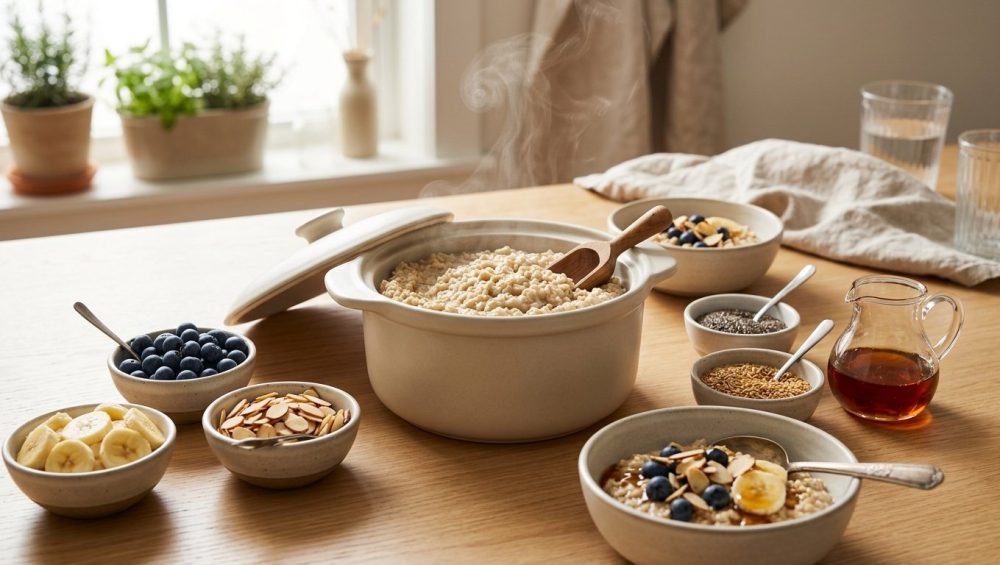
Today, we are going to completely deconstruct the humble oat. We are going to explore the rigorous colloid physics that dictate its texture, banish the toxic kitchen gear that is secretly ruining your food, and teach you how to build a stunning, interactive Mindful Oatmeal Bar. By the end of this masterclass, you will be equipped to batch-cook perfectly textured oats for a crowd and host a stress-free morning gathering that looks like it belongs in a glossy lifestyle magazine.
The Anatomy of a Breakfast Disaster: Why Your Oats Turn to Spackle
To master the oat, you must first respect the starch. The fundamental science behind why your oatmeal gets gummy is rooted in colloid physics, starch gelatinization kinetics, and convective heat transfer [1]. When you blindly boil oats, you are triggering a cascade of chemical reactions that, if left unchecked, will inevitably result in a gluey, unappetizing mess.
The Colloid Physics of Breakfast
Oats are packed with complex carbohydrates, specifically starches, which are tightly bundled inside microscopic granules. These starches are primarily made up of two molecules: amylose and amylopectin. Amylose is a long, straight-chain molecule that loves to link up and form a rigid, structured gel. Amylopectin is a highly branched molecule that absorbs water and creates a sticky, viscous texture.
When you expose raw oats to heat and water, a process called starch gelatinization occurs. The heat breaks down the intermolecular bonds of the starch molecules in the presence of water, allowing the hydrogen bonding sites to engage more water. The granules swell up like tiny water balloons. If you treat them gently, they become tender and toothsome. If you abuse them with excessive heat or aggressive agitation, those tiny balloons burst, violently releasing all of their amylose and amylopectin directly into the cooking liquid. The result? A pot of glue.
The Beta-Glucan Betrayal
Beyond basic starches, rolled oats contain between 4% and 7% beta-glucan, a highly soluble fiber that hydrates and swells dramatically as the temperature rises [1]. According to recent food physics breakdowns, between 60°C and 75°C, these beta-glucan molecules uncoil and form hydrogen bonds with the water, increasing the viscosity of your oatmeal exponentially [1].
At 85°C, the dissolved starch granules fully swell and begin leaching amylose, further thickening the matrix [1]. This incredibly viscous layer traps the steam bubbles that are being generated at the hot bottom of your pot. Unlike boiling a pot of plain water, where steam bubbles rise freely and burst harmlessly at the surface, an oat slurry creates a semi-rigid foam “skin” with a surface tension of around 42 mN/m (compared to water’s 72 mN/m) [1].
When the internal pressure of the trapped steam exceeds the elasticity of this starchy skin—which typically happens right around 92°C to 95°C—the foam ruptures catastrophically, ejecting hot, sticky gel all over your pristine stovetop [1]. This is why your oatmeal always seems to boil over the second you turn your back.
The Wooden Spoon Myth
It is incredibly tempting—almost meditative—to stand at the stove and stir your oatmeal as if you are nurturing a delicate risotto [2]. Put down the wooden spoon and step away from the pot.
Over-stirring is the single biggest mistake people make when cooking oats [2, 3]. Every time you drag a spoon through that simmering pot, you are physically creating friction that tears the swollen starch granules apart, unleashing a flood of sticky amylopectin into the water. It is the exact same principle that explains why your rice is gummy when you fuss with it too much. A few quick stirs at the very beginning to distribute the oats are fine, but after that, you must let the pot simmer undisturbed.
The Four Cardinal Sins of Cooking Oats
Even if you manage to keep your hands off the spoon, there are several other rookie mistakes that will guarantee a gummy, disappointing breakfast. Let’s break down the four cardinal sins of oatmeal preparation.
Sin 1: The Wrong Grain for the Job
The breakfast aisle is a confusing landscape of instant, quick-cooking, rolled, and steel-cut oats [4]. If you are batch-cooking for a crowd, you must choose your weapon wisely.
Instant and quick-cooking oats have been pre-cooked, dried, and rolled paper-thin [4]. They are designed to absorb liquid instantaneously. If you try to batch-cook quick oats for a brunch party, they will disintegrate into a homogenous mush before your guests even arrive.
For a Mindful Oatmeal Bar, you must use Old-Fashioned Rolled Oats or Steel-Cut Oats. Rolled oats are steamed and flattened, allowing them to cook in about 10 to 15 minutes while retaining their structural integrity [4, 6]. Steel-cut oats are the whole oat groat chopped into pieces with steel blades; they take significantly longer to cook (up to 45 minutes) but offer an incredible, chewy, nutty texture that holds up flawlessly in a chafing dish or slow cooker [4, 6].
Sin 2: The Milk Myth
There is a pervasive culinary myth that cooking your oats in milk will yield a creamier, more luxurious breakfast [6]. This is entirely false. Cooking oats directly in milk is a one-way ticket to Glue City.
Milk contains proteins, fats, and natural sugars (lactose). When subjected to prolonged simmering, the proteins in the milk coagulate, and the sugars begin to scorch on the bottom of the pot [3]. Furthermore, the fat in the milk coats the oats, interfering with proper, even hydration, which forces you to cook them longer, thereby releasing more starch. Always cook your oats in pure, filtered water [3, 6]. You achieve that rich, creamy texture by stirring in a splash of heavy cream, whole milk, or high-quality oat milk directly into the individual bowls right before serving [6].
Sin 3: The Aggressive Rolling Boil
Oats demand a gentle, nurturing environment, not a violent jacuzzi. As established by the FDA Bacteriological Analytical Manual thermal mapping trials in 2022, the single most reliable action to prevent boilovers and gumminess is reducing the heat to low immediately after the first visible bubble breaks the surface [1]. Do not wait for the foam to rise or the steam to intensify [1]. You want a bare, lazy simmer. High heat accelerates the starch release, thickening the mixture entirely too fast and scorching the bottom layer [2].
Sin 4: Drowning Your Oats
The standard recipe on the back of the cardboard oat canister usually dictates a 1:2 ratio of oats to water, and some recipes even push it to 1:4. According to recent food physics studies, a 1:4 ratio is a recipe for a watery, over-extracted mess [1]. The ideal, scientifically backed ratio for perfectly toothsome old-fashioned rolled oats is 1:3.25 [1]. This provides exactly enough hydration to soften the grain without leaving excess liquid that encourages the starches to spread and congeal.
Mastering the Batch-Cook: Techniques for Absolute Perfection
Now that we know what not to do, let’s talk about how to execute a flawless batch of oatmeal for your weekend brunch. Learning how to fix your food when a technique goes sideways is the hallmark of a competent home cook, but it is far better to simply get it right the first time.
The Dry Toasting Method
If you want to elevate your oatmeal from a bland Tuesday morning chore to a Michelin-star-worthy weekend centerpiece, you must toast your oats before you boil them [3].
Place a heavy-bottomed skillet over medium heat and add a small knob of grass-fed butter or a drizzle of virgin coconut oil. Toss in your dry, raw oats and toast them for about three to five minutes, stirring frequently, until they smell deeply nutty and fragrant—almost like popcorn [3]. This crucial step initiates the Maillard reaction, developing complex, roasted flavor compounds. More importantly, it coats the exterior of the oat in fat, creating a microscopic physical barrier that slows down water absorption and prevents the starches from leaching out too quickly [3].
The Thermal Hold and Vessel Selection
When batch-cooking for a crowd, your biggest enemy is time. As cooked oatmeal sits, it continues to absorb ambient moisture and stiffen [1]. To combat this, you need to rely on the thermal mass of your cooking and serving vessels.
This brings us to my absolute, non-negotiable rule: The No-Go Rule on Toxic Gear. I have zero patience for cheap, peeling non-stick pots that flake mystery chemicals, PFAS, or “ceramic-like” coatings into your food. If you are serving a crowd from a scratched-up Teflon slow cooker you bought for ten bucks in 2012, we cannot be friends. You are actively ruining your food and exposing your loved ones to toxic compounds. Throw it away. Today.
For batch-cooking and holding hot cereals, you must invest in heavy-bottomed, multi-clad stainless steel, enameled cast iron, or high-fired, lead-free stoneware. These materials offer superior thermal mass, meaning they absorb heat slowly and release it evenly. A heavy-bottomed pot (at least 3.5-quart capacity for 1 cup of dry oats) reduces surface tension-driven boilovers by a staggering 73% compared to thin-walled, cheap aluminum pots [1].
To hold the oatmeal for your guests, transfer the cooked oats into a pre-warmed enameled cast iron Dutch oven or a high-quality ceramic slow cooker set to the “Warm” setting. If the oats begin to tighten up after thirty minutes, simply fold in a splash of hot water or warm milk to loosen the matrix [2].
The Mindful Oatmeal Bar: Entertaining Without the Stress
The entire point of hosting a weekend gathering is to actually spend time with your friends, not to be chained to the stove frantically flipping individual pancakes while everyone else drinks mimosas in the living room. The logistical strategies used to host a relaxed dinner party apply directly to a morning brunch station. A Mindful Oatmeal Bar is the ultimate hack for effortless entertaining because 90% of the work is done before anyone knocks on your door.
Understanding the 2026 Brunch Trends
To curate a truly memorable experience, we need to look at what people actually want to eat right now. According to the latest 2026 market research, the global brunch restaurant market is valued at a staggering $32.4 billion, driven heavily by health-conscious menu innovations and experiential dining [9].
Breakfast is undergoing a massive behavioral shift [4]. Consumers, particularly Gen Z and Millennials, are prioritizing functional nutrition—specifically high protein and high fiber—while simultaneously demanding premium, indulgent experiences on the weekends [3, 6, 7]. The “snackification” of the morning meal is dominating weekdays, but on Saturdays and Sundays, people crave a leisurely, communal event [3, 4].
Furthermore, data from 2025 and 2026 reveals a massive surge in globally-focused flavors and interactive menu “flights” [8]. We are moving far beyond brown sugar and raisins. Today’s brunch guests are looking for savory oats topped with gochujang, kimchi, and poached eggs, or sweet variations featuring matcha, ashwagandha, and hot spicy maple syrup [1, 8]. Setting up a customizable bar caters to all of these trends simultaneously, allowing the health-conscious guest to load up on chia seeds and protein, while the indulgent guest can drown their bowl in heavy cream and chocolate.
The Essential Gear for the Perfect Station
While you don’t need a professional kitchen, investing in a few essential kitchen tools for beginners will make this process seamless and visually stunning.
You need a beautiful, heavy-mass serving vessel for the oats themselves (as discussed, enameled cast iron is king). You will also need a collection of matching, lead-free ceramic ramekins or small glass bowls for the toppings. Ditch the plastic serving spoons; use polished stainless steel or solid wood ladles and tongs.
When setting the table, think about traffic flow. Place the bowls first, followed by the hot oatmeal vessel, then the liquid mix-ins (pitchers of whole milk, oat milk, and heavy cream), and finally, arrange the toppings in a logical progression from sweet to savory to crunchy.
The Toppings Matrix: Curating an Interactive Experience
The success of your Mindful Oatmeal Bar relies entirely on the diversity and quality of your toppings. Oatmeal is a blank canvas [6]; it is your job to provide the paint. You want to hit every single flavor profile and textural note: sweet, savory, salty, acidic, soft, and crunchy.
Prep Work and Efficiency
Do not leave your prep work for Sunday morning. You can chop all of your nuts, wash your fruits, and mix your spices on Friday night. When prepping large quantities of walnuts, pecans, or almonds, you can effortlessly transfer your chopped walnuts from the cutting board to the serving ramekins using a stainless steel bench scraper. This protects your expensive chef’s knife from dulling against the board and speeds up your workflow tremendously.
The Fruit Element
Fresh fruit is non-negotiable, but it requires careful handling. There is nothing more tragic than prepping a beautiful fruit spread only to watch your berries mold so fast because you washed them three days early and left them in a damp plastic container. Store your unwashed berries in a glass container lined with dry paper towels, and only wash them in a gentle water-and-vinegar bath the morning of the brunch.
Offer a mix of fresh and cooked fruits. A quick, warm berry compote (just frozen blueberries simmered with a squeeze of lemon juice and a pinch of salt) adds a luxurious, saucy element that fresh fruit cannot provide.
The Sweeteners
Maple syrup and high-quality honey are standard, but you should also offer a dry sweetener for texture. We have all experienced the sheer panic when our brown sugar turns to stone right before a brunch party. To prevent this, store your brown sugar in an airtight glass jar with a soaked terracotta disk, which regulates the ambient humidity and keeps the sugar perfectly soft and scoopable.
To lean into the 2026 trends, offer a “Spicy Maple” option [1]. Simply infuse a cup of real maple syrup with a dash of cayenne pepper or a spoonful of chili crisp. The sweet heat pairs incredibly well with the earthy flavor of the oats.
The Crunch Factor
Texture is the antidote to palate fatigue. No matter how perfectly you cooked your oats, eating a bowl of uniform softness is boring. You need aggressive crunch.
Toasted coconut flakes, cacao nibs, roasted pumpkin seeds, and chopped pistachios are excellent. But the crown jewel of the crunch station is a high-quality, homemade granola. If you are wondering why your granola won’t clump into those massive, satisfying clusters, the secret is pressing the warm granola firmly into the baking sheet immediately after it comes out of the oven, and letting it cool completely undisturbed before breaking it apart.
The Savory Station
Do not ignore the savory oatmeal trend [2, 9]. For guests who prefer umami over sugar, provide a dedicated savory quadrant on your bar. Offer a bowl of sharp, aged cheddar cheese, crumbled feta, scallions, crispy bacon bits, and a bottle of high-quality toasted sesame oil.
If you want to go above and beyond, keep a skillet warm on the stove to offer freshly fried or poached eggs to order [9]. The rich, runny yolk of a poached egg mixing with the starchy, buttery oats and a dash of hot sauce is a culinary revelation that will completely change how your guests view breakfast.
Bringing It All Together
Cooking a mind-blowing weekend brunch does not require a culinary degree, a brigade of sous-chefs, or a panic attack over a boiling pot of mush. It simply requires a basic respect for the science of the ingredients, a refusal to use toxic, substandard equipment, and a little bit of mindful planning.
By understanding the exact temperature thresholds of beta-glucans, dry-toasting your oats to trigger the Maillard reaction, utilizing the thermal mass of enameled cast iron, and curating an interactive toppings matrix that leans into modern culinary trends, you elevate a humble bowl of porridge into an absolute masterpiece.
So this weekend, leave the chaotic pancake flipping to the amateurs. Put down the wooden spoon, step away from the simmering pot, and pour yourself a mimosa. You’ve earned it, and your oatmeal is going to be absolutely perfect.