The Reality of Host Fatigue (And Why We Need Science to Fix It)
Listen up. You have invited eight people over for a dinner party. You spent three days meticulously sourcing ingredients, prepping components, and curating the perfect ambient playlist. Now your guests have arrived, they are happily drinking your expensive Pinot Noir in the living room, and where are you? You are sweating profusely over a violently boiling pot, frantically whisking a broken butter sauce while your once-vibrant asparagus turns into a sad, olive-green mush. We have all been there. It is the classic, soul-crushing reality of host fatigue.
I have absolutely zero patience for pretentious chef-speak, but I have even less patience for bad science in the home kitchen. You do not need a culinary degree from a fancy French institute to pull off a flawless, multi-course meal. You just need to understand basic thermodynamics, enzymatic degradation, and the frankly terrifying reality of toxic cookware. If you are serious about breaking your takeout habit and stepping up your game, you need to learn how to manage time and temperature.
Today, we are tearing down the curtain on how professional kitchens hold food for hours without ruining it, and how you can replicate these exact methodologies in your standard home kitchen. This is a definitive masterclass on thermal holding, batch preservation, and executing a mindful, communal gathering without losing your mind. Grab a glass of wine, take a deep breath, and let’s get into the science.
The Thermodynamics of Hot Holding and the Danger Zone
If you want to orchestrate a seamless dinner party, you must respect the laws of thermodynamics and microbiology. The biggest mistake weekend culinary hobbyists make is trying to cook every single component of a meal simultaneously, right as the guests sit down. Professional kitchens do not do this. They rely on highly calculated thermodynamic food holding strategies to keep pre-cooked components perfectly hot and safe until the exact moment of plating.
Understanding the FDA Temperature Danger Zone
The science behind hot holding is rooted firmly in food safety. The USDA and the FDA Food Code explicitly define the “Danger Zone” as the temperature range between 40°F and 140°F (or 41°F to 135°F in some commercial guidelines). Within this specific thermal window, pathogenic bacteria such as Salmonella, Escherichia coli (E. coli), Clostridium perfringens, and Listeria monocytogenes thrive. In fact, under ideal conditions within this zone, bacterial populations can double every twenty minutes.
To prevent your dinner party from becoming a localized public health crisis, you must hold hot food at or above 140°F (60°C). At this temperature, bacterial growth is completely inhibited. Technically speaking, food held at 140°F can remain safe to eat indefinitely. However, while microbiology gives you a pass, gastronomy does not. Holding food at high temperatures for extended periods leads to moisture loss, textural degradation, and overcooking.
The Two-Hour and Four-Hour Rules
Because maintaining exact holding temperatures in a home kitchen can be challenging without commercial warming cabinets, you need to memorize the FDA’s time-temperature rules:
- The Four-Hour Rule: If a hot dish drops below 140°F but remains above 40°F, it must be consumed or thrown in the trash within four hours. After four hours, the bacterial load reaches unsafe levels, and no amount of reheating will destroy the heat-stable toxins produced by certain bacteria.
- The Two-Hour Rule: If your food drops into the Danger Zone, but you catch it within two hours, you can safely reset the clock. You must rapidly reheat the food to an internal temperature of 165°F (74°C) for at least 15 seconds to eliminate vegetative bacteria, after which you can return it to a safe 140°F holding state.
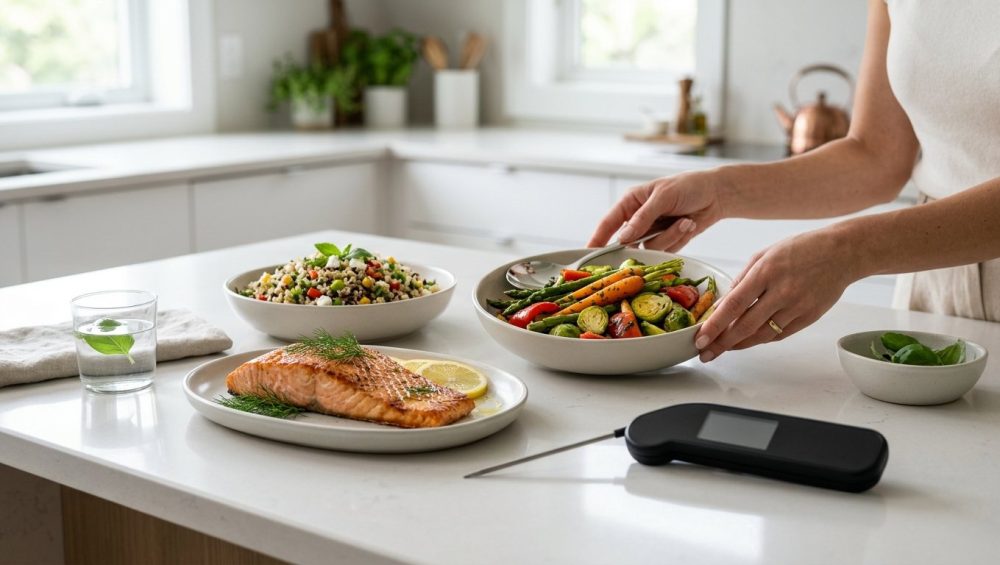
To execute this at home, utilize your oven’s “Keep Warm” setting (usually calibrated between 150°F and 170°F). Use a digital probe thermometer to monitor the internal temperature of your roasts and casseroles. Never use a slow cooker or a chafing dish to reheat cold food; these tools are designed strictly for maintaining the temperature of already-hot food, and attempting to heat cold food in them will trap your meal in the Danger Zone for hours.
The Non-Toxic Mandate: Stop Poisoning Your Guests
Before we go any further into the culinary techniques of batch preservation, we need to have a brutally honest conversation about the equipment you are using to hold your food. I have a strict, non-negotiable “No-Go” rule when it comes to toxic kitchenware. If you are holding an acidic tomato stew at 150°F for three hours in a scratched, peeling, mystery-metal non-stick pan, you are actively serving your friends a side dish of industrial chemicals.
The Terrifying Reality of PFAS and PTFE
The convenience of non-stick cookware is a modern illusion built on a foundation of toxic “forever chemicals.” According to a comprehensive 2025 study conducted by the Ecology Center, a staggering 79% of tested non-stick cooking pans were coated with PTFE (polytetrafluoroethylene), best known by the brand name Teflon. PTFE is a polymer form of PFAS (per- and polyfluoroalkyl substances)—a class of over 14,000 synthetic compounds linked to kidney cancer, testicular cancer, thyroid disease, hormone disruption, and weakened immune responses.
When these pans are heated, or worse, when their delicate coatings are inevitably scratched by a metal utensil, they release millions of microplastics and nanoplastics directly into your food. Furthermore, heating PTFE past certain thresholds releases toxic fumes that cause a condition literally documented in medical literature as “Teflon flu.” Many brands deceptively label their pans as “PFOA-free,” which simply means they swapped out one banned forever chemical for a newer, less-studied PFAS compound (a practice known as “regrettable substitution”).
Superior Materials and Thermal Mass
Throw out your peeling non-stick garbage. You cannot orchestrate a high-level dinner party with gear that belongs in a hazardous waste bin. Instead, you must rely on materials that offer safety, durability, and high specific heat capacity.
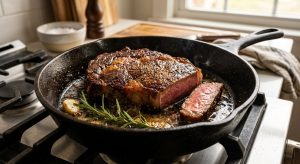
Cast iron, enameled cast iron, heavy-gauge stainless steel, and tempered glass are the only acceptable vessels for hot holding. These materials excel at optimizing thermal mass. Because cast iron is dense and heavy, it absorbs a massive amount of heat energy and radiates it incredibly slowly. If you preheat a heavy cast-iron Dutch oven, fill it with a hot braise, and place it on a wooden trivet at the dining table, its thermal mass will keep the food well above the 140°F safety threshold for an extended period, entirely without an active heat source.
Even if you are just starting out, investing in safe, high-quality beginner kitchen tools made of stainless steel or cast iron is the single most important upgrade you can make for both your cooking performance and your long-term health.
Enzymatic Preservation: Saving Vegetables from the Mush Zone
One of the most common complaints I hear from home cooks is that their side dishes degrade while they are waiting for the main course to finish. You perfectly steam a batch of vibrant green beans, you put them in a covered dish to keep them warm, and twenty minutes later, they have transformed into a drab, gray, mushy disaster. This is not a failure of your cooking skills; it is a failure to manage enzymatic activity.
The Chemistry of Enzymatic Degradation
Every time you harvest, slice, or peel a vegetable, you are initiating a cascade of chemical reactions driven by naturally occurring enzymes. These proteins act as biological catalysts, accelerating the breakdown of the plant’s cellular structure.
- Polyphenol Oxidase (PPO): This is the enzyme responsible for enzymatic browning. When plant cells are ruptured, PPO oxidizes phenolic compounds into quinones, which then polymerize into dark brown pigments called melanins. This is why your sliced potatoes and apples turn brown when exposed to oxygen.
- Pectinase: This enzyme breaks down pectin, the structural carbohydrate that holds plant cell walls together, leading to unwanted softening and a mushy texture.
- Peroxidase and Lipoxygenase: These enzymes contribute to the rapid deterioration of color, flavor, and nutritional value (particularly the destruction of Vitamin C) in cooked vegetables.
The Blanching and Shocking Protocol
To halt enzymatic degradation, you must permanently denature these proteins through a precise application of heat known as blanching. Blanching is the absolute backbone of vegetable preservation. By plunging vegetables into a massive volume of violently boiling water (212°F) for a very short, calculated duration (e.g., 2 to 3 minutes for asparagus or green beans), the intense heat unfolds the three-dimensional structure of the enzyme proteins, rendering them permanently inactive.
However, heat is a double-edged sword. If you leave those blanched vegetables in a hot holding environment (like a 150°F oven), the residual heat will continue to break down the cellular structure, leading to overcooked mush.
To eliminate bottlenecks during service, you must separate the cooking process from the holding process. Immediately after blanching, transfer the vegetables into an ice water bath. This rapid drop in temperature instantly stops the cooking process, locking in the bright, chlorophyll-driven color and the crisp structural integrity. You can hold these blanched, shocked vegetables cold in your refrigerator for up to 24 hours. Right before your guests are ready to eat, you simply flash-reheat them by tossing them in a hot skillet with a little butter or olive oil for sixty seconds.
pH Manipulation for Color Stability
If you are dealing with ingredients highly susceptible to PPO browning (like artichokes or potatoes), you can manipulate the pH of their holding environment. Enzymes are highly sensitive to acidity. By submerging peeled vegetables in water spiked with a strong acid—such as fresh lemon juice or white vinegar—you lower the pH of the surface environment below 4.0, which effectively paralyzes the polyphenol oxidase enzyme and keeps your produce pristine until you are ready to cook.
Hydrocolloids: The Secret to Bulletproof Sauces
There is nothing quite as panic-inducing as watching a beautiful, glossy pan sauce suddenly break into a greasy, separated mess of oil and water just as you are carrying it to the dining table. Emulsions are inherently unstable; oil and water fundamentally want to separate. When subjected to the prolonged heat of a holding environment, traditional starch-thickened or butter-mounted sauces lose their structural integrity.
The Limitations of Traditional Starches
Historically, home cooks have relied on flour (roux) or cornstarch slurries to thicken sauces. While these work fine for immediate consumption, they are terrible for hot holding. Starches degrade over time when exposed to heat and acidity. If you hold a cornstarch-thickened gravy at 150°F, the starch granules will eventually break down, releasing the trapped water in a process called syneresis (weeping). Furthermore, traditional starches do not handle freeze-thaw cycles well, making them useless for advanced batch prep.
Enter Xanthan Gum: The Modern Stabilizer
To solve this, we turn to modern hydrocolloids, specifically Xanthan Gum. Don’t let the scientific name intimidate you; xanthan gum is a completely natural polysaccharide produced through the fermentation of simple sugars by the bacteria Xanthomonas campestris (the same type of bacteria found naturally on leafy greens like cabbage).
Xanthan gum is a highly versatile hydrocolloid that creates incredible viscosity at remarkably low concentrations—typically requiring only 0.1% to 0.5% by weight to stabilize a liquid. It is the secret weapon used by high-end caterers and professional chefs to prevent emulsion breakage during extended service.
What makes xanthan gum vastly superior to flour or cornstarch is its extreme thermal and pH stability. Once hydrated, a xanthan-stabilized sauce can be boiled, frozen, thawed, and held at 150°F for hours without ever breaking, weeping, or separating.
The Magic of Pseudoplasticity
Furthermore, xanthan gum exhibits a fascinating rheological property known as pseudoplasticity, or “shear-thinning.” At rest, the long polymer chains of the hydrocolloid tangle together, creating a thick, highly stable network that traps oil droplets and prevents them from rising to the surface. However, when physical force (shear) is applied—such as stirring, pouring, or chewing—the polymer chains temporarily align, causing the sauce to instantly thin out and flow beautifully. The moment the pouring stops, the chains re-tangle, and the sauce clings perfectly to the food.
To use xanthan gum successfully, you must disperse it properly to avoid clumping. Never dump a spoonful directly into a hot liquid. Instead, use an immersion blender to create a vortex in your sauce, and lightly dust the xanthan gum powder into the spinning liquid, allowing the mechanical shear to hydrate the particles evenly.
Low-Waste Cross-Utilization: Working Smarter, Not Harder
I firmly believe that time is your most valuable asset in the kitchen. Weekdays are about survival, efficiency, and clever hacks, which buys you the luxury of time to be an absolute perfectionist during your weekend dinner parties. To achieve this balance, you must embrace the concept of low-waste cross-utilization and batch preservation.
The Economics of Batch Prep
When you are meticulously prepping for a Saturday night gathering, you are generating a massive amount of high-quality byproducts. Do not throw away your onion skins, carrot peels, celery tops, or the backbone of the chicken you just spatchcocked. Toss all of these scraps into a large stainless steel stockpot, cover them with water, and let them simmer quietly on the back burner while you work. By the end of your prep session, you will have yielded quarts of deeply flavorful, rich, homemade stock.
You can hot-hold this stock for use in your dinner party sauces, but more importantly, you can rapidly cool the excess and freeze it in silicone cubes. This cross-utilization ensures zero waste and sets you up for success later in the week.
Preserving Components for Weekday Survival
The effort you put into a communal gathering should pay dividends for days. If you are roasting a large piece of meat, intentionally cook 30% more than you need. If you are making a xanthan-stabilized vinaigrette, make a triple batch.
Because you have utilized proper thermal holding techniques, your leftover proteins haven’t been dried out by overcooking. Because you used hydrocolloids, your sauces will survive the refrigerator without breaking. You can repurpose these perfectly executed components to quickly assemble simple meals for mindful moments on a chaotic Tuesday night. A leftover slice of perfectly medium-rare roast beef, paired with a vibrant, acid-stable chimichurri and some cold-held blanched green beans, instantly transforms into a gourmet weekday salad that takes exactly three minutes to plate.
The Master Execution Plan: A Step-by-Step Staging Guide
Understanding the science is only half the battle; executing it under pressure is where the real magic happens. To prevent host fatigue, you must treat your dinner party like a military operation. You need a rigid timeline that relies heavily on staging and thermal holding.
If you want to host a relaxed dinner party without breaking a sweat, follow this chronological blueprint:
T-Minus 24 Hours: The Cold Prep Phase
Do not leave anything to the day-of that can be done a day early.
- Sauce Production: Build your gravies, vinaigrettes, and purees. Stabilize them with 0.2% xanthan gum. Store them in airtight containers in the refrigerator. They will not break.
- Vegetable Blanching: Trim, peel, and blanch all green vegetables in heavily salted, boiling water. Shock them instantly in an ice bath. Dry them thoroughly and store them in the crisper drawer.
- Protein Maturation: Dry-brine your meats. Season them aggressively with kosher salt and leave them uncovered on a wire rack in the fridge. This draws out surface moisture and guarantees a spectacular, Maillard-reaction crust when seared.
T-Minus 4 Hours: The Active Cooking Phase
This is when you turn on the heat.
- Roast your large proteins.
- Bake your complex casseroles or gratins.
- Once these items reach their target internal cooking temperatures, remove them from the high heat.
T-Minus 1 Hour: The Thermal Holding Phase
Your guests are arriving soon. It is time to transition from cooking to holding.
- Set your oven to its lowest setting (usually around 150°F to 170°F).
- Transfer your cooked proteins to heavy cast-iron or stainless steel platters. Cover them loosely with foil to prevent moisture loss, and place them in the warm oven. The thermal mass of the heavy pans will stabilize the temperature, keeping the meat perfectly hot and safe, well above the 140°F Danger Zone threshold, while allowing the muscle fibers to relax and retain their juices.
- Transfer your pre-made sauces to small saucepans and hold them on the stove over the lowest possible heat, or in a warm water bath.
T-Minus 15 Minutes: The Flash Execution
Your guests are seated. You have a glass of wine in your hand. You are completely calm.
- Pull the hot, rested proteins from the holding oven and carry them to the table.
- Toss your cold, blanched vegetables into a screaming hot skillet with a knob of butter for exactly sixty seconds—just long enough to heat them through without restarting the enzymatic breakdown process.
- Pour your flawlessly emulsified, hydrocolloid-stabilized sauces into warmed gravy boats.
- Serve.
Troubleshooting the Inevitable Disasters
Even with a flawless scientific plan, the kitchen is a dynamic environment, and things occasionally go sideways. The difference between a panicked amateur and a seasoned home cook is the ability to pivot and troubleshoot using methodology rather than emotion.
The Temperature Drop: If you get distracted and realize your held casserole has dropped to 125°F, do not panic. Remember the Two-Hour Rule. If it has been in the Danger Zone for less than two hours, simply blast it in a 400°F oven until the internal temperature registers 165°F on your probe thermometer. Once it hits that safety threshold, you can drop the oven back down to 150°F and resume holding.
The Over-Thickened Sauce: If your hot-held sauce reduces too much and becomes overly thick, do not add plain water—that will dilute the flavor profile. Instead, whisk in a splash of the hot, fortified vegetable broth you made from your prep scraps. The sheer-thinning properties of the xanthan gum will allow the liquid to incorporate instantly, restoring the perfect pouring consistency.
The Cold Plate Phenomenon: Never serve hot, perfectly held food on a freezing cold ceramic plate. The cold plate acts as a heat sink, rapidly sucking the thermal energy out of the food and dragging it straight into the Danger Zone before your guests even take their first bite. Stack your dining plates in the 150°F holding oven for ten minutes prior to service.
Final Thoughts on Culinary Mastery
Cooking for a crowd does not have to be an exercise in martyrdom. You do not have to sacrifice your evening, your sanity, or your health to provide a beautiful meal for the people you care about. By rejecting toxic, peeling non-stick pans in favor of high-thermal-mass metals, by utilizing hydrocolloids to defy the fragile nature of emulsions, and by respecting the strict thermodynamic boundaries of food safety, you elevate your home kitchen into a highly efficient, stress-free environment.
Embrace the science. Respect the methodology. When you stop fighting against the natural chemistry of your ingredients and start utilizing it to your advantage, you are truly unlocking kitchen creativity. Now, go throw out that scratched Teflon pan, buy some xanthan gum, and start planning your next dinner party. You’ve got this.