Let’s get one thing straight right out of the gate: cooking is not magic. It’s not a genetic gift bestowed upon a chosen few who emerged from the womb clutching a miniature whisk. It is a learnable, repeatable, and highly forgiving skill. If you can read a paragraph, follow basic instructions, and resist the urge to walk away while onions are browning, you can cook like an absolute rockstar.
I’m here to tell you that the pretentious chef-speak you see on television is mostly theater. You don’t need a culinary degree, you don’t need tweezers to place micro-greens on a plate, and you certainly don’t need a kitchen that looks like a sterile laboratory. What you do need is a fundamental understanding of how heat works, how flavors interact, and the confidence to trust your own palate. We are going to break down the barriers that keep you shackled to boring, repetitive weeknight dinners and unlock the creative culinary artistry that is absolutely within your reach. No fluff, no life stories about how I learned to make pasta in a rustic Tuscan villa—just hard facts, science-backed techniques, and a healthy dose of reality.
The Myth of the Culinary Gene
Why Recipes Are Just Suggestions (Mostly)
Let me let you in on an industry secret: outside of baking—which is essentially edible chemistry and requires actual precision—most recipes are just blueprints. They are not legally binding contracts. If a recipe calls for two cloves of garlic, and you know deep in your soul that two cloves are an insult to your ancestors, you add six. The recipe police are not going to kick down your door.
Aspiring home cooks often treat recipes like fragile house-of-cards constructions. They panic if they don’t have exactly one teaspoon of dried oregano, completely ignoring the fact that they have fresh thyme, rosemary, or even Italian seasoning sitting right there in the pantry. Culinary artistry begins the exact moment you realize that a recipe is merely a roadmap. You are the driver. If you want to take a scenic detour through Spicetown, you hit the gas. Understanding why an ingredient is in a recipe—is it providing acid? fat? crunch?—allows you to swap it out with impunity.
The Fear of Messing Up (And Why You Should Embrace It)
You are going to burn things. You are going to over-salt a soup. You might even set off the smoke detector. Congratulations, you are officially cooking. Every single competent cook on the planet has a graveyard of culinary disasters in their past. I once ruined an entire Thanksgiving side dish because I confused cayenne pepper with smoked paprika. We ordered pizza, we survived, and I learned a valuable lesson about reading labels.
Fear of failure is the single biggest barrier to kitchen creativity. When you are terrified of ruining a dish, you play it safe. You under-season, you under-cook, and you end up with bland, uninspired food that tastes like a hospital cafeteria. Embrace the mess. Treat your kitchen like a laboratory. If an experiment fails, figure out why it failed, and don’t do it again. The stakes are incredibly low—it’s just dinner, not open-heart surgery.
The Foundation: Essential Techniques Over Memorized Recipes
Instead of memorizing fifty different recipes, you need to master a handful of foundational techniques. Once you understand the mechanics of cooking, you can apply them to literally any ingredient you have on hand.
Heat Control: Your Stovetop is Not a Binary Switch
One of the most common rookie mistakes is treating the stovetop dials like an on/off switch. “High” is not the default setting for cooking food faster; it is the setting for boiling water, searing meat, and ruining perfectly good cookware. “Medium” and “Low” exist for a reason.
Cooking is about managing the transfer of heat. If you throw a thick chicken breast into a pan on blindingly high heat, the outside will turn into a charred, impenetrable hockey puck while the inside remains a raw, salmonella-laden nightmare. You need to understand residual heat, the concept of bringing proteins up to temperature gently, and knowing when to blast the heat to achieve a crust. Master your burner dials, and you master the kitchen.
The Maillard Reaction: Browning is Flavor
If you learn only one scientific concept from this entire masterclass, let it be the Maillard reaction. Named after French chemist Louis Camille Maillard who described it in 1912, this is the complex chemical reaction between amino acids (proteins) and reducing sugars that occurs when food is subjected to high heat. It typically kicks into high gear between 140°C and 165°C (280°F to 330°F).
This reaction is responsible for the glorious, savory crust on a perfectly seared steak, the golden-brown exterior of a roasted marshmallow, and the irresistible aroma of freshly baked bread,. It is literally the chemical manifestation of flavor.
Here is how you maximize it: moisture is the enemy of browning. If you throw a wet piece of meat into a pan, the heat energy goes into evaporating the water (steaming the meat) rather than triggering the Maillard reaction. Pat your proteins bone-dry with a paper towel before they hit the heat. Ensure your pan is properly preheated. Do not crowd the pan, which traps steam. Let the meat sit undisturbed until it naturally releases from the metal—if you have to pry it off, the crust hasn’t formed yet.
Knife Skills: You Don’t Need to Be a Ninja, Just Safe
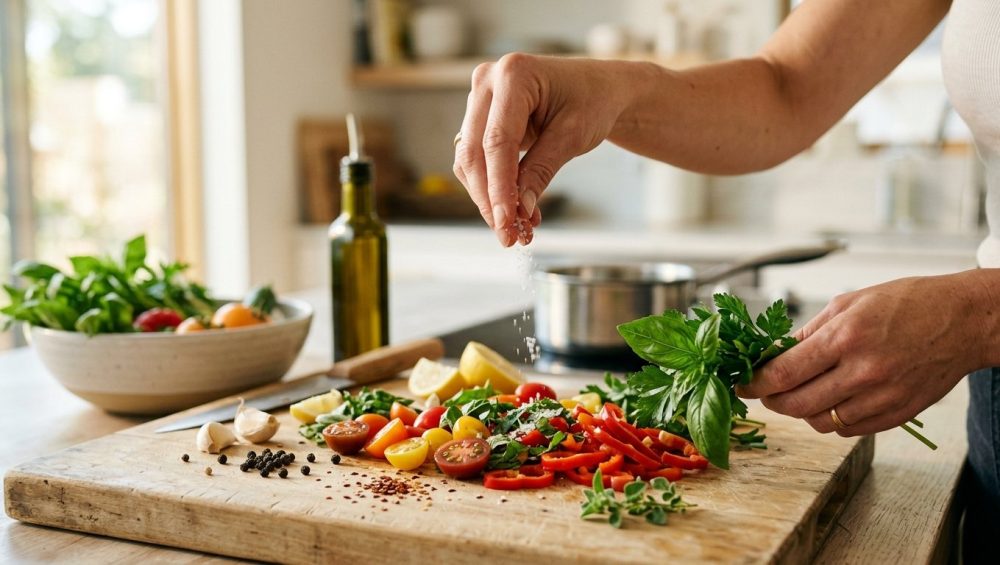
You don’t need to chop an onion at the speed of light while looking directly into the camera. You just need to chop it uniformly without severing an artery. Uniform cuts mean uniform cooking times. If you have massive chunks of potato mixed with tiny slivers of potato, the slivers will turn to mush before the chunks are even tender.
Learn the “claw grip”—tuck your fingertips under and use your knuckles to guide the blade of the knife. It feels awkward for exactly three days, and then it becomes second nature. And for the love of all things holy, use a sharp knife. A dull knife requires more force, which means when it inevitably slips off the skin of a tomato, it’s going straight into your hand with the momentum of a freight train.
Flavor Architecture: Building Taste Profiles
Cooking is basically constructing a building, but instead of steel and concrete, your materials are tastes and aromas. If your food tastes “flat” or “boring,” it’s usually because it’s missing structural integrity in one of a few key areas.
The Holy Trinity: Fat, Acid, Salt, Heat
Samin Nosrat wrote a brilliant book on this exact concept, and it is gospel. These four elements are the cornerstones of flavor.
- Fat: Carries flavor compounds and provides a luxurious mouthfeel. If a dish feels thin or watery, it needs fat (butter, olive oil, heavy cream).
- Acid: The ultimate brightener. If a rich stew or a heavy cream sauce tastes muddy or overwhelming, it desperately needs a splash of acid to cut through the fat. A squeeze of lemon juice or a dash of apple cider vinegar right at the end of cooking can elevate a dish from “meh” to mind-blowing.
- Salt: Salt doesn’t just make things salty; it amplifies the inherent flavor of the ingredients. It reduces bitterness and enhances sweetness.
- Heat: Not just temperature, but spice. A tiny pinch of cayenne or red pepper flakes adds a background hum of warmth that makes the palate pay attention.
Umami: The Secret Weapon in Your Pantry
We all know sweet, salty, sour, and bitter. But the fifth taste, umami, is the secret weapon of culinary artistry. Discovered by Japanese scientists, umami literally translates to “delicious taste” and is the deeply savory, brothy, mouth-filling sensation triggered by free glutamates,.
If your savory dish lacks depth, you need an umami bomb. You don’t need to rely solely on meat for this. Ingredients like tomato paste, mushrooms, soy sauce, anchovy paste, fish sauce, and aged cheeses are absolutely packed with free glutamates. For instance, Parmesan cheese contains a staggering 1.3 grams of free glutamate per 100 grams.
Here is the real science hack: umami compounds have a synergistic effect when combined with sodium and certain nucleotides (found in meats and fish),. This is why adding a dash of soy sauce (umami + salt) to a beef stew (nucleotides) creates a flavor explosion that is exponentially greater than the sum of its parts. Keep a tube of tomato paste and a bottle of fish sauce in your fridge at all times. They are your flavor cheat codes.
Balancing Act: How to Fix a Dish That’s Gone Sideways
Culinary artistry isn’t just about building flavor; it’s about troubleshooting when things go wrong.
- Too salty? Add acid (lemon juice/vinegar) or a touch of sweetness (honey/sugar) to balance it out. You can also add bulk (more broth, unseasoned vegetables) to dilute it. (The old “throw a potato in it” trick is mostly a myth—it doesn’t absorb enough salt to save a ruined soup).
- Too sweet? Add acid or a pinch of salt.
- Too spicy? Add fat. Dairy (sour cream, yogurt, butter) binds to capsaicin and cools the burn.
- Too acidic? Add fat or a tiny pinch of sugar to round off the sharp edges.
The Kitchen Arsenal: Gear That Actually Matters
I have zero patience for kitchen gadgets that serve a single, highly specific purpose (I’m looking at you, avocado slicers and strawberry hullers). But when it comes to the core tools of the trade, you need equipment that works as hard as you do. And more importantly, you need equipment that isn’t actively poisoning you.
The Toxic Trap: Ditch the Peeling Non-Stick
Let’s have a very serious talk about that scratched, peeling non-stick skillet you’ve been using since college. Throw it in the garbage immediately. I am not being hyperbolic; I am talking about your health.
Traditional non-stick coatings (like Teflon) rely on a class of synthetic chemicals known as PFAS (per- and polyfluoroalkyl substances), often referred to as “forever chemicals” because they refuse to break down in the environment or in the human body,. When these pans are scratched or heated above 260°C (500°F)—a temperature easily reached if you accidentally leave an empty pan on a hot burner—the coating begins to degrade, releasing toxic microscopic particles and gaseous fumes.
The science on this is grim and undeniable. Prolonged exposure to PFAS has been robustly linked by health organizations to severe health risks, including kidney cancer, testicular cancer, endocrine disruption, impaired immune function, and liver toxicity,,,. The situation is so dire that the US Environmental Protection Agency (EPA) rolled out aggressive new regulations in 2024. They have eliminated exemptions, mandated strict industry-wide reporting, and established legally enforceable limits for certain PFAS in drinking water down to a microscopic 4 parts per trillion,.
States are not waiting around, either. In a massive shift, states like California, Colorado, and Minnesota are enacting strict laws banning the sale of cookware containing intentionally added PFAS, with rolling deadlines hitting between 2025 and 2027,,. If the federal government and state legislatures are aggressively banning these chemicals from consumer goods, why on earth are you searing your Tuesday night chicken breast on them?
You do not need toxic chemicals to cook an egg. You need proper technique and safe, durable materials.
The Workhorses: Cast Iron, Carbon Steel, and Stainless
A well-equipped kitchen relies on three primary materials, none of which will off-gas toxic fumes into your dinner.
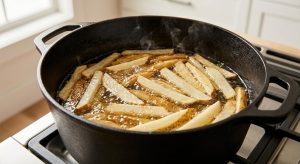
- Cast Iron: The undisputed heavyweight champion of the kitchen. It retains heat like a brick oven, making it the ultimate tool for getting a ferocious Maillard sear on a steak. When properly seasoned (a simple process of baking polymerized fat onto the surface), it becomes virtually non-stick. Yes, it’s heavy. Yes, you have to hand wash it. Deal with it. It will outlast you and your grandchildren.
- Stainless Steel (Fully Clad): This is your everyday workhorse. It heats evenly, it can take a beating, and it is perfect for building pan sauces because it encourages food to stick slightly, creating “fond” (the caramelized brown bits left at the bottom of the pan). Deglaze that fond with a splash of wine, and you have a sauce that tastes like you spent hours on it.
- Carbon Steel: The professional kitchen’s best-kept secret. It has the heat retention and seasoning capabilities of cast iron, but it is significantly lighter and more responsive to temperature changes. It is the perfect pan for a blazing hot stir-fry or a quick sauté.
The Only Knives You Actually Need
Do not buy a 15-piece knife block. You are paying for 12 knives you will never use, a pair of flimsy scissors, and a wooden block that harbors bacteria. You need exactly three knives:
- An 8-inch Chef’s Knife: This does 90% of the work. Spend the money here. Find one that feels balanced in your hand.
- A Paring Knife: For small, off-the-board tasks like hulling strawberries or peeling garlic.
- A Serrated Bread Knife: For slicing crusty sourdough without crushing it, and ironically, for slicing ripe tomatoes.
Weekday Survival vs. Weekend Artistry
There is a massive difference between cooking a meal on a Tuesday night after a grueling 9-to-5, and cooking a meal on a lazy Sunday afternoon. The goal of weekday cooking is efficiency and survival. The goal of weekend cooking is exploration and artistry.
The Weekday Hustle: Time-Saving Hacks That Don’t Sacrifice Flavor
Time is money, and on a weeknight, your energy is a rapidly depleting resource. Recent industry surveys and market forecasts for 2025 highlight a massive consumer shift toward “Low Effort, High Reward” cooking. With food costs rising, an impressive 82% of meals in the US are now prepared at home, but people are exhausted. You need shortcuts that don’t taste like shortcuts.
- Pre-chop your aromatics: Spend 15 minutes on Sunday chopping onions, celery, and carrots. Store them in an airtight container. You just saved yourself the most annoying prep step for three different weeknight dinners.
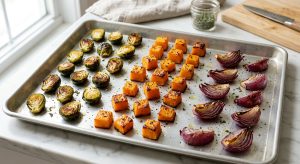
- Embrace the sheet pan: You can roast an entire meal—protein and vegetables—on a single sheet pan. Toss everything in olive oil, salt, pepper, and a spice blend, and let the high heat of the oven do the work. One pan to clean, zero active stovetop monitoring.
- Use compound butter: Mix softened butter with minced garlic, herbs, and lemon zest. Roll it into a log and freeze it. Slice off a medallion and melt it over a simple pan-seared chicken breast or steamed vegetables. Instant gourmet sauce, zero effort.
Batch Cooking and the Art of the “Planned Leftover”
I despise the term “meal prep” because it conjures images of eating the exact same sad, unseasoned chicken and broccoli from a plastic container for five days straight. Instead, practice the art of the “planned leftover.”
If you are taking the time to braise a pork shoulder on Sunday, braise a massive one. On Sunday, you eat it with mashed potatoes and roasted carrots. On Tuesday, you shred the leftover meat, crisp it up in a skillet, and make incredible carnitas tacos. On Thursday, you toss the remaining meat into a rich ragù over pappardelle pasta. You cooked once, but you created three entirely distinct culinary experiences.
The Weekend Canvas: When to Pull Out All the Stops
The weekend is when you pour a glass of wine, put on a playlist, and tackle the intimidating projects. This is when you make your own pasta dough. This is when you attempt a three-day sourdough bread process. This is when you slowly simmer a rich, gelatinous bone broth from scratch.
Weekend cooking is about enjoying the process of culinary artistry. It’s about taking the time to slowly caramelize onions for 45 minutes until they are a sweet, jammy mahogany, rather than rushing them over high heat in 10 minutes. It’s about building complex flavor profiles layer by layer. This is where you test your boundaries and expand your repertoire.
Intuitive Cooking: Breaking Free from the Blueprint
The ultimate goal of this masterclass is to get you to a place of intuitive cooking. This is the stage where you stop relying on search engines to tell you what to make for dinner, and you start relying on your own senses and instincts.
The “What’s in the Fridge” Challenge
The best way to develop intuition is to force yourself to cook without a recipe. Look in your fridge and pantry. You have half a head of wilted cabbage, a can of chickpeas, a jar of curry paste, and some coconut milk. A novice sees a random assortment of unrelated items. A culinary artist sees a vibrant, spicy coconut chickpea curry over braised cabbage.
Start thinking about ingredients in terms of their function (fat, acid, protein, starch, umami) rather than their specific names. Once you categorize food this way, the puzzle pieces start fitting together naturally.
Substitution Science: Swapping Ingredients Without Ruining Dinner
Understanding substitution is the hallmark of a confident cook.
- Out of buttermilk? Add a tablespoon of white vinegar or lemon juice to a cup of regular milk and let it sit for five minutes.
- Out of wine for a pan sauce? Use chicken broth with a splash of white wine vinegar to mimic the acidity and depth.
- Out of fresh herbs? You can use dried, but remember that dried herbs are significantly more concentrated. The rule of thumb is one teaspoon of dried herbs for every tablespoon of fresh herbs. And always add dried herbs early in the cooking process so they have time to rehydrate and release their oils; add fresh herbs at the very end to preserve their bright, volatile aromas.
Plating Like a Pro (Without the Pretentious Tweezers)
We eat with our eyes first. You don’t need to construct architectural towers of food on a slate board, but a little attention to plating elevates a home-cooked meal into a dining experience.
- Use white or neutral bowls/plates: Let the food be the star. Busy patterns on plates distract from the dish.
- Create height: Don’t just spread food flat across the plate. Mound your starch in the center, lean your protein against it, and drape your vegetables alongside.
- Garnish with purpose: A garnish should not just be a random sprig of parsley sitting sadly on top of a steak. It should add a necessary flavor or texture. A sprinkle of flaky sea salt, a drizzle of high-quality finishing olive oil, or a scattering of toasted nuts adds a final layer of complexity and visual appeal.
Continuing Your Culinary Education
The journey to culinary artistry never actually ends. The moment you think you know everything about cooking is the moment your food becomes stagnant.
Trusting Your Palate
Taste your food. I cannot emphasize this enough. Taste it at the beginning, taste it in the middle, and taste it at the end. You cannot adjust the seasoning of a dish if you don’t know what it tastes like while it’s developing.
As you cook, ask yourself questions: Is it too heavy? Does it need a hit of acid? Is the texture purely mushy, or does it need a crunchy element like toasted breadcrumbs or seeds? Your palate is a muscle. The more you actively engage it and analyze what you are tasting, the stronger and more refined it becomes.
The Final Word: Just Cook the Damn Food
Stop watching beautifully produced, heavily edited cooking videos on social media and feeling inadequate. Those videos are designed to generate clicks, not to reflect the reality of a working home kitchen. The chef in that video didn’t have to clean up the mountain of prep bowls left behind the camera.
Cooking is an act of creation, an act of nourishment, and at its best, an act of love. It is about taking raw, disparate ingredients from the earth and transforming them into something that brings joy to yourself and the people sitting around your table.
You have the tools. You understand the science of browning, the architecture of flavor, and the critical importance of safe cookware. You know how to survive a Tuesday and how to dominate a Sunday. The only thing left to do is to step into your kitchen, turn on the stove, and start cooking. Embrace the mistakes, celebrate the victories, and never, ever stop experimenting. You’ve got this.