Let’s get one thing straight right out of the gate: we have all been victimized by a bad bowl of oatmeal. You know exactly what I am talking about. You look away from the stove for thirty seconds to sip your coffee, and your innocent breakfast has maliciously transformed into a culinary science experiment capable of patching drywall. It is thick, it is gluey, and it coats the roof of your mouth like industrial spackling paste.
For decades, we accepted this as the inevitable reality of eating oats. We choked down the cement, told ourselves it was “heart healthy,” and moved on with our miserable mornings. But as a home cook who refuses to eat bad food, I am here to tell you that it absolutely does not have to be this way. You do not need a culinary degree from Le Cordon Bleu to make a bowl of porridge that is genuinely mind-blowing.
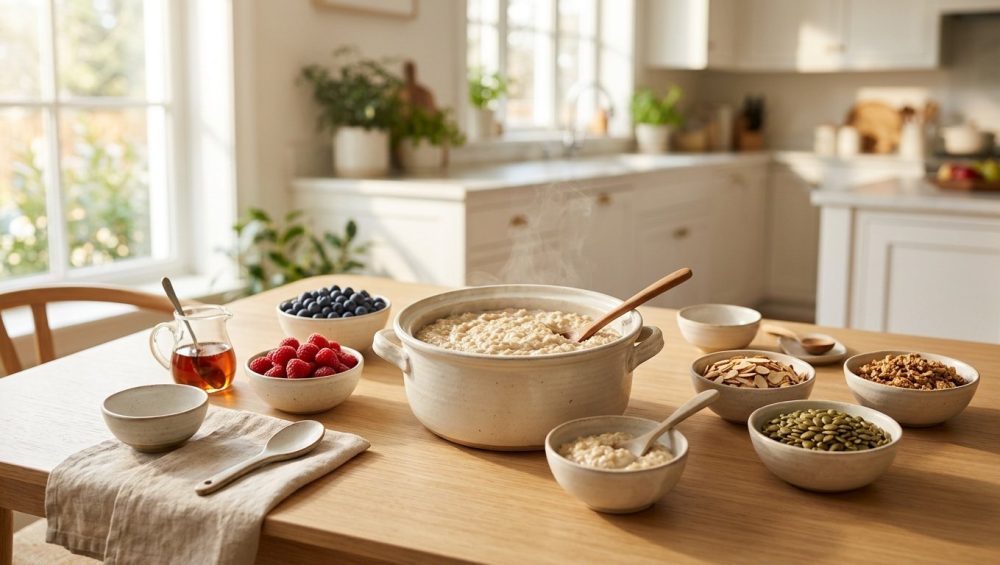
As we look at the massive shift in 2026 brunch trends, the era of the rigid, formal, sit-down plated breakfast is entirely dead. Today’s weekend gatherings are all about the “bowlification” of meals—highly interactive, customizable, and stress-free formats that allow the host to actually enjoy their own party instead of sweating over a hot stove like a short-order cook. The mindful oatmeal bar is the ultimate expression of this trend. It is cozy, it is scalable, and it is the perfect vehicle for both sweet and savory flavor profiles.
But to pull this off without serving your guests a pot of warm glue, we need to talk about the science of starch, the mechanics of temperature control, and the absolute garbage cookware you need to throw away immediately. Grab a cup of coffee (or a mimosa, I won’t judge), and let’s fix your breakfast.
The Science of the Sludge: Why Your Oatmeal Gets Gummy
If you want to stop ruining your food, you have to understand why it is failing in the first place. Cooking is not magic; it is just edible chemistry. And when it comes to oats, the enemy of texture is a little phenomenon known as starch gelatinization.
The Amylose and Amylopectin Equation
Oats, like all grains, are packed with botanical energy storage vessels called starch granules. Inside these microscopic granules are two distinct types of carbohydrate molecules: amylose and amylopectin.
Think of amylose as the straight-laced, Type-A molecule. It is a linear chain of glucose that likes to keep to itself. When it dissolves in water, it forms a nice, soft, pleasant gel. Amylopectin, on the other hand, is the chaotic, highly branched cousin who shows up to the party uninvited, drinks all the wine, and starts clinging to everyone in the room. Because of its bushy, branched structure, amylopectin creates a dense, sticky, glue-like matrix when it is released into water.
When you heat oats in a liquid, the starch granules begin to absorb that liquid and swell up like tiny water balloons. This process begins around 140°F (60°C). As the temperature climbs toward the boiling point, those swollen granules reach their absolute limit and violently burst open, vomiting their amylose and amylopectin contents directly into your cooking water. If too much amylopectin escapes, your oatmeal instantly crosses the line from creamy to concrete.
The Friction Factor
So, how do we keep the amylopectin contained? By controlling friction.
The single biggest rookie mistake you can make when cooking oats is treating them like a risotto. I see people standing over the stove, aggressively whisking and stirring their oatmeal in a rolling boil. Every time you drag a spoon through that pot, you are creating physical friction. That friction physically tears the fragile, swollen starch granules apart, forcing them to release more and more of that sticky amylopectin.
If you want distinct, creamy oats that actually retain some texture, you have to stop touching them. Agitation is the enemy of a good porridge.
The Oat Hierarchy: Steel-Cut, Rolled, and Quick
Not all oats are created equal, and your choice of grain dictates your margin of error.
Steel-cut oats are the whole oat groat chopped into two or three pieces with a steel blade. Because they have a very low surface area and have not been flattened, their starch granules are heavily protected. They take much longer to cook (up to 30 minutes), but they are incredibly forgiving and almost never turn gummy. They are the undisputed kings of texture.
Rolled oats (old-fashioned oats) are steamed to soften them, then run through massive rollers to flatten them out. Because they are flat, they have a massive surface area, meaning the starches are exposed and ready to gelatinize quickly. They cook in about 5 to 10 minutes, but they require a delicate touch to prevent mushiness.
Quick oats or instant oats are rolled paper-thin and heavily pre-steamed. Their structural integrity is basically zero. The moment hot water touches them, they disintegrate into a paste. Keep these out of your kitchen unless you are baking cookies or making a quick binder for meatballs.
Weekday Efficiency vs. Weekend Perfection: The Batch-Cooking Masterclass
I am a firm believer that your cooking methods should adapt to your schedule. The way I cook on a frantic Tuesday morning before a 9:00 AM meeting is completely different from how I cook on a lazy Sunday when I have friends coming over. Time is money during the week, but the weekend is reserved for perfection.
The 10-Minute Weekday Hustle
When you are just trying to survive a Tuesday, efficiency is your only priority. You need fuel, and you need it in under ten minutes without creating a gluey disaster in your favorite bowl.
The secret to fast, non-gummy weekday oats is the “steep and sleep” method. Do not use a pot. Do not turn on your stove. Simply place a half-cup of high-quality rolled oats into a bowl with a pinch of kosher salt. Boil water in an electric kettle. Pour exactly three-quarters of a cup of boiling water over the oats. Give it exactly one gentle stir, cover the bowl tightly with a plate, and walk away.
Go brush your teeth. Go answer an email. Let it sit for exactly five to seven minutes. The ambient heat will gently gelatinize the starches without the violent agitation of a boiling pot. When you remove the plate, you will have perfectly cooked, distinct oats. Splash in a little cold milk to stop the cooking process, and you are done. Zero friction, zero glue, zero stress.
The Weekend Batch-Cooking Masterclass
When you are hosting a brunch gathering, the microwave and the kettle are not going to cut it. You need to batch-cook a large volume of oats that will hold up on a buffet table for an hour without turning into a solid block of mortar.
The absolute most foolproof way to achieve this is by toasting your oats first before a single drop of liquid ever hits the pan.
Place a heavy-bottomed pot over medium heat and melt a tablespoon of high-quality butter, ghee, or unrefined coconut oil. Dump in your dry rolled or steel-cut oats and toast them for about three to four minutes, stirring frequently, until they smell incredibly nutty and fragrant.
This step is a game-changer for two scientific reasons. First, the dry heat triggers the Maillard reaction—the same browning process that makes a seared steak or a toasted marshmallow taste so good—adding a massive depth of savory, nutty flavor to the grain. Second, the melted fat coats the raw starch granules in a waterproof lipid jacket. When you finally pour your liquid into the pot, that fat barrier physically slows down water absorption, preventing the starches from blowing out and turning into mush.
Once toasted, add your liquid. For the best texture, I highly recommend a 50/50 split of water and whole milk (or a rich, barista-blend oat milk). Water provides the necessary hydration to soften the grain, while the milk proteins and fats provide a creamy mouthfeel and further inhibit excessive starch leakage. Bring the pot to a gentle simmer—never a violent, rolling boil—turn the heat down to the lowest possible setting, cover it, and let it gently bubble until the liquid is absorbed.
Ditching the Toxic Pots: The Only Cookware You Should Be Using
We need to have a brutally honest conversation about the equipment you are using. I have absolutely zero patience for cheap, peeling, mystery-metal non-stick pans. If you are cooking your morning oatmeal in a $15 scratched Teflon saucepan you bought a decade ago, you are actively sabotaging your food and your health.
The “Forever Chemical” Rant
In 2026, the legislative hammer is finally coming down on PFAS (per- and polyfluoroalkyl substances) in cookware. State-by-state bans are rolling out across the country, and for good reason. These are “forever chemicals” that do not break down in the environment or in the human body.
When traditional PTFE (Teflon) non-stick coatings are heated past 500°F, or when they become scratched and degraded by metal spoons, they begin to off-gas toxic fluoropolymer fumes. The CDC and poison control centers have reported hundreds of recent cases of “Teflon flu”—officially known as polymer fume fever—which causes severe flu-like symptoms simply from breathing in the air around an overheated cheap pan.
If your cookware can literally trigger a respiratory crisis in a pet bird (a well-documented scientific fact), you should not be boiling your breakfast in it. I am a fierce advocate for banishing toxic kitchen gear from your home immediately. There is no excuse for it anymore.
Safe, High-Quality Alternatives
You do not need a synthetic non-stick coating to make oatmeal. What you actually need is thermal mass.
Cheap, thin aluminum pans heat up incredibly fast and incredibly unevenly. They create aggressive hot spots on the bottom of the pot, which instantly scorches the bottom layer of your oats while the top layer remains a watery soup. This forces you to stir aggressively to prevent burning, which—as we established earlier—causes the starches to explode and turn gummy.
Instead, invest in a heavy-bottomed, fully clad stainless steel saucepan, an enameled cast-iron Dutch oven, or a high-quality ceramic-coated pot. These materials possess massive thermal retention properties. They absorb heat slowly and distribute it perfectly evenly across the entire base and up the sides of the pot. This gentle, omnidirectional heat allows your oats to simmer peacefully without requiring you to constantly scrape the bottom with a spoon. Buy good gear once, take care of it, and it will outlive you.
The Blueprint for a Stress-Free, Mindful Oatmeal Bar
Entertaining should never induce a panic attack. If you are trapped in the kitchen, sweating over a stove while your friends are in the living room drinking coffee without you, you have completely failed at hosting. The entire point of gathering is connection.
The genius of the modern weekend brunch is the transition toward interactive, self-serve stations. By setting up a cozy breakfast bowl bar, you completely eliminate the bottleneck of plating individual meals. Your guests get exactly what they want, and you actually get to sit down and enjoy the morning.
The Thermodynamics of Holding Temperatures
The single biggest challenge of an oatmeal bar is keeping the batch warm without it drying out and turning into a solid, impenetrable brick.
We have to look to professional catering standards here. According to food safety regulations, hot food must be held at or above 140°F (60°C) to prevent bacterial growth. However, if you hold your oatmeal at 180°F, the ambient heat will cause rapid evaporation, and the starches will retrograde and stiffen. The thermodynamic sweet spot for holding porridge is exactly between 140°F and 150°F.
Do not, under any circumstances, leave your pot of oats on the stove burner, even on the “simmer” setting. Direct bottom heat will eventually scorch the batch. Instead, utilize a gentle water bath (a double boiler setup), or use a countertop slow cooker set to the “warm” function.
If you want to elevate the aesthetic of your table, transfer the hot oats into high-quality safe serving ware, such as a pre-warmed heavy stoneware tureen or a traditional Japanese donabe pot. Natural clay and ceramic possess incredible emissivity and thermal mass. If you pre-warm the vessel with boiling water for five minutes before dumping the water and adding your oats, the thick walls will radiate gentle, even heat for over an hour, keeping your porridge perfectly creamy without drying it out.
Designing the Station
The flow of your serving station dictates the success of your morning. You cannot just throw a bunch of mismatched bowls on a counter and hope for the best.
By taking the time to arrange your space into a permanently organized kitchen layout, you direct the flow of human traffic effortlessly. Start the line with the physical bowls and spoons. Next, place the hot vessel of oatmeal. Follow this with a pitcher of warm milk (dairy and non-dairy options) so guests can adjust the consistency of their base. Finally, end the line with an expansive, well-curated toppings matrix.
The Toppings Matrix: Texture, Acid, and Fat
An oatmeal bar is only as good as its garnishes. A bowl of perfectly cooked, non-gummy oats is a beautiful canvas, but without contrast, it is still just a bowl of soft porridge. To build a restaurant-quality bowl, you must balance three elements: texture, acid, and fat.
Crunch and Contrast
The human palate gets bored easily. When every bite is soft and creamy, palate fatigue sets in by the fourth spoonful. You must introduce aggressive crunch.
Set out small bowls of toasted pecans, slivered almonds, roasted pumpkin seeds (pepitas), and raw cacao nibs. Toasting your nuts is non-negotiable; raw nuts taste like damp wood, while toasting them in a dry skillet for five minutes releases their essential oils and deepens their flavor exponentially.
If you are leaning into the massive 2026 trend of savory breakfast bowls, texture is even more critical. Offer crispy fried shallots, toasted sesame seeds, or a savory spiced oil. You can elevate a savory bowl immensely by blooming in oil a mixture of mustard seeds, cumin, and fresh curry leaves, allowing your guests to drizzle that highly aromatic, crunchy infused fat directly over their savory oats.
The Secret Weapon: Acid
This is the biggest rookie mistake I see home cooks make. People load their oatmeal with brown sugar, honey, maple syrup, and sweet chocolate chips. The result is a cloying, one-dimensional sugar bomb that makes your teeth ache.
Your breakfast actually needs acid to balance the heavy, starchy weight of the grains. Acid wakes up the palate and cuts right through the richness of the bowl.
Fresh fruit is the easiest way to introduce this. A bright, tart berry compote spiked with a heavy squeeze of fresh lemon juice and a grating of lemon zest will completely transform the dish. If you are setting out fresh fruit, make sure you prep it properly. To prevent moldy fresh berries from ruining your spread, wash them in a diluted vinegar bath (one part white vinegar to three parts water) the night before, rinse them well, and dry them thoroughly on a paper towel. This kills the ambient mold spores and keeps them pristine and vibrant for your guests.
For savory bowls, a dash of hot sauce, a squeeze of fresh lime, or a spoonful of quick-pickled red onions provides that necessary acidic bite.
Sweeteners and Fats
Provide options that allow guests to control their own destiny. Real, 100% pure maple syrup (throw the fake corn syrup plastic bottles in the trash), raw honey, and high-quality agave nectar are excellent liquid sweeteners.
For fats, a pat of cultured butter melting into the center of a hot bowl of oats is one of life’s greatest simple pleasures. Offer a variety of drizzles: tahini, high-quality peanut butter, or almond butter. The fat coats the tongue and carries the flavors of the spices (like cinnamon, cardamom, and nutmeg) evenly across the palate.
Troubleshooting the Porridge: Quick Fixes for Common Catastrophes
Even with the best preparation, things can occasionally go sideways in the kitchen. The difference between a panicked amateur and a confident home cook is knowing exactly how to pivot when disaster strikes.
Rescuing Cement Oats
What happens if you miscalculate your liquid ratios, or you leave the pot unattended for too long, and your batch turns to concrete right before the doorbell rings?
Do not panic, and absolutely do not just pour cold milk into the pot and stir furiously. Adding cold liquid will immediately drop the temperature of the starches, causing them to seize up further, and aggressive stirring will just break the oats into a lumpy, broken mess.
Instead, heat a cup of milk or water in the microwave or a separate saucepan until it is steaming hot. Gently pour the hot liquid over the stiff oats, and use a silicone spatula to fold the liquid in using a gentle, sweeping motion. Never use a wire whisk. The introduction of heat will loosen the tightly bound starch matrix, and the gentle folding will incorporate the hydration without causing further friction damage. Within sixty seconds, your creamy texture will be fully restored.
The Hard Sugar Fix
You go to your pantry to set up your topping station, only to discover that your airtight container failed, and your brown sugar has turned into a literal weaponized brick. You cannot serve a rock to your guests.
To instantly soften hard brown sugar, place the hardened block in a microwave-safe bowl. Cover the bowl with a damp (not dripping wet) paper towel, and microwave it on high for 15 to 20 seconds. The microwave heats the water in the paper towel, creating a burst of trapped steam that penetrates the molasses in the sugar, rehydrating it instantly. Use a fork to fluff it up, and it will be as soft as sand.
Fixing Watery Oats
If you accidentally added too much liquid and your oats are looking like a sad, watery soup, do not attempt to boil them into oblivion. Boiling them rapidly will overcook the grain and turn the entire pot to mush.
Instead, turn the heat up just slightly to encourage gentle evaporation, and stir in a tablespoon of chia seeds or flaxseed meal. These ingredients act as natural hydrocolloids. They will rapidly absorb the excess moisture in the pot within three to five minutes, naturally thickening the broth without compromising the structural integrity of your oats.
Final Thoughts: Reclaiming the Morning
Hosting a weekend gathering does not require you to wake up at 4:00 AM, and it certainly does not require you to sacrifice your sanity for the sake of a good meal. You can absolutely achieve professional-level results in a standard home kitchen by simply understanding how your ingredients behave and refusing to settle for toxic, subpar equipment.
By mastering the science of starch gelatinization, respecting the power of temperature control, and investing in a few smart aesthetic kitchen upgrades to make your serving station look intentional and beautiful, you elevate a humble pantry staple into an unforgettable culinary experience.
Oatmeal doesn’t have to be the sad, gluey punishment of our childhoods. Treated with a little bit of respect, a touch of acid, and a whole lot of crunch, it is the ultimate canvas for a relaxed, mindful morning. Now go throw away that scratched Teflon pan, toast your oats, and pour yourself a drink. You’ve earned it.