The Great Seasoning Deception: Why Your Food Tastes Like Cardboard
Picture this: It is a Tuesday night. You are exhausted, but you have valiantly decided to cook instead of ordering takeout for the third time this week. You have spent the last hour chopping, sautéing, and simmering. The kitchen smells phenomenal. You finally dip a spoon into the pot, blow on it, and take a taste.
And it is… fine.
It is not terrible, but it is not great. It tastes flat. It tastes heavy. It tastes like the culinary equivalent of beige wallpaper. So, what do you do? You do what every single home cook has been conditioned to do since the dawn of time: you reach for the salt shaker. You sprinkle a little in, stir, and taste again. Still boring. You add more salt. Now, congratulations, you have successfully created a dish that is both aggressively salty and incredibly boring. You have essentially made a hot, sodium-rich puddle.
If this scenario sounds painfully familiar, take a deep breath and put the salt down. You are not a bad cook. You are simply suffering from the most common misconception in the culinary world: the belief that “bland” always means “under-salted.”
The truth is, your dinner does not need more sodium. Your dinner needs a wake-up call. It needs a spark. It needs acid.
Understanding how to use culinary acids—like citrus, vinegar, wine, and cultured dairy—is the single most profound secret to transforming your daily cooking from a frustrating chore into an absolute joy. Acid is the invisible thread that ties a dish together. It is the treble to your heavy bass, the bright spotlight in a dark room. When you go to a high-end restaurant and wonder why their simple roasted carrots or pan-seared chicken tastes infinitely better than yours, the answer is rarely some complex, unattainable chef technique. The answer is usually a finishing squeeze of lemon juice, a splash of sherry vinegar, or a dollop of crème fraîche.
In this comprehensive masterclass, we are going completely geek-chic. We are going to strip away the pretentious culinary jargon, dive deep into the fascinating science of your taste receptors, and teach you exactly how to wield acid like a professional. By the end of this guide, you will never look at a lemon the same way again.
The Science of the Tongue: How Taste Receptors Actually Work
To understand why acid is so magical, we have to take a quick detour into human biology. Do not worry, there will be no pop quiz, but understanding the mechanics of your own mouth will instantly make you a better cook.
Your tongue is covered in thousands of taste buds, each containing specialized receptor cells that communicate directly with your brain. We primarily recognize five basic tastes: sweet, salty, sour, bitter, and umami (savory). For decades, home cooks have treated these tastes as isolated silos. You want something salty? Add salt. You want something sweet? Add sugar.
But food science tells a completely different story. These tastes do not operate in a vacuum; they interact, compete, and amplify one another in a complex biological symphony. And the “sour” receptor—the one triggered by acidity and low pH levels—is the ultimate conductor of this orchestra.
The Sodium Crisis and the Acid Hack
Before we talk about flavor, we need to have a serious chat about your health. We are currently living in a global sodium crisis. According to a 2025 report by the World Health Organization (WHO), the global mean intake of sodium for adults is a staggering 4,310 mg per day. That is more than double the WHO’s recommended limit of less than 2,000 mg per day. The Centers for Disease Control and Prevention (CDC) echoes this grim reality, noting that Americans consume over 3,300 mg daily, blowing right past the federal recommendation of 2,300 mg.
We are drowning our food in salt, and our cardiovascular systems are paying a massive price. But here is the brilliant, scientifically-backed loophole: you do not have to sacrifice flavor to save your heart.
When you introduce an acid (sourness) to a dish, it actually alters how your taste receptors perceive salt. The presence of a low-pH ingredient stimulates the palate so intensely that it enhances the perception of saltiness. This means that by simply adding a splash of vinegar or a squeeze of lime to your food, you can drastically reduce the physical amount of salt you need to add, while achieving a flavor profile that tastes more seasoned. It is the ultimate culinary health hack. You do not need to decode pretentious recipe jargon to understand this—it is pure, practical biology.
Suppressing the Bitter, Elevating the Sweet
Acid’s biological superpowers do not stop at salt amplification. Acidity is also the natural enemy of bitterness. If you have ever tried to eat raw kale or a poorly cooked batch of Brussels sprouts, you know that intense bitterness can ruin a meal. But when you introduce an acid—like tossing those roasted sprouts in a balsamic glaze or massaging that kale with lemon juice—the sour receptors fire up and actively suppress the brain’s perception of bitterness. The bitter compounds are still physically there, but your brain stops caring about them.
Furthermore, acid balances sweetness. A dessert or a glaze that is cloyingly sweet tastes cheap and heavy. A low pH mutes the sugar molecules’ interaction with your taste receptors, preventing palate fatigue. This is why the best lemon tarts are aggressively tart, and why a splash of apple cider vinegar makes a brown sugar barbecue sauce taste complex instead of like pancake syrup.
The Chemistry of Flavor: What Acid Does to Your Food
Now that we know what acid does to your tongue, let’s look at what it physically does to the food in your pan. In food science, acidity is measured on the pH scale, which ranges from 0 to 14. Pure water sits at a neutral 7. Anything below 7 is acidic, and anything above 7 is alkaline (basic).
When you manipulate the pH of your ingredients, you are literally performing kitchen chemistry. And when it comes to everyday cooking, acid performs three critical structural functions that are essential for unlocking kitchen creativity.
The Yin and Yang: Cutting Through Fat
Fat is undeniably delicious. Butter, olive oil, bacon grease, heavy cream—these are the ingredients that provide richness, carry aromatic compounds, and give food a luxurious, comforting mouthfeel. But fat has a major flaw: it coats the palate.
If you eat a dish that is entirely fat-dominant—like a heavy macaroni and cheese, a rich beef stew, or deep-fried chicken—your taste buds become smothered after the first few bites. The food starts to taste monotonous. You get “palate fatigue.”
Acid is the biological palate cleanser. When you introduce a low-pH ingredient to a high-fat dish, the acid literally “cuts” through the lipid coating on your tongue. It washes away the heavy residue, leaving your mouth feeling fresh and ready for the next bite. This is the entire scientific basis behind some of the world’s greatest culinary pairings:
- Why we serve rich, fried fish with a wedge of lemon.
- Why a heavy, olive-oil-laden salad needs the sharp bite of vinegar in the dressing.
- Why a rich, fatty pork shoulder is traditionally served with tangy, acidic apple sauce or pickled cabbage.
Tenderizing Proteins
Acids are structural wrecking balls when it comes to proteins. Meat is composed of tightly wound, complex protein fibers. When these fibers are exposed to a highly acidic environment (like a marinade made with citrus juice, vinegar, or yogurt), the low pH causes the proteins to denature—meaning they unwind and loosen up.
This chemical reaction tenderizes the meat, making tough cuts much more palatable. However, this is a double-edged sword. If you leave a delicate protein, like fish or shrimp, in an acidic marinade for too long, the acid will completely “cook” the exterior (this is the science behind ceviche). If you leave chicken breast in a harsh lemon marinade overnight, the proteins will denature so much that the meat turns into a chalky, mushy disaster. The rule of thumb? Use acid in your marinades, but respect its power. Keep the marinating time brief for delicate meats.
Brightening the Maillard Reaction
You have likely heard of the Maillard reaction—the magical browning process that occurs when amino acids and reducing sugars hit high heat, creating that gorgeous, savory crust on a seared steak or a loaf of bread. Interestingly, the Maillard reaction actually prefers a slightly alkaline environment to thrive.
This means you should not cover your steak in lemon juice before you try to sear it. The acid will inhibit browning. Instead, you use acid as the grand finale. You let the heat do the hard work of building those deep, savory, roasted notes, and then you hit the pan with a splash of wine or vinegar at the very end to lift those heavy flavors off the bottom of the skillet and brighten the entire profile.
The Weeknight Warrior’s Guide to Culinary Acids
Let’s get practical. I am a firm believer that time is money. On a Tuesday evening, you do not have the time or the energy to slowly reduce a complex veal demi-glace. You need maximum flavor with minimum effort. You need ingredients that can sit in your pantry or fridge and instantly rescue a meal in under ten seconds.
Here is your definitive, no-nonsense breakdown of the culinary acids you need to stock, and exactly how to use them to pan-seared salmon and asparagus or any other quick, elegant meal.
Citrus: The Bright and Volatile Saviors
Citrus fruits are the undisputed kings of the finishing acid. They provide a sharp, volatile, intensely fresh tartness that wakes up absolutely any dish.
- Lemons: The universal donor of the kitchen. Lemon juice works with almost everything: chicken, fish, roasted vegetables, pasta, and soups. But do not ignore the outside! Lemon zest contains essential oils that provide massive floral, citrusy flavor without the harsh sour bite. If a dish is already acidic enough but lacks aroma, use the zest.
- Limes: Sharper and slightly more bitter than lemons, limes are essential for Latin American, Mexican, and Southeast Asian cuisines. A squeeze of lime over a heavy, braised pork taco or a bowl of rich coconut curry is non-negotiable.
- Oranges and Grapefruits: These offer a sweeter, milder acidity. They are brilliant in vinaigrettes or reduced down into glazes for poultry and pork, where you want a gentle tang without an aggressive pucker.
Vinegars: The Pantry Workhorses
If citrus is the bright, flashy soloist, vinegar is the reliable, complex rhythm section. Vinegars are created through fermentation, meaning they bring not just acidity, but deep, savory complexity to your food.
- Apple Cider Vinegar: Fruity, slightly sweet, and robust. This is your go-to for autumnal dishes, braised pork, barbecue sauces, and hearty cabbage slaws.
- White Wine and Red Wine Vinegar: The absolute non-negotiables for your pantry. These are your everyday workhorses. Use white wine vinegar for delicate pan sauces, chicken dishes, and light vinaigrettes. Use red wine vinegar for robust beef stews, chimichurri sauces, and hearty marinades.
- Balsamic Vinegar: Sweet, syrupy, and complex. A massive rookie mistake is treating balsamic like a cooking liquid. Do not dump expensive balsamic into a hot pan and boil it; you will destroy its nuanced flavors. Balsamic is a finishing acid. Drizzle it over fresh tomatoes, roasted Brussels sprouts, or even vanilla ice cream.
- Rice Vinegar: Mild, slightly sweet, and less aggressive than Western vinegars. It is the backbone of Asian-inspired sauces, stir-fries, and sushi rice. If you are trying to master simple weeknight dinners, a splash of rice vinegar, soy sauce, and sesame oil is the only stir-fry sauce you will ever need.
Wine and Alcohol: The Deglazing Heroes
When you sear a piece of meat, you are left with a sticky, brown, incredibly flavorful residue on the bottom of the pan called the fond. Leaving that in the pan is a culinary crime.
By pouring a splash of dry white or red wine into the hot skillet, you create a rapid evaporation process that lifts the fond off the metal. The alcohol extracts flavor compounds that are not soluble in water or fat, while the natural acidity of the wine reduces down into a rich, complex, perfectly balanced pan sauce.
Cultured Dairy: The Creamy Acids
Not all acids are sharp and clear. Lactic acid, found in fermented dairy products, provides a gentle, mellow tang wrapped in a luxurious, fatty mouthfeel.
- Sour Cream and Crème Fraîche: Why do we put sour cream on a baked potato loaded with butter and bacon? Because the lactic acid cuts through the heavy fat of the bacon and butter.
- Yogurt and Buttermilk: These are the ultimate meat tenderizers. The gentle acidity of buttermilk or yogurt breaks down the proteins in chicken incredibly gently, which is why buttermilk fried chicken or yogurt-marinated chicken tikka masala are so devastatingly tender.
Hidden Acids: Tomatoes and Fermented Foods
Sometimes, acidity is baked right into the ingredients you are using. Tomatoes are highly acidic. If you are slow-cooking a beef ragù, the tomatoes are doing the heavy lifting of breaking down the meat and cutting the richness of the beef fat.
Fermented foods—like pickles, capers, kimchi, olives, and mustard—are essentially flavor bombs that carry their own acidic payload. Tossing a handful of chopped capers into a butter sauce for fish, or stirring a spoonful of Dijon mustard into a heavy macaroni and cheese, instantly elevates the dish from heavy and boring to complex and vibrant.
The “No-Go” Rule: Toxic Gear and Acidic Reactions
Alright, it is time for some tough love. We need to talk about your kitchen equipment. Because if you start enthusiastically cooking with high-acid ingredients using the wrong pans, you are going to ruin your food and potentially ingest some truly nasty chemicals.
I have zero patience for cheap, toxic kitchenware. I actively advocate for banishing toxic kitchen gear from your home immediately. When you combine heat, time, and acidic ingredients (like tomatoes, wine, or vinegar), you trigger powerful chemical reactions. If your cookware is not up to the task, it will literally dissolve into your dinner.
Reactive vs. Non-Reactive Cookware
In the culinary world, metals are divided into two categories: reactive and non-reactive.
Reactive Cookware: This includes unlined aluminum, raw cast iron, and raw carbon steel. Aluminum is highly reactive to acid. If you simmer a beautiful, acidic tomato sauce in a cheap aluminum pot, the acid will strip the oxidized layer of the metal. Your sauce will turn a murky, unappetizing grey color, and it will taste overwhelmingly like dirty coins. More importantly, you are leaching metallic compounds directly into your family’s dinner.
Similarly, while raw cast iron and carbon steel are incredible tools for searing, they rely on a delicate layer of polymerized oil (seasoning) to remain non-stick. If you boil vinegar or simmer wine in a cast-iron skillet for thirty minutes, the acid will eat right through that hard-earned seasoning, stripping the pan bare and imparting a harsh metallic flavor to your food.
The Toxic Non-Stick Nightmare: Even worse than reactive metals are cheap, scratched, peeling non-stick pans. When the mystery chemical coatings on bargain-bin skillets begin to degrade, adding heat and corrosive acids accelerates the flaking process. You do not want “forever chemicals” as a garnish on your chicken piccata.
Non-Reactive Cookware (What You Should Actually Use): When you are building your ultimate minimalist kitchen setup, you must invest in non-reactive vessels for acidic cooking.
- Stainless Steel: The absolute gold standard. High-quality, multi-clad stainless steel contains chromium and nickel, which form an invisible, impenetrable oxide layer that completely protects the metal from acidic corrosion. You can boil vinegar in a stainless steel pan all day, and it will not flinch.
- Enameled Cast Iron: Think of your classic, heavy Dutch ovens. The cast iron core is coated in a layer of baked glass enamel, rendering it completely non-reactive. This is the only vessel you should be using for slow-simmered tomato sauces or wine-heavy braises.
- Glass and Ceramic: Excellent, non-reactive choices for baking dishes and mixing bowls. Always whisk your acidic vinaigrettes in glass or ceramic, never in a raw aluminum bowl.
Practical Masterclass: How to Fix Ruined Dinners with Acid
Theory is great, but let’s get our hands dirty. Cooking is largely an exercise in course correction. Even the best home cooks mess up. But the difference between a panicked amateur and a confident cook is knowing how to fix the mistake before the plates hit the table.
Here is your practical guide to seven rookie kitchen mistakes and how a simple splash of acid can rescue your dinner from the brink of disaster.
Scenario 1: The Heavy, Greasy Stew
The Problem: You spent three hours making a classic beef stew. The meat is tender, the potatoes are soft, but when you taste the broth, it feels like a lead weight in your mouth. It is overly rich, greasy, and completely one-dimensional.
The Fix: Take the pot off the heat. Stir in one tablespoon of red wine vinegar or apple cider vinegar. Taste it. You will immediately notice the “heaviness” dissipate. The acid cuts through the rendered beef fat, lifting the earthy flavors of the vegetables and making the broth taste vibrant and complex. If you don’t have vinegar, a spoonful of Dijon mustard stirred into the hot broth works miracles.
Scenario 2: The Flat, Boring Pan Sauce
The Problem: You seared some chicken thighs, deglazed the pan with chicken stock, and whisked in a knob of butter to create a quick sauce. It looks glossy and beautiful, but it tastes like… nothing. It is just salty, buttery liquid.
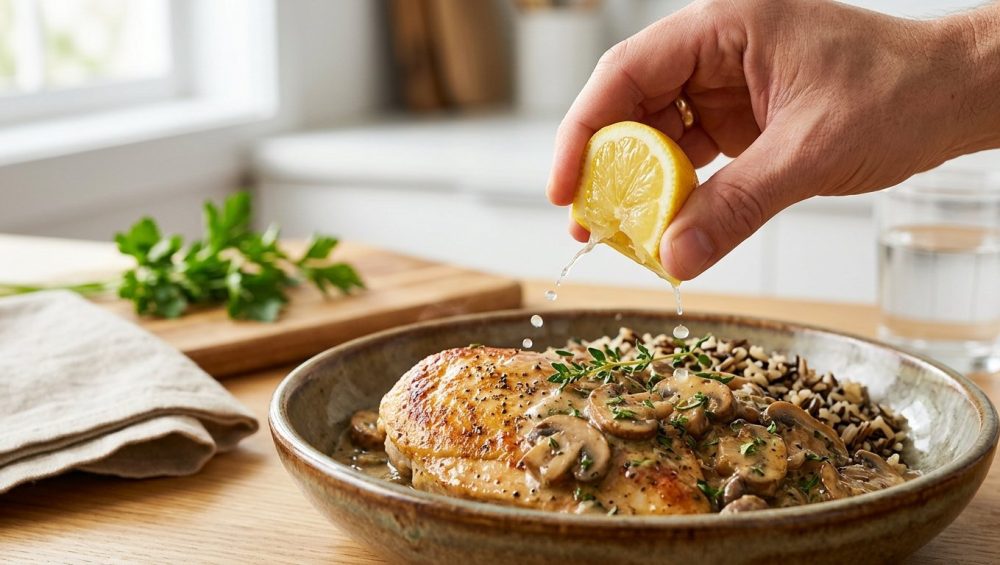
The Fix: You are missing the high notes. Squeeze half a fresh lemon directly into the sauce right before you pour it over the chicken. The sharp, volatile citric acid will instantly contrast with the rich butter, turning a boring liquid into a restaurant-quality pan sauce.
Scenario 3: The Over-Salted Disaster
The Problem: The lid fell off the salt shaker, or you aggressively over-seasoned your soup. It is practically seawater.
The Fix: You cannot magically remove salt from a liquid once it has dissolved. (And no, the old wives’ tale about dropping a raw potato in the soup to “absorb” the salt does not actually work). But you can trick your brain. Add a splash of white wine vinegar and a tiny pinch of white sugar. The combination of sour and sweet will force your taste receptors to multitask, effectively distracting your palate and masking the aggressive saltiness. It won’t cure a completely ruined dish, but it will absolutely save a borderline one.
Scenario 4: The Cloyingly Sweet Glaze
The Problem: You tried to make a teriyaki or a honey-garlic glaze for your stir-fry, but you misjudged the ratios. Now your dinner tastes like meat candy. It is sticky, heavy, and cloyingly sweet.
The Fix: Acid neutralizes the perception of sweetness. Add a hearty splash of unseasoned rice vinegar or the juice of a fresh lime. The sourness will immediately slice through the sugar, restoring balance and bringing the savory garlic and soy notes back to the forefront.
The Art of the Finish: When and How to Add Acid
One of the most important lessons you can learn in the kitchen is that when you add acid matters just as much as what acid you add.
There are two distinct phases of acidic application: cooking with acid, and finishing with acid.
Cooking with Acid (The Background Harmony)
When you add an acidic ingredient early in the cooking process—like deglazing a pan with wine before a long braise, or slow-roasting tomatoes in a sauce—the heat dramatically alters the chemical structure of the acid. The harsh, volatile, “puckery” compounds evaporate and break down over time.
What you are left with is a mellow, integrated background tang. The acid has done its job of tenderizing the meat and balancing the fats, but it no longer tastes sharply sour. It has become part of the dish’s fundamental DNA. This is essential for building deep, complex flavor bases, but it will not give you that bright, popping sensation on the tongue.
Finishing with Acid (The Spotlight)
This is the secret weapon. This is how you eliminate kitchen chaos for good and ensure your food always tastes vibrant.
Finishing with acid means adding a raw, unheated acidic ingredient to your food after it has been removed from the heat, right before it is served. Because the acid is not subjected to sustained heat, its volatile aromatic compounds remain completely intact. When the food hits your tongue, those sharp, bright molecules are the very first thing your taste buds register.
This is why you squeeze lime over a taco right before you bite into it. This is why you toss fresh herbs in vinaigrette just seconds before plating. This is why a bowl of rich, slow-cooked lentil soup demands a swirl of yogurt or a dash of sherry vinegar in the bowl.
The rule is simple: build your foundation with heat and time, but always, always finish with a fresh hit of acid to wake the whole thing up.
Trusting Your Own Palate
Ultimately, the goal of this masterclass is not to give you a rigid set of rules to blindly memorize. Recipes are not legal contracts; they are roadmaps. The author of a recipe does not know how acidic your specific lemons are, or how fatty your specific cut of meat is. You have to learn to trust yourself.
The next time you are standing over the stove and your food tastes like it is missing something, resist the deeply ingrained urge to immediately grab the salt. Stop. Take a breath. Ask yourself: Is it flat? Is it heavy? Is it boring?
If the answer is yes, reach for the lemon. Reach for the vinegar. Reach for the Dijon mustard.
By understanding the science of your taste receptors, respecting the chemistry of pH, and utilizing the incredible power of culinary acids, you will completely revolutionize the way you cook. You do not need a degree from Le Cordon Bleu to make mind-blowing food. You just need to understand balance.
The next time you invite friends over, you won’t be sweating over a bland, heavy roast. You will confidently hit that pan sauce with a splash of white wine vinegar, garnish the meat with a bright, lemony gremolata, and watch your guests’ eyes light up in amazement. That is the true art of effortless hosting. You have the knowledge. You have the tools. Now go squeeze a lemon on something and make your dinner taste spectacular.