Picture this: It is a Tuesday night. You are exhausted, your patience is thinner than cheap deli ham, and your pot of rigatoni is bubbling away like a localized volcanic eruption. The timer goes off. The pasta is perfectly al dente. Now begins the frantic, desperate stove-side scramble. You grab your standard, flimsy plastic slotted spoon—the one with holes so tiny they might as well be painted on—and you start fishing. One scoop. Two noodles. Another scoop. Three noodles. Meanwhile, the remaining pasta in the pot is continuing to boil, rapidly crossing the line from culinary perfection into mushy, gelatinous despair.
If this sounds familiar, you are not alone. I have watched countless home cooks wage this exact war against their boiling water, and frankly, it breaks my heart. You do not need a culinary degree to make phenomenal food, but you do need to stop sabotaging yourself with inadequate tools. I am here to tell you that one of the most common beginner cooking mistakes is relying on a standard slotted spoon to do a job meant for a heavy-duty lifter.
It is time to stop chasing your pasta. It is time to embrace the unsung hero of the professional kitchen: the stainless steel spider skimmer.
The Slotted Spoon Struggle: Why You’re Losing the Battle
Let us have a brutally honest conversation about that slotted spoon sitting in your utensil crock right now. Whether it is a cheap plastic freebie or a slightly more expensive silicone model, it is fundamentally flawed when it comes to bulk retrieval. The design of a standard slotted spoon is meant for stirring and perhaps lifting a single meatball out of a simmering sauce. It is not designed to rescue a pound of delicate tortellini from a rolling boil.
The Thermal Inefficiency of Small Tools
When you boil pasta, blanch vegetables, or deep-fry chicken wings, timing is everything. Cooking does not magically stop the second you turn off the burner. This phenomenon is known as carryover cooking. The residual heat trapped inside your ingredients continues to cook them even after they have been removed from the heat source. When you use a small slotted spoon, you are forced to retrieve your food in agonizingly small batches.
Let us break down the math. If it takes you two full minutes to fish out all the penne from a large stockpot, the pasta you retrieve last has cooked for two minutes longer than the pasta you retrieved first. In the unforgiving world of starch gelatinization, two minutes is an eternity. The first batch might be a beautifully chewy al dente, while the final batch has swollen into waterlogged mush. By utilizing my smart fixes, you can bypass this thermal inefficiency entirely. You need a tool that can evacuate the entire pot in two or three massive swoops, neutralizing the threat of uneven carryover cooking.
The Structural Integrity Crisis
Beyond the sheer inefficiency of the slotted spoon, there is the issue of structural integrity. Have you ever tried to lift a delicate, cheese-stuffed ravioli with a hard plastic spoon? The blunt edges of the spoon dig into the soft pasta dough, tearing the seams and spilling your precious ricotta filling into the murky boiling water. The same tragedy occurs when boiling homemade dumplings or pierogies.
A traditional slotted spoon has a relatively flat profile with harsh, punched-out holes. When you scoop up delicate foods, they are forced against these unyielding edges. A spider skimmer, on the other hand, acts like a supportive cradle. The wide, concave wire-mesh basket gently cradles the food, distributing the weight evenly and preventing tears, ruptures, and culinary heartbreak.
Enter the Stainless Steel Spider Skimmer: Your Kitchen Savior
If you want to stop dreading the boiling phase of your weeknight dinners, you need to upgrade your arsenal. The spider skimmer is not a trendy, single-use gadget destined to collect dust in the back of your junk drawer. It is an absolute powerhouse, an ancient tool refined over centuries, and one of the most vital beginner cooking essentials you will ever purchase.
What Exactly Is a Spider Skimmer?
To understand the brilliance of the spider skimmer, we have to look at its origins. The spider traces its roots back to traditional East Asian cuisine, where it was developed as an essential companion to the wok. Wok cooking demands blistering high heat and lightning-fast manipulation of ingredients. Early versions of the spider were crafted with long bamboo handles and a shallow basket woven from fine metal wires. The intricate, interlocking wire pattern resembled a spider’s web—hence the name.
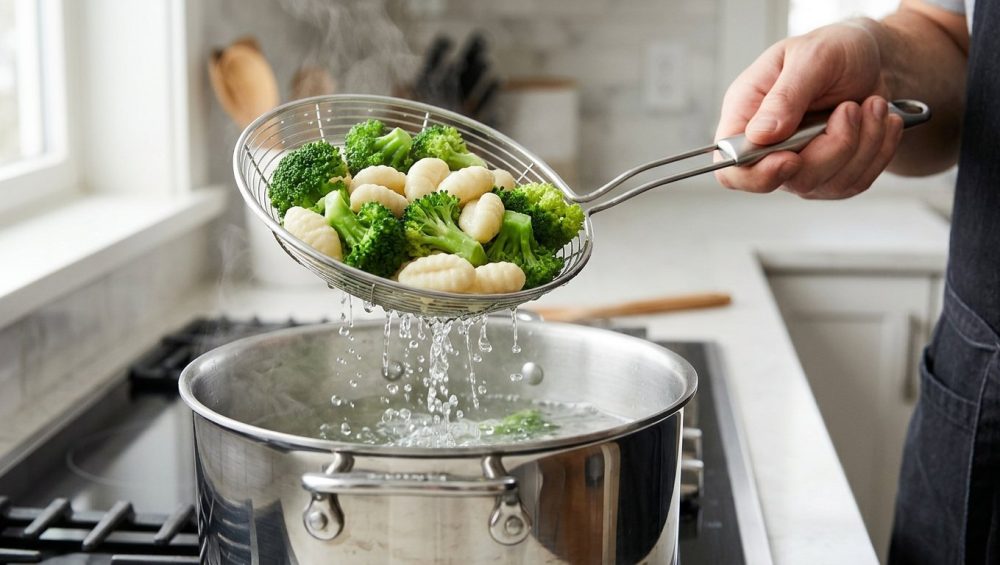
Today, the modern stainless steel spider skimmer retains this brilliant design but upgrades the materials for maximum durability. It features a long, ergonomic handle attached to a wide, shallow, cup-shaped wire-mesh basket. Unlike a fine-mesh sieve, which is tightly woven to strain out tiny particles, the spider has a wide-gauge, open weave. This specific design allows it to act as a heavy-duty lifter rather than a delicate sifter.
The Physics of Rapid Drainage
The secret to the spider skimmer’s superiority lies in the physics of fluid dynamics. When you lift a slotted spoon out of boiling water, the liquid has to fight its way through a few tiny, restrictive holes. This creates a bottleneck. The water pools in the bowl of the spoon, meaning your pasta or vegetables are still submerged in boiling hot liquid while suspended in the air.
The spider skimmer’s open wire web eliminates this bottleneck entirely. Because there is significantly more empty space than metal in the basket, liquids drain instantaneously. The moment you lift the spider from the pot, the water or hot oil falls away immediately, halting the cooking process and preventing your food from becoming waterlogged or greasy. This rapid drainage is absolutely crucial when transforming your daily cooking from a chaotic mess into a streamlined, professional operation.
The Science of Carryover Cooking and Why Speed Matters
Let us put on our lab coats for a moment, because understanding the science behind your food is the key to mastering it. You do not need a degree in molecular gastronomy, but you do need to respect the thermodynamics happening inside your pots and pans.
The Window of Perfection
When we talk about boiling pasta, we are really talking about starch gelatinization. Dried pasta is essentially a dense matrix of proteins (gluten) and tightly packed starch granules. When you drop that pasta into boiling water, the heat and moisture cause those starch granules to rapidly swell and absorb water. As the granules absorb water, they begin to break down and release sticky starch molecules into the pot—this is why your pasta water turns cloudy.
The goal of cooking perfect al dente pasta is to hydrate and gelatinize the starches just enough to make the noodle pliable and digestible, while retaining a firm, chewy core. This “window of perfection” is incredibly narrow. If you leave the pasta in the water for even a minute too long, the starch granules absorb too much water, swell past their breaking point, and rupture. The result? Flabby, mushy, structurally compromised noodles that turn into a gummy paste when you try to chew them.
Batch Retrieval vs. The Agonizing One-by-One Method
Because this window is so narrow, speed is your best friend. When the timer goes off, you need to evacuate the pasta from the hostile environment of the boiling water immediately. If you are using a small slotted spoon, you are forcefully extending the cooking time for the majority of the pot.
By using a large stainless steel spider skimmer, you can retrieve massive batches of pasta in seconds. You simply plunge the wide basket into the pot, scoop up a massive mound of noodles, let the water instantly drain through the wire mesh, and transfer the pasta directly into your waiting skillet of simmering sauce. This batch retrieval method ensures that every single noodle is cooked evenly. It is the ultimate secret to conquer the modern kitchen without breaking a sweat. Furthermore, by moving the pasta directly from the pot to the sauce, you retain a coating of that starchy, gelatinized pasta water on the noodles, which helps emulsify your sauce and bind it to the pasta.
Toxic Gear Warning: Why Plastic and Nylon Skimmers Are Kitchen Enemy Number One
We need to address a serious issue. If you have been following my advice, you know that I have an absolute zero-tolerance policy for cheap, toxic kitchenware. I do not care if that black nylon slotted spoon came free with your starter cookware set. It is a hazard to your food, your health, and your sanity, and it belongs in the garbage.
The Dangers of Melting Plastics and Mystery Metals
Nylon and plastic utensils are heavily marketed to home cooks because they are cheap to manufacture and will not scratch non-stick pans. However, they possess a fatal flaw: atrocious heat resistance. The standard melting point for most nylon kitchen utensils is a mere 400°F (204°C).
While boiling water only reaches 212°F (100°C), the edge of your metal pot and the radiant heat from your gas burner can easily exceed 400°F. If you leave a nylon spoon resting against the rim of a hot pot, or if you attempt to use it to retrieve foods from hot frying oil (which typically ranges from 350°F to 375°F), the plastic will begin to soften, warp, and melt.
When nylon degrades under high heat, it is not just ruining the tool; it is potentially leaching harmful chemical compounds into your food. Studies have raised concerns about compounds like diaminodiphenylmethane (DDM) found in some black nylon utensils, particularly when exposed to high temperatures. Furthermore, as the plastic edges melt and fray, they create microscopic crevices that harbor bacteria and trapped food particles. If you are serious about surviving kitchen disasters, the first step is eliminating tools that actively melt into your dinner.
Why 304 (18/8) Stainless Steel is Non-Negotiable
This is why a high-quality stainless steel spider skimmer is non-negotiable. When shopping for a spider, you must look for food-grade stainless steel, ideally 304 grade (often labeled as 18/8, referring to its 18% chromium and 8% nickel content).
Stainless steel is virtually indestructible in a standard home kitchen. It can easily withstand the blistering temperatures of deep-frying without warping, melting, or off-gassing. It is completely non-reactive, meaning it will not impart a metallic taste to acidic foods like tomatoes or citrus. It is also non-porous, making it incredibly hygienic and easy to clean. Yes, a solid stainless steel spider might cost a few dollars more than a flimsy plastic spoon, but it is a lifetime investment. When you are upgrading your cooking skills, investing in safe, durable, professional-grade materials is the most important leap you can make.
Beyond Pasta: The Spider Skimmer’s Multitasking Mastery
Do not let the pasta-centric introduction fool you. The spider skimmer is one of the most versatile multitasking tools you can own. Once you start keeping it within arm’s reach of your stove, you will find yourself reaching for it constantly.
Blanching Vegetables Like a Pro
Blanching is the culinary technique of briefly plunging vegetables into violently boiling, heavily salted water, and then immediately shocking them in an ice bath. This process halts enzymatic browning, sets a vibrant, electric-green color, and tenderizes the vegetable while retaining a crisp snap.
The success of blanching relies entirely on speed. If you are blanching a pound of delicate asparagus or fresh green beans, you cannot afford to fish them out one by one. The spider skimmer allows you to scoop the entire batch out of the boiling water in two seconds flat and plunge them directly into the ice bath. This rapid transfer completely halts the carryover cooking process, ensuring your vegetables do not turn into drab, olive-green mush. It is an essential technique when preparing simple meals for mindful moments where vibrant, fresh ingredients are the star of the show.
Deep Frying Without the Danger
If you have ever been terrified of deep-frying at home, the spider skimmer is your safety blanket. Dropping foods into 375°F oil using short tongs or a tiny spoon forces your hands dangerously close to the bubbling, spitting fat.
The long handle of a spider skimmer keeps your hands safely away from the danger zone. You can use the wide basket to gently lower breaded chicken, fragile tempura, or delicate wontons into the hot oil, eliminating the risk of violent splashes. When the food is perfectly golden brown, the spider allows you to retrieve multiple pieces at once, while the wide wire mesh ensures the excess oil drains away instantly, preventing greasy, soggy crusts.
For a fun culinary trick, you can even use the metal latticework of the spider to create “bird’s nest fries.” By layering thinly julienned potatoes across the concave basket and frying them, the metal framework conducts heat perfectly, setting the potatoes into a crispy, edible bowl. It is a spectacular presentation trick for mindful gatherings that will make your guests think you spent hours in a professional kitchen.
Skimming Stocks and Broths
While a fine-mesh strainer is better suited for removing microscopic impurities and foam (scum) from the surface of a simmering bone broth, the spider skimmer is the ultimate tool for the heavy lifting. When your homemade chicken stock has finished simmering for six hours, you are left with a pot full of spent bones, mushy onions, and limp celery.
Trying to pour a heavy, boiling-hot stockpot through a strainer is a recipe for disaster and severe burns. Instead, use your spider skimmer to effortlessly scoop out the large bones and aromatic vegetables first. Once the bulky solids are removed, the remaining liquid is significantly lighter and safer to pour through a fine-mesh sieve for a final clarification.
How to Choose the Perfect Spider Skimmer for Your Home Kitchen
Not all spider skimmers are created equal. Since we have established that cheap plastic is banned from our kitchens, you are looking exclusively at metal options. But even within the metal category, there are a few key design elements you need to consider to ensure you are buying a tool that will actually make your life easier.
Handle Length and Ergonomics
The handle is your primary defense against heat. Traditional Asian spiders often feature natural bamboo handles. While bamboo is lightweight and does not conduct heat, it has drawbacks in a modern home kitchen. Bamboo handles cannot go in the dishwasher, and over time, the wood can dry out, crack, or separate from the metal basket.
For maximum durability and hygiene, I strongly recommend a fully welded, all-stainless-steel design. Look for a handle that is at least 12 to 15 inches long. This length provides sufficient leverage for lifting heavy loads of pasta while keeping your hands well above the steam and spitting oil. A hollow stainless steel handle is ideal, as it remains lightweight and disperses heat quickly, ensuring the handle does not become too hot to touch. Finding the right ergonomic balance is crucial to eliminate kitchen chaos and cook with confidence.
Basket Diameter and Gauge Size
The size of the basket dictates how much food you can retrieve in a single swoop. For a standard home kitchen, a basket diameter between 5 and 7 inches is the sweet spot. Anything smaller defeats the purpose of bulk retrieval, and anything larger becomes unwieldy to maneuver inside a standard 8-quart stockpot or 12-inch skillet.
Pay close attention to the wire gauge and the depth of the basket. You want a concave, bowl-like shape, not a flat disc. The depth allows the spider to securely cradle round objects like boiled eggs or meatballs, preventing them from rolling off the edge and splashing back into the boiling liquid. The wire itself should be thick and rigid; if you can easily bend the mesh with your thumb, the skimmer is too flimsy and will warp under the weight of a heavy load.
Care and Maintenance for a Lifetime of Use
One of the greatest joys of upgrading to a fully stainless steel spider skimmer is the absolute lack of high-maintenance care required. Unlike cast iron skillets that need constant seasoning, or wooden cutting boards that demand regular oiling, a high-quality stainless steel spider is wonderfully low-maintenance.
Because it is made of non-porous metal, it will not absorb odors, stain from turmeric or tomato sauce, or harbor invisible bacteria. If you have used it for boiling pasta or blanching vegetables, a quick rinse under hot water is usually all it takes to clean it. If you have used it for deep-frying, the stainless steel construction means it is completely dishwasher safe. Just toss it on the top rack, and the high heat of the dishwasher will strip away any residual grease.
The only minor maintenance required is the occasional inspection of the wire mesh. Over years of heavy use, ensure that none of the individual wires have snapped or separated from the outer rim, as jagged metal edges can pose a hazard. However, if you invest in a solid, fully welded 304 stainless steel model from the start, this tool will easily outlast most of the pots and pans in your kitchen.
Conclusion
Cooking should not be a frantic, stressful race against time. It should be a controlled, enjoyable process where you dictate the pace, not the other way around. The frantic stove-side scramble of fishing out individual noodles with a tiny, melting plastic spoon is a self-inflicted wound.
By upgrading to a wide-gauge, stainless steel spider skimmer, you are doing more than just buying a new utensil. You are buying efficiency. You are buying the ability to instantly halt the carryover cooking process, preserving the delicate textures and vibrant colors of your food. You are banishing toxic, melting plastics from your home, and you are empowering yourself to tackle intimidating techniques like deep-frying and blanching with the calm confidence of a seasoned professional.
So, the next time you put a pot of water on to boil, do yourself a favor. Throw that useless plastic slotted spoon in the recycling bin, grab your stainless steel spider, and stop chasing your pasta. Your weeknight dinners—and your sanity—will thank you.