The Weekend Host’s Dilemma: Why Prepping Ahead Usually Ends in Mush and Misery
Listen closely, weekend culinary warriors. We need to have a brutally honest conversation about the absolute tragedy that is your make-ahead food prep. I am all for efficiency. During the week, my kitchen operates like a ruthless, highly optimized assembly line because time is money, and frankly, I have zero patience for a Tuesday night recipe that demands three hours of my life. The secret to simple weeknight dinners might be clever shortcuts and strategic compromises, but when the weekend rolls around, the rules change entirely. Weekends are for culinary artistry, elaborate projects, and actually enjoying the process of feeding the people you care about.
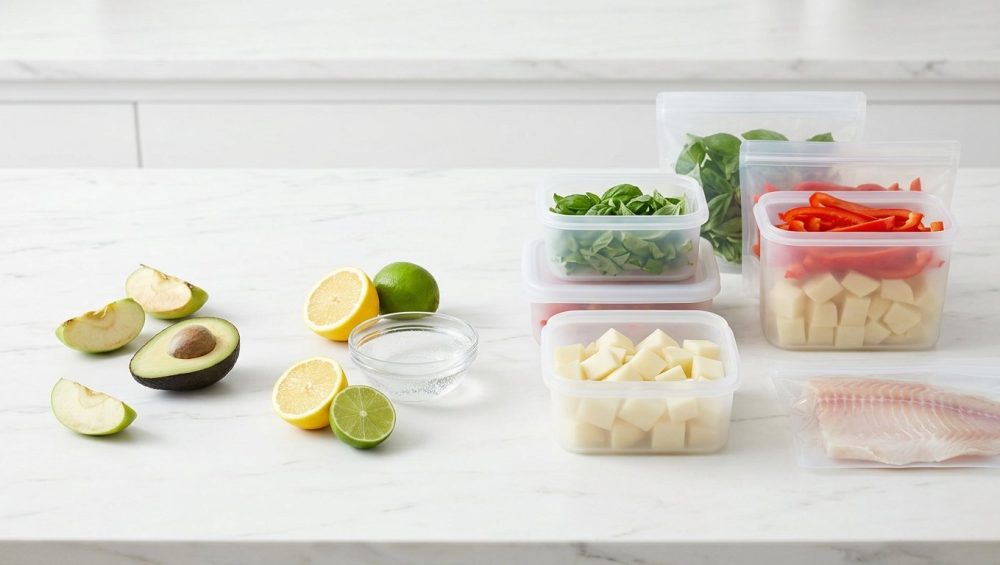
However, there is a massive, stressful disconnect between the fantasy of entertaining and the harsh reality of pulling it off. You want to be the effortlessly chic host, sipping a crisp Sauvignon Blanc while your guests mingle. You want to pull off a relaxed dinner party without breaking a sweat. But instead, you are usually trapped in the kitchen, frantically chopping apples that are turning brown before your very eyes, and praying your pre-sliced avocado doesn’t look like oxidized swamp mud by the time the appetizers hit the table.
You try to be smart. You try to prep your ingredients a day in advance. And what happens? Your potatoes turn black, your crisp greens wilt into a sad, slimy mess, and your meticulously chopped vegetables lose all their structural integrity. You assume you just aren’t fast enough, or that professional chefs have some sort of magical kitchen fairy that does their prep work ten minutes before service.
Spoiler alert: They don’t. Professional kitchens survive on massive amounts of make-ahead prep (they call it mise en place). The difference between their pristine, crisp, vibrantly colored ingredients and your sad, brown, mushy Tupperware graveyard comes down to a fundamental understanding of biochemistry and thermodynamics. I have zero patience for pretentious chef-speak, but we are going to get incredibly nerdy for a minute because understanding the molecular science of your food is the only way to stop it from looking like a science experiment. We are going to dismantle the exact mechanisms of enzymatic browning and cellular degradation, and I am going to teach you how to manipulate pH, block oxygen, and use the right storage gear to completely eliminate your day-of cooking bottlenecks.
Know Your Enemy: The Biochemical Sabotage of Enzymatic Browning
If you want to stop your beautifully curated make-ahead grazing boards from turning into a visual disaster, you need to understand exactly what you are fighting. The primary villain in our story is an enzyme called Polyphenol Oxidase, or PPO.
PPO is naturally present in the tissues of almost all plants, particularly in high-phenolic fruits and vegetables like apples, pears, bananas, avocados, potatoes, and mushrooms. In a perfectly intact, unbruised apple, PPO and the plant’s natural phenolic compounds are kept in entirely separate cellular compartments. They live in harmony because they never interact. But the moment you take a knife to that apple—or drop it, or bruise it—you rupture those internal cellular walls. You introduce the PPO to the phenols, and more importantly, you introduce both of them to the oxygen in the air.
This triggers a rapid, cascading chemical reaction. The PPO catalyzes the oxidation of the monophenols into o-diphenols, and then further oxidizes them into highly reactive compounds called o-quinones. Now, quinones themselves aren’t actually brown. But they are incredibly unstable and electrophilic. They rapidly react with amino acids and proteins, polymerizing in a complex chain reaction to form dark, insoluble pigments known as melanins. Yes, the exact same class of pigments that give human skin its color is what turns your potatoes black.
Why do plants do this? It’s a defense mechanism. Those melanins form a physical barrier and possess antimicrobial properties that prevent the spread of infection or rot into the damaged plant tissue. It is brilliant biology, but it is terrible for your dinner presentation.
To stop this reaction, we have to look at the enzyme’s vulnerabilities. The rate of enzymatic browning is dictated by the amount of active PPO present, the availability of oxygen, and the environmental pH. PPO is highly active in a relatively neutral pH environment, specifically between pH 5.0 and 7.0. However, if you drop the pH below 4.0, the enzyme’s activity is severely inhibited, and if you drop it below 3.0, it is essentially neutralized. Temperature also plays a role; dropping the temperature below 7°C (45°F) significantly slows the reaction, which is why your home refrigerator (usually sitting around 3°C to 5°C) buys you a little bit of time, but it does not stop the enzyme completely. To truly halt the browning, we have to engage in chemical warfare.
The Second Villain: Cellular Texture Degradation and the Loss of Turgor
While PPO is busy ruining the color of your food, a completely different set of biological processes is actively destroying its texture. Have you ever prepped a beautiful medley of diced vegetables on a Thursday for a Saturday gathering, only to find them sitting in a pool of their own weeping juices, soft and lifeless?
This mush factor is driven by the breakdown of pectin, the complex structural carbohydrate that acts as the biological “glue” holding plant cell walls together. When you slice a vegetable, you aren’t just exposing it to oxygen; you are activating hydrolytic enzymes like pectin methylesterase (PME) and polygalacturonase (PG). These enzymes immediately get to work depolymerizing the pectin chains, literally dissolving the structural integrity of the cell wall from the inside out.
Furthermore, when you damage the cell membranes, you disrupt the plant’s osmotic balance. Crispness in a vegetable is dictated by turgor pressure—the physical pressure of the water inside the cell’s central vacuole pushing outward against the rigid cell wall. When the membrane loses its integrity, solutes leak into the extracellular space, osmotic pressure equalizes, turgor pressure plummets, and the vegetable goes entirely limp.
Avoiding these rookie kitchen mistakes is entirely about mitigating enzymatic action and managing environmental exposure. If you store your prepped vegetables in a poorly sealed container, they will also fall victim to dehydration, causing them to shrivel. Conversely, if you store them with too much trapped, ambient moisture without proper airflow, you accelerate rot. And if you dare to store your prepped greens anywhere near an ethylene-producing fruit (like an apple, banana, or tomato), the ethylene gas will act as a ripening hormone, hyper-activating those pectin-destroying enzymes and turning your crisp greens into slime overnight.
Chemical Warfare: Manipulating pH and Deploying Antioxidants
Now that we know exactly how the food is degrading, we can systematically stop it. You cannot simply chop your ingredients, throw them in a bowl, and hope for the best. You must actively treat the exposed surfaces.
I finally stopped burning dinner when I understood how to control the thermodynamics of my pans, and you will stop ruining your prep when you learn how to control the pH and oxidation states of your ingredients.
The Undisputed King: Ascorbic Acid
When it comes to preventing enzymatic browning, Ascorbic Acid (Vitamin C) is the absolute gold standard. While many home cooks reach for a squeeze of lemon juice, pure ascorbic acid is scientifically vastly superior. Here is why: Lemon juice relies primarily on citric acid. Citric acid lowers the pH to inhibit PPO, acting as a non-competitive inhibitor. However, it requires a significant amount of citric acid to properly acidify the food, which drastically alters the flavor profile, making your apples and potatoes taste aggressively sour.
Ascorbic acid, on the other hand, is a dual-threat weapon. Yes, it lowers the pH, but more importantly, it is a powerful reducing agent (an antioxidant). When PPO oxidizes those phenols into quinones, ascorbic acid literally intercepts the reaction. It reduces the newly formed quinones straight back into colorless diphenols before they ever have the chance to polymerize into brown melanins. It actively reverses the browning process at a molecular level without aggressively altering the flavor of the food.
The Master Ratio: To create a professional-grade holding solution, dissolve 1 level teaspoon of pure ascorbic acid powder into 1 gallon of cold water. If you cannot find the pure powder, you can crush six standard 500-milligram Vitamin C tablets until completely fine and dissolve them in the water. (Ignore any slight cloudiness in the water; that is just the inert binders from the tablets). Submerge your freshly cut produce in this bath for exactly 10 minutes, then drain. The surface will be deeply protected against oxidation for days.
The Honey Water Hack
If you are prepping fruit specifically for a sweet application and want to avoid any acidic tang entirely, you can leverage the biochemical properties of honey. Honey contains specific peptide compounds and possesses natural antibacterial and antioxidant properties that actively inhibit the activity of polyphenol oxidase and reduce oxidation.
The Master Ratio: Dissolve 2 tablespoons of honey into 1 cup of warm water, then allow it to cool completely before using. (Do not put hot water on your fresh fruit, or you will initiate thermal breakdown of the pectin). Submerge your sliced apples or pears in the cooled honey water for 3 to 5 minutes. The peptides will bind to the enzymes, and the slight sugar coating will act as a mild physical barrier against oxygen.
The Salt Water Solution
For savory applications, particularly potatoes and root vegetables, sodium chloride is your best friend. The chloride ions in salt act as a potent inhibitor of PPO.
The Master Ratio: Dissolve 1/2 teaspoon of kosher salt per cup of cold water. Submerge your cut potatoes entirely. Not only does the salt inhibit the browning enzyme, but the water submersion acts as a physical barrier against atmospheric oxygen, and it simultaneously draws out excess surface starch, which will result in a significantly crispier final product when you roast or fry them later. Just be sure to rinse and thoroughly dry the potatoes before cooking.
Physical Barriers: Blocking Oxygen and Strategic Denaturation
Chemical treatments are highly effective, but they are only half the battle. To guarantee pristine make-ahead ingredients, you must also utilize physical interventions to either separate the food from oxygen or permanently destroy the enzymes causing the problem.
The Double-Edged Sword of Blanching
Blanching is a technique where vegetables are briefly submerged in rapidly boiling water, then immediately shocked in an ice bath. The science here is brutal but effective: PPO is a protein, and like all proteins, it denatures when exposed to high heat (generally above 60°C or 140°F). Blanching physically destroys the enzyme, permanently preventing enzymatic browning.
However, blanching is a double-edged sword. While the heat destroys PPO, it also solubilizes the pectin in the cell walls, which can lead to rapid texture degradation and softening. If you blanch too long, you end up with mush. The professional secret is the HTST method: High-Temperature, Short-Time. You want the water at a rolling, aggressive boil so the exterior of the vegetable hits the denaturation temperature almost instantly, and then you must plunge it into ice water immediately to halt the cooking process before the internal pectin breaks down.
Submersion and Vacuum Sealing
If you are prepping ingredients that cannot be blanched (like fresh fruits, avocados, or delicate salad components), you must physically block oxygen. Submersion in your ascorbic acid or salt water baths is the easiest method for sturdy items.
For items that need to be stored dry, vacuum sealing is an incredible tool, but it requires finesse. If you pull a maximum vacuum on delicate cellular structures (like berries or leafy greens), the negative pressure will literally crush the cell walls, causing the turgor pressure to collapse and the internal juices to leak out. You will open the bag to find a pulverized, wet mess. When vacuum sealing prepped produce, use the “pulse” function on your sealer to remove the majority of the ambient oxygen without crushing the physical structure of the food.
The “No-Go” Rule: Why Your Storage Containers Are Ruining Your Food (and Your Health)
We need to pause here for a critical intervention. You can perfectly execute an ascorbic acid bath, meticulously manage your pH, and perfectly blanch your vegetables, but if you put those pristine ingredients into a cheap, degraded plastic container, you are entirely defeating the purpose. I absolutely refuse to use toxic kitchen gear in my home, and neither should you.
Plastic food storage is a culinary abomination. Traditional plastic containers are manufactured from petroleum-based polymers loaded with chemical additives. When exposed to the acidic environments we just created (like our ascorbic or citric acid baths), or when exposed to the heat of a dishwasher, these plastics rapidly degrade. They warp, they stain, and they leach endocrine-disrupting chemicals like BPA, BPS, and phthalates directly into your food.
Furthermore, plastic is incredibly prone to micro-scratches. Every time you vigorously wash a plastic container or scoop food out of it with a metal spoon, you create microscopic gouges in the surface. These scratches become impenetrable breeding grounds for bacteria and trapped odors. Have you ever noticed that your prepped onions make your plastic container smell like onions for the next three years? That is because the plastic is physically holding onto the volatile sulfur compounds. This bacterial load actively accelerates the spoilage of whatever fresh ingredients you put in there next.
The Superiority of Platinum-Cured Silicone
The only acceptable, non-toxic, highly durable material that should form the foundation of a minimalist kitchen setup is high-grade, platinum-cured silicone.
Silicone is fundamentally different from plastic. It is a synthetic polymer made from alternating silica (sand) and oxygen molecules. It is completely inert, meaning it will not chemically react with the acids in your food, nor will it absorb or off-gas odors. High-quality, food-grade silicone does not contain BPA, BPS, latex, lead, or phthalates. It does not shed microplastics into your food or the environment.
When sourcing silicone gear, you must be ruthless about quality. Look for “Platinum-Cured” silicone, which means it was manufactured using a platinum catalyst rather than cheap peroxide curing agents, resulting in absolute purity. Furthermore, look for the LFGB certification. The FDA standard for food-grade silicone in the United States is notoriously lax; the LFGB standard (used in Europe) is significantly stricter regarding chemical transfer and material purity.
Platinum silicone storage bags and containers provide a truly hermetic, airtight seal that drastically outperforms the flimsy lids of plastic containers. Because silicone is thermally stable from -40°F to a blistering 450°F (-40°C to 230°C), you can take a prepped meal directly from the deep freezer and drop it straight into a sous-vide bath or a hot oven without the material degrading, warping, or melting. It is the ultimate tool for preserving the cellular integrity of your make-ahead prep.
The Masterclass: Ingredient-Specific Make-Ahead Strategies
Understanding the science is great, but executing it on a Friday night requires specific, actionable tactics. The secret to effortless hosting lies in knowing exactly how to treat individual ingredients based on their unique biochemical makeup.
Apples, Pears, and Stone Fruit
These fruits possess incredibly high phenolic content and highly active PPO, making them the most susceptible to rapid browning.
- Slice the fruit with a razor-sharp knife. A dull knife causes excessive cellular crushing along the cut line, releasing exponentially more enzymes and accelerating the degradation.
- Immediately submerge the slices in the Ascorbic Acid Master Ratio bath (1 tsp per gallon) for 10 minutes.
- Drain thoroughly. Do not rinse, as you want the microscopic layer of antioxidant protection to remain on the surface.
- Store in an LFGB-certified platinum silicone bag, squeezing out as much ambient air as possible before sealing. They will remain crisp and vibrantly colored in the refrigerator for up to 3 to 4 days.
Avocados and Guacamole
Let’s dispel a persistent culinary myth: Leaving the avocado pit in a bowl of guacamole does absolutely nothing to prevent browning, except for the exact millimeter of avocado flesh physically touching the pit. The pit emits no magical anti-browning aura; it simply blocks oxygen from that tiny surface area.
- To prep avocados ahead of time, you must rely on surface acidification and total oxygen deprivation.
- If storing avocado halves, brush the exposed flesh generously with a concentrated ascorbic acid solution.
- If making guacamole, mix your lime juice (citric acid) into the mash, but don’t stop there. Transfer the guacamole to a rigid silicone container, smooth the top completely flat with a bench scraper or spatula, and pour a very thin, 2-millimeter layer of cold water or a mild ascorbic acid solution directly over the top. This creates an impenetrable liquid oxygen barrier.
- When ready to serve, simply pour the water off the top and stir. The guacamole underneath will be flawlessly green.
Potatoes and Root Vegetables
Potatoes are victims of both enzymatic browning and starch oxidation.
- Peel and dice your potatoes.
- Immediately submerge them in the Salt Water Solution (1/2 tsp salt per cup of water).
- Keep them fully submerged in a sealed silicone or glass container in the refrigerator for up to 48 hours.
- If you are prepping potatoes for a make-ahead potato salad or home fries, blanch them in boiling water heavily spiked with white vinegar. The acid in the vinegar prevents the exterior pectin from breaking down, ensuring the potato holds its sharp, diced shape without turning to mush, while the heat denatures the PPO.
Leafy Greens and Delicate Herbs
The enemy of prepped greens is not PPO; it is moisture and ethylene gas.
- Wash your greens and spin them aggressively dry in a high-quality salad spinner. Any residual surface moisture will breed bacteria and cause rapid cellular rot.
- Line a large, rigid platinum silicone container with a completely dry paper towel.
- Place the greens inside loosely—do not pack them down, as physical crushing destroys turgor pressure.
- Place another dry paper towel on top and seal the container. The silicone blocks external ethylene gas from ripening fruits in your fridge, while the paper towels regulate the internal humidity, keeping the greens perfectly crisp for days.
Workflow Optimization: Eliminating the Day-Of Bottleneck
Once you have mastered the biochemistry of preservation, you must optimize your staging. You cannot simply shove all your perfectly prepped silicone containers onto a random shelf in the refrigerator.
You need to utilize advanced food staging techniques to completely eliminate the chaos of day-of cooking. Your refrigerator has distinct micro-climates. The bottom back of the fridge is the coldest zone (often hovering near 1°C to 2°C). This is where you store your highly perishable, prepped proteins and your heavily acidified fruit baths, as the extreme cold will further suppress any lingering enzymatic activity. The crisper drawers, assuming they have adjustable humidity vents, should be reserved for your sealed silicone containers of leafy greens (high humidity setting) to maintain maximum turgor pressure.
By Friday evening, every single vegetable should be chopped, treated, and sealed. Every fruit should be bathed in ascorbic acid and staged. Every sauce should be emulsified and stored in non-reactive silicone. When your guests arrive on Saturday, your only job should be applying heat to ingredients, plating, and pouring wine. You have successfully shifted 90% of the labor out of the critical path.
Final Thoughts: Reclaiming Your Weekend and Your Sanity
Listen, pulling off a meaningful dinner party without losing your mind does not require a degree from Le Cordon Bleu. It simply requires you to stop working against the biological nature of your ingredients and start working with it.
When you understand that browning is just a polyphenol oxidase reaction waiting to be interrupted by ascorbic acid, and when you realize that cellular mush is just pectin degradation that can be halted by proper thermal and environmental control, the kitchen stops being a place of unpredictable chaos. Throw away those stained, toxic plastic tubs. Invest in serious, platinum-grade silicone. Respect the chemistry of your food, and I promise you, your weekends will never be the same. Now, go prep something amazing, and pour yourself a drink. You’ve earned it.