We have all been there. You buy a block of tofu with the best of intentions, determined to have a healthy, plant-based weeknight meal. You carefully cube it, toss it in a hot pan, and… congratulations, you have just cooked a batch of hot, flavorless pencil erasers. It is culinary purgatory. If you have ever frantically searched for ways to rescue a ruined dinner while staring down a skillet of mushy, disintegrating soy curds, I feel your pain. I really do.
But here is the brutally honest truth: tofu is not the problem. You are the problem. Or, more accurately, the Western culinary approach to tofu is the problem. For decades, we have treated this delicate ingredient like a one-to-one replacement for a slab of beef, expecting it to magically sear and absorb flavor straight out of its little plastic waterbed. Tofu has been a revered staple in Asian cuisines for over two thousand years, originating during the Chinese Han dynasty. It was never meant to be a direct meat substitute; it is a unique protein with its own set of rules.
When you take raw tofu straight from the package, it is essentially a wet sponge. You cannot stuff more liquid—no matter how delicious your marinade is—into a sponge that is already 85% full of water.
So, what is the secret? What is the zero-effort, scientifically validated trick that will transform your sad soy blocks into chewy, meaty, sauce-absorbing powerhouses?
You freeze it.
Yes, you heard me correctly. You take that block of tofu, and you subject it to sub-zero temperatures. It sounds almost too simple to be true, but as your favorite snarky sous-chef, I promise you this: freezing your tofu will fundamentally alter its cellular structure, changing your weeknight dinners forever. Put away the expensive gadgets. You do not need a culinary degree to pull this off. You just need a freezer, a basic understanding of thermodynamics, and the willingness to let science do the heavy lifting.
The Cellular Food Science: What Actually Happens in the Freezer?
I have zero patience for pretentious chef-speak, but we need to put on our lab coats for a minute because the physics behind this transformation are absolutely mind-blowing. Freezing tofu is not just a trendy social media hack; it is a profound food physics intervention with measurable, reproducible effects on the soy protein matrix.
Raw tofu is roughly 85% water, suspended in a fragile gel of denatured soy globulins. To be specific, it is made up of two primary proteins: glycinin (11S globulin), which is responsible for the firmness, and β-conglycinin (7S globulin), which contributes to the elasticity. These proteins are bound together with coagulants like calcium sulfate or magnesium chloride. The resulting smooth, custard-like texture is the product of tightly packed, hydrogen-bonded protein clusters with very little void space.
This dense, watery structure is exactly why your marinades constantly fail. Studies utilizing confocal laser scanning microscopy have demonstrated that in raw tofu, marinades sit stubbornly on the surface, diffusing a pathetic 0.3 to 0.7 millimeters deep even after 24 hours of soaking. You are essentially painting the outside of a water balloon.
When you place that block of tofu in your freezer (which should sit at around -18°C or 0°F), you violently disrupt this delicate equilibrium. As the temperature drops below freezing, the water inside the tofu begins nucleating into ice crystals. Because the solutes in the tofu—the naturally occurring salts, sugars, and proteins—depress the freezing point only slightly, the free water freezes first. Crucially, it freezes outside the protein cells.
Here is where the magic happens: water expands by approximately 9% when it turns into ice. These growing extracellular ice crystals exert immense hydraulic pressure, stretching and fracturing the tightly packed soy protein matrix like microscopic geological fault lines. The ice literally pushes the protein structure apart. At the same time, the freezing temperatures force the proteins to aggregate, forming stronger disulfide bonds and hydrophobic interactions.
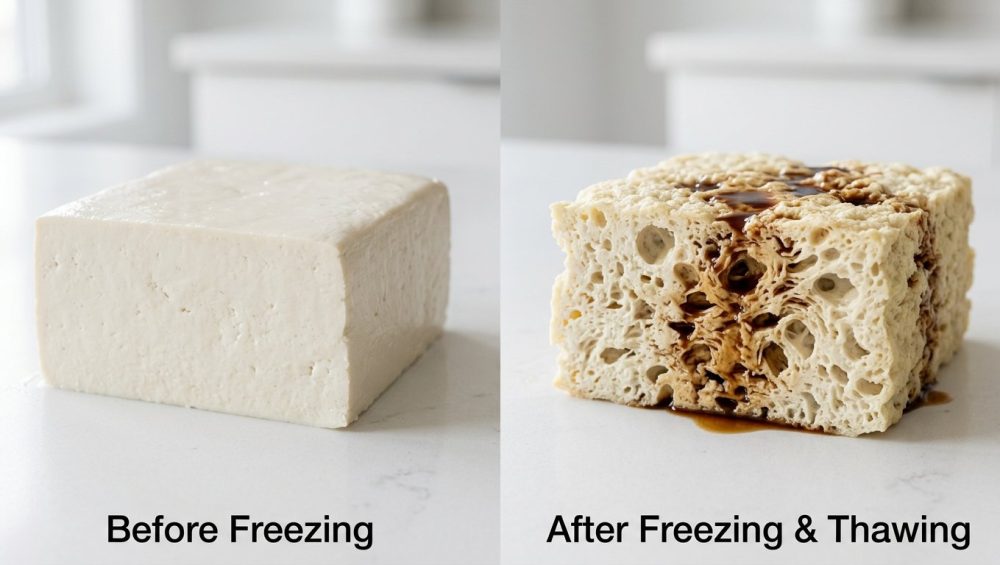
When you eventually thaw the tofu, those ice crystals melt and drain away, but the structural damage is permanent—in the absolute best way possible. The protein matrix cannot spring back to its original shape. What is left behind is a highly porous, interconnected network of micropores. You have effectively transformed a dense block of soy cheese into a culinary sponge. According to recent food science tracer assays, this freeze-thaw process increases a tofu block’s marinade uptake capacity by a staggering 217%.
The Economics of the Plant-Based Boom
Before we get into the exact methodology, let’s talk about why mastering this technique matters right now. We are currently living in the golden age of alternative proteins. According to recent 2026 market intelligence reports, the global plant-based meat market was valued at an astonishing $11.47 billion in 2025, and it is aggressively projected to reach $22.37 billion by 2030, growing at a compound annual growth rate of over 14%.
People are spending an absolute fortune on hyper-processed, lab-engineered faux meats. Supermarket shelves are flooded with expensive pea-protein patties and soy-isolate crumbles that frequently cost more per pound than actual premium beef. If you look at the ingredient labels on these modern meat substitutes, you will find a laundry list of lab-derived components: methylcellulose, isolated pea protein, expeller-pressed canola oil, and titanium dioxide.
Why are we doing this to our wallets and our digestive systems? If you are genuinely interested in breaking your takeout habit and cooking sustainable, plant-based meals at home, you do not need to rely on expensive, heavily packaged commercial meat substitutes. You just need a two-dollar block of firm tofu (ingredients: soybeans, water, calcium sulfate) and a working freezer. By utilizing the freeze-thaw method, you can replicate the chewy, fibrous, resilient texture of those expensive meat alternatives for pennies on the dollar. It is the ultimate victory for the everyday home cook.
The Masterclass Method: How to Freeze Tofu Correctly
Not all freezing methods are created equal. I have seen viral tutorials telling people to just chuck the entire sealed plastic tub of tofu directly into the freezer. Do not do this. It is lazy, it yields wildly inconsistent results, and it is terrible for the ingredient. The water inside the packaging will expand, potentially cracking the plastic and inviting freezer burn. Plus, it takes exponentially longer to thaw a giant block of solid ice. Time is money, people. We need efficiency.
Here is the definitive, zero-BS step-by-step guide to perfectly freezing your tofu.
Step 1: Selecting the Right Block
Do not freeze silken tofu unless you are specifically trying to make a crumbly, bizarre dessert base. Silken tofu has too much water and too little protein structure; freezing it destroys it completely, leaving you with a grainy mess. You want Firm or Extra-Firm tofu. These varieties have the structural integrity required to withstand the hydraulic pressure of the expanding ice crystals without turning to mush.
Step 2: The Pre-Freeze Prep (And Why You Shouldn’t Press It Yet)
Open the package and drain the cloudy liquid. Do not bother pressing the tofu at this stage. I repeat: skip the heavy books, the paper towels, and the expensive plastic tofu presses.
This is a critical mistake that so many beginners make. If you press the tofu before you freeze it, you are removing the very water that is needed to create the expanding ice crystals! You want that internal water present during the freeze to act as your microscopic demolition crew. Furthermore, mechanical pressing of raw tofu is an exercise in futility, as it only achieves about a 38% moisture removal anyway.
Instead, simply pat the outside of the block dry and cut it into your desired shapes. I highly recommend tearing the tofu into irregular chunks rather than cutting it into perfect, uniform cubes. Tearing creates craggy, jagged edges that maximize the surface area, giving your marinades and cooking oils more texture to cling to. If you prefer neat slices for sandwiches, cut them into thick planks.
Step 3: The Freezing Process
Line a baking sheet with parchment paper. (Side note: if your baking sheets keep warping the second they hit extreme temperatures, do yourself a massive favor and invest in heavy-gauge commercial aluminum pans. Stop buying cheap junk that bends like tin foil).
Arrange your tofu pieces in a single layer, ensuring they are not touching. If they touch, they will freeze together into an inseparable iceberg, and you will have to chip them apart with a butter knife later. Place the tray in the freezer for at least 6 to 8 hours, or ideally overnight. Once they are frozen solid, you can transfer the pieces into a heavy-duty freezer bag or an airtight container for long-term storage. They will keep beautifully for up to three months.
Step 4: The Thawing Protocol
When you are ready to cook, you have three options for thawing, depending entirely on your level of patience and planning:
- The Fridge Method (The Planner): Move the frozen tofu to the refrigerator 24 hours before you plan to cook. This is the gentlest method. Slow thawing allows the protein matrix to relax, keeping it slightly more tender while still retaining that meaty chew.
- The Hot Water Bath (The Quick Fix): Place the frozen pieces in a large bowl and submerge them in boiling or very hot water for 10 to 15 minutes. This rapidly melts the ice crystals and actually shocks the proteins, making them even tighter and chewier. This is my preferred method for stir-fries.
- The Microwave (The Desperate Weeknight): Place the pieces on a microwave-safe plate and use the defrost setting. It works in a pinch, but keep a close eye on it so you don’t accidentally start cooking and rubberizing the edges.
Step 5: The Final Press
This is where the magic reveals itself. Once the tofu is completely thawed, it will look slightly yellow and feel remarkably spongy. Now, you press it. Because the protein matrix has been fractured, you can literally take a handful of thawed tofu chunks and squeeze them over the sink like a literal bath sponge. The water will pour out effortlessly, leaving you with dry, highly porous, incredibly resilient pieces of soy protein ready to absorb whatever flavor you throw at them. You can easily achieve 65% to 70% moisture removal using this method.
The “Double Freeze” Method: Is It Worth It?
If you spend any time in online culinary circles, you may have heard of the viral “double freeze” method. The premise is exactly what it sounds like: you freeze the tofu, thaw it, and then freeze it a second time before the final thaw and press.
Does it work? Yes. Is it necessary? That depends entirely on your end goals.
The science behind the double freeze is sound. The first freeze creates the initial network of micropores. When you thaw it, some residual moisture remains trapped in the deeper, unbroken protein clusters. Freezing it a second time forces that remaining, stubborn moisture to crystallize, creating secondary micro-fissures.
The result is a tofu that is startlingly dense, dry, and chewy. It is the closest you will ever get to the texture of real chicken or beef without stepping foot in a laboratory. If you are making a vegan “fried chicken” sandwich, a hearty beef-style stew, or a dense jerky, the double freeze is absolutely worth the extra day of passive prep. But for a standard Tuesday night stir-fry, a single freeze is more than sufficient to blow your mind.
The Marinade Magnet: Mastering Flavor Chemistry
Now that you have expelled the water and created a network of hungry micropores, your tofu is a blank canvas. But a blank canvas still requires good paint.
Because frozen-and-thawed tofu acts like a sponge, capillary action will aggressively pull your marinade deep into the center of the block. This means you need to be intentional about your flavor profiles and the viscosity of your liquids. Thick, sugary marinades (like pure, undiluted BBQ sauce) will simply clog the surface pores and burn in the pan. You need a thin, watery marinade to penetrate deep into the center of the protein. Once the inside is flavored, you can glaze the outside with the thick sauce in the pan.
A good marinade requires a balance of fat, salt, umami, sweetness, and—crucially—acid. I see so many home cooks drowning their food in soy sauce and wondering why it tastes flat and muddy. I will scream this from the rooftops until I lose my voice: your dinner actually needs acid to wake up the palate. Rice vinegar, lime juice, or even a splash of apple cider vinegar will cut through the heaviness and brighten the entire dish.
Here is a foolproof, all-purpose Asian-inspired marinade ratio for one block of frozen tofu:
- Umami/Salt: 3 tablespoons of low-sodium soy sauce or tamari.
- Acid: 1 tablespoon of rice vinegar.
- Fat: 1 tablespoon of toasted sesame oil (fat is essential because it carries fat-soluble flavor compounds deep into the matrix).
- Sweetness: 1 tablespoon of maple syrup or brown sugar (crucial for promoting the Maillard reaction and caramelization later).
- Aromatics: Minced garlic, freshly grated ginger, and a dash of white pepper.
Toss your dry, squeezed tofu chunks into this mixture. Watch closely. Within minutes, the liquid will practically vanish, sucked into the core of the tofu. You do not need to marinate this overnight; 10 to 15 minutes is plenty.
If you prefer a Mediterranean profile, whisk together olive oil, lemon juice, dried oregano, minced garlic, and a tablespoon of nutritional yeast for a savory, cheesy depth. The sponge-like texture will absorb it just as eagerly.
Searing and Cooking: The No-Nonsense Gear Talk
We need to have a serious conversation about how you are cooking this perfectly prepped tofu. You have gone through the trouble of altering its cellular structure and infusing it with complex flavors. Do not ruin it by tossing it into a scratched, peeling, toxic non-stick pan.
I am a militant advocate for banishing toxic kitchen gear from your home. Cheap Teflon pans are an absolute menace. They cannot handle the high heat required to get a proper, crispy sear on your tofu, and once that coating starts flaking into your food, you are literally eating forever chemicals.
To achieve that glorious, golden-brown crust, you need thermal mass and high heat. You need a well-seasoned carbon steel wok, a heavy cast-iron skillet, or a high-quality tri-ply stainless steel pan.
Wait, you are terrified of stainless steel because everything sticks to it? That is a technique issue, not a pan issue. You just need to understand the thermodynamics of preventing protein adhesion. Pre-heat your stainless steel pan dry until it is hot enough that a drop of water instantly beads up and dances across the surface like a glass marble (this is known as the Leidenfrost effect). Only then do you add your high-smoke-point oil, followed immediately by your tofu.
Because you pressed all the excess water out of the frozen tofu, it won’t immediately drop the temperature of the pan. The reduced surface moisture allows for immediate starch-protein caramelization (the Maillard reaction). The Maillard reaction requires temperatures above 140°C (285°F) and a dry surface to thrive. You will get a restaurant-quality crust in 90 seconds flat.
For an even crispier exterior, toss your marinated tofu in a light dusting of cornstarch or arrowroot powder right before hitting the pan. The amylose in the cornstarch gelatinizes and then dehydrates in the hot oil, creating a glass-like, shattering crust that holds up brilliantly in sauces.
And please, use proper utensils. If you are using cheap, degrading silicone tools and wondering why your spatulas taste like soap, it is because low-grade silicone absorbs dish detergent and transfers it directly to your food when heated. Throw them out. Invest in a solid wooden turner or a metal fish spatula. Respect your ingredients, and respect your tools.
The Weeknight Efficiency Hack
Let’s talk about the reality of modern life. You are busy. I am busy. When 6:30 PM rolls around on a Wednesday, the last thing you want to do is start a complicated, multi-step culinary project.
This is exactly why freezing tofu is the ultimate weapon for simple weeknight dinners. It is pure, unadulterated passive prep.
Buy three blocks of tofu on your weekend grocery run. Drain them, tear them into chunks, and freeze them on a sheet pan on Sunday afternoon. Once frozen, dump them all into a large freezer bag. You now have a massive stash of highly textured, ready-to-absorb protein on standby.
On Tuesday morning, grab a handful of frozen chunks and toss them in a bowl in the fridge to thaw while you are at work. When you get home, squeeze them out, toss them in a quick sauce, and throw them in a hot pan. You can have a crispy, deeply flavorful protein on the table in under 15 minutes. It is a foolproof system to eliminate kitchen chaos and ensure you are never more than a few minutes away from a high-quality meal. Time is money, and this method buys your time back.
Flavor Profiles and Meat Mimicry
Because the texture of frozen tofu is so remarkably resilient and chewy, it excels in dishes where you would traditionally use poultry or beef. If you are cooking for stubborn carnivores who constantly complain that their chicken always turns out dry, serve them a blind taste test of double-frozen tofu tossed in cornstarch and pan-fried. They won’t know what hit them.
The “Chicken” Nugget
Tear the tofu into bite-sized pieces, freeze, thaw, and press. Toss them in a mixture of nutritional yeast, garlic powder, onion powder, salt, and a little pickle juice (trust me on the pickle juice, it mimics the brine used by famous fast-food chains). Dredge lightly in arrowroot powder or cornstarch and shallow fry. The texture is shockingly similar to a premium chicken breast nugget.
The “Beef” Stir-Fry
Cut the tofu into thin strips before freezing. Thaw, press, and marinate in dark soy sauce, vegetarian oyster sauce, a dash of liquid smoke, and black pepper. Sear hard in a carbon steel wok with broccoli and snap peas. The strips will hold their shape during vigorous tossing without disintegrating, providing a satisfying, meaty chew.
The “Pork” Crumbles
Take your thawed, pressed tofu and pulse it a few times in a food processor, or just crumble it aggressively with your hands. Fry it in a pan with chili oil, doubanjiang (fermented broad bean paste), and Sichuan peppercorns for a phenomenal Mapo Tofu or Dan Dan noodle topping. The crumbles absorb the spicy oil perfectly.
Troubleshooting Common Rookie Mistakes
Even with a method this brilliantly simple, people find ways to mess it up. Let’s head off the culinary disasters before they happen.
“My tofu turned yellow in the freezer! Is it spoiled?”
No. Take a deep breath. Frozen tofu naturally takes on a yellowish-amber hue due to the concentration of soy proteins and lipids as the water separates into ice. It is completely harmless, and it will return to its normal off-white color as soon as it thaws.
“My tofu is completely falling apart and crumbly.”
You either used silken tofu (which I specifically told you not to do), or you were overly aggressive when squeezing it. While frozen-and-thawed tofu is resilient, it is not indestructible. Squeeze it firmly with the palms of your hands to expel the water, but do not wring it out like a wet dish towel. Treat it with a little respect.
“It didn’t absorb the marinade.”
You didn’t squeeze enough water out after thawing. Think about the physics of a sponge. If the sponge is still full of water, it cannot absorb the soy sauce. Squeeze harder. Alternatively, your marinade was too thick. Remember, thin liquids penetrate; thick liquids coat.
“Can I freeze it IN the marinade?”
Yes! This is actually a genius, advanced-level hack. Once you have frozen, thawed, and pressed the tofu the first time, you can place it in a bag with your marinade and freeze it again. As the ice crystals form and fracture the protein a second time, the marinade is pulled directly into the microscopic fissures. When you thaw it for cooking, it is infused with flavor down to the cellular level.
Final Thoughts from the Sous-Chef
Cooking does not require a culinary degree. It requires an understanding of basic techniques, a refusal to settle for mediocre ingredients, and a willingness to let science do the heavy lifting for you.
Freezing tofu is the perfect embodiment of this philosophy. You are taking a misunderstood, often-maligned ingredient and using elementary thermodynamics to transform it into a culinary powerhouse. It requires zero active effort, zero expensive equipment, and zero stress.
Stop settling for bland, mushy, disappointing meals. Stop relying on overpriced, hyper-processed meat substitutes that drain your bank account. Embrace the ice, fracture that protein matrix, and start cooking like the absolute boss you are. Now go clean your kitchen.