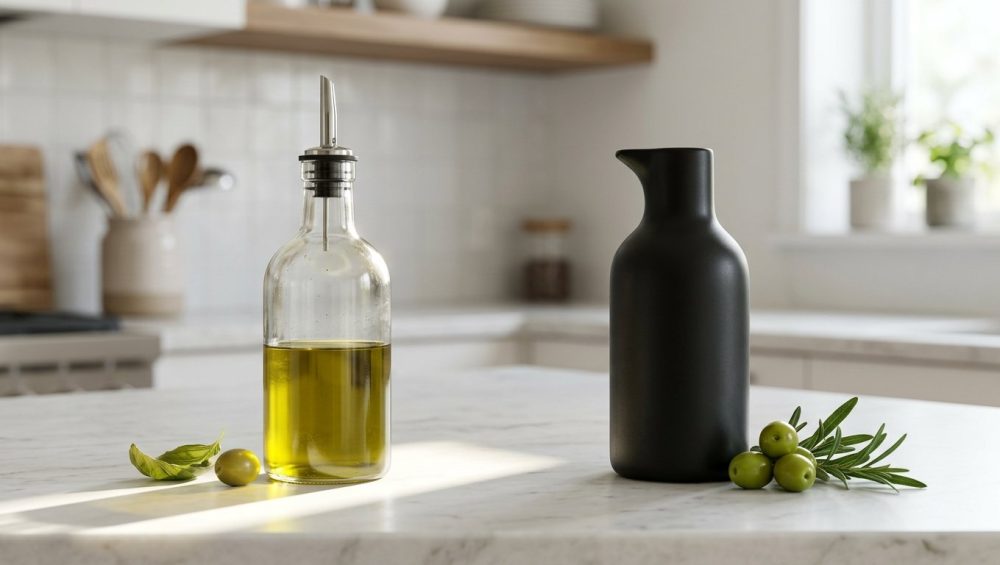
Let’s get one thing straight right out of the gate: you are probably sabotaging your own cooking before you even turn on the stove. You spend your hard-earned money on a beautiful, artisanal bottle of Extra Virgin Olive Oil (EVOO). You bring it home, carefully decant it into a stunning, crystal-clear glass cruet with a charming little sprig of rosemary floating inside, and you place it proudly on the countertop right next to your stovetop. It looks like a rustic Mediterranean dream. It belongs on a magazine cover.
It also tastes like melted crayons.
Welcome to the harsh reality of kitchen chemistry. As a home cook, you don’t need a culinary degree to make mind-blowing food, but you do need to understand the basic rules of ingredient preservation. The global olive oil market was valued at nearly $20 billion in 2025 and is projected to skyrocket past $36 billion by 2035. We are collectively spending a fortune on this liquid gold because we want the health benefits, the peppery finish, and the luxurious mouthfeel. Yet, we are actively destroying those very qualities by storing it improperly. Storing premium olive oil in a clear glass bottle is one of the most common rookie kitchen mistakes that home cooks make without even realizing it.
If you want to cook efficiently, save money, and actually taste the ingredients you paid for, it is time to ditch the aesthetic clear glass and upgrade to an opaque dispenser. Here is the brutally honest, science-backed masterclass on why your clear oil dispenser belongs in the recycling bin, and how to choose a countertop storage solution that actually protects your food.
The Chemistry of Ruin: What Actually Happens Inside That Clear Bottle?
To understand why clear glass is the enemy, you have to understand what Extra Virgin Olive Oil actually is. Unlike heavily refined, chemically extracted seed oils, EVOO is essentially fresh fruit juice. It is mechanically pressed from olives, meaning it retains a massive amount of volatile organic compounds, antioxidants, and natural pigments. Because it is unrefined, it is highly unstable and deeply vulnerable to its environment.
The Three Enemies of Liquid Gold
Olive oil has three primary mortal enemies: heat, oxygen, and light.
Heat breaks down the chemical bonds of the oil, which is why keeping any oil right next to a hot stove is a terrible idea. Oxygen causes standard oxidation, leading to staleness and degradation over time. But light? Light is a silent, rapid-acting assassin. When you expose olive oil to light—whether it is direct UV sunlight streaming through your kitchen window or the harsh fluorescent bulbs in your ceiling—you trigger a devastating chain reaction known as photo-oxidation.
Photo-Oxidation Explained (Without the PhD)
You don’t need to be a biochemist to grasp this, but the science is fascinating. When light hits your clear glass cruet, it doesn’t just warm the oil; it fundamentally alters its molecular structure. Exposure to light induces photo-oxidation through the action of natural photosensitizers present in the oil. The light energy excites the oxygen molecules dissolved in the oil, turning them into highly reactive “singlet oxygen.” This singlet oxygen viciously attacks the double bonds of the unsaturated fatty acids in the olive oil.
As these lipid bonds break down, the oil begins to produce volatile aldehyde compounds, most notably a compound called hexanal. Hexanal is the primary oxidative marker that gives rancid oil its unmistakable, deeply unpleasant odor. This process doesn’t take months; under continuous light exposure, photo-oxidation can begin degrading your expensive oil in a matter of days.
The Chlorophyll Double-Edged Sword
You know that gorgeous, vibrant green color that makes premium EVOO look so appetizing? That color comes from chlorophyll, specifically a pigment called pheophytin a. Here is the cruel irony: while chlorophyll is a sign of fresh, high-quality oil, it also acts as the primary photosensitizer that accelerates photo-oxidation.
In the dark, chlorophyll is perfectly harmless and even offers some antioxidant properties. But the moment you put that green oil in a clear bottle and expose it to light, the chlorophyll absorbs the light energy and acts as a catalyst, rapidly speeding up the destruction of the oil. In short, the greener the oil, the faster it will destroy itself if you don’t keep it in the dark.
The Clear Glass Conspiracy: Why Do They Even Sell Them?
If clear glass is so objectively terrible for olive oil, why are home goods stores packed to the brim with clear glass dispensers? Why do so many restaurants leave clear bottles on their tables? It all comes down to a fundamental clash between aesthetics and culinary science.
The Aesthetic Trap
We eat with our eyes first, and marketers know this. A clear glass bottle shows off the rich, golden-green hue of the oil. It looks fresh, natural, and inviting. Home goods manufacturers design clear cruets because they look beautiful empty on a store shelf, and they look beautiful filled with oil on a Pinterest board. They are selling you a kitchen aesthetic, not a functional culinary tool. But it completely undermines the concept of a permanently organized kitchen if your most frequently used pantry staples are actively expiring on the counter. Form should never precede function when it comes to perishable food.
The Supermarket Shelf Deception
You might also be wondering why so many olive oils are sold in clear glass bottles right at the grocery store. The truth is, the olive oil industry struggles with this too. Mass-market brands use clear glass to prove to consumers that the oil is green and clear, rather than cloudy or yellow. However, responsible producers ship these clear bottles in completely dark, sealed cardboard cases. The oil only sees the light of day once the grocery store clerk unboxes it and puts it on the shelf.
Even then, the harsh fluorescent lighting of a supermarket aisle is actively degrading the oil while it sits there waiting for you to buy it. This is why you should always reach for the bottles at the very back of the shelf, hidden in the shadows, or better yet, only buy oil packaged in dark green glass, opaque ceramic, or tin.
The Rancidity Test: How to Tell if You’ve Already Ruined Your Oil
If you have been keeping your oil in a clear glass bottle on your counter for the past three months, I have bad news for you: it is almost certainly rancid. But don’t just take my word for it. Go to your kitchen right now and perform the sensory test.
The Smell Test (Crayons, Putty, and Sadness)
Pour a small amount of the oil into a small glass. Warm the glass in the palm of your hand for a minute to release the volatile aromatic compounds. Now, take a deep sniff.
Fresh, healthy Extra Virgin Olive Oil should smell alive. It should smell like fresh-cut grass, green apples, tomato leaves, artichokes, or black pepper.
Rancid, photo-oxidized olive oil smells distinctly like a box of old wax crayons. Other common aromatic indicators of rancidity include the smell of old window putty, stale walnuts, sweaty socks, or a dusty basement. If your oil smells flat, waxy, or fatty, the hexanal has taken over, and the oil is dead.
The Taste Test (Grease and Mud)
If you are brave enough to taste it, take a small sip and let it coat your tongue. Fresh EVOO will have a bright, fruity front end and a peppery, slightly bitter finish in the back of your throat (a sign of healthy polyphenols). Rancid oil will feel heavy, greasy, and flabby in your mouth. It leaves a muddy, unpleasant coating on your palate. You might taste a dish and think your dinner actually needs acid, but the reality is your base cooking fat is just muddying the entire flavor profile.
Is Rancid Oil Dangerous or Just Gross?
I have zero patience for fear-mongering, so let’s be clear: consuming rancid olive oil is not going to send you to the emergency room. It is not acutely toxic. However, it is actively counterproductive to your health.
When you consume photo-oxidized lipids, you are ingesting free radicals. Furthermore, the light exposure has already destroyed the beneficial antioxidants in the oil. Studies show that α-tocopherol (Vitamin E), which acts as a powerful antioxidant, degrades rapidly when exposed to light. By using rancid oil, you are stripping away all the cardiovascular and anti-inflammatory benefits that likely motivated you to buy olive oil in the first place, while simultaneously making your dinner taste like a wax candle.
The Opaque Solution: Finding the Perfect Olive Oil Dispenser
The solution to this widespread kitchen tragedy is incredibly simple: block the light. You need an opaque dispenser that sits on your counter, keeps your oil at arm’s reach for efficient weekday cooking, and completely shields the delicate lipids from UV and ambient light. This is a crucial part of banishing toxic kitchen gear and investing in materials that actually protect your food.
Here are the best materials for the job, ranked by performance and practicality.
Ceramic and Porcelain: The Traditional Heavyweights
There is a reason Mediterranean cultures have stored olive oil in ceramic amphorae and terracotta jugs for thousands of years. Ceramic and porcelain are the gold standard for countertop oil dispensers.
First and foremost, they are 100% opaque. Zero light penetrates a glazed ceramic bottle. Secondly, ceramic has excellent thermal mass. This means the thick walls of the dispenser act as an insulator, protecting the oil from sudden temperature fluctuations in your kitchen (like when you turn on the oven or boil a large pot of water nearby). When shopping for a ceramic dispenser, ensure that both the inside and outside are fully glazed with a food-safe, lead-free finish so the porous clay doesn’t absorb the oil.
Food-Grade Stainless Steel: The Indestructible Workhorse
If you want a sleek, modern look and a dispenser that will outlive you, food-grade stainless steel is the ultimate workhorse. Specifically, you want to look for 18/8 or 18/10 stainless steel.
Like ceramic, stainless steel is entirely opaque. It completely blocks all light, halting photo-oxidation in its tracks. It is also incredibly durable; if you knock a stainless steel cruet off the counter during a chaotic dinner prep session, it will simply bounce. The only downside to stainless steel is that it conducts heat more readily than ceramic, so it is extra important to keep a metal dispenser away from the direct radiant heat of your stovetop.
Tinted Glass: The Acceptable Compromise
If you absolutely cannot part with the look of glass, your only acceptable option is heavily tinted glass—specifically dark amber or dark green. Dark glass blocks a significant portion of the UV spectrum, slowing down the degradation process considerably compared to clear glass.
However, it is vital to understand that tinted glass is a compromise, not a perfect solution. It slows photo-oxidation, but it does not stop it entirely. If your kitchen gets a lot of direct sunlight, a dark green glass bottle will still eventually allow enough light through to degrade the oil over time. If you use tinted glass, you must commit to using up the oil inside within a few weeks.
The “No-Go” Zone: Dispensers You Should Throw in the Trash Immediately
As a dedicated home cook, you have to establish strict boundaries regarding the equipment you allow into your workspace. We’ve already established that clear glass is a culinary crime, but there are other materials that are just as bad, if not worse.
Clear Glass Cruets
We have thoroughly covered this, but it bears repeating: clear glass cruets are decorative items, not functional kitchen storage. If you own one, wash it out, fill it with dish soap to use by the sink, or put some dried flowers in it. Do not put your expensive EVOO in it.
Plastic Squeeze Bottles
A lot of professional restaurant kitchens use clear plastic squeeze bottles for their cooking oils because they are cheap, unbreakable, and allow for rapid, precise dispensing during a busy service. But here is the secret: restaurants go through a squeeze bottle of oil in a single night. The oil doesn’t have time to go bad.
In a home kitchen, a plastic squeeze bottle is a disaster. First, it is usually clear or semi-transparent, allowing light to penetrate. Second, plastic is actually permeable to oxygen at a microscopic level, meaning your oil is slowly oxidizing through the walls of the bottle. Third, cheap plastics can leach endocrine-disrupting chemicals into the fat over time. Finally, you already know how plastic containers stay greasy no matter how hard you scrub them; now imagine that permanently trapped inside a narrow-necked bottle. You will never get it truly clean, and the residual rancid oil will contaminate every fresh batch you pour in.
Mystery Metals and Flimsy Linings
Avoid cheap, decorative metal tins or dispensers made from unlined copper, iron, or mystery alloys. Research shows that the presence of metallic traces, specifically iron and copper, acts as a powerful catalyst for oxidation in olive oil. If the interior of a cheap metal dispenser is not properly lined or made of high-quality non-reactive stainless steel, the metal itself will react with the oil, causing it to spoil rapidly and take on a harsh, metallic, battery-acid flavor.
Spouts, Stoppers, and Seals: The Anatomy of a Flawless Dispenser
You can buy the most beautiful, expensive, light-blocking ceramic bottle in the world, but if the spout is garbage, your oil is still going to suffer. Oxygen is the second biggest enemy of olive oil, and the spout is the gatekeeper.
The Auto-Flip vs. The Weighted Pourer
An open spout—the kind with just a metal tube and no cover—is unacceptable. It leaves the oil permanently exposed to the air, inviting constant oxidation and providing a convenient entry point for fruit flies and dust.
You need a spout that closes automatically when the bottle is upright. The two best options are the weighted pourer and the auto-flip cap. A weighted pourer uses a small internal weight that swings a metal flap open when the bottle is tilted and snaps it shut when the bottle is set down. An auto-flip cap uses a small hinge and gravity to achieve the same result. Both allow for effortless, one-handed operation while keeping oxygen out of the bottle when not in use.
The Non-Negotiable Snug Silicone Seal
The base of the pour spout must form an airtight seal with the neck of the bottle. Look for spouts that feature ribbed, food-grade silicone gaskets. Silicone is non-reactive, durable, and won’t absorb flavors.
Avoid cork stoppers at all costs. Cork is porous. Over time, the oil will soak into the cork, oxidize, and turn rancid. You cannot wash a grease-soaked cork. Every time you pour fresh oil past that rancid cork, you are tainting the entire dish. If your dispenser has a cheap rubber gasket that degrades and crumbles over time, it’s just as frustrating as when your ceramic pan lost its non-stick coating—it becomes completely useless and actively hinders your cooking.
The Golden Rule of Refilling: How to Clean Your Dispenser
Here is a hard truth that most home cooks ignore: you cannot just keep topping off your oil dispenser. This is the fastest way to ruin good oil, regardless of what kind of bottle you use.
The Danger of the “Top-Off”
Over time, a small amount of oil will cling to the inside walls and pool at the very bottom of your dispenser. Because this oil has been sitting in the bottle the longest, it is the most degraded. If you pour fresh, vibrant, expensive EVOO directly on top of that old, tired oil, the rancid compounds (like our old friend hexanal) will act as a seed, rapidly accelerating the oxidation of the fresh oil. It is a domino effect of culinary despair.
The Step-By-Step Degreasing Method
Before you refill your countertop dispenser, it must be completely emptied, sanitized, and dried.
- Empty and Rinse: Pour out any remaining dregs of old oil. Rinse the bottle with blazing hot water to loosen the residual grease.
- The Soap and Brush: Add a generous squirt of a heavy-duty, grease-cutting dish soap (Dawn is the undisputed champion here) and fill the bottle halfway with hot water. You must use a long-handled bottle brush to physically scrub the inside walls and the bottom corners. Agitation is required to break the lipid bonds adhering to the ceramic or steel.
- The Vinegar Rinse (Optional but Recommended): If the bottle still smells like old oil, fill it with a mixture of hot water and white vinegar, let it sit for ten minutes, and rinse again. The acid helps cut through stubborn fat residues.
- Bone Dry: This is the most critical step. Water causes hydrolysis in olive oil, which is yet another pathway to degradation. Your bottle must be 100% bone dry before you add fresh oil. Shake out the excess water and let the bottle air dry completely upside down on a rack overnight. Do not rush this.
Maximizing Your Oil’s Lifespan: Beyond the Dispenser
An opaque countertop dispenser is a game-changer, but it is only one part of a holistic oil management strategy. To truly protect your investment, you need to rethink how you purchase and store your bulk supply.
Bulk Buying vs. Everyday Decanting
The most economical way to buy high-quality EVOO is in large, sealed metal tins (usually 3 liters or 1 gallon). These tins are fantastic because they block 100% of light and minimize oxygen exposure. However, wrestling a massive, heavy tin every time you want to fry an egg is incredibly inefficient.
The smart home cook’s workflow involves keeping the large bulk tin in a cool, dark pantry—away from the heat of the kitchen and the fluctuations of the ambient temperature. Once a week, or whenever your countertop dispenser runs low, you clean the dispenser, dry it, and decant just enough oil to get you through the next week or two. Having high-quality, fresh ingredients readily accessible is the first step to unlocking kitchen creativity because you aren’t second-guessing your foundation. Your bulk supply stays perfectly preserved in the dark pantry, while your everyday supply is protected in its opaque dispenser on the counter.
The Temperature Factor: Keep It Away From the Stove
Even with a perfectly opaque ceramic bottle, you still have to manage heat. The convenience of keeping your oil right next to the burners is tempting, but radiant heat from the stove will slowly cook the oil in the bottle. Find a spot on your counter that is easily within arm’s reach of your prep station but far enough away from the stove that the bottle doesn’t get warm to the touch when you are boiling pasta or searing a steak.
Everyday Cooking Efficiency: Using Your Opaque Dispenser Like a Pro
Once you have your workflow established, you will realize that a proper opaque dispenser doesn’t just protect your oil; it fundamentally improves the physical mechanics of your daily cooking.
The One-Handed Grab
Time is money, and weeknight cooking requires efficiency. Fumbling with two hands to unscrew a slippery plastic cap from a grocery store bottle slows you down and breaks your rhythm. A weighted-pourer dispenser allows for the “one-handed grab.” You can hold a pan in your left hand, grab the dispenser with your right, pour the exact amount of oil you need, and set it down without ever breaking your focus.
Precision Pouring for Advanced Techniques
A narrow, controlled spout allows you to drizzle oil in a fine, steady stream. This is critical for emulsifying salad dressings or making homemade mayonnaise, where dumping in too much oil at once will break the emulsion. A precise pour is also essential when measuring out aromatics and blooming them in oil to release their fat-soluble flavor compounds without drowning them in a deep-fry pool.
If your oil is fresh and protected, it will perform beautifully when you are deglazing a pan and turning burnt bits into sauce. The robust, un-oxidized fats will bind with the pan fond and the aromatics, creating a rich, glossy, flawlessly flavored pan sauce rather than a greasy, muddy mess.
The Final Verdict on Countertop Oil Storage
Cooking is a science, but it doesn’t have to be intimidating. By understanding the simple mechanics of photo-oxidation, you can immediately elevate the baseline quality of every single meal you cook. Olive oil is the foundational fat of the modern kitchen. It goes into your pans, it dresses your salads, it finishes your soups, and it marinates your proteins.
If that foundation is built on stale, light-damaged, rancid oil, no amount of expensive sea salt or fresh herbs is going to save the dish. Stop treating your olive oil like a decorative centerpiece. Treat it like the highly perishable, incredibly valuable ingredient that it is.
Invest in a heavy ceramic or sleek stainless steel dispenser. Keep it clean. Keep it dry. Keep it away from the heat. Make this one simple, inexpensive swap in your kitchen architecture, and you will instantly taste the difference. You can stop eating mushy veggies roasted in tired, oxidized fat and start enjoying vibrant, crisp, flavorful meals that actually reflect the money and effort you put into them. Your palate, your wallet, and your weeknight dinners will thank you.