Picture this: It is a beautiful Tuesday evening. You have spent the last hour meticulously hand-rolling delicate ricotta gnocchi. You drop them into a rolling boil. A few minutes later, they float to the top—little pillowy clouds of perfection signaling they are ready to be devoured. You reach for your trusty plastic slotted spoon. You scoop. You miss. You scoop again. The gnocchi dodge your spoon like they are dodging bullets in The Matrix. By the time you finally chase down the last few stragglers, they have transformed from delicate, airy pillows into waterlogged, mushy lumps of despair.
Does this scenario sound familiar? If you are nodding your head in quiet frustration, pour yourself a glass of wine, pull up a stool, and listen closely. We need to talk about one of the most egregious, time-wasting, dinner-ruining tools currently sitting in your utensil crock: the slotted spoon. More importantly, we need to talk about its replacement.
I firmly believe that anyone can cook like an absolute expert in a standard home kitchen. You do not need a fancy culinary degree, a massive trust fund, or a kitchen that looks like a sterile spaceship. What you do need are the right tools and a little bit of culinary science. When it comes to retrieving food from hot liquids, the ultimate kitchen upgrade is a cheap, unassuming, restaurant-staple tool. It is time to stop chasing your dinner around the pot and embrace the magic of the spider skimmer.
The Slotted Spoon: A Kitchen Tragedy
Let’s get brutally honest for a second. The slotted spoon is a deeply flawed piece of engineering. It is essentially a solid spoon that a manufacturer punched a few tiny holes into as an afterthought, hoping it would miraculously drain liquids. Spoiler alert: it does not.
When you attempt to scoop a serving of boiled potatoes, blanching broccoli, or fried chicken out of a pot, you are fighting a losing battle against basic fluid dynamics. The surface area of a slotted spoon is mostly solid metal or plastic. When you lift it out of the water, the liquid has to force its way through three or four measly slits. The surface tension of the water—especially water thickened by pasta starches—creates a literal bridge across those tiny holes. This creates a bottleneck. The water drains agonizingly slowly, meaning your food continues to cook in that boiling puddle while you stand there waiting.
If you get impatient and transfer that food to a plate or a pan too quickly, you bring a quarter-cup of dirty cooking water or greasy frying oil right along with it. This is exactly why your beautifully breaded chicken turns out greasy instead of shatteringly crisp, and why your rich pan sauces end up watered down and sad.
Furthermore, slotted spoons are comically small. They require you to make five, six, or even seven passes through the boiling water to retrieve a single batch of food. Time is money, my friends. When you are trying to get a weeknight meal on the table after a grueling day at the office, you do not have time to go on a fishing expedition in your own pasta pot. You need efficiency. You need speed. You need a tool designed for the job.
The Anatomy of a Kitchen Hero: What is a Spider Skimmer?
Enter the spider skimmer. If you have ever peeked into the open kitchen of a high-end restaurant or an authentic Asian noodle shop, you have undoubtedly seen this tool in action. It is the undisputed king of liquid retrieval.
The spider skimmer (or simply, “the spider”) traces its culinary origins back to traditional East Asian cooking, specifically Chinese cuisine. It was developed centuries ago as a mandatory tool for wok-based techniques like chao (stir-frying) and deep-frying. These high-heat techniques demand the rapid, precise manipulation of ingredients in screaming-hot oil or boiling broths.
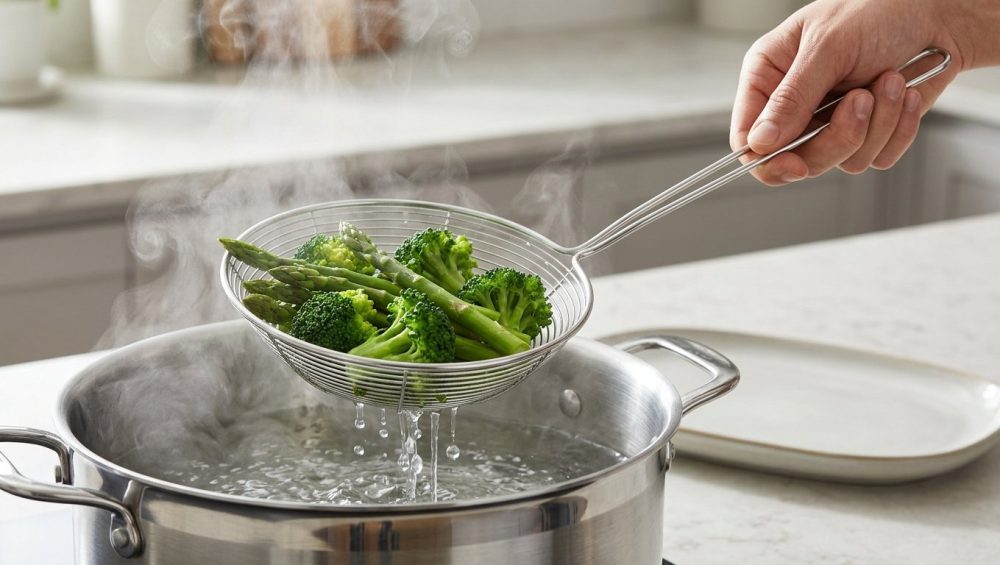
The name comes from its brilliant, highly functional design. Instead of a solid bowl with holes, the basket of a spider is constructed from a wide, shallow, interwoven wire mesh that looks exactly like a spider’s web. This basket is attached to a long handle, traditionally made of bamboo but now frequently made of heavy-duty metal.
Why is this web design so revolutionary? It is all about the drainage speed. Because the basket is made entirely of wire, it has virtually zero flat surface area. When you plunge a stainless steel spider skimmer into a pot of boiling water and scoop up a massive portion of ravioli, the water falls away instantly. There is no surface tension holding the liquid back. There is no bottleneck. There is no waiting. You get the food, the whole food, and nothing but the food, in a single, graceful swoop.
The “No-Go” Rule: Banish the Toxic Plastics
Before we dive any further into the culinary magic of the spider, I need to invoke my strict “No-Go” rule. We need to have a serious conversation about toxic kitchen gear, specifically nylon and cheap plastic utensils.
If you are currently using a black plastic slotted spoon or a nylon skimmer, I want you to walk into your kitchen, open the drawer, and throw it in the garbage. I am completely serious. I have absolutely zero patience for cheap, toxic kitchenware that poisons your food and melts into your dinner. Actively banishing toxic kitchen gear is the first and most vital step to becoming a better, healthier home cook.
Here is the brutal scientific reality: Nylon and standard plastic cooking utensils have dangerously low melting points. Nylon was invented by DuPont chemist Wallace Carothers in 1935, originally intended for toothbrush bristles and women’s stockings. It was adapted for kitchen utensils in the 1970s as a cheap way to avoid scratching non-stick Teflon pans. But most nylon utensils begin to soften, warp, and chemically degrade at around 400°F (204°C).
While boiling water only reaches 212°F (100°C), the sides of your metal pots and pans get significantly hotter. And if you are deep-frying? Forget about it. Frying oil regularly reaches 350°F to 375°F, and the bottom of a heavy skillet can easily soar past 500°F.
When you dip a plastic skimmer into hot oil or rest it against the edge of a hot pan, the polymer chains begin to break down. Even if the tool doesn’t visibly turn into a molten puddle of goo, it is micro-melting. It is releasing chemical fumes and leaching synthetic compounds directly into your food. Have you ever noticed that your plastic tools or cheap spatulas taste like soap or retain weird chemical odors? That is the synthetic material physically degrading and absorbing impurities from your dishwasher and your food.
You deserve better. Your family deserves better. A high-quality spider skimmer is made of 100% food-grade stainless steel. Stainless steel is chemically inert, non-toxic, rust-resistant, and can withstand temperatures well over 1000°F. It will never melt, it will never warp, and it will never leach mystery chemicals into your beautifully crafted meals.
Pasta, Gnocchi, and the Dumpling Dilemma
Let’s talk about carbohydrates. Whether you are boiling dried spaghetti for a quick weeknight meal, carefully monitoring fresh tortellini, cooking potato gnocchi, or steaming delicate soup dumplings, the spider skimmer is your ultimate ally.
One of the most common rookie mistakes I see home cooks make is the dreaded “Colander Dump.” You know exactly what I am talking about: You carry a heavy, sloshing pot of boiling pasta water across the kitchen, inevitably burning your wrist with steam, and dump the entire contents into a colander sitting in the sink.
This is a culinary crime for two reasons. First, it is dangerous and unnecessary heavy lifting. Second, you are washing the most valuable ingredient in your kitchen straight down the drain: the pasta water.
Pasta water is liquid gold. As pasta boils, it releases starches into the water, turning it slightly cloudy. This starchy water is the secret binding agent required to create rich, glossy, restaurant-quality pan sauces that actually cling to your noodles instead of pooling at the bottom of the bowl. Harnessing the power of starchy water is what separates the enthusiastic amateurs from the seasoned pros.
When you use a spider skimmer, you simply scoop the cooked pasta directly out of the boiling pot and transfer it right into your saucepan of simmering marinara, pesto, or garlic and oil. The pasta brings just enough starchy water clinging to its surface to help emulsify the sauce, and the rest of the liquid gold remains safely in the pot if you need to ladle more in to thin out your sauce.
Furthermore, the wide, shallow basket of the spider is incredibly gentle. When you are cooking delicate foods like fresh ravioli or homemade potstickers, a clumsy slotted spoon will tear the dough as you try to balance the food on a tiny surface. If your dumplings always tear, it is highly likely because you are manhandling them with the wrong tool. The spider cradles delicate foods, lifting them out of the water safely, securely, and in one piece.
Stop Boiling Your Vegetables to Death: The Art of Blanching
We have all been victims of the mushy, gray, sulfurous broccoli floret. It is a sad, depressing vegetable that has been boiled of all its dignity and flavor. If you want to eating mushy veggies, you need to master the art of blanching. And to properly master blanching, you absolutely must have a spider skimmer.
Blanching is a fundamental culinary technique where vegetables are briefly plunged into heavily salted, rapidly boiling water, and then immediately shocked in an ice-water bath to instantly halt the cooking process.
The science behind this is fascinating and crucial for any home cook to understand. Vegetables contain specific enzymes that dictate their texture and color. Peroxidase and polyphenol oxidase are enzymes that cause vegetables to break down, lose their crispness, and eventually rot. They also contain chlorophyllase, an enzyme that actively degrades the green pigment chlorophyll.
When you drop green beans, asparagus, or snap peas into boiling water, the intense heat instantly destroys these enzymes. This is exactly why vegetables suddenly turn a vibrant, shocking shade of green the moment they hit the hot water. You are witnessing the deactivation of chlorophyllase in real time.
However, there is a catch. If you leave them in the boiling water for even thirty seconds too long, the cell walls begin to collapse completely. The magnesium ions in the chlorophyll are permanently displaced, and the vegetables turn a drab, olive-gray color. (And by the way, if your roasted veggies are soggy, it is often because you skipped the blanching step which helps draw out excess internal moisture before they hit the oven).
Timing in blanching is everything. When the clock strikes two minutes, those vegetables need to come out of the water immediately. If you are using a slotted spoon, you will spend a frantic, stressful minute chasing individual green beans around the pot. By the time you get the last ones out, they are overcooked, gray, and dead.
With a wide-basket spider skimmer, you can retrieve an entire pound of green beans in two simple, effortless scoops. The water drains instantly through the wire mesh, and you can plunge the vegetables directly into the waiting ice bath. The result? Perfectly crisp-tender, brightly colored, restaurant-quality vegetables every single time.
Frying Without Fear: Conquering the Hot Oil
Deep-frying at home intimidates a lot of weekend culinary hobbyists. It involves large volumes of screaming-hot oil, the fear of aggressive splatters, and the anxiety of burning your expensive ingredients. But frying does not have to be a stressful chore.
The spider skimmer is the undisputed king of the deep fryer. In fact, attempting to fry without one is a recipe for a greasy disaster.
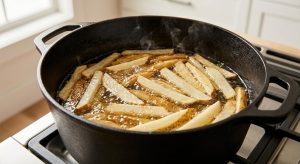
When you are frying foods like buttermilk fried chicken, tempura vegetables, or homemade french fries, temperature control is your biggest hurdle. When you add cold, raw food to hot oil, the temperature of the oil drops immediately. You need the oil to recover its heat quickly to create a crispy, shattered crust. If the oil stays too cool for too long, the food acts like a sponge, soaking up the grease.
When your fried food finally reaches that perfect golden-brown color, it needs to exit the oil immediately to prevent burning. A spider skimmer allows you to scoop up multiple pieces of fried chicken or a massive handful of fries all at once. The wide wire mesh lets the viscous hot oil drain away in milliseconds, ensuring you do not transfer excess liquid grease to your cooling rack.
Additionally, the spider is the perfect tool for “skimming” the oil between batches. When you fry breaded items, little bits of flour and batter inevitably fall off and sink to the bottom of the pot. If left there, these crumbs will burn, turning your oil bitter and ruining the flavor of your next batch. The fine wire mesh of a spider allows you to easily sweep the bottom of the pot, capturing and removing those burnt bits to keep your oil clean and pristine.
Beyond the Basics: 10 Unexpected Uses for Your Spider Skimmer
I love a multi-tasking kitchen tool. I absolutely despise unitaskers that clutter up your drawers and only serve one highly specific purpose. The beauty of the spider skimmer is its incredible, unmatched versatility. Once you buy one, you will find yourself reaching for it constantly for tasks you never even considered. Here are ten ways to use your spider that have absolutely nothing to do with pasta or frying:
1. Washing Delicate Berries
Do not crush your expensive farmers market raspberries or blackberries by dumping them into a massive, heavy colander. Place them gently in the basket of your spider and run them under a low stream of cold tap water. The water drains instantly, and the berries stay pristine.
2. Boiling the Perfect Egg
Dropping eggs directly into boiling water often results in cracked shells and a leaky mess. Instead, place your eggs into the basket of the spider and gently lower them all into the water at once. When the timer goes off, you can retrieve the entire batch simultaneously for their mandatory ice bath, ensuring perfectly even cooking.
3. Skimming Stocks and Broths
When making homemade chicken or beef bone broth, impurities and coagulated proteins will float to the surface as a gray foam. The spider is perfect for skimming this scum away, leaving you with a crystal-clear, professional-looking broth.
4. Rescuing Dropped Utensils
Did you accidentally drop your whisk, a measuring spoon, or a pair of tongs into a deep pot of boiling soup? Do not risk burning your fingers or wrists trying to fish it out. Use the spider to safely and easily retrieve the sunken treasure.
5. Sifting Powdered Sugar and Cocoa
In a pinch, if you do not want to dirty a large fine-mesh sieve, you can use a tightly woven spider skimmer to dust powdered sugar over a batch of brownies or cocoa powder over a homemade tiramisu. Just tap the side of the handle gently to create a fine dusting.
6. Blanching Peaches and Tomatoes
When making fresh tomato sauce or a summer peach pie, you need to peel the fruit. Score the bottoms with a shallow ‘X’, drop them in boiling water for exactly 30 seconds using the spider, and retrieve them. The skins will slip right off in your hands.
7. Scooping Bagels and Pretzels
Making homemade boiled breads like bagels or soft pretzels requires a brief swim in an alkaline water bath. The spider easily flips the heavy dough in the water and retrieves it without denting or deflating your beautiful creations.
8. Straining Citrus Seeds on the Fly
Need to squeeze a lemon directly over a pan of searing fish, but do not want seeds in your dinner? Hold the spider skimmer underneath your hand to catch the seeds while letting the fresh juice flow right through the wire mesh.
9. Fishing Out Spent Aromatics
When your hearty winter soup or braise is finished cooking, you often need to remove the spent bay leaves, whole peppercorns, or woody thyme sprigs before serving. The spider sweeps them up effortlessly, saving your guests from biting into a whole clove.
10. Serving Delicate Poached Eggs
Poached eggs are notoriously fragile. A slotted spoon often holds too much water, ruining your toast. The spider lifts the poached egg gently from the simmering vortex and allows all the excess cooking water to drain away completely, preventing a soggy breakfast.
Buying Guide: How to Spot a High-Quality Skimmer
Not all spider skimmers are created equal. Since I am your biggest cheerleader and your harshest critic when it comes to kitchen gear, I want to make sure you spend your hard-earned money wisely. Fortunately, even the best, professional-grade spider skimmers on the market are incredibly inexpensive, usually ranging from $10 to $20.
Here is exactly what you need to look for when shopping for your new favorite tool:
Material Matters
As established in the strict “No-Go” rule, you must insist on 100% stainless steel. Do not buy aluminum, which can react with acidic foods like tomatoes and discolor your food. Do not buy anything with a non-stick or silicone coating, as it will eventually peel, degrade, and flake into your meals. Look for “18/8” or “304” grade stainless steel, which offers the absolute highest resistance to rust and corrosion in a wet kitchen environment.
The Handle Construction
Traditional Asian spiders feature a bamboo handle. While bamboo is beautiful, lightweight, and naturally heat-resistant, it does require a bit more maintenance. You cannot put a bamboo-handled spider in the dishwasher, as the wood will swell, crack, and eventually rot. Furthermore, the wire basket is usually bound to the bamboo with smaller, thinner wires, which can loosen and unravel over time.
For the modern home cook who values efficiency and durability, I highly recommend a seamless, all-stainless-steel construction. Look for a handle that is welded directly to the basket frame. A hollow stainless steel handle is ideal because it remains cool to the touch even when the basket is submerged in boiling liquids for extended periods.
Basket Depth and Weave
Spider baskets come in varying depths. A very shallow, nearly flat basket is excellent for flipping large items like chicken breasts or retrieving flat, delicate ravioli. A deeper, bowl-shaped basket is better for scooping up dozens of small items like peas, corn, or gnocchi. For your first all-purpose spider, look for a medium depth—a gentle curve that can hold a substantial amount of food without being so deep that it becomes difficult to clean.
Pay close attention to the wire weave. You want a concentric, spiral web pattern. The wires should be close enough together to catch small pasta shapes like macaroni, but wide enough apart to allow thick, viscous frying oil to escape instantly.
Handle Length
Safety always comes first! When you are working with hot oil or boiling water, you want to keep your hands as far away from the danger zone as possible. If your pot boils over unexpectedly, a long handle keeps you safe from the resulting steam burns. Look for a spider with a handle that is at least 12 to 15 inches long. This gives you plenty of leverage and keeps your knuckles safely away from aggressive oil splatters.
Care, Maintenance, and Rust Prevention
You have purchased your gleaming new stainless steel spider skimmer. Now, how do you keep it looking and performing like brand new for the next twenty years?
The good news is that high-quality stainless steel is incredibly forgiving. If you opted for an all-metal spider, it is entirely dishwasher safe. However, because of the intricate wire web, food particles—especially sticky starches from pasta or thick batter from frying—can sometimes get trapped in the microscopic crevices where the wires cross.
If you throw a dirty spider directly into the dishwasher without inspecting it, the intense heat of the drying cycle might bake those starches onto the metal like cement.
To prevent this, adopt the habit of the immediate rinse. The moment you are finished using your spider, run it under hot water in the sink. Use a stiff-bristled dish brush to quickly scrub both the inside and the outside of the basket. This takes exactly ten seconds and ensures that no food dries onto the wires.
If you do end up with stubborn, burnt-on bits from a heavy frying session, do not panic and do not reach for a harsh steel wool pad, which can scratch the finish. Fill a pot with water, add a splash of white vinegar and a tablespoon of baking soda, and bring it to a rolling boil. Submerge the basket of the spider in the boiling mixture for five minutes. The chemical reaction will loosen the burnt grease, allowing you to easily brush it away with a standard sponge.
Finally, while high-quality stainless steel is highly rust-resistant, it is not entirely rust-proof. Never leave your spider sitting in a sink full of soapy water overnight. After washing, dry it thoroughly with a clean microfiber dish towel before storing it in your utensil crock. If you ever notice a tiny speck of rust forming on the welds, a quick scrub with a paste made of baking soda and a few drops of water will buff it right out. (And by the way, if you want to know if your stainless steel pan is ready for cooking, always use the water drop test to ensure perfect heat and prevent sticking).
Conclusion: Your Kitchen Deserves Better
Cooking should be a joy, an art form, and a relaxing escape—not a stressful battle against your own equipment. Every time you struggle to fish a rogue piece of tortellini out of a boiling pot, or watch in despair as your fried chicken turns soggy on the cooling rack because it took too long to drain, you are letting bad tools dictate your culinary success.
You do not need to suffer through mushy vegetables, watered-down sauces, or toxic melting plastics anymore. By throwing out that useless, poorly designed slotted spoon and upgrading to a professional-grade spider skimmer, you are taking a massive step toward absolute kitchen mastery. You are buying yourself time, efficiency, and safety, all for the price of a few cups of coffee.
So, the next time you decide to tackle an elaborate weekend cooking project, or even just a quick, survival-mode Tuesday night pasta dinner, arm yourself properly. Stop chasing your food around the pot. Scoop with confidence, drain with speed, and remind yourself that with the right tools, you absolutely have what it takes to cook like a pro. Now, get out of here and go boil some water. You have a magnificent dinner to make.