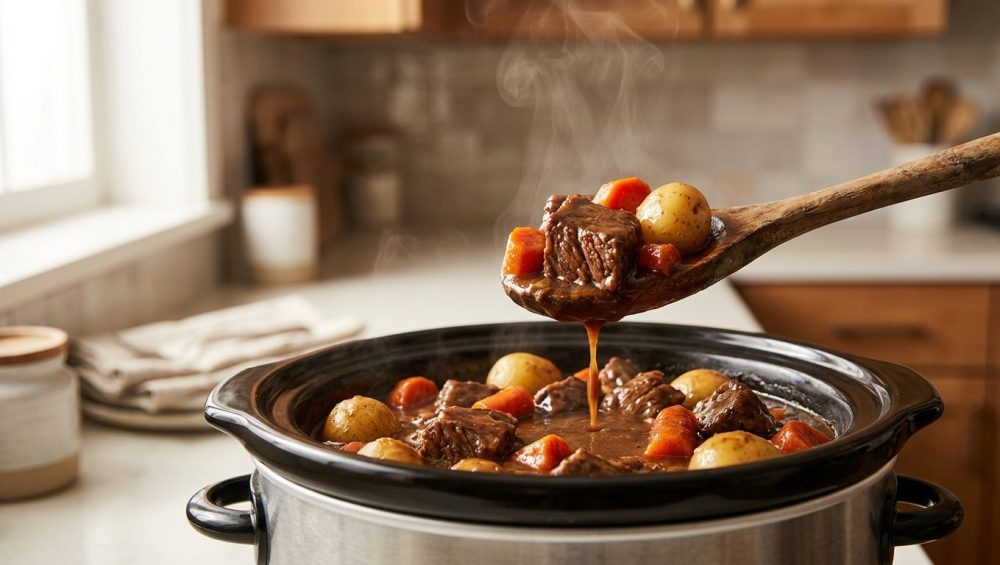
Listen up, weekend culinary warriors. You know the exact scenario I am talking about. You have had a brutally long day at the office, fighting traffic and managing chaos. All day, you have been daydreaming about the rustic, thick, perfectly braised beef stew you prepped at 7:00 AM before rushing out the door. You walk into your kitchen, greeted by an incredible aroma that promises a gourmet, soul-warming dinner. You eagerly lift the heavy glass lid of your slow cooker, and your heart sinks.
Instead of a rich, velvety sauce clinging to fork-tender meat and perfectly glazed root vegetables, you are staring at a bleak, unappetizing swamp. Your beautiful chuck roast is bobbing sadly in a massive pool of grey, diluted “meat tea.” The carrots have surrendered their structural integrity, the onions have disintegrated into mush, and the flavor profile tastes like someone took a magnificent French bourguignon and watered it down with a garden hose.
If this sounds familiar, take a deep breath. You are not a bad cook. You simply fell victim to the fundamental physics of closed-environment cooking. As a home cook who learned the hard way—by ruining more weeknight dinners than I care to admit—I am here to tell you that professional-level, mind-blowing food is absolutely achievable in your standard home kitchen. You do not need a culinary degree to master your slow cooker; you just need a basic understanding of thermodynamics, moisture dynamics, and a few clever, time-saving weekday hacks.
Today, we are leaving absolutely no stone unturned. We are going to dive deep into the science of why your slow cooker traps liquid, the biological water bombs hiding in your ingredients, and the exact, foolproof methods you can use to force your slow cooker to produce the thick, luxurious, restaurant-quality meals you actually deserve.
The Science of the Closed Loop: Thermodynamics in Your Kitchen
To understand why your meals are turning into unwanted soups, we have to look at how this appliance actually functions. I have zero patience for pretentious chef-speak, so let’s break the engineering down into plain English.
A slow cooker is a highly efficient, self-contained electrical appliance that relies on indirect heat transfer. Unlike your stovetop, which blasts direct, intense thermal energy into the bottom of a pan, a slow cooker uses a relatively low amount of electricity—typically just 200 to 300 watts. The electrical coils are wrapped around the outer base and sides of the unit, gently and gradually transferring heat to the heavy ceramic or metal insert. This design allows the appliance to maintain a steady, low-temperature cooking environment, usually hovering between 180°F and 300°F depending on your settings.
But here is the critical flaw that ruins your weeknight dinners: a slow cooker is an almost perfectly closed thermodynamic system.
When you simmer a stew in a Dutch oven on the stove, or roast a chicken in the oven, the ambient heat causes the liquid in your food to vaporize. That steam escapes into the dry air of your kitchen, reducing the volume of the sauce and intensely concentrating the flavors. This process is called reduction, and it is the backbone of traditional sauce-making.
Your slow cooker, however, completely eliminates the reduction process. The heavy glass lid creates a low-pressure seal that traps thermal energy and moisture inside the crock. As the food heats up and releases steam, that vapor rises, hits the relatively cooler underside of the glass lid, condenses back into water droplets, and rains directly back down onto your meal. There is virtually zero evaporation. Every single drop of liquid you pour into that pot at 7:00 AM will still be sitting in that pot at 6:00 PM. If you do not account for this closed-loop condensation cycle, you are mathematically guaranteeing a watery, diluted disaster.
The Biological Water Bomb: What Your Ingredients Are Hiding
The lack of evaporation only explains half of the problem. The other half of the equation involves the ingredients themselves. Many home cooks assume that if they only add half a cup of beef broth to their recipe, they will only have half a cup of liquid at the end of the day. This is a massive rookie mistake because it ignores the biological composition of fresh food.
Your ingredients are microscopic water balloons waiting to burst. Let’s look at the hard data. If you love throwing a mountain of fresh vegetables into your slow cooker, you are inadvertently adding cups of hidden water to your recipe. Zucchini and summer squash are composed of roughly 94% water. Those earthy mushrooms you chopped up? They sit at about 92% water. Celery and radishes clock in at an astonishing 95% water. Even the foundational aromatics of almost every savory dish—onions and carrots—are packed with intracellular moisture.
When you subject these vegetables to prolonged, low-temperature heat, their rigid cellular walls begin to break down and collapse. As the cell structures rupture, they release all of that trapped intracellular liquid directly into your cooking vessel. This is why, if you are not careful with your timing, your roasted veggies turn mushy and dissolve into a flavorless puddle.
But vegetables are not the only culprits. Meat is also an enormous contributor to the flood. Raw muscle tissue is roughly 75% water by weight. As the meat cooks and the proteins denature, the muscle fibers violently contract, literally wringing themselves out like a wet sponge. Depending on the temperature and the cut, meat can expel up to 37% of its internal moisture during the cooking process.
When you combine the condensation dripping from the lid, the cellular liquid released by the vegetables, and the moisture squeezed out of the shrinking meat, your initial half-cup of broth can easily multiply into three or four cups of watery, unseasoned liquid by dinner time.
The Collagen Conversion and the Meat Moisture Squeeze
If we want to truly master the slow cooker, we need to talk about the complex biochemistry of cooking tough cuts of meat. The entire reason the slow cooker was invented was to take cheap, fibrous, heavily worked cuts of meat—like beef chuck, pork shoulder, and lamb shanks—and turn them into succulent, fork-tender masterpieces.
These tough cuts are loaded with a connective tissue called collagen. In its raw state, collagen is incredibly tough and rubbery. If you were to quickly sear a piece of beef chuck and try to eat it rare, you would be chewing for days. However, collagen has a magical property: when it is exposed to sustained, low-temperature heat over a long period of time, it undergoes a structural transformation. Between the temperatures of 160°F and 180°F, the tough triple-helix structure of the collagen molecules begins to unravel and melt into a rich, silky, water-soluble protein called gelatin. This gelatin is what gives perfectly braised meats their sticky, luscious, melt-in-your-mouth texture.
But here is the catch, and it is the exact reason why your chicken always turns out dry if you leave it in the crockpot all day. While the collagen requires temperatures above 160°F to melt into gelatin, the actual muscle fibers (composed of the proteins actin and myosin) begin to denature and aggressively contract at much lower temperatures. As the internal temperature of the meat rises past 140°F, those muscle fibers shrink tightly, expelling massive amounts of water.
This means that while you are waiting eight hours for the collagen to melt into gelatin, the meat is simultaneously squeezing out all of its natural juices into the surrounding environment. If you are cooking a massive pork shoulder, you are going to end up with a massive pool of rendered fat and expelled water. Understanding this biological tug-of-war is essential for controlling the liquid levels in your final dish.
The “No-Go” Rule: Why Your Slow Cooker Might Be Slowly Poisoning You
Alright, it is time for a Sassy Sous-Chef intervention. Before we talk about how to fix your recipes, we need to have a brutally honest conversation about the actual hardware sitting on your kitchen counter. I have a strict, uncompromising “no-go” rule when it comes to toxic kitchenware, and you need to adopt it immediately.
If you are using a cheap, lightweight slow cooker with a dark, non-stick metal insert that is beginning to scratch, flake, or peel, I want you to unplug it and throw it in the garbage right now. I am completely serious. Many of these budget-friendly “easy-to-clean” non-stick coatings are manufactured using PTFE (polytetrafluoroethylene), commonly known as Teflon. PTFE belongs to a broader class of synthetic chemicals known as PFAS (per- and polyfluoroalkyl substances), which are notoriously dubbed “forever chemicals” because they do not break down in the environment or in the human body.
When these cheap non-stick coatings are heated, scratched by metal utensils, or simply degraded over time, they can bubble, chip, and flake directly into your family’s beef stew. Ingesting these forever chemicals has been linked to a terrifying array of health issues, including abnormal thyroid function, reduced immune system response, hormone disruption, and even certain types of cancer. In fact, there are ongoing class-action lawsuits against major appliance manufacturers specifically alleging that their non-stick slow cooker coatings are defective and peel toxic plastics into consumers’ food.
Furthermore, if you are using an antique or imported ceramic slow cooker, you need to be wary of the glazes used to seal the stoneware. Many older or unregulated brightly colored ceramic glazes contain heavy metals like lead and cadmium. When you slow-cook highly acidic foods—like tomato sauces or chili—for eight hours, those acids can actively leach the neurotoxins out of the glaze and into your meal.
You must be proactive about banishing toxic kitchen gear from your home. When shopping for a slow cooker, strictly look for models that feature verified, certified lead-free ceramic stoneware inserts, or better yet, medical-grade stainless steel inserts. Yes, a stainless steel pot might require an extra sixty seconds of soaking in the sink with some hot soapy water, but the peace of mind is priceless. Stop prioritizing lazy cleanup over your physical health. And while you are auditing your kitchen, please stop ruining your nonstick pans with those highly processed aerosol cooking sprays, which leave a polymerized, sticky residue that ruins the pan’s surface anyway.
Pre-Game Strategies: Stopping the Flood Before You Plug It In
Now that we have ensured your gear is safe, let’s talk about preventative culinary strategy. The absolute best way to fix a watery slow cooker meal is to stop the flood before you ever turn the dial to “Low.” Time is money, and spending five extra minutes prepping your ingredients in the morning will save you an hour of stressful triage in the evening.
The Golden Ratio of Liquid Reduction
If you are taking a traditional recipe meant for a stovetop Dutch oven and adapting it for the slow cooker, you cannot blindly follow the liquid measurements. As a hard and fast rule, you must reduce the amount of added liquid (broth, wine, water) by at least 40% to 50%. Remember the closed-loop system: there is zero evaporation. If you are cooking a large, fatty roast surrounded by onions, you often do not need to add any liquid at all. The meat and vegetables will release more than enough moisture to braise themselves perfectly.
The Searing Imperative
I know, the whole point of a slow cooker is the “dump and go” convenience. But if you want to elevate your food from mediocre to mind-blowing, you must take ten minutes to sear your meat in a hot skillet before it goes into the crock. Searing does not “seal in the juices”—that is a widely debunked culinary myth. What searing actually does is trigger the Maillard reaction, a complex chemical process where amino acids and reducing sugars brown and create hundreds of incredible, savory flavor compounds.
Beyond flavor, searing serves a critical moisture-control function. By blasting the meat with high heat in a skillet, you are rapidly cooking off a significant amount of surface moisture and rendering out excess exterior fat before the meat ever enters the closed environment of the slow cooker. If you skip this step and just toss a massive, raw, wet chuck roast into the crock, you will quickly discover why your ground beef steams in its own grey juices rather than developing any depth of flavor.
Blooming and Frying Aromatics
Do not just dump raw spices and thickeners into the cold crockpot. Take the time to bloom your spices in a little bit of oil in a skillet to release their fat-soluble flavor compounds. Furthermore, if your recipe calls for tomato paste, never just squeeze a blob of raw tomato paste directly into the slow cooker liquid. It will taste tinny, metallic, and harsh. Fry it in the skillet with your onions for three minutes until it deepens from bright red to a rusty brick color. This caramelizes the sugars, deepens the umami, and—crucially—cooks off the excess water content in the paste.
Avoid the Frozen Dump
Never put completely frozen blocks of meat into your slow cooker. Not only is this a massive food safety hazard—the slow cooker takes too long to bring the frozen meat out of the FDA’s “Danger Zone” (40°F – 140°F), allowing bacteria to rapidly multiply—but it also ruins the moisture balance. Frozen meat is full of sharp ice crystals that have punctured the cellular walls of the muscle tissue. As it thaws in the slow cooker, it will dump massive amounts of pure water into your sauce, completely diluting your flavors. Thaw your meat safely in the refrigerator overnight.
Mid-Cook Interventions: When to Step In
The marketing slogan “set it and forget it” is a lie designed to sell appliances. While you certainly don’t need to babysit a slow cooker, a tiny bit of strategic intervention can completely change the trajectory of your meal.
Staggering the Drop
Not all vegetables are created equal, and they certainly do not share the same cooking times. Dense, fibrous root vegetables like potatoes, carrots, and parsnips are incredibly resilient. They need the full 8-hour cooking cycle to soften, so they should be placed at the very bottom of the crock, closest to the heating element.
However, if you add delicate, high-water vegetables like zucchini, bell peppers, spinach, or fresh peas at the beginning of the day, they will literally disintegrate into flavorless mush and dump all their cellular water into your sauce. You must stagger your ingredient drops. Keep those delicate vegetables in the fridge all day, and stir them into the hot slow cooker during the final 20 to 30 minutes of cooking. They will gently poach in the hot liquid, retaining their vibrant color, textural integrity, and flavor.
Timing the Acid
You also need to be highly strategic about when you introduce acidic ingredients. If you are making a slow cooker chili from dried beans, do not add the crushed tomatoes or vinegar at the beginning. Acid physically hardens the exterior skin of legumes and prevents them from absorbing water and softening. This chemical reaction is the exact reason why your beans stay hard and chalky even after simmering for ten straight hours. Cook the beans in a neutral broth first, and stir the acidic tomatoes in during the final hour.
The Chopstick Lid Prop
If you return home from work, look through the glass lid, and realize you have inadvertently created a swimming pool, do not panic. It is time to break the closed-loop system. During the final hour of cooking, take a wooden chopstick or the handle of a wooden spoon and wedge it under the edge of the glass lid. This slightly props the lid open, breaking the vacuum seal and allowing the trapped condensation to finally escape as steam. Turn the slow cooker up to the “High” setting. This simple hack forcefully introduces evaporation into the equation, helping to reduce and thicken the liquid before dinner is served. Alternatively, you can drape a clean, dry kitchen towel across the top of the crock (underneath the lid) to physically absorb the condensation before it drips back down into the food.
Post-Cook Rescues: Fixing the Soup You Didn’t Mean to Make
Alright, let’s say it is 6:30 PM. You are hungry, the kids are screaming, and your slow cooker meal is undeniably, aggressively watery. You do not have an hour to wait for the lid-prop trick to work. Here are the rapid-fire, professional culinary rescues to thicken that sauce and save your dinner.
The Starch Slurry
This is the fastest and most reliable method for thickening a hot, watery liquid. You cannot just dump raw flour or cornstarch directly into the slow cooker; it will instantly clump into horrifying, gelatinous dumplings that will ruin the texture of your dish. You must create a slurry.
In a small bowl, whisk together equal parts of a pure starch (like cornstarch, arrowroot powder, or tapioca starch) and a cold liquid (water or cold broth). Usually, one to two tablespoons of starch is plenty. Once it is whisked into a perfectly smooth, milky liquid, pour it directly into the bubbling slow cooker. Stir vigorously. The heat will activate the starch molecules, causing them to swell and absorb the excess water, instantly transforming the thin broth into a glossy, clinging gravy.
The Beurre Manié
If you want to feel like a fancy French chef while wearing your sweatpants, use a beurre manié (kneaded butter). Take equal parts of softened, room-temperature butter and all-purpose flour—about two tablespoons of each. Use your fingers to mash and knead them together until they form a smooth, uniform paste. Drop small pea-sized pieces of this paste into the hot slow cooker liquid and stir. The fat from the butter coats the flour particles, preventing them from clumping. As the butter melts, it slowly releases the flour into the sauce, thickening it beautifully while adding a luxurious, velvety richness to the mouthfeel.
The Stovetop Reduction
When the liquid is just too voluminous and lacks any concentrated flavor, starch won’t save you—it will just make a bland, thick paste. You need to evaporate the water. Carefully use a ladle to scoop out the excess liquid from the slow cooker and transfer it to a wide, shallow sauté pan on your stovetop. Turn the burner to medium-high heat and bring the liquid to a rapid boil. The wide surface area of the pan encourages massive evaporation. Boil it down for 10 to 15 minutes until it reduces by half, concentrating the salts, fats, and savory flavors. Once it reaches a syrupy consistency, pour it back over the meat in the slow cooker.
Dairy and Emulsions
If you are making a creamy dish, adding dairy at the end is a fantastic way to thicken a watery sauce. Heavy whipping cream, sour cream, or a block of softened cream cheese can work miracles. However, you must temper the dairy first. If you drop cold dairy directly into a boiling hot slow cooker, the sudden temperature shock will curdle the proteins, which is exactly why your cheese sauce breaks and turns into a grainy, oily nightmare. Ladle a small amount of the hot slow cooker liquid into a bowl with the dairy, whisk it gently to raise the temperature of the dairy, and then slowly pour the warmed mixture back into the crock.
The Pasta Water Trick
If your watery slow cooker meal is meant to be served over pasta (like a ragù or a pulled pork marinara), you have a secret weapon waiting in your boiling pasta pot. Before you drain your cooked noodles, reserve a cup of the cloudy, starchy pasta water. Toss the hot pasta into a skillet, add a few ladles of the watery slow cooker sauce, and pour in a splash of the starchy water. Cook them together over high heat for two minutes. The starch in the water acts as an emulsifier, aggressively binding the fat and the liquid together so the sauce clings beautifully to the noodles. If you skip this emulsification step, your pasta sauce slides off the spaghetti and pools sadly at the bottom of your dinner bowl.
Modifying Your Favorite Stovetop Recipes for the Slow Cooker
Once you understand the physics of the closed-loop system and the biological water content of your ingredients, you can confidently adapt almost any recipe for the slow cooker.
First, rigorously cut the liquids. If your grandmother’s famous stovetop pot roast recipe calls for four cups of beef broth and two cups of red wine, cut it down to one and a half cups of broth and half a cup of wine. The meat and vegetables will easily make up the difference as they release their intracellular water.
Second, rethink your flavor pacing. The extended, low-temperature cooking environment of a slow cooker has a tendency to mute and flatten out bright flavors and spices over an eight-hour period. You generally need to increase your dried herbs and spices by about 50% to ensure they survive the marathon cook.
However, be incredibly cautious with fresh garlic. Subjecting minced garlic to a low, wet heat for eight straight hours can cause it to develop a harsh, muddy, or strangely bitter profile. Adding garlic first is a common mistake that ruins the delicate balance of the dish. Instead, stir in fresh minced garlic, a handful of vibrant fresh herbs (like parsley or basil), and a heavy squeeze of fresh lemon juice or a splash of apple cider vinegar right before serving. This final hit of acid and fresh aromatics will cut through the heavy, rendered fats, instantly waking up the dish and restoring the bright, complex flavors that the slow cooker tried to mute.
The Final Verdict
You do not have to accept watery, bland, uninspired dinners just because you are a busy professional who relies on a slow cooker. By respecting the thermodynamics of the appliance, understanding the moisture content of your ingredients, and keeping a few clever thickening tricks up your sleeve, you can completely transform your weeknight cooking routine.
Throw out the toxic, peeling Teflon inserts. Take the extra ten minutes to sear your meats and bloom your spices. Stagger your vegetable drops, and never be afraid to hit your sauce with a quick cornstarch slurry or a stovetop reduction when things get a little too soupy. You are the boss of your kitchen, and with a little bit of science and a healthy dose of culinary snark, you can absolutely cook like a pro. Now go plug in that crockpot and make something incredible.