Picture this: It is a beautiful Friday evening. You have poured yourself a generous glass of Pinot Noir, put on your favorite cooking playlist, and decided to treat yourself. You bypassed the cheap frozen fish sticks and spent a small fortune on a gorgeous, ruby-red, wild-caught sockeye salmon fillet. You envisioned a flawless, restaurant-quality centerpiece for your dinner table—crispy skin, perfectly flaky flesh, and a presentation that would make any professional chef weep with joy.
You carefully place the fish in the pan, anticipating culinary glory. But ten minutes later, when you proudly pull your masterpiece off the stove, your heart sinks. Your beautiful, expensive salmon is covered in a bizarre, unappetizing, white sludge. It looks less like a gourmet meal and more like your dinner is aggressively sweating cottage cheese.
It is enough to make you want to throw the whole pan in the trash and order a pizza. But before you let those rookie kitchen mistakes ruin your evening, let me stop you right there. Take a deep breath and take a sip of that wine. You are not alone, you did not buy a “bad” piece of fish, and you certainly do not need a culinary degree to fix this.
As a home cook who has set off the smoke detector more times than I care to admit, I have made it my personal mission to demystify these frustrating kitchen disasters. Today, we are going to dive deep into the science of that hideous white goo, why your salmon insists on ruining your dinner party aesthetics, and the foolproof, incredibly simple techniques you can use to banish it from your kitchen forever.
What in the World is That White Stuff?
Let us get the most important fact out of the way immediately: that white goo is not fat, it is not a chemical injected into your food, and it is not a sign that your fish has gone bad.
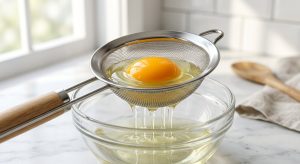
The white substance is called albumin. Albumin is a highly soluble, moisture-rich protein that naturally exists in liquid form inside the muscle fibers of all raw fish, as well as in land animals and eggs. In fact, if you have ever cracked an egg, you are already intimately familiar with a close cousin of this protein—the egg white itself is primarily composed of albumen (spelled with an ‘e’, but functionally very similar).
When your salmon is raw, the albumin is completely invisible, resting peacefully in a liquid state between the delicate layers of the fish’s flesh. You cannot see it, you cannot smell it, and you certainly cannot taste it. However, as soon as you apply heat to the fish, a dramatic chemical and physical transformation takes place.
The Chemistry of Coagulation
To understand why the white stuff appears, we have to look at the science of cooking. Research from Dr. Donald Kramer, a former professor of seafood science at the University of Alaska, explains that the cooking process actively breaks down the molecular bonds in the albumin protein. As the internal temperature of the salmon rises, the liquid albumin denatures.
Denaturation is just a fancy, pretentious culinary term for the protein molecules unwinding and changing their structure. Once the temperature hits a certain threshold—usually beginning around 120°F to 140°F—the albumin coagulates. It transforms from a clear, invisible liquid into a semi-solid, opaque white mass.
Is Albumin Safe to Eat?
I hear this question constantly from panicked home cooks. Yes, albumin is one hundred percent safe to eat. It is completely harmless, highly nutritious, and packed with the exact same healthy proteins that make salmon such a superfood to begin with. It has absolutely no flavor of its own, so it will not negatively impact the taste of your dish.
But let us be brutally honest with each other: we eat with our eyes first. While albumin might be perfectly safe, it is aesthetically repulsive. If you are serving a romantic dinner or hosting friends, serving a piece of fish covered in white slime is not going to win you any presentation points. You want your food to look as incredible as it tastes, and that means keeping the albumin locked inside the fish where it belongs.
The Physics of the Ooze: Why Your Salmon is Crying
Now that we know what the white stuff is, we need to understand why it insists on violently ejecting itself from your dinner. Why does it not just stay inside the fish?
The answer comes down to thermal dynamics and the unique physical structure of fish anatomy.
The Wet Sponge Effect
Think of a raw salmon fillet as a soaking wet sponge. The “sponge” itself is made up of delicate muscle fibers, and the “water” inside the sponge is the liquid albumin and natural juices.
When you expose that fillet to heat—whether you are tossing it into a scorching hot frying pan, sliding it into a 425°F oven, or dropping it onto a blazing grill—those muscle fibers react to the temperature change by rapidly contracting. They seize up and shrink.
As the muscle fibers forcefully contract, they act exactly like a giant, invisible hand wringing out that wet sponge. The shrinking fibers squeeze the liquid albumin out from between the cell walls and push it directly to the surface of the fish. Once the liquid albumin hits the surface and is exposed to the direct heat of your pan or oven, it instantly coagulates, solidifies, and turns into that dreaded white sludge.
The Culprits: Heat and Time
The amount of albumin that your salmon releases is directly proportional to two things: how hot you cook it, and how long you cook it.
If you blast your delicate salmon with incredibly high, aggressive heat, you are subjecting the fish to massive thermal shock. The muscle fibers panic and contract violently, squeezing out a massive amount of albumin all at once.
Similarly, if you overcook your fish, you are continuing to wring out that sponge long after it should have been removed from the heat. The longer the fish stays in the pan, the tighter the muscle fibers squeeze, and the more white goo is forced to the surface. In fact, a heavy layer of albumin is usually the very first visual indicator that your salmon is hopelessly overcooked and dried out.
When discussing simple weeknight dinners, I rigorously prioritize efficiency, but cooking fish is the one area where you simply cannot rush the process with aggressive heat. Patience is mandatory.
The Sassy Sous-Chef’s Foolproof Fixes
Alright, enough with the science lecture. You are here because you want to know how to stop the ooze. You want practical, no-nonsense solutions that actually work in a standard home kitchen.
Fortunately, preventing albumin leakage is incredibly easy once you understand the mechanics behind it. By utilizing a few clever, time-saving tricks, you can completely eliminate the white stuff and guarantee a moist, tender, flawless fillet every single time.
Fix #1: The Wet Brine Miracle (The Gold Standard)
If you want the absolute most effective, scientifically proven method for preventing albumin, you need to wet brine your salmon. I know the word “brining” sounds like an intimidating, time-consuming chore reserved for Thanksgiving turkeys, but I promise you, brining fish takes exactly fifteen minutes and requires zero actual effort.
The brilliant food scientists over at America’s Test Kitchen conducted exhaustive research on this exact topic and discovered that a quick, 15-minute soak in a simple saltwater solution is the ultimate weapon against albumin.
The Master Brine Recipe:
- In a large bowl or baking dish, whisk together 5 tablespoons of standard kosher salt and 2 quarts of cold water until the salt is completely dissolved.
- Submerge your salmon fillets completely in the saltwater solution.
- Let them sit at room temperature for exactly 15 minutes. Do not leave them in longer, or your fish will become unpleasantly salty.
- Remove the fillets, rinse them quickly under cold water to remove excess surface salt, and pat them aggressively dry with paper towels.
Why This Works:
Fish muscle fibers are completely different from the muscle fibers in land animals like beef or pork. Instead of long, tough fibers, fish are constructed of incredibly short bundles of fibers—up to 10 times shorter than meat. This means that marinades and brines penetrate fish flesh astonishingly fast.
When you submerge the salmon in the saltwater brine, the salt goes to work immediately. It partially dissolves the muscle fibers on the outer layers of the fish, breaking down a specific protein called myosin. As the myosin breaks down, it forms a water-retaining gel that coats the outside of the fillet.
This microscopic gel barrier acts like a straightjacket for the fish. When the salmon hits the hot pan, the gel prevents the muscle fibers from violently contracting. Because the fibers cannot squeeze together, the albumin remains safely locked inside the flesh where it belongs, keeping your fish incredibly moist and completely free of white sludge.
Fix #2: The Dry Brine Shortcut (For the Busy Cook)
I get it. Sometimes it is a Tuesday night, you are exhausted, the kids are screaming, and the idea of measuring out two quarts of water feels like climbing Mount Everest. If you do not have the patience for a wet brine, a dry brine is your next best friend.
To dry brine, simply sprinkle a generous layer of kosher salt directly onto the flesh side of your salmon fillets about 20 to 30 minutes before you plan to cook them. Let the fish sit on the counter.
Within a few minutes, you will notice moisture beading up on the surface of the fish. The salt is actively drawing the liquid albumin and excess water out of the cells before the fish even hits the heat. After 20 minutes, take a paper towel and firmly wipe away the moisture and the excess salt. You have just preemptively removed the albumin that would have oozed out during cooking!
Fix #3: The Low and Slow Roasting Method
If you are baking your salmon, the temperature of your oven is the biggest factor in the albumin equation. Most outdated recipes will tell you to roast salmon at 400°F or even 425°F. This is a recipe for disaster. Blasting delicate seafood with a 400-degree inferno guarantees massive thermal shock, violent muscle contraction, and a tsunami of white goo.
Instead, embrace the “low and slow” method. Turn your oven down to 275°F or 300°F. Place your brined, dried salmon on a baking sheet and let it gently roast.
Because the heat is so low and gentle, the internal temperature of the fish rises gradually. The muscle fibers never panic, they never violently contract, and the albumin is never forced out. Yes, it will take about 20 to 25 minutes to cook instead of 12 minutes, but the result is a fillet that is unbelievably tender, evenly cooked from edge to center, and completely free of white slime.
Fix #4: The Cold Pan Searing Technique
If you prefer the crispy skin of a pan-seared fillet, the traditional method involves dropping the fish into a screaming hot skillet. While this does create great skin, it also causes immediate thermal shock to the flesh.
This is exactly why the cold pan trick is an absolute game-changer for weeknight cooking. Instead of preheating your skillet, place your salmon fillets skin-side down into a completely cold pan. Turn the burner on to medium heat and let the pan and the fish heat up together simultaneously.
As the pan slowly warms, the thick layer of fat sitting just underneath the salmon skin gently renders out. The skin crisps up perfectly in its own natural oils, while the flesh of the fish is spared the violent shock of a preheated pan. The gentle temperature gradient keeps the muscle fibers relaxed and the albumin hidden.
Stop Ruining Your Fish with Toxic Kitchen Gear
We need to pause for a moment and have a very serious conversation about the equipment you are using to cook your beautiful seafood. I have a strict, non-negotiable “no-go” rule when it comes to toxic, low-quality kitchenware. You can use all the brining tricks in the world, but if you are cooking your food in garbage pans, you are fighting a losing battle.
The Non-Stick Nightmare
If you are searing your salmon in a scratched, peeling, lightweight non-stick Teflon pan that you bought at a discount store five years ago, I need you to throw it in the garbage immediately. I am not joking.
Cheap non-stick coatings degrade incredibly quickly, especially when exposed to the heat required to get a good sear on fish. When these mysterious chemical coatings begin to peel and flake, they leach toxic “forever chemicals” directly into your food. Furthermore, lightweight aluminum non-stick pans have abysmal heat retention and distribution. They create massive hot spots that instantly scorch your fish, causing localized thermal shock that forces out massive amounts of albumin in uneven patches.
If you are constantly ruining your nonstick pans with aerosol sprays and high heat, you are wasting your money and ruining your dinners.
The Right Tools for the Job
You do not need a kitchen full of expensive copper to cook like a professional, but you do need safe, durable, heavy-bottomed cookware that offers real value.
For pan-searing salmon, you should be using either a high-quality fully clad stainless steel skillet or a well-seasoned carbon steel pan. Both of these materials offer superior thermal mass, meaning they hold heat evenly and distribute it perfectly across the entire surface of the fish. This even heat distribution prevents the localized thermal shock that causes albumin to leak.
If you are terrified of your fish tearing, you can easily prevent food sticking in stainless steel by properly preheating the pan and allowing the natural oils of the fish to release naturally.
Additionally, stop trying to flip delicate fish fillets with a thick, clumsy silicone baking spatula. You absolutely must invest in a slotted fish turner to gracefully flip your seafood. The thin, flexible, angled metal blade slides effortlessly under the delicate skin without tearing the flesh or squeezing out precious juices.
The Art of Temperature Control
The most common reason home cooks end up with dry, albumin-covered salmon is that they simply cook it to death. We have been conditioned by decades of terrible recipes to bake our fish until it is a chalky, desert-dry puck.
Throw Away the “Flake Test”
Almost every outdated recipe tells you to cook salmon “until it flakes easily with a fork.” This is terrible advice. By the time a salmon fillet flakes easily and looks completely opaque all the way through, it is massively overcooked. The muscle fibers have been squeezed entirely dry, and every drop of albumin has been forced out.
Embrace the Meat Thermometer
If you want perfectly cooked, restaurant-quality salmon, you must use a fast-reading digital meat thermometer. Do not guess. Do not poke it with your finger. Use science.
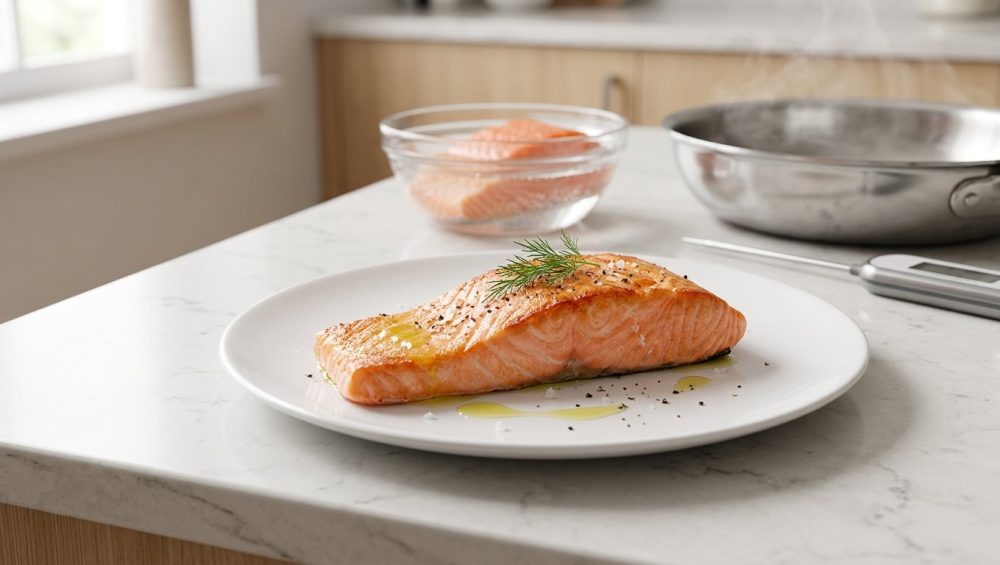
Insert the probe into the absolute thickest part of the fillet. For a perfect, moist, medium-rare to medium salmon, you want to pull the fish off the heat the exact second the internal temperature reaches 120°F to 125°F.
If you suspect your meat thermometer is lying to you, it probably is. Cheap grocery store thermometers take 15 seconds to register a temperature, and in the world of seafood, 15 seconds is the difference between perfection and a dried-out disaster. Invest in a high-quality, instant-read thermometer.
Carryover Cooking is Real
You must account for carryover cooking. When you remove a piece of fish from a hot pan or oven, it does not magically stop cooking. The residual heat trapped inside the outer layers of the flesh will continue to travel inward, raising the internal temperature by another 5 to 10 degrees as it rests.
If you leave the salmon in the pan until it hits 145°F, the carryover heat will push it past 150°F on the plate. At that temperature, the proteins seize, the albumin erupts, and your dinner is ruined. Pull it at 120°F, let it rest for five minutes, and watch as it gently coasts to a perfect 130°F.
Damage Control: What to Do When the Goo Appears Anyway
Let us be realistic. You are a busy home cook. Sometimes you forget to brine the fish. Sometimes you get distracted by a text message and leave the pan on the stove for two minutes too long. Suddenly, the white sludge appears.
Do not panic, and definitely do not throw the fish away. We can fix this.
The Scrape and Camouflage
If the albumin has already coagulated on the surface of your fish, your first line of defense is physical removal. Take the edge of a spoon, a slightly damp paper towel, or the side of a wooden chopstick, and gently scrape the white goo off the surface of the flesh. Because albumin does not bond aggressively to the cooked fish, it will usually slide right off with gentle pressure.
Once you have removed the offending sludge, you need to employ the art of camouflage. When it comes to the art of food plating, presentation is everything, and a clever garnish can hide a multitude of sins.
Cover the top of the fillet with a vibrant, fresh herb salad tossed in lemon vinaigrette. The bright green parsley, dill, and chives will instantly draw the eye and mask any lingering imperfections on the surface of the fish. Alternatively, a heavy sprinkle of toasted sesame seeds, scallions, and a drizzle of teriyaki glaze works wonders.
Sauces to the Rescue
If the albumin leakage was severe, it means your fish has lost a significant amount of moisture and is likely going to taste a bit dry. You need to reintroduce fat and liquid to save the meal.
This is where a brilliant pan sauce comes into play. A rich lemon-butter caper sauce, a classic beurre blanc, or a creamy dill yogurt sauce will instantly mask the dry texture of the overcooked fish. Just remember, if your pan sauces are watery, they won’t cling to the fish properly, so make sure to reduce them down until they are thick and luxurious enough to coat the back of a spoon.
Frequently Asked Questions About Salmon Albumin
Because I believe in leaving absolutely no stone unturned when it comes to mastering the kitchen, let us address the most common mysteries and questions surrounding this frustrating phenomenon.
Does Freezing Cause More Albumin Leakage?
Yes, absolutely. If you are buying frozen salmon fillets and noticing a massive amount of white goo every time you cook them, the freezing process is likely to blame.
When fish is frozen, the water inside the flesh expands and forms sharp, jagged ice crystals. If the fish is frozen slowly or improperly, these massive ice crystals literally puncture and shred the delicate cell walls of the muscle tissue. When you thaw and cook that damaged fish, the ruptured cells have absolutely no structural integrity left. They immediately collapse under the heat, dumping all of their water and liquid albumin out at once.
If you must buy frozen salmon, look for “flash-frozen” or “IQF” (Individually Quick Frozen) labels. Flash freezing happens so rapidly that the ice crystals remain microscopic, preventing them from tearing the cell walls apart. Furthermore, always thaw your frozen fish slowly overnight in the refrigerator. Force-thawing fish in warm water damages the cellular structure even further.
Does Wild Salmon Ooze More Than Farmed Salmon?
This is a fascinating debate in the culinary world, and the answer involves a bit of biology.
In the United States, salmon is incredibly popular. In fact, in 2023, Americans consumed 19.1 pounds of seafood per capita, with salmon ranking as the second most consumed species. To meet this massive demand, the global aquaculture industry produces over 2.4 million tons of farmed salmon annually.
Farmed salmon (typically Atlantic salmon) are raised in controlled environments and fed a highly regulated, high-fat diet. Because they do not have to swim thousands of miles up a raging river, they develop thick, luxurious layers of intramuscular fat (those white lines you see in the meat).
Wild-caught salmon (like Sockeye or Coho), on the other hand, are athletes. They spend their lives swimming against ocean currents. As a result, their flesh is incredibly lean, dense, and packed with highly active muscle fibers.
Because wild salmon has significantly less fat to insulate its meat, it is much more susceptible to thermal shock. The lean muscle fibers seize up much faster when exposed to heat, meaning wild salmon is far more likely to aggressively squeeze out albumin if it is even slightly overcooked. If you are cooking an expensive piece of wild Sockeye, the brining and low-heat methods are absolutely mandatory.
Does the Cut of the Fish Matter?
Yes. The physical shape of the cut plays a role in how much albumin is released.
A thick, center-cut fillet with the skin left on is your safest bet. The skin acts as a natural insulator, protecting the delicate flesh from direct heat and slowing down the cooking process.
Conversely, salmon steaks (which are cut crosswise through the bone) expose a massive amount of cut muscle fibers directly to the heat. Because the fibers are severed and exposed on both sides, they have a much harder time holding onto their internal liquids, making albumin leakage much more prevalent.
Similarly, if you are making salmon burgers using ground or minced fish, you have completely destroyed the cellular structure with your knife. Ground salmon will almost always release a significant amount of albumin when cooked because there is no intact muscle structure left to hold it in. Just like using a dull knife makes prep work miserable by crushing vegetables instead of slicing them, using a food processor to aggressively grind salmon will turn it into an albumin-leaking nightmare.
The Final Verdict on Flawless Salmon
Cooking exceptional, mind-blowing food at home does not require a culinary degree, a Michelin-starred kitchen, or an encyclopedic knowledge of French techniques. It simply requires a basic understanding of how your ingredients react to heat, and the willingness to use smart, efficient techniques to control that reaction.
The next time you bring home a beautiful piece of salmon, do not let the fear of the white goo intimidate you. Take fifteen minutes to whip up a quick saltwater brine. Ditch the toxic, peeling non-stick pans and reach for a reliable, heavy-bottomed skillet. Turn the heat down, respect the delicate nature of the protein, and use your meat thermometer to pull the fish at the exact right moment.
If you follow these simple, science-backed rules, you will never have to scrape unappetizing white sludge off your dinner again. You will be rewarded with a perfectly cooked, incredibly tender, restaurant-quality fillet that you can be genuinely proud to serve. Now, pour yourself another glass of that Pinot Noir, get into the kitchen, and show that salmon who is boss. You’ve got this.