Picture this: It is Saturday afternoon. You have just dropped the equivalent of a minor car payment on a wedge of authentic, aged Parmigiano-Reggiano, a massive bouquet of vibrant fresh basil, and a tiny bag of pine nuts that somehow cost more per ounce than printer ink. You are ready to channel your inner Italian nonna. You toss your beautiful, expensive ingredients into your food processor, stream in your prized, cold-pressed Extra Virgin Olive Oil, and hit the pulse button. You watch it churn into a beautiful, vibrant green emulsion. You dip a spoon in, bring it to your lips, and…
It tastes like battery acid.
It is overwhelmingly, aggressively, mouth-puckeringly bitter. You stare at the machine, wondering which culinary deity you offended. Did you buy a bad batch of basil? Were the pine nuts rancid? Is your cheese defective?
No. You just committed a cardinal sin of food science, and your food processor punished you for it.
As a home cook who has ruined more dinners than I care to admit before finally figuring out the precise mechanics of the kitchen, I am here to tell you that it is not your fault. Well, it is your fault for pressing the button, but nobody ever taught you the actual science of why this happens. We are going to fix that today. I have zero patience for pretentious chef-speak, but we do need to talk about chemistry for a minute. If you want to survive the kitchen without wasting your expensive ingredients and your precious weekend time, you need to understand exactly what happens when high-speed metal blades meet high-quality olive oil.
The Blender Betrayal: Why Your Hardware is the Enemy
Let’s get one thing straight: I am an absolute advocate for the home cook. I firmly believe that you do not need a culinary degree to make mind-blowing, restaurant-quality food in a standard residential kitchen. I also believe that time is money. On a chaotic Tuesday evening, your food processor is your absolute best friend. It chops onions in seconds, it blitzes marinades, and it saves you from endless, tedious knife work when you are just trying to get dinner on the table.
But when it comes to weekend cooking—when you have the time to be a perfectionist and you are working with delicate, premium ingredients—you have to recognize the severe limitations of your hardware. A food processor or a high-speed blender is a violently aggressive machine. It does not gently coax flavors out of ingredients; it obliterates them.
When you make pesto in a food processor and stream the olive oil in while the motor is running at full speed, you are falling right into the hidden trap of the blender. The metal blades are spinning at thousands of revolutions per minute. They aren’t just mixing the ingredients together; they are tearing them apart on a microscopic, molecular level. And while that intense mechanical action is great for turning tough chickpeas into silky hummus, it is an absolute disaster for Extra Virgin Olive Oil (EVOO).
To understand why your pesto turned on you, we have to look deep inside the chemical structure of the oil itself.
The Deep Science of Polyphenol Shearing
Here is the no-fluff, highly-researched truth about your olive oil. Extra Virgin Olive Oil is entirely unique in the culinary fat world. Unlike neutral, highly refined cooking oils (like canola, vegetable, or grapeseed oil), EVOO is essentially a fresh, unrefined fruit juice. It is mechanically pressed without the use of high heat or chemical solvents, meaning it retains all of the natural chemical compounds, vitamins, and antioxidants from the raw olive fruit.
Among the most important of these natural compounds are polyphenols.
What Are Polyphenols?
Polyphenols are a diverse class of natural antioxidants found abundantly in high-quality Extra Virgin Olive Oil. The specific phenolic compounds we care about in this context are oleuropein, oleocanthal, and hydroxytyrosol. These compounds are incredibly good for your health. They are potent anti-inflammatories, they protect against cardiovascular disease, and they are the primary reason the Mediterranean diet receives so much medical praise.
But here is the catch that the health blogs conveniently leave out: polyphenols taste incredibly astringent and horribly bitter. In fact, oleocanthal is the exact chemical compound responsible for that sharp, peppery tickle in the back of your throat that makes you cough when you swallow a spoonful of really robust, high-quality EVOO.
The Protective Fatty Acid Shield
If polyphenols are so intensely bitter, why doesn’t a drizzle of good olive oil over your salad taste like a crushed-up aspirin? Because in their natural, undisturbed state within the oil, these water-soluble polyphenols are tightly encased in a protective layer of fatty acids. The fat molecules literally coat the bitter compounds, preventing them from fully interacting with the taste receptors on your tongue. The oil tastes grassy, fruity, and pleasantly peppery, but the intense, underlying bitterness is securely masked by the fat.
The Mechanical Catastrophe of Emulsification
Enter your high-speed food processor. When you pour EVOO into a running blender along with water-heavy ingredients (like fresh basil leaves and raw garlic), you are forcing an emulsion. Emulsification is the process of forcing two liquids that hate each other—like oil and water—to mix.
The high-speed blades violently shear the oil, breaking it down into millions of microscopic droplets. This physical process is known as polyphenol shearing. As the oil droplets are slashed smaller and smaller by the blades, the protective fatty acid coating is ripped apart. The intensely bitter polyphenols are violently ejected from their fat shields and dispersed directly into the aqueous (water-based) liquid of the pesto.
Because the oil droplets are now microscopic, the total surface area of the oil is exponentially increased. Your tongue is suddenly exposed to a massive, unshielded payload of oleuropein and oleocanthal. The result? A sauce so bitter it is practically inedible. It has absolutely nothing to do with the quality of your basil or your cheese. You simply beat the oil up until it released its natural defense mechanism.
Why Extra Virgin Olive Oil is the Only Oil That Does This
You might be wondering why you can easily make a homemade mayonnaise in a blender using standard canola or sunflower oil without it turning bitter. It all comes down to the industrial refining process.
Refined oils (canola, vegetable, soybean, and even the bottles labeled “Light” or “Pure” olive oil) have been heavily processed using extreme heat, chemical solvents like hexane, and deodorizers. This aggressive refining process strips away impurities, neutralizes the flavor, and—crucially—destroys virtually all of the polyphenols. Because there are no polyphenols left in the oil to shear, you can blend these refined oils for ten minutes straight at maximum speed and they will never turn bitter.
Now, you might be tempted to say, “Great! I’ll just use a cheap, highly refined neutral oil for my pesto to save time!”
Absolutely not. We have a strict “No-Go” rule on toxic, highly processed garbage in this kitchen. I despise cheap, chemically extracted mystery oils just as much as I despise peeling, toxic non-stick pans. Pesto is a raw, uncooked sauce that relies entirely on the flavor profile of its fats to carry the dish. If you use a flavorless, industrial seed oil, your pesto will taste like greasy lawn clippings. You need the rich, fruity, grassy notes of a high-quality Extra Virgin Olive Oil to make a pesto worth eating.
You just have to know how to handle it properly.
The Definitive Fix: How to Build Pesto Without Ruining It
We have thoroughly diagnosed the problem. Now, let’s fix it. If you want to know how to stop blending the olive oil and start treating it with the culinary respect it deserves, follow this exact, foolproof method. We are going to use the food processor for the heavy lifting (because we rigorously prioritize efficiency), but we are going to completely remove the EVOO from the line of fire.
Step 1: Prep and Protect the Greens
Before we even touch the machine, let’s talk about the basil. Basil leaves are incredibly delicate and highly prone to rapid oxidation. If you have ever made a batch of pesto that turned a depressing swamp-brown color after sitting on the counter for ten minutes, it is because the polyphenol oxidase enzymes inside the crushed leaves reacted with the oxygen in the air.
If you want to keep your sauce vibrant, you need to utilize the quick boiling trick. Bring a large pot of heavily salted water to a rolling boil. Dunk your fresh basil leaves into the boiling water for exactly five to ten seconds (this is called blanching), then immediately use a spider skimmer to plunge them into a bowl of ice water (shocking). The brief exposure to extreme heat completely deactivates the browning enzymes, while the ice bath immediately halts the cooking process. Squeeze the leaves completely dry in a clean kitchen towel. Your pesto will stay emerald green for days, even after being exposed to the air.
Step 2: Blitz the Base Components
Add your dry, blanched basil, your toasted pine nuts, your raw garlic cloves, and a generous pinch of coarse sea salt to the bowl of your food processor. Pulse the machine. Do not just turn it on and walk away to check your phone. Pulse it in short, controlled, one-second bursts to chop the ingredients without generating excess friction and turning them into a heated, oxidized paste.
If the mixture is too dry and stubbornly refuses to process, do not reach for the olive oil! Instead, add a tiny splash of ice-cold water or a single teaspoon of a neutral, polyphenol-free oil (like a high-quality, cold-pressed avocado oil) just to get the mixture moving so the blades can catch the ingredients.
Step 3: The Manual Fold
Once your basil, nuts, and garlic are finely minced into a fragrant, textured green paste, stop the machine. Unplug it. Take the dangerously sharp blade out of the bowl.
Transfer the green paste into a large, wide mixing bowl. Now, fold in your freshly grated Parmigiano-Reggiano and Pecorino Romano cheeses. Finally, take your beautiful, expensive Extra Virgin Olive Oil and pour it directly into the bowl. Grab a sturdy wooden spoon or a high-quality silicone spatula and gently stir the oil into the paste by hand.
By stirring the oil in manually, you are coating the ingredients in fat without mechanically shearing the polyphenols. The protective fatty acid shields remain perfectly intact. The bitter compounds stay locked away where they belong. You get all the lush, grassy, complex flavor of the EVOO with absolutely zero bitterness. It takes exactly thirty extra seconds of manual labor, and it saves your entire meal.
The Traditional Route: Mastering the Mortar and Pestle
If you want to completely elevate your weekend cooking project, you should ditch the mechanized hardware entirely. There is a reason traditional pesto from Genoa (Pesto alla Genovese) is never bitter, and it is because it was perfected centuries before the electric food processor was ever invented.
The word “pesto” literally comes from the Italian verb pestare, which means “to pound” or “to crush.” Authentic pesto is not meant to be uniformly chopped by a spinning blade; it is meant to be bruised, battered, and crushed against stone.
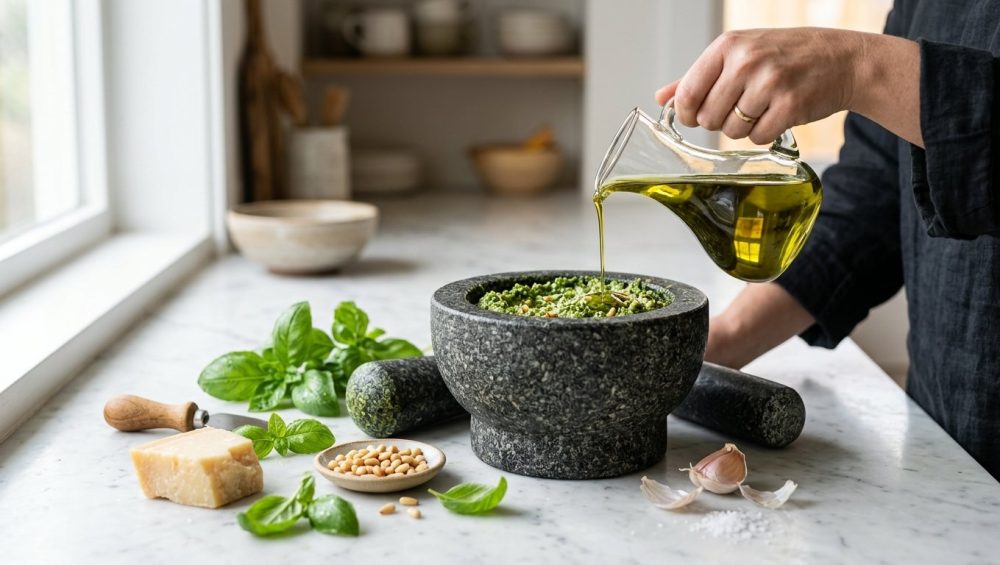
When you use a heavy granite mortar and pestle, you are pressing and tearing the basil leaves against the rough, unpolished stone walls. This abrasive crushing action ruptures the plant’s cell walls, releasing a massive flood of aromatic essential oils that a sharp, fast-moving blender blade simply slices right past. The garlic is mashed into a creamy, pungent paste rather than being diced into sharp little geometric cubes.
More importantly, the slow, grinding motion of a mortar and pestle is incredibly gentle on the olive oil. It slowly works the oil into the crushed ingredients, creating a luxurious, creamy, stable emulsion without ever generating the violent high-speed shear required to strip the polyphenols of their fatty acid coats.
If you decide to invite friends over and host a mindful pesto night, making the sauce entirely by hand is an absolute game-changer. It forces you to slow down, smell the ingredients as they transform, and appreciate the culinary artistry of traditional methods. Plus, you get an incredible forearm workout in the process.
Other Sneaky Reasons Your Pesto Tastes Awful
Let’s say you followed my advice to the letter. You stirred the oil in by hand, or you used a mortar and pestle. But you take a taste, and the pesto still has a harsh, unpleasant, or bitter edge. What gives? While polyphenol shearing is the number one culprit for intensely bitter pesto, it is not the only way to ruin the sauce. Here are the other rookie mistakes you need to aggressively check for.
1. Rancid Pine Nuts
Pine nuts (pignoli) are notoriously expensive because they are incredibly labor-intensive to harvest from pine cones. Because they are so pricey, they often sit on grocery store shelves or in the back of your pantry for months on end. Pine nuts have an extremely high fat content, and fat goes rancid when exposed to heat, light, and oxygen.
If you use rancid pine nuts, your pesto will taste like old oil paint. Always, always taste a pine nut before you throw it into the mix. If it tastes bitter, metallic, or smells like stale play-dough, throw the bag away. To extend their shelf life and protect your investment, store your pine nuts in an airtight container in the freezer.
Pro-Tip: Always toast your pine nuts in a dry stainless steel skillet over medium heat until they are golden and fragrant. This brings out their natural sweetness and adds a deep, nutty complexity to the sauce. But ensure they are completely cool before adding them to the basil; hot nuts will cook the delicate herbs, destroy their vibrant color, and ruin the fresh flavor.
2. The Green Sprout of Death (Old Garlic)
Garlic is the aromatic backbone of a good pesto, but it can quickly become a bully. If you are using older garlic cloves that have been sitting on your counter for weeks, cut them in half lengthwise before using them. If you see a thick, green sprout running down the center of the clove, use the tip of your paring knife to pop it out and discard it. That germ is the beginning of a new garlic plant, and it is incredibly harsh, sulfurous, and bitter.
Furthermore, pay close attention to how you process your garlic. If you are using a cheap, mystery-metal garlic press with dull extrusion holes, you are likely severely oxidizing the garlic and making it taste metallic. Understanding why your garlic tastes bitter is crucial for any raw sauce. Mince it finely with a sharp knife, or smash it into a paste on your cutting board with the flat of your blade and a pinch of coarse salt.
3. Dull Knives and Toxic Gear
I will scream this from the rooftops until the day I die: the quality of your equipment dictates the quality of your food. If you are stubbornly chopping basil by hand using a dull knife on a cheap, deeply scarred bamboo board, you are not actually slicing the herbs; you are crushing and tearing them.
Tearing delicate herbs causes rapid cellular damage and extreme oxidation, leading to a blackened, bitter mess. This is exactly why ruining your knives on terrible, overly hard cutting boards has a direct, measurable impact on the flavor of your food. Use a razor-sharp chef’s knife and a solid edge-grain wood or high-quality rubber cutting board. Treat your ingredients with respect, and they will reward you with superior flavor.
4. Bolting Basil
Basil is a highly temperamental plant. If it gets too hot, is under-watered, or is left unpruned for too long, it will “bolt,” meaning it will rapidly start producing flowers to go to seed. Once a basil plant bolts, the chemical composition of the leaves changes drastically. The plant stops putting energy into producing sweet, aromatic oils and instead produces defensive, highly bitter compounds to protect its seeds.
If you are harvesting basil from your own garden, aggressively pinch off the flowers the second you see them forming. If you buy basil from the grocery store and notice your fresh herbs turn to slime within a day, it means they were improperly stored in cold temperatures or harvested far too late. Look for young, tender, bright green leaves with no signs of flowering.
How to Salvage a Bitter Batch (If You Already Ruined It)
Okay, let’s say you didn’t read this article in time. You already blended the olive oil, the polyphenols are sheared, and you are staring at a bowl of bitter green sludge. Is it destined for the trash can?
Not necessarily. You cannot reverse the chemical reaction of sheared polyphenols once they are released, but you can attempt to mask the intense bitterness by playing with the balance of flavors on your palate.
1. Add Acid: Bitterness is directly counteracted by acidity on the human tongue. Squeeze in a teaspoon of fresh lemon juice. The bright, sharp acid will distract your taste buds, cut through the astringency of the oil, and artificially brighten the muted flavors of the basil.
2. Add More Fat: Fat coats the tongue and physically blocks bitter flavor receptors. Fold in an extra handful of finely grated Parmigiano-Reggiano, a splash of heavy cream, or even a spoonful of rich ricotta cheese. The dairy fat will help mellow out the harshness of the oleuropein.
3. Dilute It: If the pesto is aggressively bitter and cannot be saved with acid or fat, do not use it as a standalone pasta sauce. Instead, use it as a minor flavor enhancer. Swirl a small spoonful into a rich minestrone soup, bake it into the dimples of a focaccia bread, or mix it into a heavy cream sauce where the bitterness will be highly diluted by other strong, rich, fatty components.
The Sassy Sous-Chef’s Golden Rules for Perfect Pesto
Let’s recap, because I know you have a dinner party to prep for and a mindful pasta bar to assemble before your guests arrive. If you want to make pesto that tastes like it was flown in directly from a seaside trattoria on the Italian Riviera, you must adhere to these strict, non-negotiable rules:
- Never blend the oil. Process your solid ingredients first, then stir the Extra Virgin Olive Oil in by hand at the very end. Protect those polyphenols at all costs.
- Use real, high-quality ingredients. No pre-grated cheese covered in anti-caking cellulose in plastic tubs. No cheap, refined mystery oils. Buy a block of real Parmigiano-Reggiano and grate it yourself.
- Check for rancidity. Taste your pine nuts and your olive oil before they go into the bowl. One bad nut will ruin the entire batch.
- Blanch your basil. Five seconds in boiling water, followed immediately by an ice bath, guarantees a vibrant, emerald-green sauce that won’t turn brown and muddy on your pasta.
- Ditch the toxic gear. Use sharp knives, solid cutting boards, and a proper stone mortar and pestle if you have the time to do it right.
Final Thoughts on Kitchen Artistry
Cooking is not magic; it is physics, chemistry, and technique applied to raw ingredients. When you take the time to understand the foundational science behind your food, you stop making blind, frustrating mistakes and you start cooking with true intention. You don’t need to go to an expensive culinary school to understand that a spinning metal blade will destroy the delicate chemical structure of a premium olive oil. You just needed someone to explain it to you without the pretentious fluff.
Now you know exactly why your past attempts at homemade pesto tasted like a bitter mistake, and you possess the mechanical knowledge to ensure it never happens again. So go forth, buy the good cheese, carefully toast those pine nuts, and treat your olive oil with the respect it deserves. Your weekend culinary projects are about to get a massive upgrade, and your taste buds will thank you.