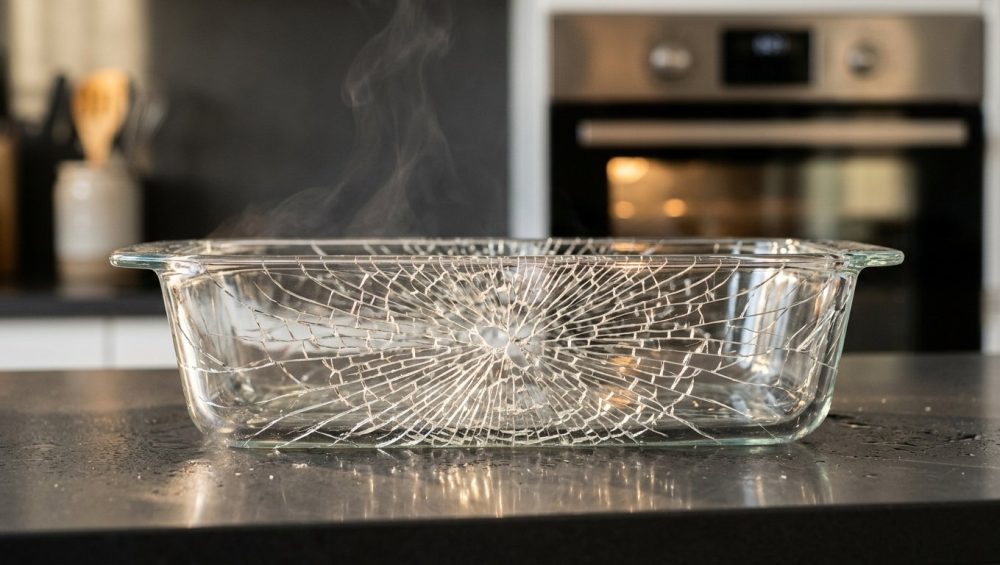
Picture this: You’ve just spent your precious Tuesday evening assembling the ultimate weeknight lasagna. You layered the ricotta, you simmered the sauce, and you carefully transferred your masterpiece into your trusty glass baking dish. You pop it into a 400-degree oven, pour yourself a well-deserved glass of Pinot Noir, and finally sit down. Ten minutes later, a sound like a localized tectonic event echoes from your kitchen. You rush in, yank open the oven door, and are greeted by a culinary crime scene. Your beautiful lasagna is now a bubbling, tragic mosaic of marinara, melted mozzarella, and razor-sharp glass shards. Dinner is ruined, your oven is a hazard zone, and you are left wondering what on earth you did wrong.
Sound familiar? If you spend enough time in the kitchen, chances are you’ve either experienced this nightmare firsthand or heard horror stories from traumatized friends. It is a rite of passage for the modern home cook, but it absolutely shouldn’t be. When you are surviving kitchen disasters, an exploding casserole dish ranks right up there with setting off the smoke alarm during a dinner party.
But here is the brutally honest truth: It is probably not your fault. You didn’t anger the culinary gods, and you aren’t a bad cook. You are simply a victim of cheap manufacturing, deceptive branding, and a fundamental misunderstanding of material science. As a home cook who firmly believes that anyone can achieve professional-level results in a standard kitchen, I have zero patience for toxic, unreliable, or downright dangerous equipment. We demand better.
Today, we are taking a deep, scientific dive into the hidden dangers lurking in your cupboards. We are going to explore the physics of thermal shock, unpack the scandalous history of how the industry downgraded our favorite bakeware, and lay down the ironclad rules you need to follow to keep your dinners intact. Consider this your essential kitchen survival guide for navigating the fragile world of glass baking dishes.
The Science of the Shatter: What Exactly is Thermal Shock?
Before we start pointing fingers at manufacturers (don’t worry, we’ll get there), we need to put on our lab coats and talk about physics. Glass doesn’t just spontaneously decide to explode because it hates your casserole. It shatters due to a phenomenon known as thermal shock.
The Physics of Expanding Glass
Everything expands when it gets hot and contracts when it gets cold. This is a basic rule of thermodynamics. However, different materials expand and contract at different rates, a metric scientists call the “coefficient of linear thermal expansion” (CTE).
Glass, by its very nature, is a terrible conductor of heat. Think about a metal pan for a second. When you put a carbon steel skillet on a hot burner, the heat rapidly travels through the metal, warming the entire pan relatively evenly. Glass doesn’t do this. When you expose glass to a sudden temperature change—like pulling a hot dish out of a 400-degree oven and setting it on a cold granite countertop—the part of the glass touching the cold surface cools down and rapidly contracts. Meanwhile, the rest of the glass is still screaming hot and expanded.
The Breaking Point: Tensile Stress vs. Compressive Stress
This uneven temperature distribution creates a brutal tug-of-war inside the material. The rapidly cooling exterior of the glass shrinks, pulling against the hot, expanded interior. This creates immense tensile stress (pulling apart) on the surface and compressive stress (pushing together) on the inside.
Glass is incredibly strong when it comes to compressive stress, but it is notoriously weak against tensile stress. When that pulling force exceeds the structural integrity of the glass, it fails. And because glass is a brittle, amorphous solid with no internal grain boundaries to stop a crack from spreading, that failure is catastrophic and instantaneous. The crack propagates at the speed of sound, and your dish literally blows itself apart.
That is thermal shock in a nutshell. It is the exact reason why your glass shatters in the oven when a stray drop of cold water hits it, or why it explodes on your counter. But here is the kicker: not all glass is created equal. Some glass is engineered to handle this stress beautifully. The glass currently sitting in your cabinet? Probably not.
The Great Glass Downgrade: Borosilicate vs. Soda-Lime
If you ask your grandmother about her glass bakeware, she’ll probably tell you she’s been using the exact same dishes since the 1970s, transferring them from the fridge to the oven without a single issue. She isn’t lying, and she isn’t performing magic. She just owns better glass than you do.
The Golden Age of Borosilicate Glass
Back in 1915, Corning Glass Works introduced a revolutionary product to the American kitchen: Pyrex. This original Pyrex was made from borosilicate glass. Borosilicate is a specialized glass engineered with boron trioxide, which fundamentally alters its molecular structure.
The magic of borosilicate glass is that its coefficient of thermal expansion is incredibly low (around 3.3 x 10^-6 / K). When it gets hot or cold, it barely expands or contracts at all. Because it doesn’t shift its shape drastically, it doesn’t build up those lethal internal stresses. You could practically pull a borosilicate dish out of a roaring oven and throw it into a snowbank, and it would survive (though I don’t recommend testing that theory with your dinner). It was the gold standard, and it earned its reputation as an indestructible kitchen workhorse.
The Sneaky Switch to Soda-Lime Glass
Fast forward to 1998. Corning sold the Pyrex brand name for kitchen products to a company called World Kitchen (now Corelle Brands). Shortly after the acquisition, the US manufacturing process underwent a massive, quiet shift. They stopped using the expensive, heat-resistant borosilicate glass and switched to tempered soda-lime glass.
Soda-lime glass is the cheap, everyday glass used for windows, drinking glasses, and beer bottles. It is significantly cheaper to manufacture, melts at a lower temperature, and is easier to shape. Manufacturers will happily tell you that tempered soda-lime glass is more resistant to physical impact—meaning if you drop it on the floor, it’s less likely to break.
But here is the dirty little secret they gloss over: soda-lime glass has a thermal expansion coefficient nearly three times higher than borosilicate (around 9.0 x 10^-6 / K). It expands and contracts wildly with temperature changes. It is incredibly susceptible to thermal shock.
Consumer Reports conducted an exhaustive investigation in 2011 after receiving hundreds of complaints about exploding dishes. They took soda-lime dishes and borosilicate dishes, heated them up, and placed them on wet granite countertops. The soda-lime dishes shattered ten out of ten times. The borosilicate dishes survived. If you’ve ever wondered why you should stop baking brownies in glass pans, this unpredictable thermal volatility is a massive part of the reason.
How to Tell What Your Dish is Made Of
So, how do you know if you are holding a ticking time bomb or a piece of heirloom-quality borosilicate? It all comes down to the logo.
- PYREX (All Uppercase): If the logo on your dish is stamped in all capital letters (PYREX), you are holding the good stuff. This indicates either vintage American-made borosilicate (pre-1998) or modern European-manufactured Pyrex, which still uses the superior borosilicate formula.
- pyrex (Lowercase): If the logo is lowercase (pyrex), it is modern, American-made soda-lime glass. Treat it with extreme caution.
- Anchor Hocking and Others: Most other budget-friendly glass bakeware brands sold in US supermarkets are also made of tempered soda-lime glass.
If you are serious about your cooking and want to start banishing toxic kitchen gear and cheap materials from your life, identifying your glass is step one.
The Silent Killers: Everyday Habits That Destroy Glass Bakeware
If you are stuck with soda-lime glass, you can still use it safely, provided you treat it like a delicate diva. Most shattering incidents occur because home cooks treat modern soda-lime glass like the vintage borosilicate of their childhoods. Here are the everyday habits that are turning your bakeware into shrapnel.
The Cold Countertop Catastrophe
This is the number one killer of glass baking dishes. You pull a bubbling casserole out of a 400-degree oven and set it directly onto a stone, granite, or tile countertop. Stone is a fantastic conductor of heat. It immediately sucks the heat out of the bottom of the glass dish, causing the exterior to rapidly contract while the interior remains expanded. Bang. The dish explodes.
Never, ever place hot glass directly onto a bare countertop. It is the fastest way to ruin your meal and your evening.
The Freezer-to-Oven Fantasy
We all love the idea of meal prep. You make a lasagna on Sunday, freeze it in a glass dish, and pop it directly into the oven on Wednesday night after a long day at work. If you are doing this for the sake of conquering weeknight cooking anxiety, I applaud your efficiency. But if you are doing it with soda-lime glass, you are playing Russian roulette.
Taking a dish from 0 degrees Fahrenheit to 400 degrees Fahrenheit is the ultimate thermal shock. The outside of the glass heats up and expands in the oven, while the frozen block of food keeps the inside of the glass contracted. The resulting stress will almost certainly fracture the dish.
The Wet Towel Trap
You might think you are being safe by placing your hot glass dish on a folded dish towel instead of the bare counter. But if that towel is damp—even slightly—you have just created a thermal shock hazard. Water conducts heat roughly 25 times faster than air. A wet towel will rapidly pull heat from the bottom of the glass, causing the exact same rapid contraction as a cold granite counter. Always ensure your trivets and potholders are bone dry.
Scratches, Micro-Abrasions, and the Danger of Metal Utensils
Here is a fascinating and terrifying fact about glass: it rarely breaks without a starting point. In material science, these are called “nucleation sites”. A nucleation site is a tiny flaw, scratch, or micro-abrasion on the surface of the glass.
When thermal stress builds up inside the glass, it looks for the weakest point to release that energy. If your glass dish has a scratch from where you aggressively cut a brownie with a metal knife, or where you scoured it with heavy-duty steel wool, that scratch becomes the origin point for a catastrophic crack.
Stop using metal knives, metal spatulas, and harsh abrasive scrubbers on your glass bakeware. Stick to silicone, wood, or nylon utensils. You aren’t just protecting the aesthetic of the dish; you are maintaining its structural integrity.
The Sassy Sous-Chef’s Ironclad Rules for Glass Bakeware Safety
If you refuse to part with your modern glass bakeware, you must adopt a new set of kitchen protocols. I am all for saving time on a Tuesday night, but I draw the line at unsafe practices. Follow these ironclad rules to keep your glass intact.
Master the Art of the Trivet
Your hot glass dish should only ever touch three things: the oven rack, your dry oven mitts, and a dry, heat-safe trivet.
Invest in high-quality cork trivets, thick silicone mats, or heavy-duty cloth hot pads. Place them on the counter before you open the oven door. When you remove the dish, place it gently onto the trivet. Cork and dry cloth are excellent insulators; they slow down the transfer of heat, allowing the glass to cool down gently and evenly. Having a good set of trivets is one of the essential tools every beginner needs for a safe, functional workspace.
Preheat Like a Professional
Never put a glass baking dish into an oven while it is preheating. During the preheat cycle, the oven’s heating element (especially the broiler at the top) kicks into high gear, blasting intense, direct, uneven radiant heat to bring the ambient temperature up quickly. This direct blast of heat can easily cause the glass to expand unevenly and shatter. Wait until the oven has fully reached its target temperature and the heating elements have cycled down before inserting your dish.
Liquid is Your Friend (Sometimes)
If you are roasting a chicken or baking a piece of meat that will release fats and juices, make sure the bottom of your glass dish is covered with a small amount of liquid (like broth or water) before you put it in the oven.
Why? If hot fat drips onto dry, screaming-hot glass, the sudden temperature differential between the boiling fat and the glass can cause a localized thermal shock. Having a baseline of liquid ensures the bottom of the dish heats evenly.
However, the reverse is also true: NEVER add cold liquid to a hot glass dish. If your roast is looking dry halfway through cooking, do not pour cold chicken broth straight from the fridge into the hot pan. You will shatter it instantly. If you must add liquid, heat it up on the stove or in the microwave first.
The Cooling Down Protocol
Patience is a virtue, especially when dealing with cheap glass. Let your dish cool completely at room temperature on a dry trivet before you even think about putting it in the refrigerator or freezer. Rushing the cooling process by sticking a hot dish in the fridge is a guaranteed way to induce thermal shock.
Ditching the Danger: The Best Alternatives to Cheap Glass
If you are tired of treating your bakeware like an unexploded bomb, it is time to upgrade. As a home cook who demands reliability, I highly recommend phasing out your soda-lime glass in favor of materials that can actually handle the heat. When readers ask me what to buy instead, I point them toward these three superior alternatives.
Sourcing True Borosilicate (The Good Stuff)
If you love the transparency of glass (it is undeniably helpful to see the bottom of your pie crust browning), you don’t have to give it up. You just need to buy real borosilicate.
Look for vintage PYREX (uppercase) at thrift stores, antique malls, or online marketplaces. It is practically indestructible and has stood the test of time.
If you prefer buying new, look for brands that explicitly advertise their products as borosilicate glass. The brand OXO Good Grips manufactures a fantastic line of borosilicate glass bakeware that is widely available in the US. Additionally, if you order Pyrex from Europe (manufactured by Arc International), you will receive true borosilicate. It costs a few dollars more, but the peace of mind is priceless.
Enameled Cast Iron: The Heavyweight Champion
If you want a baking dish that will outlive you, invest in enameled cast iron. Brands like Le Creuset and Staub make stunning cast iron roasters and casserole dishes. Yes, they are heavy. Yes, they are expensive. But they are entirely immune to thermal shock shattering in the way glass is, they retain heat beautifully, and they look gorgeous on the dining table. They are the ultimate workhorses for weekend culinary projects.
High-Fired Stoneware and Ceramics
For everyday casseroles, brownies, and baked ziti, high-fired stoneware is a phenomenal upgrade from soda-lime glass. Stoneware is baked at incredibly high temperatures, making it dense, durable, and highly resistant to thermal shock. It heats evenly, resulting in perfectly browned edges without the hidden danger of glass pans scorching the corners of your baked goods.
Just be sure to check the manufacturer’s guidelines, as extreme temperature swings (like freezer-to-oven) can still crack lower-quality ceramics.
What to Do When the Worst Happens (Cleanup and Recovery)
Let’s say you are reading this article a little too late. The dish has shattered. The dinner is ruined. You are standing in your kitchen surrounded by glass and grief. Here is exactly how to handle the aftermath.
Securing the Scene
First, stop moving. Glass shards from a thermal shock explosion can travel surprisingly far. Put on hard-soled shoes immediately. Keep pets and children completely out of the kitchen.
If the dish shattered inside the oven, turn the oven off immediately and leave the door closed until it is completely cool. Do not attempt to clean a hot oven full of glass; you risk burning yourself and inhaling dangerous fumes from the ruined food.
Once everything is cool, use a shop vacuum or a broom and dustpan to collect the large pieces. If you are wondering why your metal sheets warp in the oven, it’s often poor material quality, but when glass shatters, it’s a full-blown safety hazard. Wear thick, heavy-duty work gloves while handling the debris.
The Bread Trick for Micro-Shards
The biggest danger after a glass explosion isn’t the large chunks; it is the microscopic, invisible shards scattered across your floor. Sweeping and vacuuming often miss these tiny slivers.
Here is my favorite sous-chef trick: take a slice of soft sandwich bread and press it gently into the floor across the blast radius. The soft, spongy texture of the bread will pick up and trap the microscopic glass shards that your broom missed. Once you’ve blotted the floor, throw the bread away immediately. (Alternatively, a damp paper towel works, but bread is surprisingly effective).
Let the Food Go
I know it hurts. I know you spent hours on that casserole. But you must throw the food away.
Do not attempt to salvage the center of the lasagna. Do not pick around the edges. When glass shatters from thermal shock, it doesn’t just break into large pieces; it produces thousands of tiny, needle-like splinters that embed themselves invisibly into the food. Eating it is a massive medical hazard. Cut your losses, order a pizza, and pour yourself another glass of wine.
Final Thoughts from the Sassy Sous-Chef
Cooking should be a joy, not a high-stakes game of dodging flying glass. While the manufacturing industry did home cooks a massive disservice by quietly downgrading our bakeware, you now have the knowledge to outsmart them.
You understand the physics of thermal shock. You know the difference between cheap soda-lime and durable borosilicate. You know exactly why you should never put a hot dish on a cold counter, and you are officially armed with the smartest alternatives on the market.
Your kitchen is your domain. Fill it with tools that work as hard as you do, respect the laws of thermodynamics, and never let a cheap glass pan ruin your Tuesday night lasagna again. Now, go preheat that oven—safely—and get back to cooking.