Picture this: It is a chilly Tuesday evening. You have just spent the last forty-five minutes assembling a gorgeous, bubbling baked ziti. You survived the weekday commute, you successfully navigated the grocery store during rush hour, and you managed to get a hot meal into the oven. You are feeling like a domestic deity. The timer goes off, and you proudly pull your bubbling masterpiece from the 400-degree oven, setting it down on your granite countertop to rest.
You turn your back for exactly three seconds to grab a serving spoon. And then, it happens.
BANG.
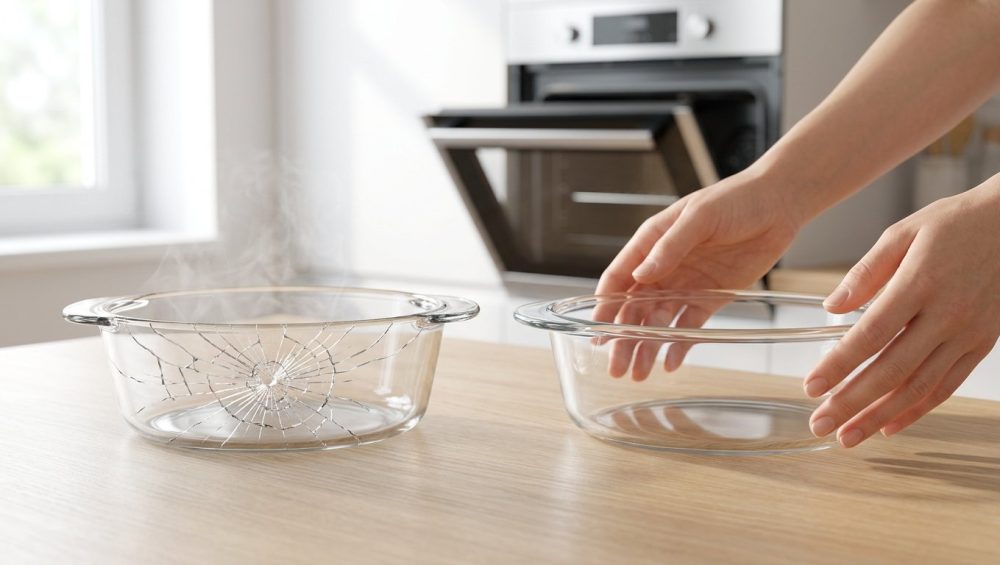
It sounds like a localized seismic event. You whip around to find your beautiful, cheese-crusted dinner completely annihilated, replaced by a smoking crater of marinara sauce and thousands of razor-sharp glass shards scattered across your kitchen floor. Your dinner is ruined, your kitchen is a hazard zone, and you are left standing there holding a wooden spoon, wondering what on earth you did wrong.
Listen to me very carefully: You did nothing wrong. You are simply the latest victim of a massive, industry-wide downgrade in materials that has been quietly plaguing home cooks for decades.
As a busy professional who relies on ruthless efficiency to get through weekday meals, I firmly believe that time is money. I have absolutely zero patience for fussy techniques when I am just trying to feed my family on a Wednesday, and I have even less patience for kitchen equipment that actively sabotages my efforts. We have all spent enough time surviving kitchen disasters without our own bakeware turning into a shrapnel bomb.
Today, we are skipping the pretentious chef-speak and diving deep into the actual physics, history, and corporate cost-cutting that caused your glass baking dish to explode. More importantly, I am going to teach you how to curate a collection of safe, high-quality, durable glass bakeware that will never betray you.
The Anatomy of a Kitchen Disaster: What Actually Happened?
When a glass dish shatters in the kitchen, the home cook’s first instinct is always self-blame. You assume you set it down too hard, or you bumped the edge against the oven rack, or you somehow angered the culinary gods. But unless you actively threw your casserole dish at the wall, mechanical force is rarely the culprit.
The true villain here is a phenomenon known as thermal shock.
To understand thermal shock, you have to understand that glass is not a static, unmoving material. When glass is exposed to heat, it expands. When it is exposed to cold, it contracts. If you heat a glass dish slowly and evenly, the entire structure expands together in harmony. But kitchens are not controlled laboratory environments. We subject our cookware to wild, sudden temperature swings.
Imagine taking a 400-degree glass dish out of the oven and placing it on a cool, room-temperature granite countertop. Or worse, imagine a single drop of cold water from your sink splashing onto the side of that scorching hot glass. The area of the glass that comes into contact with the cooler temperature instantly tries to shrink and contract. However, the rest of the thick glass dish is still screaming hot and fully expanded.
You now have two different parts of the exact same piece of solid glass trying to exist in two different physical states at the exact same time. The internal stress builds up in a fraction of a millisecond until the structural integrity of the material simply cannot take it anymore. The glass violently releases that stress by blowing itself to pieces.
If you want to eliminate kitchen chaos, you have to understand the tools you are working with. And unfortunately, not all glass is created equal when it comes to handling this kind of thermodynamic stress.
The Science of the Shatter: Coefficient of Thermal Expansion
If we want to get slightly nerdy for a moment (and we do, because knowledge is power), the ability of a material to withstand temperature changes without changing shape is measured by its Coefficient of Thermal Expansion, or CTE.
You do not need a chemistry degree to understand this concept. A high CTE means the material expands and contracts dramatically when the temperature changes. A low CTE means the material is incredibly stable and barely changes its volume at all, regardless of whether it is freezing cold or boiling hot.
When it comes to glass bakeware, there are two main players in the game, and their CTE numbers tell you everything you need to know about why your dinner exploded.
Borosilicate Glass: The Gold Standard
Borosilicate glass is the holy grail of heat-resistant kitchenware. It is formulated by melting together silica sand, soda ash, alumina, and a magical ingredient called boron trioxide. The addition of boron trioxide fundamentally alters the atomic structure of the glass, binding the chemicals tightly together and resulting in a phenomenally low Coefficient of Thermal Expansion of approximately 3.3 x 10^-6/K.
Because its CTE is so remarkably low, borosilicate glass barely expands when heated. You can take a borosilicate dish out of a freezing cold refrigerator and put it directly into a hot oven, and it will handle the transition with grace and stability. It simply does not care about thermal shock.
Soda-Lime Glass: The Cheap Imposter
Soda-lime glass is the most common type of glass on the planet. It is made from a basic mixture of silicon dioxide, sodium oxide (soda), and calcium oxide (lime). It is fantastic for making window panes, drinking glasses, and beer bottles because it is incredibly cheap and easy to manufacture.
However, soda-lime glass has a massive flaw when it comes to cooking: it has a high Coefficient of Thermal Expansion of roughly 9.0 x 10^-6/K. That is nearly three times higher than borosilicate glass. When soda-lime glass gets hot, it expands significantly. When it cools, it contracts violently.
Manufacturers often put their soda-lime bakeware through a tempering process (heating it up and cooling it rapidly during production) to make it physically stronger against drops and bumps. But tempering does not change the fundamental chemical composition of the glass. It is still soda-lime, and it is still highly susceptible to thermal shock.
When you are serious about banishing toxic kitchen gear and cheap, inferior tools from your home, soda-lime bakeware should be the very first thing on your chopping block.
The Pyrex Plot Twist: A Brief History of Your Grandmother’s Casserole Dish
At this point, you are probably thinking, “Wait a minute. My grandmother used the same glass Pyrex dish for fifty years. She took it from the fridge to the oven to the table, and it never exploded. Why is my modern glass bakeware acting like a fragile snowflake?”
You are not crazy. Your grandmother’s glass bakeware really was better than yours. To understand why, we have to look at the fascinating, slightly infuriating corporate history of the most famous glassware brand in the world.
In 1908, a research director at Corning Glass Works named Eugene Sullivan developed a low-expansion borosilicate glass to reduce breakage in railroad lantern globes. By 1915, Corning realized this incredible, heat-resistant glass would be perfect for the kitchen, and they introduced it to the public under the brand name Pyrex.
For decades, clear Pyrex bakeware was the undisputed king of the American kitchen. It was made exclusively from premium borosilicate glass. It was practically indestructible against thermal shock. It was a true culinary workhorse that empowered home cooks to achieve professional-level results without fear of equipment failure.
But then, the corporate landscape shifted. Borosilicate glass requires incredibly high temperatures to melt, making it expensive and energy-intensive to produce. Soda-lime glass, on the other hand, is vastly cheaper to manufacture.
Starting around the 1940s, Corning began using tempered soda-lime glass for their opaque, painted “opal” glass bowls (the famous colorful vintage nesting bowls). Then, in a move that still angers cookware purists today, Corning gradually began shifting the production of their clear Pyrex bakeware from borosilicate to cheaper soda-lime glass starting in the 1980s.
By 1998, Corning decided they were done with the consumer kitchenware business entirely. They spun off their kitchen division, selling it to a company called World Kitchen (which later became Corelle Brands). By the time World Kitchen took over, the transition was complete. All clear Pyrex bakeware manufactured in the United States from 1998 onward has been made from tempered soda-lime glass.
The brand name remained the same, but the chemical reality of the product had been fundamentally downgraded. It is the exact same frustration you feel when your cheap, flimsy baking sheets pop and warp in a hot oven. You thought you were buying quality, but you were sold a cost-cutting compromise.
Interestingly, this downgrade only happened in the United States. Pyrex products manufactured and sold in Europe (currently produced by International Cookware) are still made from the original, high-quality borosilicate glass recipe.
The “No-Go” Rule: Why I Refuse to Settle for Inferior Glass
I have a very strict philosophy when it comes to outfitting a kitchen: I absolutely despise cheap, unreliable gear. If a tool cannot perform its primary function safely and consistently, it belongs in the trash, not in your cabinets.
This is not just me being a snarky perfectionist. The shift to soda-lime glass has had real-world safety consequences. According to data analyzed by the Consumer Product Safety Commission (CPSC), over a nine-year period, an estimated 11,882 people went to emergency rooms in the United States for injuries related to glass bakeware that was dropped, broken, or shattered.
While manufacturers of soda-lime glass correctly point out that tempered soda-lime is more resistant to breaking if you accidentally drop it on the floor, I frankly do not care. I am not playing basketball with my casserole dishes. I am putting them in a 425-degree oven. In a kitchen environment, thermal resistance is infinitely more important than impact resistance.
When you are dealing with weeknight cooking anxiety, the absolute last thing you need is the lingering fear that your dinner is going to detonate because your countertop was slightly too cold. You deserve equipment that works with you, not against you.
How to Audit Your Current Bakeware Collection
Before you panic and throw every piece of glass in your kitchen into the recycling bin, we need to do a thorough audit of your current inventory. You might actually own some high-quality borosilicate glass without even realizing it.
Here is how to play kitchen detective and figure out exactly what kind of glass is hiding in your cupboards. Just as you would throw away a pan after your ceramic pan lost its non-stick coating, you need to identify and isolate the weak links in your glassware.
The Logo Capitalization Trick
If you own Pyrex, the easiest way to determine its composition is to look at the logo stamped into the glass.
- PYREX (All Uppercase): If the logo is entirely in uppercase letters, congratulations! You likely have a piece of vintage American borosilicate glass (pre-1998) or a piece of modern European borosilicate glass. Treat this dish like the treasure it is.
- pyrex (All Lowercase): If the logo is in all lowercase letters, you are holding a piece of modern, post-1998 American soda-lime glass. This dish requires extreme caution regarding temperature changes.
The Color Tint Test
If the logo is worn off, or if you own a brand other than Pyrex, you can often tell the difference by looking at the color of the glass itself. Hold the dish up to a bright light and look directly at the thickest part of the rim or the edge.
- Borosilicate Glass: Because it is made with highly pure materials, the edge of borosilicate glass will typically look perfectly clear, or perhaps have a very faint grayish or yellowish tint.
- Soda-Lime Glass: Soda-lime glass naturally contains trace amounts of iron oxide. When you look at the edge of a soda-lime dish, it will almost always have a distinct bluish-green tint.
If your glass is lowercase “pyrex” and glows with a blue-green hue on the edges, you have soda-lime glass. It is time to relegate that dish to cold storage duties, like holding pasta salad in the fridge, and banish it from your oven forever.
The Sassy Sous-Chef’s Definitive Buying Guide: What to Buy Instead
If you have just realized your entire bakeware collection is made of thermal-shock-prone soda-lime glass, take a deep breath. It is time to upgrade.
As a home cook who demands the best, I only recommend brands that refuse to compromise on materials. If you are tired of your baking sheets keep warping and your glass dishes exploding, these are the borosilicate brands you need to invest in right now.
1. OXO Good Grips Glass Bakeware
OXO is one of the few mainstream brands in the United States that actively advertises the use of thermal shock-resistant borosilicate glass in their bakeware. Their glass baking dishes are rugged, reliable, and designed with the home cook in mind. They feature generously sized handles that are incredibly easy to grip with bulky oven mitts, and many of their dishes come with smart, tight-fitting lids for easy refrigerator storage. This is my top recommendation for an accessible, everyday workhorse.
2. Simax
If you want true European craftsmanship, look no further than Simax. Manufactured in the Czech Republic, Simax has been producing premium borosilicate glassware since 1837. Their bakeware is elegant, crystal clear, and virtually immune to thermal shock. They offer a fantastic range of sizes, including deep casseroles and specialized roasting dishes. You can often find Simax products online or at high-end specialty kitchen retailers.
3. Pyrex Classic (European Import)
If you are a brand loyalist and simply must have the Pyrex name in your kitchen, you need to look across the Atlantic. The Pyrex products manufactured by International Cookware in France are still made using the original, superior borosilicate formula. You can often find these pieces online labeled as “Pyrex Classic” or under the brand name Arcuisine. Look for the all-uppercase PYREX logo to confirm you are getting the good stuff.
4. Hario
While primarily known for their world-class pour-over coffee gear, the Japanese brand Hario (which literally translates to “King of Glass”) also manufactures stunning borosilicate kitchenware. Their glass mixing bowls and smaller baking dishes are incredibly lightweight, highly durable, and beautiful enough to go straight from the oven to a formal dining table.
Best Practices for Baking with Glass (Even the Good Stuff)
Upgrading to high-quality borosilicate glass will eliminate 99% of your thermal shock worries. However, even the best tools require proper handling. If you want to ensure you have stopped burning dinner and ruining your expensive ingredients, you must follow these non-negotiable rules for baking with any glass dish.
1. Never Place Hot Glass on a Cold or Wet Surface
This is the cardinal rule of glass bakeware. When you pull a hot dish out of the oven, never set it directly on a granite, quartz, or tile countertop. These materials are incredibly dense and naturally cold, and they will rapidly suck the heat out of the bottom of the glass, inducing thermal shock. Furthermore, never set hot glass on a damp dish towel or a wet sink basin. Water conducts heat incredibly fast, and a single drop of cold water on hot glass is a recipe for disaster. Always place your hot glass bakeware on a dry cloth towel, a thick silicone trivet, a wooden cutting board, or a wire cooling rack.
2. Always Preheat Your Oven
Never put a glass dish into a cold oven and then turn it on. During the preheating phase, ovens do not heat up gently. The heating elements blast intense, direct, concentrated heat to bring the ambient temperature up as quickly as possible. This intense, localized heat can cause uneven expansion in the glass. Always wait until the oven has fully reached its target temperature and the heating elements have cycled off before sliding your glass dish inside.
3. The Broiler is the Enemy
Under no circumstances should you ever put a glass baking dish—even premium borosilicate—under an active broiler. Broilers generate intense, direct, top-down infrared heat that can exceed 500 degrees Fahrenheit in a matter of seconds. Glass is an insulator, meaning it absorbs and holds heat very slowly. The top layer of the glass will rapidly superheat under the broiler while the bottom layer remains cooler, creating massive internal stress. If you need to broil a cheese topping, use a metal pan.
4. Manage Your Liquids
If you are roasting a chicken or a large cut of meat in a glass dish, never pour cold water, cold wine, or cold broth into the hot dish to deglaze or create steam. The sudden introduction of cold liquid to the hot glass floor will cause an instant localized contraction. If you must add liquid during the cooking process, ensure the liquid is heated to a simmer on the stovetop first before adding it to the hot baking dish.
When to Ditch Glass Entirely: The Case for Metal and Ceramic
As much as I advocate for sourcing high-quality borosilicate glass, part of being a smart home cook is knowing when to choose a different material entirely. Glass is fantastic for casseroles, baked pastas, fruit cobblers, and pies because it conducts heat slowly and evenly, allowing the center of a dense dish to cook before the edges burn.
However, glass is a terrible conductor of rapid heat. If your goal is to get a hard, crispy, caramelized sear on your food, glass will fight you every step of the way.
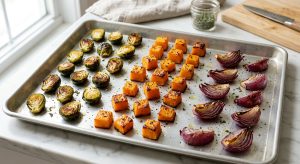
If you want to stop eating mushy veggies, you need to stop roasting your broccoli and Brussels sprouts in a high-sided glass dish. The high sides trap steam, and the glass takes too long to get hot, resulting in sad, boiled vegetables. For roasting vegetables or baking cookies, you should always use a heavy-duty, bare aluminum half-sheet pan. Aluminum heats up almost instantly, giving your vegetables that gorgeous, crispy, browned exterior.
If you are roasting a whole chicken or a heavy pork shoulder, you are much better off using a multi-clad stainless steel roasting pan or a heavy enameled cast-iron Dutch oven (like a Staub or Le Creuset). These materials can handle massive temperature swings, they are completely immune to thermal shock, and you can take them straight from the oven to the stovetop to build a pan sauce over a live burner—something you can absolutely never do with glass.
What to Do When the Inevitable Happens
Let us say you are reading this article a little too late. You already used a cheap soda-lime dish, it exploded in your oven, and you are currently staring at a disaster zone. Here is your emergency protocol.
First, turn off the oven and do not open the door immediately. Let the dust settle and allow the oven to cool completely. Do not attempt to clean up hot glass.
Second, mourn your food, and then throw it all in the trash. I know it is heartbreaking to throw away an expensive roast or a labor-intensive casserole, but you cannot salvage it. When tempered soda-lime glass shatters, it breaks into thousands of tiny, granular chunks and microscopic slivers. It is physically impossible to guarantee that you have removed every invisible shard of glass from your food. Eating glass is a guaranteed trip to the emergency room. Throw the food away. Order a pizza.
Once the oven is completely cool, put on heavy-duty leather work gloves and use a shop vacuum to suck up the debris. Do not use your regular household vacuum, as the sharp glass can puncture the internal hoses. Wipe down the entire interior of the oven with a thick, damp paper towel to pick up the microscopic glass dust, and then immediately throw the paper towel away.
Conclusion: Take Back Your Oven
Cooking should be a joyful, creative, and empowering experience. You do not need a culinary degree to make mind-blowing food in your own kitchen, but you do need tools that respect your time and your safety.
We have all fallen victim to clever marketing and corporate cost-cutting at some point. But now that you understand the hidden science of thermal shock, the crucial difference between borosilicate and soda-lime glass, and the shady history of your grandmother’s favorite bakeware brand, you hold the power to make better choices.
Audit your cabinets this weekend. Identify the cheap, blue-tinted soda-lime glass and demote it to holding cold leftovers. Invest in a few heavy-duty pieces of real, thermal-shock-resistant borosilicate glass from a brand that actually cares about quality.
Just like figuring out why your cheap spatulas taste like soap, identifying the root cause of exploding bakeware is the first step toward building a safer, more efficient, and vastly more enjoyable kitchen. Stop settling for kitchen gear that actively works against you. Equip yourself for success, preheat that oven with confidence, and let’s get back to cooking incredible food.