
Pour yourself a generous glass of wine, grab a cutting board, and let’s get straight to the point. If you are reading this, you have probably just set off the smoke detector, turned a beautiful piece of steak into a leather shoe, or stared in sheer horror as your homemade mayonnaise separated into a depressing, oily puddle. Take a deep breath and take a sip of that wine. You are absolutely not alone.
According to recent food industry data, as of 2025, roughly 65% of Americans are cooking at home at least four nights a week. That is a massive demographic of people who are inevitably burning their dinners on a Tuesday night. The difference between a panicked novice and a seasoned home cook isn’t that the expert never makes mistakes; it’s that the expert knows exactly how to hide them, fix them, or pivot so brilliantly that the guests think it was intentional.
You do not need a culinary degree to make mind-blowing food. You just need to understand a few basic principles of kitchen chemistry, invest in gear that won’t slowly poison you, and learn how to triage a culinary disaster. Let’s roll up our sleeves and fix your kitchen nightmares.
The “My Food is Ruined” Triage: Flavor Fixes
We have all been there. You taste your simmering pot of soup or sauce, and your palate is assaulted. Before you dump the entire pot down the drain and order takeout, let’s look at the science of flavor balancing.
The Over-Salting Disaster (and the Great Potato Myth)
Let’s address the elephant in the room and kill a pervasive kitchen myth right now: dropping a raw potato into an over-salted soup will not fix it. I don’t care what your grandmother told you; science says otherwise. The myth claims the potato acts like a sponge, selectively soaking up sodium ions. In reality, a raw potato submerged in hot liquid absorbs water and starch non-selectively. Because the potato’s cell membranes rupture at temperatures above 60°C (140°F), it releases its own starches into your broth rather than pulling salt out. Rigorous peer-reviewed laboratory testing has shown that adding a potato reduces the sodium concentration by a statistically insignificant ≤2%, while simultaneously introducing unwanted cloudiness and potential microbial risks like Bacillus cereus if the broth isn’t held at a rolling boil. Skip the potato. It is a waste of time.
The Real Fix: You have three actual scientific options to fix an over-salted dish.
- Dilution: The most foolproof method. Add more unsalted liquid (water, unsalted stock, or a splash of cream if the recipe allows).
- Increase the Volume: Add more bulk ingredients. Toss in extra unsalted cooked rice, noodles, or unseasoned vegetables to distribute the sodium over a larger mass of food.
- Sensory Distraction: You can trick your palate by adding a heavy splash of acid (like lemon juice, lime juice, or apple cider vinegar) or a pinch of sugar. Acid and sugar compete with salt for your tongue’s taste receptors, masking the aggressive salinity. It won’t remove the salt, but it will make the dish highly edible.
The Accidental Sugar Bomb
Maybe your hand slipped while adding honey to a glaze, or those canned tomatoes were suspiciously sweet. When a dish tastes like a dessert instead of a dinner, you need to fight sweetness with its mortal enemies: acid and heat.
The Real Fix: Squeeze in fresh citrus juice or stir in a splash of high-quality vinegar (sherry or white wine vinegar works wonders). If the flavor profile of the dish allows it, introduce a spicy element. A pinch of crushed red pepper flakes, a dash of cayenne, or a spoonful of chili crisp will immediately cut through the cloying sweetness and add complex depth.
The Five-Alarm Fire (Too Spicy)
You got a little too enthusiastic with the jalapeños or the chili powder, and now your chili is weaponized. Do not drink water—capsaicin (the chemical that makes chilies hot) is an oil, and water will just spread the fiery oil all over your mouth like a slip-and-slide of pain.
The Real Fix: You need fat and dairy. The protein casein, found in dairy products, binds to capsaicin and washes it away. Stirring in heavy cream, whole milk, yogurt, or sour cream will instantly extinguish the flames. If dairy doesn’t suit the dish (like in an Asian stir-fry), add a fatty element like coconut milk, a spoonful of peanut butter, or a drizzle of sesame oil. A touch of sweetness (honey or brown sugar) will also help neutralize the perceived heat.
The “Meh” Factor (Too Bland)
If your food tastes flat, boring, or just “missing something,” you probably didn’t season it at every step. Home cooks are notoriously terrified of salt. Watch a professional chef season a dish sometime; it will make your cardiologist weep, but it is why restaurant food tastes so incredibly good.
The Real Fix: First, add a generous pinch of kosher salt. If it still tastes dull, it is crying out for acid. A squeeze of fresh lemon juice at the very end of cooking brightens up the heavy, muddy flavors of a stew or pan sauce. Finally, consider umami—the savory fifth taste. A dash of soy sauce, a splash of fish sauce, a spoonful of tomato paste, or a pinch of MSG will instantly elevate a boring dish into a savory masterpiece.
Texture Terrors: Rescuing Consistency
Texture is just as important as taste. Nobody wants to chew on a rubbery chicken breast or eat a salad swimming in a broken, oily dressing.
The Broken Emulsion (Mayonnaise & Vinaigrettes)
It is 7:00 PM, you are trying to make a beautiful homemade garlic aioli or mayonnaise, and suddenly it looks like a curdled, greasy nightmare. You have a broken emulsion.
An emulsion is a forced marriage between two liquids that passionately hate each other—usually oil and water (or vinegar/lemon juice). To make them hold hands, you need an emulsifier, like the lecithin found in egg yolks or the mucilage in mustard. A broken emulsion happens when you add the oil way too fast, overwhelming the emulsifier, or when your ingredients are at drastically different temperatures (like a fridge-cold egg yolk and room-temperature oil).
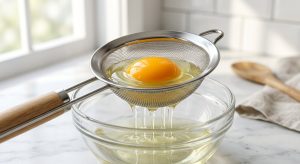
The 90-Second Fix: Do not throw it away! Grab a clean bowl. Crack a fresh, room-temperature egg yolk into it (or use a tablespoon of boiling water or a dab of Dijon mustard). Whisk that new base vigorously. Now, take your broken, separated mayonnaise and very, very slowly—literally drop by drop—drizzle it into the new egg yolk while whisking like your life depends on it. The fresh emulsifier will grab onto the rogue oil droplets, and within 90 seconds, your sauce will miraculously pull back together into a thick, glossy, perfect mayonnaise.
The Soggy Vegetable Syndrome
If your roasted Brussels sprouts or sautéed mushrooms are coming out pale, limp, and soggy, you are committing the cardinal sin of pan-crowding.
When vegetables hit a hot pan or oven tray, they immediately start releasing their internal water content. If the pan is overcrowded, that moisture has nowhere to go. It gets trapped, creating a steam bath. You are no longer roasting or sautéing; you are steaming your food in its own sad juices.
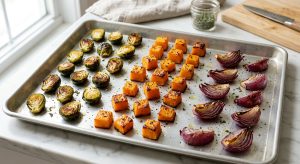
The Real Fix: Give your vegetables personal space. Leave at least a half-inch of room between pieces on a baking sheet. If you are sautéing mushrooms, do them in batches. Furthermore, make sure your vegetables are bone-dry before they hit the oil. Water is the enemy of the Maillard reaction (the chemical process that causes delicious, crispy browning). Pat them dry with a paper towel, use high heat, and let them sizzle.
The Chewy, Overcooked Meat
You got distracted, and now your beautiful, expensive steak or chicken breast is cooked to the texture of a premium Goodyear tire. You cannot un-cook meat, but you can definitely pivot to save dinner.
The Real Fix: If it’s a steak, slice it incredibly thin, against the grain. The “grain” refers to the direction the muscle fibers are running. If you cut parallel to the fibers, you are forcing your teeth to do the hard work of breaking them apart. Slicing perpendicular to the fibers shortens them, artificially creating a more tender chew. If it’s chicken or pork, shred it aggressively with two forks, toss it in a rich, highly seasoned sauce (like BBQ, salsa verde, or a heavy gravy), and serve it over rice or in tortillas. The sauce will mask the dryness, and nobody will know you ruined the initial sear.
Equipment Errors & The Mandatory “Toxic Gear” Rant
Your kitchen equipment dictates your success just as much as your ingredients. If you are fighting your pans, you are going to lose.
The Searing Struggle & The Leidenfrost Effect
You bought a gorgeous, shiny, professional-grade stainless steel skillet. You put a piece of fish or chicken in it, and it immediately welded itself to the metal with the strength of superglue. You are now scrubbing the pan with wire wool and cursing my name.
Stainless steel is incredibly durable and creates the best pan sauces, but it is porous on a microscopic level. When cold protein hits cold or warm steel, the proteins bond directly to the metal. To make stainless steel act like a non-stick pan, you must harness the power of physics—specifically, the Leidenfrost Effect.
The Real Fix (The Mercury Ball Test): Put your dry stainless steel pan on medium-high heat. Do not put oil in yet! Wait a few minutes. To test if the pan is ready, drop exactly one small drop of water into the center of the pan.
- If the water just sits there and gently bubbles away, the pan is too cold.
- If the water immediately splatters violently into a dozen tiny, angry droplets, the pan is too hot.
- If the water droplet stays entirely intact, beads up into a perfect sphere, and gracefully glides around the pan like a bead of mercury on glass, you have achieved the Leidenfrost Effect.
This occurs roughly around 400°F to 420°F (204°C to 215°C). At this precise temperature, the bottom of the water droplet vaporizes instantly upon contact with the metal, creating a microscopic cushion of steam that insulates the rest of the droplet (and your food) from the surface of the pan. Once you see the mercury ball, wipe it out, add your cooking oil, and immediately add your dry, room-temperature protein. It will sear beautifully and release from the pan with zero sticking.
The “No-Go” Rule: Throw Out Your Toxic Non-Stick Pans
I am going to get on my soapbox now, and I demand that you listen carefully. If you have a cheap, lightweight non-stick pan in your cabinet that has peeling, scratched, or flaking black coating, I want you to walk into your kitchen, put it in the garbage can, and never look back. I have absolutely zero patience for toxic kitchen gear.
For decades, traditional non-stick pans have been coated with PTFE (polytetrafluoroethylene), part of a massive family of synthetic chemicals known as PFAS (per- and polyfluoroalkyl substances). These are widely referred to as “forever chemicals” because they do not break down in the environment or in your body. When cheap non-stick pans are scratched or overheated (above 500°F), they can degrade and release toxic fumes and microplastics into your food and the air. The health risks associated with PFAS exposure are terrifying, including links to kidney cancer, testicular cancer, thyroid disease, and immune system suppression.
The regulatory landscape is finally catching up to this nightmare. In 2024, the FDA announced that grease-proofing materials containing PFAS are no longer allowed to be sold for food packaging in the U.S.. The EPA has set strict limits on PFAS in drinking water. And thankfully, state-level legislation is aggressively targeting cookware. Minnesota became the first state to outright ban the sale of non-stick cookware coated with PFAS starting in 2025, with states like California, Colorado, Connecticut, Rhode Island, and Maine following suit with bans phasing in between 2026 and 2030.
Beware the “PFOA-Free” Loophole: Do not be fooled by marketing. A pan that proudly declares it is “PFOA-free” is playing semantic games with you. PFOA is just one specific chemical in the PFAS family of over 14,000 compounds. Independent studies by the Ecology Center have shown that the vast majority of “PFOA-free” pans are still coated with PTFE. If it doesn’t explicitly say “PFAS-free” and “PTFE-free,” it is likely still utilizing forever chemicals.
The Real Fix: You deserve better. Invest in safe, durable, lifetime-lasting cookware.
- Carbon Steel: The darling of the restaurant industry. It is lightweight, develops a natural, completely safe non-stick patina through seasoning, and can withstand blistering heat.
- Cast Iron: Heavy, cheap, indestructible, and naturally non-stick when properly cared for.
- Fully Clad Stainless Steel: For acidic foods and pan sauces. Master the Leidenfrost effect, and you will never need a toxic Teflon pan again.
Weekday Time-Saving Hacks: Efficiency is Everything
When it’s a Wednesday night, you just got off a brutal Zoom call, and the kids are screaming, time is money. We do not have the luxury of spending three hours on dinner. Weekday cooking requires military precision and ruthless efficiency.
Realistic Mise En Place
“Mise en place” is a fancy French culinary term that translates to “everything in its place.” On cooking shows, this looks like twenty tiny, adorable glass bowls holding exactly one teaspoon of minced garlic or chopped parsley. In a home kitchen on a Wednesday, using twenty tiny glass bowls is an act of self-sabotage because you are the one who has to wash them.
The Real Fix: Practice “lazy” mise en place. Group your ingredients on your cutting board based on when they go into the pan. Onions, carrots, and celery (the mirepoix) all go in together, so they share a pile. Garlic and ginger go in a minute later, so they get their own pile. Meat is prepped on a separate, sanitized board. You only need one knife, one board, and a hot pan. Clean as you go. While the onions are sweating, you should be wiping the counter and loading the dishwasher.
Sheet Pan Math
Sheet pan dinners are the holy grail of weeknight cooking, but they only work if you understand thermal mass and cooking times. If you throw diced potatoes, chicken breasts, and delicate asparagus onto the same pan and bake them at 400°F for 30 minutes, you will end up with perfectly cooked potatoes, dry chicken, and asparagus that has been carbonized into ash.
The Real Fix: Stagger your entries. Hard root vegetables (potatoes, carrots, beets) take the longest. Toss them in oil, season them, and get them into the oven first. Set a timer for 15 minutes. Then, pull the pan out and add your proteins (chicken, sausage). Set a timer for 10 minutes. Finally, in the last 5 to 7 minutes of cooking, add your quick-cooking, delicate vegetables (asparagus, cherry tomatoes, spinach). Everything finishes at the exact same time, perfectly cooked, on one pan.
The Pantry Arsenal
The secret to avoiding the drive-thru is having a bulletproof pantry. You should always have the building blocks of a 15-minute meal on standby. Keep high-quality canned San Marzano tomatoes, canned cannellini beans, dried pasta, anchovies, garlic, and good olive oil in your kitchen. With just those ingredients, you can throw together a restaurant-quality Pasta e Fagioli or a fiery Pasta Puttanesca in the exact amount of time it takes to boil the noodles. Your pantry is your insurance policy against exhaustion.
Baking Blunders: The Exacting Weekend Projects
Weekdays are for survival and shortcuts; weekends are for pouring a glass of wine, turning on some jazz, and tackling exacting baking projects. Baking is not cooking; it is edible chemistry. If you eyeball ingredients in a cake recipe, you are going to end up with a brick.
The Flat, Sad Cookie
You followed the chocolate chip cookie recipe, but instead of thick, chewy, bakery-style mounds, your cookies spread out into a single, paper-thin, greasy sheet across the baking pan.
The Real Fix: The culprit is almost always butter temperature. When a recipe calls for “room temperature softened butter,” it means butter that is around 65°F to 68°F. It should yield slightly when you press it with your finger, but it should still hold its shape and feel cool to the touch. If your butter is shiny, greasy, or melting because you microwaved it for 10 seconds too long, the fat structure has collapsed. In the oven, that melted butter will immediately liquefy and spread before the flour proteins have a chance to set. Bonus Tip: Always chill your cookie dough in the refrigerator for at least 30 minutes before baking. Cold dough spreads slower, resulting in a thicker, chewier cookie. Also, check the expiration dates on your baking soda and baking powder; if they are dead, your cookies won’t rise.
The Dense, Brick-Like Cake
If your homemade cake has the density of a neutron star and a tough, chewy crumb, you committed the crime of overmixing.
The Real Fix: Flour contains two proteins: glutenin and gliadin. When they combine with liquid and are agitated (mixed), they form gluten, a stretchy, elastic network. Gluten is fantastic for chewy sourdough bread, but it is the arch-nemesis of a tender, fluffy cake. Once you add the dry ingredients to the wet ingredients, stop using the electric mixer. Switch to a rubber spatula and gently fold the batter just until the last streak of dry flour disappears. Walk away. Lumps are fine; tough cakes are not.
Kitchen Management & Safety: Surviving the Heat
Let’s wrap this masterclass up with the most important element of the kitchen: not burning your house down.
The Smoke Detector Symphony (Understanding Smoke Points)
If your kitchen routinely fills with acrid, stinging blue smoke every time you try to sear a steak, you are using the wrong fat. Every cooking oil has a specific “smoke point”—the temperature at which the fat molecules begin to break down, burn, and release free radicals and a bitter, burnt-tasting chemical called acrolein.
Stop trying to sear meat in butter or extra virgin olive oil. Butter contains milk solids that burn at a measly 302°F (150°C). Extra virgin olive oil, packed with unrefined particles and flavor compounds, will smoke and turn bitter anywhere between 325°F and 375°F (163°C – 190°C).
The Real Fix: Match your oil to your cooking method. For screaming-hot, high-heat searing (400°F – 500°F), you need a highly refined oil with a massive smoke point.
- Refined Avocado Oil: The absolute king of high-heat cooking, boasting a smoke point of up to 520°F (271°C).
- Refined Safflower or Peanut Oil: Excellent choices, clocking in around 450°F to 510°F.
- Canola Oil: A solid mid-to-high range option, holding steady up to 400°F (204°C).
Save your expensive, grassy extra virgin olive oil for finishing dishes, drizzling over salads, or low-heat sweating. Use the high-octane refined oils for the heavy lifting.
The Grease Fire Protocol
It happens in a fraction of a second. Oil in a pan gets too hot, reaches its flash point, and suddenly you have a column of fire in your kitchen. Panic sets in.
The Real Fix: Rule number one, which you must burn into your memory: NEVER, EVER POUR WATER ON A GREASE FIRE. Water is heavier than oil. If you throw water on a grease fire, the water will instantly sink to the bottom of the pan, superheat into steam, and violently explode outward, carrying the burning oil with it. You will turn a contained pan fire into a kitchen-destroying fireball.
Instead, turn off the heat source immediately. Put on an oven mitt, grab a metal lid or a baking sheet, and confidently slide it over the top of the pan to smother the flames by depriving them of oxygen. If the fire is outside the pan, dump a massive amount of baking soda or salt over it to choke it out. Keep a Class B kitchen fire extinguisher nearby, and check its pressure gauge annually.
Cooking is not magic; it is just applied physics, a bit of chemistry, and a lot of trial and error. The next time a dish goes sideways, don’t panic. Put down the tongs, take a sip of your wine, assess the situation, and use the science to fix it. Throw out your toxic peeling pans, respect the Leidenfrost effect, and leave the raw potatoes out of your salty soup. You’ve got this. Now get back in the kitchen and make something spectacular.