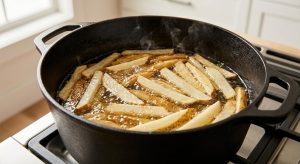
Let’s face it: we have all been victimized by an eggplant. You buy this gorgeous, glossy, deep-purple vegetable (which is technically a berry, but let’s not be pedantic right now) with grand visions of whipping up a silky, restaurant-quality stir-fry or a perfectly layered parmigiana. You chop it up, toss it into a hot skillet with a generous glug of expensive olive oil, and then… magic happens. But not the good kind of magic. The dark, infuriating kind of magic where a full quarter-cup of oil vanishes into thin air in exactly three seconds.
Your pan is suddenly bone-dry. The eggplant looks exactly the same, only now it’s smug. So, you panic and add more oil. It drinks that, too. By the time you sit down to eat, you are chewing on a heavy, oil-logged sponge that leaves a greasy slick on your palate and a deep sense of regret in your soul. If you are tired of eating greasy eggplant on a Tuesday night, I have excellent news for you.
You do not need a culinary degree to fix this. You do not need to spend two hours salting and pressing your vegetables like you’re preparing for a medieval feast. All you need is a basic understanding of food science and the most underrated, disrespected appliance in your kitchen: the microwave. Today, we are going to break down exactly why this vegetable absorbs so much oil, why the traditional fixes are a massive waste of your precious time, and how a quick stint in the microwave will give you the creamy, tender, perfectly seared results you actually deserve.
The Sponge Effect: Why Eggplant Acts Like a Culinary Vacuum
If we want to defeat the enemy, we must first understand the enemy. And to understand eggplant, we have to look at it under a microscopic lens.
The Cellular Anatomy of an Eggplant
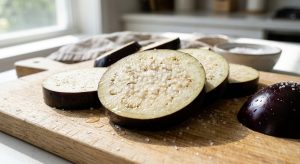
Despite its firm, dense appearance in the produce aisle, an eggplant is essentially a giant, purple botanical sponge. Structurally, the flesh is composed of roughly 92% water, held together by a network of plant cells. But here is the kicker: between those cells are countless microscopic air pockets.
This unique cellular architecture is actually the reason why a whole eggplant feels surprisingly light for its size, and it is the same reason why early varieties of the plant were able to float across bodies of water to reach new continents. Those tiny air pockets give the raw flesh its bouncy, spongy texture. When you slice into it, you are exposing millions of these tiny, empty caverns.
The Thermodynamics of Frying Eggplant
So, what happens when you take this water-logged, air-filled sponge and toss it into a hot skillet with oil? Chaos, that’s what.
As soon as the raw eggplant hits the heat, the temperature of the vegetable rapidly increases. The water trapped inside the cellular structure begins to heat up and convert into steam. As this steam expands and escapes, the rigid cell walls—which are made of cellulose—hold their shape just long enough to create a vacuum effect.
The escaping steam and air leave behind empty voids. Because nature abhors a vacuum, and because your hot oil is sitting right there, the oil rushes in to fill those empty pockets. The eggplant literally sucks the fat out of your pan. By the time the heat finally breaks down the cellulose and the structure collapses into that creamy texture we all love, the damage is already done. The oil is trapped inside the flesh, resulting in a heavy, greasy, caloric nightmare.
The Traditional Fixes (And Why They Ruin Your Weeknight)
Professional chefs and Italian grandmothers have known about the eggplant’s sponge-like tendencies for centuries. Over time, they developed several methods to combat the issue. And while these methods absolutely work, they are completely impractical for a busy home cook who just wants to get dinner on the table before 8:00 PM.
Salting and Pressing: The Time-Suck
The most famous piece of advice you will read in almost every traditional cookbook is to salt your eggplant. The process involves slicing or cubing the vegetable, tossing it generously with kosher salt, placing it in a colander in the sink, and letting it sit for anywhere from 30 minutes to two hours.
The science here is solid. The salt draws out the moisture from the cells through the process of osmosis. As the water leaves, the cell structure begins to collapse on itself, effectively shrinking the air pockets before the eggplant ever touches a hot pan. When you finally rinse off the excess salt, pat it dry, and fry it, the collapsed sponge can no longer absorb excessive amounts of oil.
Does it work? Yes. Is it annoying? Absolutely. If you are cooking on a random Wednesday evening after a long day at work, you do not have an hour to stand around waiting for osmosis to do its job. Time is money, and weeknight cooking requires efficiency.
The Milk Soak Myth
Another old-school trick is soaking the eggplant slices in milk for 30 minutes. The theory is that the milk fills the air pockets so that the oil cannot. While this does technically reduce oil absorption to some degree, it introduces a new problem: you are now frying milk-logged vegetables. This prevents the eggplant from getting a proper, hard sear, often resulting in a soggy, steamed texture. Plus, you still have to wait 30 minutes. Hard pass.
The Flour or Cornstarch Dredge
Some recipes tell you to toss your eggplant cubes in flour or cornstarch before frying. The idea is to create a starchy barrier that seals the exterior of the vegetable, preventing oil from penetrating the flesh.
While a light dredge can give you a nice crispy exterior, it does not actually solve the internal structural issue. If you are deep-frying, sure, this works. But if you are pan-frying, the starch quickly absorbs the oil in the pan, creating a gummy paste on the outside of the vegetable while the inside remains spongy and raw. It also makes a massive mess on your cutting board and adds unnecessary refined carbohydrates to a dish that should be vegetable-forward.
The Magic of the Quick Microwave: Food Science in Action
Here is where we ditch the pretentious chef-speak and embrace modern convenience. If the goal is to collapse the air pockets inside the eggplant before it hits the frying pan, we do not need to wait an hour for salt to do the job. We just need targeted heat. Enter the microwave.
How Microwaving Collapses the Sponge
Microwaves work by agitating water molecules, generating rapid, intense heat from the inside out. When you put raw eggplant in the microwave, the electromagnetic waves immediately target that 92% water content.
Within minutes, the water inside the eggplant turns to steam. Because the heat is applied so rapidly, the steam escapes and the cellulose structure collapses almost instantly. You are essentially pre-cooking the vegetable, forcing it to surrender its air pockets and shrink down into a dense, silky state.
When you take this pre-collapsed eggplant and throw it into a hot skillet, it behaves completely differently. The voids are already gone. The sponge has been neutralized. The eggplant will now sear beautifully in a normal amount of oil, developing a gorgeous, caramelized crust without turning into a grease bomb. It is a scientifically backed, foolproof method that saves you 45 minutes of prep time.
The Step-by-Step Microwave Method
Doing this correctly requires a tiny bit of finesse, but it is incredibly straightforward.
- Prep Your Eggplant: Wash and cut your eggplant into your desired shape. Whether you are doing 1-inch cubes for a stir-fry or thick rounds for an eggplant parmigiana, the microwave trick works.
- Line a Safe Plate: Grab a large, microwave-safe plate (we will talk about toxic plastics in a minute, don’t you worry) and line it with two layers of heavy-duty paper towels. The paper towels are crucial here; as the eggplant steams and collapses, it will release a significant amount of water. You want the paper towels to absorb that moisture so the eggplant doesn’t end up boiling in its own juices.
- Arrange and Cover: Spread the eggplant pieces out in a single layer on the paper towels. Do not pile them up, or they will steam unevenly. Cover the top of the eggplant with another paper towel.
- Microwave on High: Microwave the plate on high power for 3 to 5 minutes. The exact time will depend on the wattage of your microwave and the size of your cuts. You are looking for the eggplant to look slightly shriveled, soft, and visibly reduced in size.
- The Squeeze: Carefully remove the plate from the microwave (it will be hot!). Using the paper towels or a pair of tongs, gently press down on the eggplant to squeeze out any remaining excess moisture.
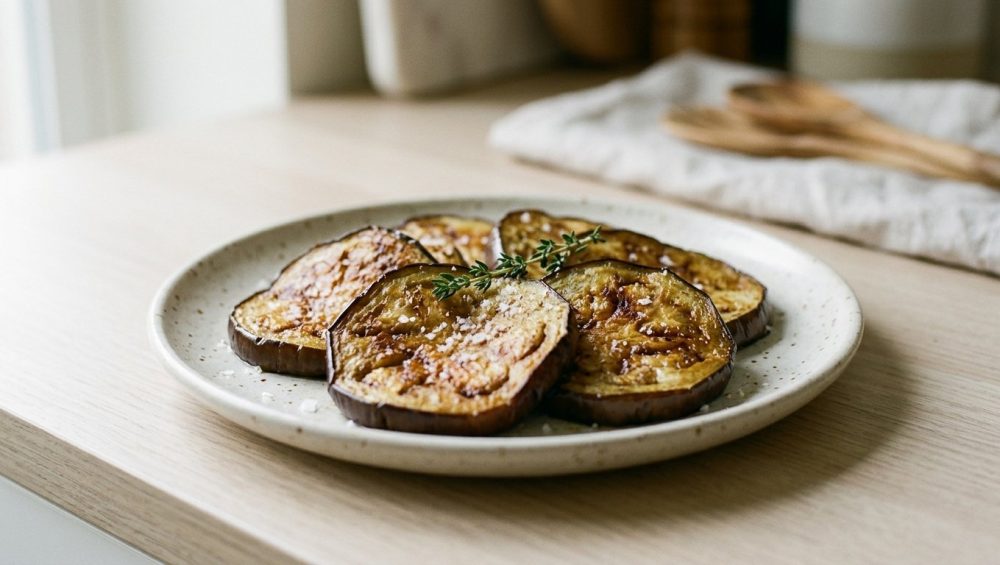
- Ready to Cook: Your eggplant is now perfectly prepped. You can toss it straight into a hot skillet with just a tablespoon of oil, and it will sear like an absolute dream.
Essential Gear: Ditch the Toxic Plastic
As your resident sassy sous-chef, I have a strict “no-go” rule when it comes to toxic kitchen gear. I do not care how convenient it is; I absolutely refuse to let you poison yourself just to make dinner faster. If we are going to use the microwave to hack our vegetables, we are going to do it safely.
Safe Microwaving: Glass and Ceramic Only
Do not even think about putting your eggplant in a plastic container or on a cheap melamine plate before nuking it. In recent years, the science has become overwhelmingly clear: heating plastic is a terrible idea.
According to recent 2026 data, the combination of heat, food contact, and plastic is a primary driver of chemical leaching in the home kitchen. When you microwave plastic, you are inviting a cocktail of endocrine-disrupting chemicals—like BPA, BPS, phthalates, and microplastics—directly into your food. And don’t fall for the “BPA-free” marketing gimmick; manufacturers often just replace BPA with BPS or BPF, which have nearly identical toxicological profiles. This is exactly why your plastic containers stain orange after heating up leftover spaghetti sauce—the plastic is porous and breaking down.
For this microwave trick, strictly use high-quality tempered glass (like Pyrex) or lead-free ceramic plates. They are completely inert, meaning they will not leach anything into your food, no matter how hot they get. If you are serious about toxic kitchen gear, purging cheap plastic from your microwave routine is step one.
The Right Pan for the Perfect Sear
Once your eggplant is microwaved and ready to fry, you need the right vessel to achieve that deep, caramelized crust. This brings me to my second major pet peeve: cheap, peeling non-stick pans.
Traditional non-stick coatings (PTFE, commonly known as Teflon) are manufactured using PFAS, a family of synthetic compounds known as “forever chemicals”. These chemicals do not break down in the environment or in the human body, and they have been linked to a laundry list of severe health issues. In fact, the backlash against these chemicals has been so severe that several U.S. states, starting with Minnesota in 2025, have enacted strict bans on PFAS in cookware.
Furthermore, PTFE coatings begin to degrade and release toxic fumes at temperatures above 500°F (260°C)—a temperature that is surprisingly easy to reach on a standard gas burner when you are trying to get a hard sear. You are actively ruining your nonstick pans and your health every time you aggressively crank up the heat.
Instead, invest in a high-quality carbon steel skillet, a cast-iron pan, or a heavy-bottomed stainless steel skillet. Carbon steel pans are my personal favorite for weeknight vegetable searing. They are incredibly durable, naturally non-stick once properly seasoned, and can handle the ripping hot temperatures required to put a beautiful crust on your microwaved eggplant without leaching forever chemicals into your dinner.
Pan-Frying Your Prep: Getting the Perfect Sear
Now that your eggplant is pre-collapsed and you have a safe, high-quality pan on the stove, it is time to cook. Because the eggplant has already been partially cooked in the microwave, your primary goal on the stove is developing flavor and texture through searing.
Oil Temperature and Searing Science
Temperature control is everything. If you drop your eggplant into lukewarm oil, it will still try to absorb whatever it can. You need the oil to be hot—ideally between 365°F and 375°F.
When the pre-cooked eggplant hits properly heated oil, the intense heat immediately flash-cooks the exterior surface. This creates a rapid dehydration effect on the very outer layer of the vegetable, forming a crispy, caramelized crust that acts as a physical barrier. This barrier forces the remaining internal moisture out as steam, which physically pushes back against the oil, preventing it from seeping in.
This beautiful browning process is known as the Maillard reaction—a chemical reaction between amino acids and reducing sugars that gives browned food its distinctive, savory flavor. To ensure your pan is hot enough before adding the food, you can utilize the water drop test. Flick a tiny drop of water into your stainless or carbon steel pan; if it immediately beads up and dances across the surface like a little mercury marble (the Leidenfrost effect), your pan is ready.
Avoiding the Crowded Pan
One of the biggest rookie mistakes you can make is dumping a massive mountain of microwaved eggplant into the skillet all at once. When you overcrowd the pan, the temperature of the cooking surface plummets.
Instead of searing, the eggplant sits in a lukewarm pan and begins to release its remaining moisture. Because there isn’t enough ambient heat to rapidly evaporate that moisture, the liquid pools in the bottom of the pan. Congratulations, you are now boiling your eggplant. Boiling leads to mushy, unappetizing textures and completely ruins the Maillard reaction.
Cook in batches if you have to. Give each piece of eggplant enough breathing room so that the steam can escape up and away from the food.
Roasting and Baking: The Microwave Method Still Shines
While pan-frying is the most notorious culprit for oil absorption, roasting eggplant in the oven presents its own set of challenges. Have you ever pulled a sheet pan out of the oven only to find that your roasted veggies are soggy, sad, and swimming in a pool of olive oil?
Pre-Cooking for Oven Bakes
The microwave trick works absolute wonders for roasting, too. If you toss raw eggplant cubes in olive oil and throw them in the oven, they will instantly drink the oil. As they slowly roast, they will eventually collapse and release that oil back onto the pan, leaving you with a greasy mess.
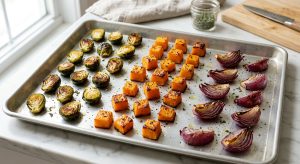
By microwaving the eggplant first, you collapse the sponge structure before the oil is even introduced. Once the eggplant comes out of the microwave and is patted dry, transfer it to a mixing bowl. Drizzle it with a modest amount of olive oil—you will be shocked by how little you actually need to coat the pieces now that the air pockets are gone. Toss well, spread them evenly on a bare aluminum or stainless steel baking sheet, and roast at a high temperature (around 425°F).
Achieving Crispy Edges in the Oven
Because the interior of the eggplant is already tender from the microwave, the oven’s dry, ambient heat can focus entirely on crisping up the exterior. You get beautifully roasted, caramelized edges in half the time it would normally take, with a fraction of the fat. This method is an absolute game-changer for dishes like ratatouille, roasted vegetable medleys, or warm lentil salads.
Troubleshooting Common Eggplant Disasters
Even with the microwave trick in your arsenal, things can occasionally go sideways if you aren’t paying attention. Let’s troubleshoot some common weeknight disasters so you can cook with confidence.
My Eggplant Turned to Mush
If your eggplant emerges from the microwave looking like a pulverized puree rather than slightly shriveled cubes, you overdid it. Microwaves vary wildly in wattage. A 1200-watt microwave will obliterate a delicate vegetable much faster than a standard 900-watt model.
Start with just 3 minutes. Check the texture. You want the pieces to feel soft and look a bit wrinkled, but they should absolutely still hold their shape. Furthermore, make sure you are cutting the eggplant into uniform, adequately sized pieces. If you dice them too small, they will turn to mush instantly. Aim for hearty 1-inch cubes or thick 3/4-inch slices.
It Still Tastes Bitter
Historically, eggplants were known for carrying a sharp, bitter flavor, which is another reason traditional recipes demand salting. However, modern agricultural practices have largely bred the bitterness out of the eggplants you find at your local grocery store.
That being said, if you buy an older, overripe eggplant, it can still harbor some bitterness. You can usually spot these culprits because they feel surprisingly heavy, have dull (not glossy) skin, and are packed with large, dark seeds on the inside. The seeds are where the bitter alkaloids live.
If you slice open an eggplant and it is completely loaded with dark seeds, the microwave trick alone will not fix the flavor. In this specific scenario, you might actually need to revert to the traditional salting method, as the salt helps draw out those bitter compounds. Alternatively, you can just scoop out the most seed-heavy portions of the flesh before microwaving.
Also, be mindful of your aromatics. If your dish tastes acrid, the eggplant might not be the problem at all. Often, home cooks throw minced garlic into a hot pan way too early. When garlic always burns, it coats the entire dish in a harsh, bitter flavor that completely ruins the subtle sweetness of the eggplant. Add your garlic in the last thirty seconds of cooking!
Elevating Your Eggplant: Flavor Pairings and Final Thoughts
Now that you have mastered the texture, it is time to elevate the flavor. Because we have successfully prevented the eggplant from turning into an oil-logged sponge, it is now the perfect blank canvas for bold, punchy ingredients.
Acid is Your Best Friend
Eggplant is a naturally rich, earthy vegetable. Even when cooked perfectly, its creamy texture demands a counterpunch to wake up your palate. Acid is the secret weapon of professional chefs.
Once your eggplant is beautifully seared, hit the pan with a splash of high-quality acid. A drizzle of balsamic glaze, a splash of sherry vinegar, or a heavy squeeze of fresh lemon juice will completely transform the dish. The acidity cuts through the richness of the vegetable and brightens the entire flavor profile.
Herbs, Spices, and Umami Bombs
Eggplant plays incredibly well with umami-rich ingredients. Try tossing your seared cubes with a spoonful of miso paste, a splash of soy sauce, or a handful of finely grated Parmigiano-Reggiano.
When it comes to herbs, fresh is always better. Basil, mint, and parsley are classic Mediterranean pairings that add a vibrant, fresh contrast to the deep, smoky flavor of the seared flesh. If you are using spices, remember to bloom them in a little bit of oil to release their essential oils, but be careful with your timing. Just like salting too early can ruin the texture of delicate fungi, adding dry spices to a blazing hot dry pan will scorch them instantly.
The Final Word
You do not need to be a classically trained chef to make mind-blowing food in your own kitchen. You just need to understand the basic rules of engagement. Eggplant is a sponge. It wants to drink your oil and ruin your dinner. But now, you have the scientific high ground.
By utilizing the rapid, internal heat of the microwave to collapse those cellular air pockets, you bypass the tedious traditional prep methods and guarantee yourself a perfectly textured, non-greasy result every single time. You save time, you save calories, and you save your sanity.
So, ditch the cheap plastic, fire up your carbon steel skillet, and show that eggplant who is actually boss. Weeknight dinners are about to get a whole lot more delicious. Now go pour yourself a glass of wine—you’ve earned it.