Listen, we need to have a serious, sit-down conversation about the state of your skillet. I know you are trying your absolute best on a random Tuesday night. You are exhausted after a long day of work, you are starving, and you just want to throw together a decent, satisfying meal that does not involve an exorbitant delivery fee. So, you chop up a beautiful carton of fresh cremini mushrooms, toss them into a pan with a splash of olive oil, sprinkle a generous, chef-like pinch of kosher salt over the top, and wait for that gorgeous, steak-like caramelization to happen.
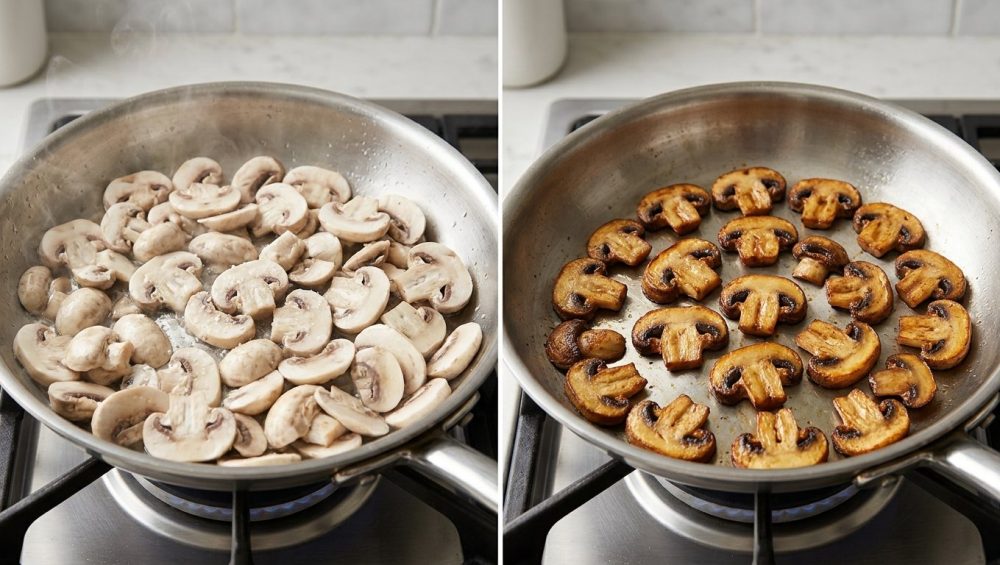
But what actually happens? Within three agonizing minutes, your pan is flooded with a murky, grey puddle of unappetizing liquid. Your beautifully sliced mushrooms shrink into sad, rubbery little erasers, boiling in their own juices. It is depressing, it is frustrating, and it is one of the most painfully common beginner cooking mistakes out there. But do not worry, my friend. You do not need a culinary degree to fix this. We are going to permanently solve this issue tonight.
The culprit ruining your dinner is not your stove, and it certainly is not the mushrooms themselves. The hidden trap that is sabotaging your meal is your timing. Specifically, you are salting your mushrooms way too early. To fix this, we are going to dive deep into the fascinating food science of fungi, temperature control, and cellular biology.
The Anatomy of a Mushroom: Why They Behave Like Kitchen Sponges
Before we can master the skillet and achieve restaurant-quality results, we have to understand the actual ingredient we are working with. To unlock the secret to a perfect sear, you need to realize that mushrooms are not like the other vegetables sitting in your crisper drawer. In fact, biologically speaking, they are not vegetables at all. They belong to the fungi kingdom, and their cellular structure is entirely unique compared to a potato or a carrot.
Water Weight: The 90 Percent Rule
Let’s start with the most critical, foundational fact: mushrooms are essentially tiny, highly absorbent, edible water balloons. Depending on the specific variety, a fresh mushroom is composed of anywhere from 80 to 92 percent water. When you look at a plump, firm white button mushroom or a dense portobello, you are looking at a masterclass in biological water retention.
Their spongy, highly porous internal structure is designed by nature to hold onto moisture. This immense water content is exactly why they shrink so dramatically when you cook them. As heat is applied to the pan, those water-filled cells begin to break down and release their payload. If you are not scientifically prepared to manage that sudden, massive influx of liquid, your pan will instantly transition from a searing environment into a steaming one.
Chitin vs. Pectin: The Structural Secret
Here is where the food science gets incredibly fascinating. If you overcook a potato, a zucchini, or a carrot, it eventually disintegrates into a pile of unappetizing mush. That happens because the cell walls of terrestrial plants are primarily made of pectin, a structural acid that breaks down entirely when subjected to prolonged heat and moisture.
Mushrooms, however, do not contain a single drop of pectin. Instead, their cell walls are constructed from a rigid, heat-stable polymer called chitin. If that word sounds vaguely familiar from high school biology, it is because chitin is the exact same tough carbohydrate that makes up the exoskeletons of crabs, lobsters, shrimp, and insects.
Because chitin is incredibly resilient to thermal breakdown, it is almost physically impossible to overcook a mushroom to the point of mushiness. You can simmer a mushroom in a stew for four hours, and it will still retain a meaty, distinctly chewy texture. This unique structural secret is a massive advantage for home cooks, provided you know how to leverage it properly.
The Science of Osmosis: Why Early Salting is Sabotage
So, if mushrooms are tightly packed with water and protected by indestructible chitin walls, what exactly happens when we introduce salt to the equation? We immediately trigger a fundamental biological process: osmosis.
The Cellular Water Slide
Osmosis is the movement of water across a semi-permeable membrane from an area of low solute concentration to an area of high solute concentration. In plain, no-nonsense English: water always wants to go exactly where the salt is.
When you toss freshly sliced, raw mushrooms into a hot pan and immediately sprinkle them with salt, you are instantly creating a highly concentrated, hypertonic salty environment on the outside of the mushroom. The water trapped inside the mushroom’s cells wants to achieve equilibrium, so it rapidly rushes out through the cell walls to dilute the salt on the surface. It is the microscopic equivalent of pulling the plug on a full bathtub.
Within seconds, that 90 percent internal water content we talked about earlier comes flooding out into your skillet. This is exactly why I constantly advise my readers to stop adding salt too early when they are cooking high-water-content ingredients. You are literally forcing the food to purge its moisture before it has a chance to brown.
The Steaming Effect: How Water Kills the Sear
Why is this sudden flood of osmotic water such a culinary disaster? Because liquid water is the ultimate, undisputed enemy of browning. Water boils and evaporates at exactly 212°F (100°C). No matter how high you crank the dial on your gas burner, the liquid sitting in that pan will never, ever exceed 212°F until every last drop has evaporated into steam.
If your mushrooms are sitting in a grey puddle of their own osmotically extracted juices, they are cooking at a maximum of 212°F. They are steaming. They are boiling. They are doing absolutely everything except searing. To get that deep, savory, golden-brown crust that makes a cooked mushroom taste like a prime, expensive cut of beef, you need a bone-dry pan and a massive amount of heat. And that brings us to the holy grail of all savory cooking.
The Maillard Reaction: The Holy Grail of Caramelization
If you want to cook like a seasoned professional without spending thirty thousand dollars on culinary school tuition, you only need to deeply understand one chemical process: the Maillard reaction. This is the complex, beautiful series of chemical interactions between amino acids and reducing sugars that gives browned food its distinctive, mouth-watering flavor.
Why Dry Heat is Non-Negotiable
The Maillard reaction is the magic responsible for the crispy crust on a diner smash burger, the golden, crackling exterior of a freshly baked loaf of sourdough bread, and the deep, savory umami flavor of perfectly roasted vegetables. It generates hundreds of brand-new flavor molecules that simply do not exist in raw food.
But the Maillard reaction has incredibly strict environmental requirements. It utterly refuses to show up to the party if the environment is wet. Remember how we just established that water caps your pan’s temperature at 212°F? Well, the Maillard reaction generally does not kick into high gear until the surface temperature of the food reaches at least 285°F (140°C). To truly optimize flavor development, you must master carbon steel skillet thermodynamics to ensure the pan stays screaming hot and completely dry.
The Temperature Threshold for Golden Brown Perfection
If you salt your mushrooms early, the resulting puddle of water keeps the pan temperature a full 75 degrees below the absolute minimum threshold required for the Maillard reaction to even begin. You are literally locking yourself out of flavor town. The mushrooms will turn a dull, unappetizing grey, and they will taste incredibly bland and rubbery.
By strictly withholding the salt until the very end of the cooking process, you allow the surface of the mushroom to make direct, uninterrupted contact with the hot, dry metal of your skillet. The surface temperature skyrockets past 300°F, the amino acids and sugars rapidly recombine, and you achieve that gorgeous, mahogany-brown crust that elevates a cheap, simple weeknight side dish into something truly spectacular.
The Ultimate Step-by-Step Guide to Searing Mushrooms Like a Pro
Alright, enough food science theory. Let’s get our hands dirty in the kitchen. Here is my foolproof, strictly enforced, no-nonsense method for cooking mushrooms perfectly every single time. It does not take any extra time out of your busy weekday schedule; it just requires a little bit of patience and discipline.
Step 1: The Great Washing Debate (To Wash or Not to Wash?)
For decades, pretentious, old-school chefs insisted that you must never, ever wash a mushroom under running water, claiming they would absorb liquid like a sponge and ruin the dish. They told you to painstakingly brush each individual mushroom with a tiny, damp pastry brush or a specialized cloth. Who on earth has time for that on a Wednesday night? Nobody.
The truth is, modern culinary science has thoroughly debunked this myth. A quick rinse under cold running water adds an almost negligible amount of weight to the mushroom. Just toss them in a colander, give them a quick, vigorous spray to remove the surface dirt, and then pat them thoroughly dry with a clean, highly absorbent kitchen towel. The key is drying them incredibly well so you do not introduce unnecessary surface moisture to the hot oil, which helps prevent food sticking when you first drop them into the pan.
Step 2: Slicing for Optimal Surface Area
Do not slice your mushrooms too thin. Remember, they are going to shrink significantly as they release their internal water. If you slice them paper-thin, they will shrivel into sad little wisps of nothingness. Aim for thick, hearty, substantial slices—about a quarter of an inch thick. Alternatively, if you are working with smaller cremini or button mushrooms, simply cut them into halves or quarters. This maximizes the flat surface area that comes into direct contact with the hot pan, giving you significantly more opportunity for that beautiful browning to occur.
Step 3: Heat, Fat, and Patience (The Holy Trinity)
Place your heaviest, highest-quality skillet on the stove over medium-high heat. Let it get screaming hot. Add a high-smoke-point fat, like avocado oil, clarified butter (ghee), or beef tallow. Do not use extra virgin olive oil for this initial searing step, as its smoke point is far too low and it will burn, leaving an acrid, bitter taste on your food.
Once the oil is shimmering and just barely beginning to smoke, add your mushrooms in a single, even layer. Now comes the hardest part for most anxious home cooks: step away from the stove. Do not touch them. Do not toss them. Do not stir them. Let them sit completely undisturbed for at least three to four full minutes. You want them to sear hard against the metal to guarantee perfectly browned mushrooms. Only when they have developed a deep, golden crust on the bottom should you finally give them a toss to cook the other side.
Step 4: The Strategic Salt Strike (Timing is Everything)
Once the mushrooms are deeply browned and caramelized on multiple sides, and only then, you may finally reach for your salt cellar. By salting at the very end of the cooking process, the mushrooms have already developed their robust crust. The Maillard reaction has already worked its undeniable magic. The salt will now act strictly as a topical flavor enhancer, rather than an osmotic weapon of mass destruction. Toss them with a generous pinch of coarse kosher salt, maybe a knob of cold butter, a splash of dry white wine, and some freshly chopped thyme. You will be absolutely blown away by the difference in texture and flavor.
The “No-Go” Zone: Toxic Pans and Why They Ruin Your Food (and Health)
I cannot in good conscience write a comprehensive masterclass on high-heat searing without aggressively addressing the elephant in the room: your cookware. If you are trying to achieve a professional-level, high-heat sear on a scratched, peeling, lightweight non-stick pan that you bought for fifteen dollars at a big-box store five years ago, you are fighting a losing battle. Worse, you might be actively poisoning yourself and your family.
The Peeling Non-Stick Nightmare
I have a very strict, uncompromising “no-go” rule when it comes to toxic kitchen gear, and traditional Teflon (PFAS) coated non-stick pans are at the absolute top of my hit list. To properly sear a mushroom, you need medium-high to high heat. But heating a traditional non-stick pan above 500°F (260°C) causes the chemical coating to rapidly break down, releasing invisible, highly toxic fumes that can cause a condition known as polymer fume fever.
Furthermore, as these cheap, mass-produced pans age, the chemical coating inevitably scratches, degrades, and flakes off directly into your food. If the cooking surface of your pan looks like a topographical map of the moon, throw it in the garbage immediately. You are ingesting forever chemicals with every meal, and the degraded coating is the main reason your pans are constantly losing their slip. I am incredibly passionate about banishing toxic kitchen gear from home kitchens because you deserve better, safer tools that actually last a lifetime.
Safe, High-Heat Alternatives for the Perfect Sear
To get a true, restaurant-quality sear, you need a pan with high thermal mass—something that holds onto heat fiercely and does not immediately drop in temperature the second you add room-temperature food.
Your best, safest options are a heavy-bottomed, multi-clad stainless steel skillet, a well-seasoned cast-iron pan, or my personal favorite workhorse, a carbon steel skillet. Carbon steel offers the incredible heat retention and searing power of cast iron, but it is significantly lighter, more maneuverable, and becomes naturally, safely non-stick over time as you build up a layer of polymerized oil. Investing in one high-quality, non-toxic pan will do more to elevate your daily cooking than buying a hundred fancy recipe books.
Advanced Mushroom Tactics: The Counterintuitive “Dry Boil” Method
Now that you know the traditional, chef-approved searing method, I am going to share a brilliant, highly advanced, and slightly counterintuitive hack popularized by culinary scientists like Dan Souza at America’s Test Kitchen. If you want to guarantee perfectly cooked, incredibly meaty mushrooms without the stress of managing oil absorption, you should actually boil them first.
Wait, Boil Them First? (The America’s Test Kitchen Hack)
I know, I know. I just spent over two thousand words lecturing you about how water is the ultimate enemy of browning. But hear me out, because the science here is brilliant. Mushrooms act exactly like dry sponges, and if you add them to a pan full of cold or warm oil, they will instantly soak up all the fat, leaving the pan completely dry and the mushrooms unpleasantly greasy.
Instead, try this revolutionary technique: put your sliced, raw mushrooms in a cold, dry skillet. Add about a quarter cup of water (just enough to barely cover the bottom of the pan) and turn the heat to high. As the water comes to a rapid, bubbling simmer, the mushrooms will begin to release their own internal moisture. The sustained heat causes the microscopic, sponge-like air pockets inside the mushroom’s tissue to collapse entirely.
Why This Saves Time on a Busy Tuesday
Once those internal air pockets collapse, the mushroom permanently loses its ability to act like a sponge. You simply let the water boil completely away until the pan is bone dry. You will actually hear the auditory shift in the pan—it will transition from a wet, bubbling simmer to a sharp, dry sizzle. Now, the mushrooms are fully cooked, incredibly tender, and their cellular structure has collapsed.
At this exact moment, you add your high-heat oil or butter directly to the dry pan. Because the mushrooms can no longer absorb the fat, the oil stays in the pan, quickly frying the exterior of the mushrooms to a crisp, golden brown. It sounds absolutely crazy, but this method is incredibly efficient for rushed weeknight dinners. You do not have to babysit the pan while the water boils off, and the final sear takes less than two minutes. Plus, you end up using significantly less cooking oil, resulting in a lighter, better-tasting dish.
Troubleshooting Common Mushroom Mistakes
Even armed with the advanced knowledge of osmosis, the Maillard reaction, and the structural integrity of chitin, things can still go sideways if you are not paying close attention to your technique. Let’s quickly troubleshoot a few other incredibly common pitfalls so you can guarantee absolute success every single time you fire up the stove.
The Overcrowded Pan Syndrome
If you dump a massive, two-pound mountain of sliced mushrooms into a standard ten-inch skillet, you are going to fail spectacularly. When mushrooms are piled on top of each other, the immense amount of moisture they release gets trapped in the bottom layers. The steam physically cannot escape into the air, and once again, you are boiling your food. Always, always cook mushrooms in a single, even, uncrowded layer. If you have a lot of mushrooms to prepare, you must cook them in batches. Yes, it takes an extra five minutes, but the resulting flavor and texture are exponentially better.
The Fat-Absorbing Sponge Dilemma
As mentioned earlier, raw mushrooms absolutely love to drink up oil. If you are using the traditional searing method (and not the advanced water-boil hack), you might panic when you see the pan go completely dry after thirty seconds of cooking. Do not instinctively grab the oil bottle and drown them in extra fat. Let them cook. As the chitin structure breaks down and the mushrooms shrink under the heat, they will actually release that absorbed oil back into the pan. Trust the scientific process.
The “Stir-Crazy” Compulsion
Home cooks have a terrible, deeply ingrained habit of constantly prodding, poking, flipping, and stirring their food. Every single time you move a mushroom, you break its thermal contact with the hot surface of the pan, completely resetting the searing process. Put the spatula down. Take a sip of your wine. Wash a cutting board. Let the intense heat do its job. Constantly scraping the bottom of the pan with a cheap utensil is a fantastic way of ruining your nonstick pans (assuming you haven’t rightfully thrown them out yet) and an even better way to ruin your dinner.
Conclusion: Empowering Your Inner Chef
Cooking does not have to be a stressful, chaotic, mystical chore, and you certainly do not need a fancy degree from Le Cordon Bleu to make food that makes people close their eyes and sigh in delight. What you actually need is a firm understanding of the basic, underlying scientific rules of culinary engagement.
By understanding the massive water content of mushrooms, respecting the indestructible nature of their chitin cell walls, and realizing that early salting triggers a disastrous osmotic flood, you have unlocked a massive culinary secret. You now control the heat, you control the moisture, and you control the Maillard reaction.
Stop settling for rubbery, grey, steamed fungi. Wait to salt your mushrooms until they are beautifully caramelized, deeply savory, and ready to be the absolute star of your plate. You have got this. Now get into the kitchen, grab a heavy, non-toxic skillet, and show those mushrooms who is boss.