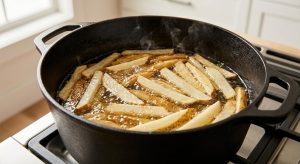
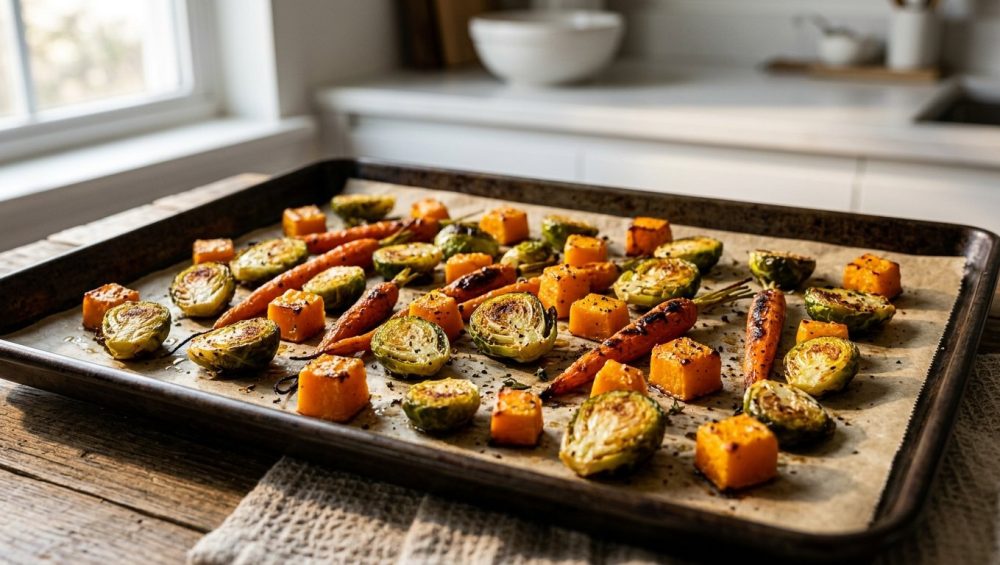
You know the feeling. You’ve had a long, exhausting day, but you’re trying to be a responsible, health-conscious adult. You chop up some gorgeous broccoli, toss it in olive oil, throw it on a pan, and pop it in the oven. You are expecting those deeply browned, crispy, caramelized edges that make you feel like an absolute culinary genius. Thirty minutes later, you open the oven door, and what greets you? A tray of sad, limp, grayish-green mush sitting in a puddle of its own despair. It’s a culinary tragedy, and frankly, it’s enough to make you want to order takeout and never look at a vegetable again.
Listen to me: it is not your fault. You do not need a culinary degree to make mind-blowing food, and you certainly don’t need to tolerate soggy side dishes. I have set off the smoke detector more times than I care to admit figuring out the exact mechanics of oven-roasting so that you don’t have to. The difference between a restaurant-quality roasted vegetable and a sad, soggy mess comes down to a few fundamental rules of physics, moisture management, and spatial awareness. Grab a glass of wine, and let’s fix your food.
The Science of the Mush: Why Your Veggies Are Steaming, Not Roasting
If you want to cook like an expert, you need to understand what is actually happening inside your oven. We are going to skip the pretentious chef-speak and get right to the science. Vegetables are, fundamentally, structural water balloons. They are packed with moisture held together by rigid cell walls. When you expose them to heat, those cell walls break down, and the water inside comes rushing out.
The Moisture Problem: Enemy Number One
When that internal water hits the heat of your oven, it immediately turns into steam. Steam is the mortal enemy of crispiness. If that steam has nowhere to go, it surrounds your food in a humid, wet cloud. Instead of roasting in dry heat, your beautiful produce is essentially getting a hot facial. This is why your zucchini turns to mush and your Brussels sprouts get that unappetizing sulfurous smell. To get a crispy exterior, you have to manage that moisture and ensure the water evaporates faster than it can pool on the pan.
Overcrowding: The Cardinal Sin of the Baking Sheet
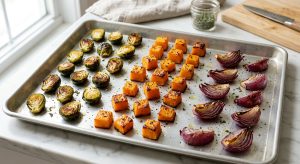
This brings us to the single biggest mistake rookie cooks make: cramming too much food onto one pan. When you pile your chopped carrots and potatoes on top of each other, you are creating a barricade that traps the steam. The heat of the oven cannot reach the surface of the food to crisp it up. Instead, the trapped water vapor simmers the vegetables from the bottom up. If you take away nothing else from this masterclass, remember this: your vegetables need personal space. If you can’t see the bottom of the pan between the pieces of food, you are going to end up with mush.
The Maillard Reaction: Your Ticket to Flavor Town
The goal of roasting is to trigger the Maillard reaction. This is a complex chemical process that occurs when proteins and sugars in your food react under high, dry heat. It is the exact same reaction that gives a seared steak its crust and baked bread its golden-brown exterior. The Maillard reaction creates hundreds of new, complex flavor compounds that make roasted vegetables taste savory, nutty, and sweet. But here is the catch: the Maillard reaction generally does not happen efficiently in the presence of excess moisture. If your vegetables are swimming in their own steam, they will never reach the temperature required for this chemical magic to occur.
Temperature Control: Stop Treating Your Oven Like a Sauna
Your oven’s temperature dial is not a suggestion; it is a critical tool for moisture management. Too many home cooks default to 350°F out of habit. That might be great for baking a delicate cake, but it is a death sentence for a tray of cauliflower.
High Heat is Non-Negotiable
To rapidly evaporate the water escaping from your vegetables and kickstart the Maillard reaction, you need aggressive heat. For most vegetables, 425°F (220°C) is the absolute sweet spot. At this temperature, the exterior of the vegetable cooks fast enough to form a crispy, caramelized crust while the interior remains tender and perfectly cooked. If you drop the heat to 350°F, the water slowly leaches out, pooling on the tray and turning your dinner into a soggy, dehydrated mess. Don’t be afraid of high heat; embrace the char.
Preheating the Pan: The Ultimate Pro Move
If you want to instantly level up your roasting game, you need to change how you start the cooking process. When you toss room-temperature vegetables onto a room-temperature pan and put it in the oven, the pan takes ten to fifteen minutes just to get hot. During that time, your vegetables are slowly warming up and leaking water. To fix this, simply place your empty baking sheet in the oven while it preheats. When you carefully pull it out and drop your oiled veggies onto it, you should hear a loud, aggressive sizzle. That sound is the magic of a preheated pan instantly searing the exterior of the food, locking in the structure and jumpstarting the caramelization process.
Conversely, using a cold baking sheet is practically begging for your food to stick and steam. The initial blast of conductive heat from a preheated surface is the secret to those dark, crispy bottoms you usually only get at high-end restaurants.
The Gear: Why Your Baking Sheet is Sabotaging You
I have a strict, non-negotiable rule in my kitchen: absolutely no toxic, cheap, or flimsy gear. If you are trying to achieve professional-level results using a scratched-up, peeling pan from a discount bin, you are fighting a losing battle. Your equipment matters, and it directly impacts the thermodynamics of your cooking.
Ditch the Toxic Non-Stick and Flimsy Pans
Let’s get brutally honest for a second. Those dark, lightweight, non-stick baking sheets you bought ten years ago are ruining your food and potentially leaching mystery chemicals into your dinners. I am a massive advocate for banishing toxic kitchen gear from your life entirely. Beyond the health concerns of degrading Teflon, dark non-stick pans absorb heat too aggressively, causing the bottoms of your vegetables to burn before the insides are cooked. Furthermore, cheap, thin pans cannot handle the 425°F heat required for proper roasting. When you hear that loud bang and your pops in the oven, it has warped. A warped pan means your oil pools in the corners, leaving half your veggies dry and burning while the other half deep-fries in a puddle.
If you are constantly wondering why your baking sheets keep warping under high heat, it is because they lack the structural integrity and thickness needed for serious culinary work. Throw them away.
The Bare Aluminum Advantage
If you walk into any professional restaurant kitchen, you will not see flimsy non-stick pans. You will see stacks of heavy-duty, 18-gauge bare aluminum half-sheet pans. This is the only acceptable vessel for roasting vegetables. A high-quality bare aluminum sheet pan conducts heat evenly, features an encapsulated steel rim to prevent warping, and provides the perfect reflective surface to encourage even browning without scorching the bottoms. They are practically indestructible, entirely safe, and will outlive you if you treat them right.
The Silicone Mat Debate: To Bake or Not to Bake?
Silicone baking mats are incredibly popular, but they are secretly sabotaging your roasted vegetables. Silicone is a thermal insulator. When you place a silicone mat on your baking sheet, you are essentially putting a blanket between the hot metal and your food. This prevents the rapid transfer of conductive heat necessary for a crispy sear. Save the silicone mats for baking delicate cookies. For vegetables, you want direct contact with the hot metal, or at most, a sheet of unbleached parchment paper to make cleanup easier.
Prep Like a Pro: Moisture Management Before the Oven
Achieving the perfect crunch starts long before the food hits the heat. How you prep your produce dictates how it will behave in the oven.
Dry Your Veggies (Seriously, Dry Them)
Washing your produce is non-negotiable, but tossing wet vegetables straight onto a baking sheet is a rookie disaster. Any surface water clinging to your broccoli florets or bell peppers will immediately turn to steam in the oven, completely halting the Maillard reaction. After washing, you must aggressively dry your vegetables. Run them through a salad spinner, pat them down with paper towels, or let them air dry on a clean kitchen towel while you prep your other ingredients. The surface must be bone-dry before the oil goes on.
The Oil Equation: Too Much vs. Too Little
Oil is the medium that transfers heat from the pan to the uneven surfaces of your vegetables. Without oil, your food will simply dry out and burn. With too much oil, your vegetables will act like sponges, soaking up the grease and turning flabby and heavy. You want a light, even coating—just enough to make the vegetables glisten. Toss them in a large bowl with your hands to ensure every piece is coated; do not just drizzle oil over the pan and hope for the best.
And please, step away from the aerosol cans. Aerosol cooking spray is the enemy of high-heat roasting. These sprays contain soy lecithin and propellants that bake onto your pans at high temperatures, creating a sticky, polymerized residue that is impossible to scrub off and ruins the cooking surface forever. Stick to a bottle of high-quality olive oil or avocado oil.
The Starch Coating Hack (Cornstarch & Arrowroot)
If you want to achieve an almost deep-fried level of crispiness without actually deep-frying, you need to steal this restaurant hack. After you have dried your vegetables and tossed them in oil, sprinkle a tablespoon of cornstarch or arrowroot powder over them and toss again. The starch mixes with the oil to create an imperceptibly thin microscopic batter on the surface of the vegetable. As it roasts, this starchy coating absorbs any escaping surface moisture and crisps up beautifully, giving you an audible crunch, especially on potatoes, broccoli, and cauliflower.
Spacing and Placement: The Geography of a Perfect Pan
Where you place your food on the pan is just as important as the temperature of your oven. You need to become a master of pan geography.
The “Social Distancing” Rule for Vegetables
As we established, overcrowding traps steam. You must practice strict social distancing on your baking sheet. Every single piece of vegetable needs a buffer zone of hot air circulating around it to carry away evaporating moisture. If you have too many vegetables for one pan, do not pile them up. Use two pans, or roast in batches. Trying to cheat this rule will guarantee a mushy outcome every single time.
The Edge Effect: Utilizing the Hottest Zones
The edges of your baking sheet are the hottest zones because they are exposed to the most circulating hot air and conductive heat from the metal rim. Use this to your advantage. If you are roasting a mix of vegetables with slightly different cooking times, place the denser, harder-to-cook pieces (like thick carrot chunks or potato wedges) along the outer perimeter of the pan, and place the quicker-cooking pieces (like asparagus or bell peppers) in the center.
The Vegetable Matrix: Not All Veggies Roast the Same
You cannot treat a dense, starchy potato the same way you treat a delicate, water-logged zucchini. Understanding the cellular makeup of your produce allows you to adjust your technique for flawless results.
Root Vegetables: The Dense Delights (Potatoes, Carrots, Beets)
Root vegetables are dense, high in complex carbohydrates, and relatively low in water content. They are incredibly forgiving and love high, sustained heat. Because they are so dense, they take the longest to cook. To get the crispiest potatoes, you can parboil them for five minutes in heavily salted water with a pinch of baking soda before roasting. The baking soda breaks down the exterior of the potato, creating a starchy slurry that crisps up phenomenally in the oven.
Cruciferous Crunch: (Broccoli, Cauliflower, Brussels Sprouts)
Cruciferous vegetables have complex structures with hundreds of tiny buds and leaves. These nooks and crannies are perfect for catching oil and crisping up, but they are also highly prone to burning if left unattended. To get perfect Brussels sprouts, cut them in half and place them cut-side down on your preheated, oiled baking sheet. Do not flip them. Let the flat side maintain constant contact with the hot metal to develop a deep, dark, caramelized crust.
The High-Water Saboteurs: (Zucchini, Bell Peppers, Mushrooms)
These are the troublemakers. Zucchini, summer squash, and bell peppers are essentially solid water. If you roast them too slowly, they will collapse into absolute mush. They demand extremely high heat (450°F) to flash-evaporate their moisture.
Mushrooms require an entirely different strategy. Mushrooms are porous sponges that will instantly absorb any oil they touch, leaving your pan dry and your mushrooms greasy. To combat this, you must stop adding the oil first. Instead, toss your mushrooms onto a dry, hot pan for the first five minutes of roasting. Let the heat draw out their internal moisture and collapse their spongy cellular structure. Once they have shrunk and released their water, pull the pan out, drizzle them with oil, and return them to the oven to crisp up.
The Seasoning Strategy: Timing is Everything
You can have the perfect temperature and the best pan in the world, but if you screw up the seasoning, you ruin the dish.
The Salt Conundrum
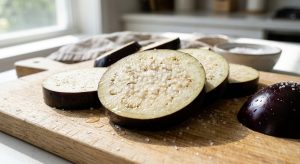
Salt is a desiccant; it aggressively draws water out of plant cells through osmosis. If you salt high-water vegetables like zucchini or eggplant too early, they will sit on your cutting board bleeding water, and when they hit the oven, they will steam in that extracted puddle. For these delicate veggies, salting too early is a fatal error. Toss them in oil, roast them naked, and hit them with a generous shower of flaky sea salt the second they come out of the oven while they are still piping hot. Root vegetables, however, can and should be salted before roasting, as their dense structure benefits from the salt penetrating during the cook time.
Herbs and Spices: When to Add Them
Hearty, woody herbs like rosemary, thyme, and oregano can withstand the 425°F heat of the oven and should be tossed with the vegetables before roasting. Their essential oils will bloom in the heat and permeate the food. However, delicate herbs like parsley, cilantro, and basil will instantly turn to ash. Add these as a fresh garnish right before serving.
Similarly, be incredibly careful with minced garlic. Raw minced garlic burns at high temperatures, turning acrid and bitter. If you want a garlic flavor, smash whole cloves and let them roast alongside the veggies, or toss the finished, hot vegetables with garlic powder or a garlic-infused oil right out of the oven.
The Art of the Flip (and When to Leave Them Alone)
We need to talk about your spatula habits. Many home cooks suffer from the urge to constantly poke, prod, and flip their food. You need to stop.
Timing the Turn
If you want a truly caramelized, crispy edge, the food needs uninterrupted, continuous contact with the hot metal of the baking sheet. If you open the oven every ten minutes to stir the vegetables, you are letting out all the heat and interrupting the Maillard reaction. Generally, you should only flip your vegetables once, about two-thirds of the way through the cooking time.
The “Don’t Touch It” Principle
When it is time to flip, slide your spatula under the vegetables. If they feel stuck to the pan, do not force them. Forcing them will tear the delicate, caramelized crust right off, leaving it stuck to the metal while you lift away a pale, sad vegetable. As the Maillard reaction completes and the moisture fully evaporates from the contact point, the food will naturally release from the pan. If it’s stuck, give it another five minutes. Trust the process.
Weeknight Shortcuts: Crispy Veggies When You Have Zero Time
I firmly believe that time is money. On a leisurely Sunday afternoon, taking an hour to perfectly roast a tray of root vegetables is a joy. On a Tuesday night at 6:30 PM when you are exhausted and starving, it is an absolute chore. You need efficiency without sacrificing quality.
The Microwave-to-Oven Trick
If you are trying to roast dense vegetables like potatoes, carrots, or butternut squash on a weeknight, the microwave is your best friend. Chop the vegetables, place them in a microwave-safe bowl with a splash of water, cover them with a plate, and microwave on high for 4 to 6 minutes. You are essentially steam-blanching them to cook the tough interior. Drain them incredibly well, let the steam flash off so they are dry, toss them in oil, and throw them onto your preheated baking sheet in a 450°F oven. Because the insides are already tender, you only need the oven to blister and crisp the outside, cutting your roasting time in half.
Sheet Pan Dinners Without the Mush
Sheet pan dinners are marketed as the ultimate lazy weeknight hack, but they often result in a soggy disaster because proteins (like chicken or sausage) release massive amounts of juices that flood the pan and steam the vegetables. To fix this, you must stagger your cooking times. Put the dense vegetables in first. Once they have a head start and have begun to crisp, push them to the perimeter of the pan (the hottest part) and add your protein to the center. This ensures the vegetables don’t spend thirty minutes drowning in chicken stock.
Conclusion: Your New Crispy Reality
You are no longer a victim of soggy, disappointing side dishes. By understanding the simple physics of moisture, investing in a proper bare aluminum sheet pan, utilizing the magic of a preheated surface, and giving your vegetables the personal space they deserve, you have completely eliminated the root causes of the mush.
Cooking is not about innate talent; it is about controlling the variables. You now know how to manipulate heat, manage water content, and trigger the Maillard reaction on command. So preheat that oven, dry off your broccoli, and go make some mind-blowing food. You’ve got this.