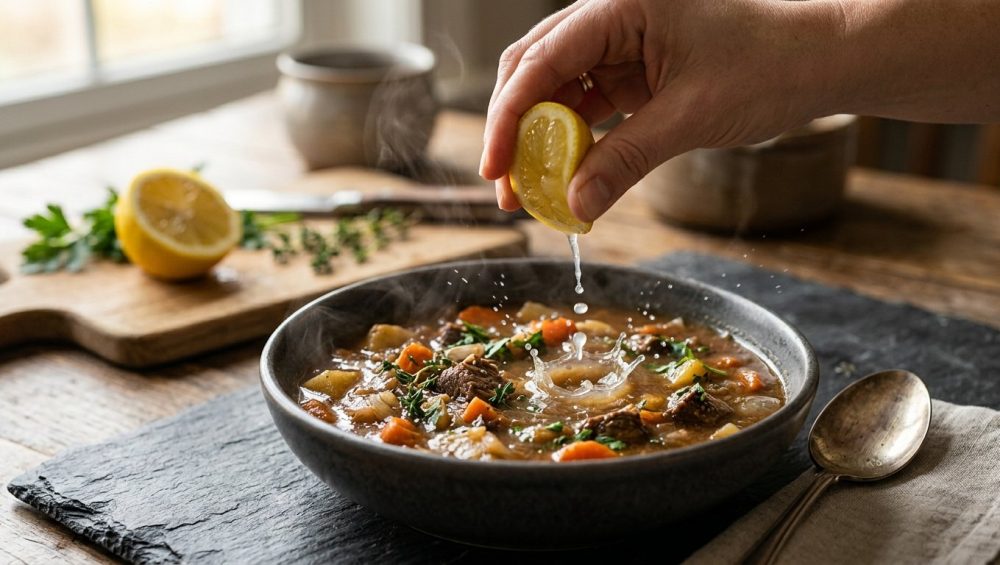
Picture this: It is a freezing, miserable Tuesday night here in Germany. You have just spent the last hour meticulously chopping root vegetables, searing chunks of meat, and simmering what you sincerely hope will be a life-changing, soul-warming pot of soup. You finally grab a spoon, blow on the steaming broth, take a highly anticipated sip, and… nothing. It is completely flat. It is boring. It tastes like hot, wet disappointment.
So, you do what absolutely every home cook does in a moment of sheer culinary panic. You grab the salt shaker. You dump in a heavy teaspoon. You stir it, taste it again, and realize it is still boring—just saltier. You add more salt. Now your dinner tastes like the Dead Sea, but somehow, it still lacks that vibrant, restaurant-quality punch.
Put the salt down. Step away from the shaker.
The problem with your soup is not a lack of sodium. The problem is a lack of balance. Your soup does not need more salt to wake it up; it needs a swift, sharp, unapologetic kick in the pants. It needs acid.
I have ruined enough dinners in my early days of trial-and-error cooking to know that aggressively dumping a cup of salt into a dull broth is one of the most common rookie kitchen mistakes you can possibly make. But here is the beautiful, empowering truth: you do not need a fancy culinary degree or a Michelin star to fix this. You just need a bottle of vinegar in your pantry and a basic, foundational understanding of how your tastebuds actually work.
The Culinary Science of Flavor Balancing
Let’s talk science for a second—but without the pretentious chef-speak, because nobody has time for culinary jargon when they are just trying to get a decent weeknight dinner on the table. Balancing flavors is both an art and a hard science.
Why Your Tastebuds Are Begging for Acid
Our tongues are biologically wired to recognize five basic tastes: sweet, salty, bitter, umami (savory), and sour. When you simmer a massive pot of soup, especially cold-weather staples like a heavy beef stew, a creamy potato leek, or a chicken and dumpling soup, you are extracting a massive amount of fat, starch, and savory umami flavors from your ingredients. These heavy, rich molecules physically coat your palate. They act like a thick, heavy wool blanket thrown over your tastebuds.
When food feels “flat,” “heavy,” or “dull,” it is usually because those rich, fatty flavors have completely taken over, muting everything else. Acid—whether it is derived from a sharp vinegar, fresh lemon juice, or even a splash of dry wine—acts like a pair of scissors cutting right through that heavy blanket. The hydrogen ions present in acidic ingredients stimulate the sour receptors located on the sides of your tongue, triggering an instant salivation response.
This literal mouth-watering effect makes it exponentially easier for your palate to perceive the other complex flavors in the dish. Acid does not necessarily make the food taste sour; it simply makes the rest of the ingredients easier to notice and appreciate. It is the ultimate flavor equalizer.
The Salt-Acid Seesaw Effect
Here is where the culinary magic truly happens. Salt and acid are locked in a perpetual, microscopic seesaw on your tongue. Research shows that at a cellular level, a decrease in intracellular pH (which means an increase in acidity) can actually alter how the sodium channels in our taste receptors operate. In plain English? Acid and salt actively enhance each other.
When you add a tiny splash of vinegar to a simmering soup, it sharpens the flavor profile so effectively that the salt you already added suddenly pops. You are essentially tricking your brain into tasting more seasoning without actually raising the sodium levels. This is why a squeeze of lemon or a dash of apple cider vinegar can take a dish from “meh” to mind-blowing in three seconds flat.
Why You Keep Over-Salting (And Why It Isn’t Working)
We have all been trapped in the vicious, frustrating cycle of over-salting. You keep tasting, adjusting, and hoping for a culinary miracle that never arrives. Understanding why this happens is the first step to breaking the habit.
The Sodium Trap in Cold-Weather Stews
Cold-weather soups and stews are notorious for trapping well-meaning home cooks in this endless sodium spiral. Think about what actually goes into a classic winter stew: dense root vegetables, heavily marbled beef chuck, starchy potatoes, maybe some pearl barley. These ingredients are heavy, starchy sponges. They absorb salt aggressively. But because they entirely lack any natural brightness or acidity, the overall flavor profile remains incredibly dense and muddy.
You keep adding salt because your brain registers the dish as “bland.” But the reality is that the soup is already perfectly seasoned; it is just asleep. Adding more salt to a sleeping soup doesn’t wake it up—it just gives your dinner high blood pressure. If you have ever managed to completely ruin a good beef stew by turning it into an inedible salt lick, this is exactly the physiological trap you fell into.
When Salt Actually Mutes Flavor
Believe it or not, there is a distinct tipping point where excess salt actually begins to mask the subtle, delicate notes of your expensive aromatics. That beautiful, traditional mirepoix (the holy trinity of onions, carrots, and celery) that you spent twenty minutes carefully sweating in the pan? Obliterated by an avalanche of kosher salt. The subtle, woody earthiness of your perfectly browned mushrooms? Completely lost in the saline wash.
When you rely exclusively on salt for flavor enhancement, you inherently create a one-dimensional dish. It is loud, but it is singing terribly off-key. Acid provides the necessary harmony to make the dish sing in tune.
The Magic of Vinegar: A Masterclass in Brightening Broths
If acid is the undisputed hero of this story, vinegar is the trusty, reliable steed it rode in on. Let’s break down exactly why keeping a few bottles of fermented goodness in your pantry will change your daily cooking routine forever.
Breaking Down Heavy Fats and Proteins
Vinegar is essentially a diluted, fermented solution of acetic acid. When introduced to a fat-rich environment—like a chicken soup made from rendered bone-in thighs, or a heavy New England clam chowder—acetic acid works a structural miracle. It physically cuts through the lipid layers that coat your tongue, preventing the animal fat from feeling cloying, heavy, or greasy in your mouth.
This is precisely why rich soups feel lighter and infinitely more digestible after a tiny dose of vinegar. It is the exact same scientific principle behind why we naturally serve rich, fatty meats with sharp, acidic condiments—like pairing roasted pork with sharp mustard, or serving deep-fried fish and chips with a heavy dousing of malt vinegar.
The Volatile Compounds That Wake Up Your Palate
What makes vinegar so special compared to just dumping straight, synthetic citric acid powder into your food? It comes down to the volatile compounds. Fermented vinegars carry incredibly complex, aromatic top notes that vaporize almost instantly as soon as they hit the hot broth. These vapors travel up into your olfactory receptors (the back of your nose) as you eat, dramatically enhancing your perception of the soup’s depth.
You aren’t just tasting the tang on your tongue; you are actively smelling the fermented richness of the apple cider, the oaky depth of the red wine, or the sweet, smoky maltiness of a black vinegar. It adds a profound layer of olfactory complexity that plain table salt could never dream of achieving.
Choosing Your Weapon: The Ultimate Acid Cheat Sheet for Soups
Not all acids are created equal. Dumping a cup of cheap, industrial white distilled vinegar into a delicate, painstakingly crafted consommé is a fast track to ruining your dinner. Here is your no-nonsense, highly curated guide to matching the exact right acid to the right pot of soup.
Apple Cider Vinegar: The Everyday Workhorse
If you only have room for one single bottle of vinegar in your minimalist kitchen setup, make it raw, unfiltered apple cider vinegar (ACV). It has a moderate acidity level and a slightly sweet, fruity backbone that makes it incredibly versatile and forgiving for beginners.
Best for: Hearty, rustic, autumnal soups. Think lentil soup, split pea, creamy butternut squash, or a chunky vegetable minestrone. The subtle apple notes pair beautifully with earthy root vegetables and heavy pork-based broths.
Red and White Wine Vinegars: The European Elegance
Wine vinegars bring a sharp, structural, and sophisticated acidity that mimics the culinary effect of deglazing a hot pan with actual wine. Red wine vinegar is robust, punchy, and aggressive, while white wine vinegar is a bit more delicate, floral, and restrained.
Best for: Red wine vinegar is the absolute undisputed champion for heavy beef stew, rich tomato-based soups, and hearty black bean soups. White wine vinegar is your ultimate go-to for lighter fare: classic chicken noodle, potato leek, or any creamy vegetable puree where you want to keep your broth completely clear without altering its visual color.
Sherry Vinegar: The Secret Weapon
Sherry vinegar is aged in oak barrels and has a deeply nutty, complex, and slightly sweet undertone. It is less abrasive than red wine vinegar but packs significantly more depth than apple cider vinegar. It is the secret ingredient that high-end restaurants use to make their food taste expensive.
Best for: Puréed cauliflower soup, roasted carrot and ginger soup, and traditional French onion soup. If you want to trick your dinner guests into thinking you went to culinary school, add a splash of sherry vinegar to your bowl.
Balsamic Vinegar: The Rich, Dark Finisher
Balsamic is the absolute diva of the vinegar world. It is sweet, syrupy, and aggressively flavorful. Because of its high natural sugar content and intense dark fruit notes, it needs to be used with a very heavy, savory base so it doesn’t completely overpower the dish.
Best for: Deeply roasted tomato bisque, or a deeply caramelized mushroom soup. A few drops of high-quality, aged balsamic right before serving can magically enhance the roasted, umami flavors of the vegetables.
Lemon and Lime Juice: The Citrus Alternatives
Sometimes you simply do not want the fermented, funky undertones of vinegar. You just want pure, bright, sunshine-in-a-bowl citrus. Lemon juice provides sharp, fleeting citric acid that lifts flavors instantly but doesn’t linger heavily on the palate the way acetic acid does.
Best for: Lemon is practically mandatory for Mediterranean and Middle Eastern soups like Greek avgolemono, red lentil, or anything heavily spiced with cumin and coriander. Lime juice is completely non-negotiable for chicken tortilla soup, Vietnamese pho, or any spicy, chili-heavy broth. (And please, for the love of all things holy, buy a proper manual juicer so you aren’t wasting fresh citrus juice all over your countertops).
Rice Vinegar: The Asian Broth Essential
Rice vinegar is significantly milder, sweeter, and less aggressively acidic than its Western counterparts. It provides a gentle, rounded tang that won’t bulldoze delicate Asian flavor profiles.
Best for: Classic egg drop soup, traditional hot and sour soup, delicate miso broths, and rich tonkotsu ramen. It cuts through the heavy richness of toasted sesame oil and rendered pork fat without fundamentally altering the flavor profile of the dish.
The Exact Technique: How and When to Add Acid
You cannot just blindly chug a bottle of vinegar into a boiling pot on the stove and hope for the best. There is a rigid science to the timing of flavor integration.
The “Off the Heat” Golden Rule
This is the single most important rule in this entire masterclass, and I need you to commit it to memory: Never vigorously boil your vinegar.
Acetic acid (the primary acid in all vinegars) is highly volatile. Its boiling point is just slightly above that of water. If you add a beautiful, expensive, aromatic sherry vinegar to your soup and let it rapidly simmer for forty-five minutes, those bright, complex flavor compounds will literally vaporize into the air. You will be left with a kitchen that smells amazing, but a soup that tastes totally flat in the bowl.
Always add your acid at the very end of the cooking process, immediately after you have turned the heat off. Better yet, bring the bottle directly to the dinner table and let everyone add a customized splash to their individual bowls. This preserves the sharp, volatile top notes that make the acid so incredibly effective in the first place.
Dosing: How Much is Too Much?
When it comes to adding acid, the line between “perfectly balanced culinary masterpiece” and “tastes like a bottle of cheap salad dressing” is razor-thin.
Your goal is not to make the soup taste sour. If you can explicitly and easily identify the taste of vinegar on your spoon, you have gone too far. The acid should operate entirely behind the scenes, acting as an invisible flavor amplifier.
Start with a ridiculously small, conservative amount. For a standard 4-quart family pot of soup, begin with just one single teaspoon of vinegar or lemon juice. Stir it in thoroughly, wait ten seconds for it to integrate, and taste. If the broth still feels flat, add another half-teaspoon. You will literally taste the exact moment the soup “wakes up.” The muddy flavors will suddenly snap into crystal-clear focus. Once you hit that sweet spot, stop immediately.
Weeknight Efficiency vs. Weekend Perfection
As a busy home cook, I firmly believe that your time is money. You need foolproof strategies that work whether you are rushing to feed your exhausted family on a Tuesday night, or spending your entire Sunday hovering over a massive stockpot with a glass of wine in hand.
Quick Fixes for Weekday Canned Soups
Let’s be brutally honest with each other: we all eat canned soup sometimes. It is a valid survival tactic. But commercial canned soups are notoriously high in sodium and incredibly flat in flavor, thanks to the aggressive, high-heat commercial canning process required for shelf stability. If you frequently suffer from weeknight cooking anxiety, doctoring up a cheap canned soup is a brilliant, stress-free shortcut.
Heat up your sad, store-bought chicken noodle or minestrone on the stove. Right before you ladle it into a bowl to eat, stir in a quarter-teaspoon of raw apple cider vinegar or a quick, fresh squeeze of lemon. The acid will immediately cut through that tinny, metallic, processed flavor and make the broth taste exponentially fresher and significantly closer to a homemade meal.
Elevating Your 48-Hour Bone Broth
For those elaborate weekend culinary projects where you have lovingly simmered roasted marrow bones for two literal days, acid plays a vital dual role. Not only does a splash of apple cider vinegar at the very beginning of the simmering process help chemically extract valuable minerals and collagen from the bones, but a final splash of red wine or sherry vinegar at the very end balances the intense, gelatinous richness of the finished broth. It transforms a heavy, lip-coating, cloying liquid into a vibrant, complex, restaurant-quality elixir.
The “No-Go” Rule: Don’t Let Toxic Gear Ruin Your Broth
I cannot emphasize this next point enough. If you are going to start cooking with acidic ingredients on a regular basis, you absolutely must audit your kitchenware. I have zero patience for cheap, toxic, corner-cutting gear that ruins your hard work and endangers your health.
Why Reactive Metals and Cheap Non-Stick Are Sabotaging Your Soup
Acids are highly reactive by nature. If you simmer a tomato-heavy soup (which is already highly acidic) or add vinegar to a broth while cooking in a cheap, unlined aluminum pot or a bare, unseasoned cast-iron Dutch oven, the acid will literally strip the metal. This chemical reaction leaches raw iron or aluminum directly into your food. If you have ever wondered why your sauce tastes distinctly metallic and bitter, congratulations, you just ate a microscopic layer of your cookware.
Worse yet are cheap, heavily scratched non-stick pots. The combination of simmering heat and sharp acid can cause those cheap, peeling Teflon coatings to degrade even faster, ruining your nonstick pans and leaching forever chemicals (PFAS) straight into your beautiful homemade soup. Furthermore, do not even think about storing your highly acidic leftover soups in cheap, heavily stained plastic storage containers that degrade and warp over time. Just say no to toxic plastics.
Safe, High-Quality Vessels for Acidic Cooking
If you want to cook like a pro without the health hazards, you need safe, non-reactive equipment. Invest in a high-quality, fully clad stainless steel stockpot, or a heavy enameled cast-iron Dutch oven. The enamel coating on a good Dutch oven is essentially baked glass, meaning it is 100% non-reactive and completely safe for simmering highly acidic broths for hours on end without altering the flavor.
And while we are talking about upgrading your kitchen environment, do yourself a favor and throw away those cheap, splintering wooden boards that are constantly dulling your best chef knives. Invest in proper, durable prep tools. High-quality, non-toxic gear isn’t a luxury; it is the absolute foundation of good, safe cooking.
Case Studies: Rescuing Classic Flat Soups
Let’s put all of this culinary theory into practice. Here are three incredibly common kitchen scenarios where a simple splash of acid will entirely save your dinner.
Fixing a Dull Chicken Noodle
The Problem: You boiled a whole chicken, but the resulting broth tastes like salty, uninspired chicken water. It lacks any real depth and feels greasy and heavy on the lips.
The Fix: Turn off the heat completely. Add one teaspoon of fresh lemon juice or a dash of white wine vinegar. Stir well. The acid will instantly cut through the rendered chicken fat, making the broth taste lighter, cleaner, and deeply savory.
Waking Up a Sluggish Beef Stew
The Problem: It is thick, it is hearty, and it looks beautiful. But after three heavy bites, severe palate fatigue sets in. It is just too monolithic, dense, and rich to enjoy a full bowl.
The Fix: A generous splash of red wine vinegar or aged sherry vinegar stirred in right before serving. The sharp, oaky notes of the vinegar will slice right through the rich beef fat and the starchy potatoes, making every single bite taste as exciting and dynamic as the first.
Brightening a Heavy Potato Leek
The Problem: You blended your potatoes and leeks with a heavy pour of cream, and now it basically tastes like a savory, starchy milkshake. It is overly rich, coats the mouth unpleasantly, and desperately needs some textural contrast.
The Fix: A tiny dash of white wine vinegar or even a dollop of cultured crème fraîche (which provides natural lactic acid). The subtle tang will beautifully balance the heavy dairy fat, bringing the earthy, oniony flavor of the leeks right to the forefront.
Frequently Asked Questions About Acidifying Soups
Can I just use leftover wine instead of vinegar?
Yes and no. Wine provides excellent acidity (specifically tartaric acid), but it must be properly cooked down. If you add raw, unreduced wine at the very end of a soup, it will taste harsh and reek of raw alcohol. Wine should be used to deglaze the pot at the beginning of the cooking process. Vinegar and citrus are for finishing at the end.
What if I accidentally add way too much vinegar?
Do not panic; your dinner is not ruined. If your soup suddenly tastes like a vinaigrette salad dressing, you can easily counteract the sharp acid by adding a fat (like a splash of heavy cream, a drizzle of olive oil, or a pat of butter) or a tiny pinch of sugar. The fat will coat the palate and buffer the sourness, while the sugar will help balance the overall pH.
Does adding acid ruin the physical texture of the soup?
Not at all. Vinegars are water-based and incredibly thin, so they will not alter the physical viscosity or thickness of your soup. However, if you are making a dairy-heavy soup (like a cream of mushroom or a cheddar broccoli), you must be cautious. Adding highly concentrated acid to boiling dairy can cause the milk proteins to instantly curdle and separate. Always temper it by adding the acid off the heat, or use a milder, dairy-friendly acid.
Can I use that thick balsamic glaze instead of regular balsamic vinegar?
Absolutely not. Commercial balsamic glaze is heavily loaded with added sugars, corn syrups, and artificial thickeners. It will make your savory soup taste like a bizarre, sticky dessert. Stick to real, liquid, unadulterated vinegar.
Does the type of salt I use matter if I’m adding acid?
Yes! Ditch the iodized table salt—it has a harsh, metallic chemical aftertaste. Use a clean, pure kosher salt or a flaky sea salt. Because kosher salt has larger crystals, it seasons more gently, allowing you to perfectly ride that salt-acid seesaw without accidentally over-salting the broth in the process.
Final Thoughts from the Sassy Sous-Chef
Cooking does not have to be a stressful, chaotic, tear-inducing chore. You do not need a pantry full of wildly expensive imported truffles or a fancy culinary degree to make mind-blowing, restaurant-quality food in your own home. You just need to understand the fundamental, scientific rules of the game, and refuse to settle for bland food.
The next time you are standing over a steaming pot of soup, feeling defeated because it tastes flat, boring, or heavy, I want you to remember this masterclass. Put down the salt shaker. Reach into your pantry, grab that bottle of apple cider or red wine vinegar, and give your broth the bright, acidic wake-up call it so desperately deserves.
Your tastebuds—and your blood pressure—will thank you. Now get out of here, go audit your cookware, throw away those toxic peeling pans, and start cooking with the confidence of a pro.