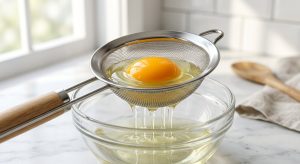
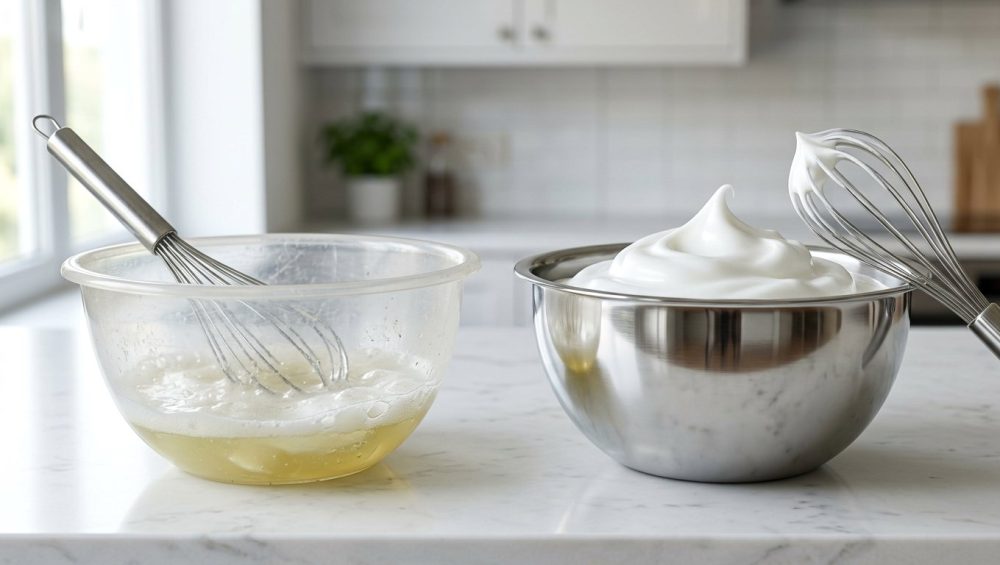
Let’s have a little heart-to-heart about your weekend baking projects. You’ve spent the better part of an hour meticulously separating egg yolks from whites, ensuring not a single microscopic drop of yellow breaches your pristine pool of albumen. You’ve got your caster sugar measured, your cream of tartar on standby, and your whisk ready for action. You turn on the stand mixer, fully expecting to witness the glorious, gravity-defying transformation of slimy egg whites into glossy, stiff peaks.
Instead? You get a sad, weeping, frothy puddle of culinary disappointment.
You probably blame yourself. You think you didn’t whip it long enough, or maybe you whipped it too long. You start questioning your worth as a home cook. But as your favorite brutally honest kitchen confidante, I am here to tell you: it’s not you. It’s your cheap, scratched-up plastic mixing bowl.
Welcome to the hidden trap of the modern home kitchen. We are going to dive incredibly deep into the exact biochemical and material science reasons why your egg whites refuse to stabilize in plastic. We are going to completely eliminate the pretentious recipe jargon and break down the rigorous, peer-reviewed chemistry of foaming proteins. By the end of this definitive masterclass, you will understand exactly why polypropylene and polycarbonate are the sworn enemies of meringues, and why upgrading to professional-grade materials is the only way to achieve flawless results without needing a degree in chemistry. Time is money, and we are not wasting another minute (or another carton of expensive eggs) on toxic, subpar equipment.
The Biochemical Architecture of a Perfect Foam
To truly understand why plastic destroys your meringue, you first have to understand what a meringue actually is on a molecular level. Egg white, scientifically known as albumen, is essentially a mixture of about 90% water and 10% protein. But these aren’t just any proteins; they are a highly specialized squad of globular proteins, each with a specific, vital job in foam formation and stabilization.
The Heavy Lifters: Ovalbumin and Ovomucin
The undisputed star of the show is ovalbumin, which makes up a staggering 54% of the total protein content in an egg white. In its natural state, ovalbumin is a globular protein. This means its incredibly long chain of amino acids is folded up into a tight, microscopic ball. The way it folds is crucial to its function: the hydrophilic (water-loving) amino acids, such as arginine and lysine, are positioned on the outside of the ball, facing the watery environment of the egg. Meanwhile, the hydrophobic (water-fearing) amino acids, like leucine and valine, are tucked safely inside the core, hiding from the moisture.
When you take a whisk to these proteins, you are applying intense mechanical shear force. This physical beating forcefully unfolds, or denatures, the ovalbumin molecules. Suddenly, those hydrophobic amino acids are exposed to the water, and they absolutely panic. To escape the surrounding water, they rush to the nearest available safe haven: the pockets of air you are simultaneously whipping into the mixture. The hydrophilic heads stay anchored in the water, while the hydrophobic tails stick out into the trapped air bubbles. This dual-action alignment creates a protective, cohesive, viscoelastic film around every single microscopic air bubble, trapping the air and creating the foam.
But ovalbumin cannot do it alone. Enter ovomucin, which constitutes only about 3.5% of the egg white protein but acts as the essential structural rebar of the entire operation. Ovomucin is a highly viscous glycoprotein that doesn’t actually foam very well on its own. Instead, it weaves through the ovalbumin network, providing the rigid, elastic infrastructure that prevents the bubbles from collapsing under their own weight. If ovalbumin is the concrete, ovomucin is the steel reinforcement.
The Supporting Cast: Lysozyme and Ovotransferrin
We also have lysozyme (about 3.4%) and ovotransferrin (about 12%) playing critical supporting roles. Lysozyme is a positively charged enzyme that forms a powerful electrostatic complex with the negatively charged ovomucin, cementing the structural integrity of the bubble walls. Ovotransferrin, meanwhile, is a metal-binding glycoprotein (which is exactly why old-school French chefs insist on whipping egg whites in unlined copper bowls—the copper ions bind with ovotransferrin to create an incredibly stable, heat-resistant foam network).
When everything goes right, these proteins cross-link to form a stable, glossy matrix. But this delicate biochemical ballet is incredibly fragile. It requires absolute, clinical purity to succeed. And that brings us to the ultimate saboteur.
The Saboteur: Why Lipids Destroy Protein Networks
If ovalbumin and ovomucin are the master architects of your meringue, lipids (fats) are the wrecking ball. The golden rule in the culinary world is that even a single drop of egg yolk will completely ruin a batch of whites. But why is fat so catastrophic?
Egg yolks are packed with lipids and phospholipids. According to food science research, even a minuscule lipid concentration of just 0.5% is enough to completely destroy the foaming characteristics of an egg protein system.
The Race to the Air-Water Interface
The destabilization happens because of a microscopic turf war. Lipids are highly hydrophobic—much more intensely so than the denatured hydrophobic tails of your ovalbumin proteins. Because they are smaller, lighter, and highly mobile, lipids physically race the proteins to the air-water interface during the whipping process.
When the fat molecules reach the air bubble first, they immediately coat the surface. However, unlike our hero proteins, fats do not have the chemical ability to cross-link and form a strong, elastic web. They simply sit there, taking up valuable real estate, physically blocking the ovalbumin and ovomucin from bonding together.
Bubble Disproportionation and Complete Collapse
Without that strong, cross-linked protein matrix, the walls of the air bubbles are incredibly weak. As you continue to whip, the mechanical force causes the lipid-coated bubbles to burst. This triggers a cascading failure known in physical chemistry as bubble disproportionation. Driven by differences in Laplace pressure, the smaller bubbles collapse and merge into larger, highly unstable bubbles, which then quickly pop. The water instantly drains out of the foam structure, leaving you with a weeping, soupy mess at the bottom of your bowl.
You might be thinking, “But Sassy Sous-Chef, I was so careful! I didn’t get any yolk in my whites! My separation technique was flawless!”
I believe you. Your technique is likely perfect. The fat didn’t come from the egg yolk. It came from your bowl.
The Microscopic Nightmare of Polypropylene and Polycarbonate
This is exactly where we have to talk about material science, and why I constantly preach about the essential tools every beginner needs to avoid these exact, infuriating headaches.
The vast majority of cheap, lightweight nesting mixing bowls sold in big-box stores are made from either Polypropylene (PP) or Polycarbonate (PC). These are thermoplastic polymers derived from petroleum. While they are cheap to manufacture and won’t shatter if you drop them, they are the absolute worst possible environment for protein foams.
The Lipophilic Nature of Plastics
From a structural chemical standpoint, plastics are inherently lipophilic (fat-loving) and hydrophobic (water-fearing). Polypropylene, for instance, is manufactured through Ziegler-Natta catalysis, resulting in a long chain of non-polar alkane molecules. Because the molecular structure of these polymers is completely non-polar, they have a natural, intense chemical affinity for other non-polar substances—namely, fats and oils.
When you make a rich buttercream frosting, toss a salad with a heavy vinaigrette, or mix a batch of oily brownie batter in a plastic mixing bowl, the lipids don’t just sit passively on the surface. They are chemically attracted to the plastic polymer matrix. Over time, these plastics can even suffer from a condition known as lipid-induced environmental stress cracking, where the fats literally penetrate the microscopic structure of the plastic, compromising its physical integrity.
The Micro-Canyon Effect
To make matters exponentially worse, plastic is a relatively soft material. Every single time you use a metal whisk, a hand mixer, or even a heavy-duty spatula, you are gouging microscopic scratches into the surface of the bowl.
To the naked human eye, the bowl might look relatively smooth and clean. But under an electron microscope, a well-used plastic mixing bowl looks like the Grand Canyon. These microscopic fissures become permanent, inescapable hiding places for lipids. The fat molecules nestle deep into these scratches, binding chemically to the lipophilic plastic walls.
This is the hidden trap. You can wash that bowl until your hands are raw and blistered, but that microscopic layer of fat is still there, waiting in ambush to sabotage your next batch of egg whites.
Why Your Dish Soap Is Failing You
At this point, you are probably shouting at your screen, “But I use premium dish soap! I scrub it with boiling hot water! It has to be clean!”
Let me explain why your trusty bottle of blue dish detergent isn’t enough to save your meringue, and why it’s a sheer miracle you are surviving kitchen disasters with plastic gear in the first place.
The Chemical Limits of Surfactants
Dish soaps rely heavily on surfactants (surface-active agents). A surfactant molecule looks a bit like a microscopic tadpole: it has a hydrophilic (water-loving) head and a lipophilic (fat-loving) tail. When you wash a dirty dish, the lipophilic tails grab onto the grease, and the hydrophilic heads point outward toward the water. When enough surfactant molecules surround a droplet of fat (reaching what chemists call the Critical Micelle Concentration), they form a spherical structure called a micelle. This micelle lifts the fat off the surface so it can be safely rinsed down the drain.
The Superior Bond of Plastic Polymers
This surfactant system works brilliantly on hard, non-porous surfaces like glass, ceramic, or metal. But on porous, lipophilic plastics, the surfactants face a brutal uphill battle. The chemical bond between the lipid molecule and the plastic polymer is incredibly strong—often significantly stronger than the physical pull of the surfactant micelle.
Furthermore, the surfactant micelles are often physically too large to penetrate the deep, microscopic scratches in the plastic where the fats are hiding. The soapy water simply glides over the top of the micro-canyons, leaving the embedded fats completely untouched.
This is exactly why your plastic containers stay greasy and stained a horrific shade of orange for weeks after you store leftover tomato sauce in them. The lipids (and the fat-soluble lycopene pigments from the tomatoes) have bonded with the plastic on a cellular level.
When you drop your pristine, perfectly separated egg whites into that “clean” plastic bowl and start whipping, the aggressive mechanical action of the whisk acts like a mining drill. It forcefully scours those microscopic canyons, dislodging the hidden lipids and throwing them directly into your delicate protein matrix. Instantly, the 0.5% fat threshold is breached, the proteins are blocked from the air-water interface, and your foam catastrophically destabilizes.
The Holy Grail of Foam Stability: Austenitic Stainless Steel
If you want to cook like a professional, you have to equip yourself like one. In commercial pastry kitchens, plastic mixing bowls are practically illegal. The absolute gold standard for whipping egg whites—and the material I forcefully recommend in my masterclass on banishing toxic kitchen gear—is austenitic stainless steel, specifically Grade 304 or 316.
The Metallurgy of 304 and 316 Stainless Steel
What exactly makes stainless steel “austenitic”? It comes down to the precise, highly engineered metallurgical blend. Grade 304 stainless steel is composed of approximately 18% chromium and 8% nickel, while Grade 316 contains 16% chromium, 10% nickel, and 2% molybdenum for even higher corrosion resistance.
The absolute magic of this material lies in the chromium. When the chromium in the steel alloy is exposed to oxygen in the atmosphere, it undergoes a process called passivation. It forms a microscopic, highly stable, and continuous passive layer of chromium oxide on the surface of the bowl.
Non-Porous and Fiercely Lipid-Repelling
This passive chromium oxide layer is the exact opposite of a plastic polymer. First, it is extraordinarily dense and non-porous. There are no microscopic gaps, pores, or natural fissures for fats to hide in. Second, it is aggressively non-lipophilic. Fats have absolutely zero chemical affinity for chromium oxide; they cannot bond to it on a molecular level.
When you wash a stainless steel bowl with hot, soapy water, the surfactants easily lift every single lipid molecule off the surface because the steel refuses to hold onto the fat. The surface is left clinically, chemically clean. (This exact same non-porous, smooth property is the core scientific principle behind making a pan actually non-stick when searing meats—it is all about managing the surface interface and preventing chemical adhesion).
Indestructible Durability
Furthermore, austenitic stainless steel is incredibly hard and durable. When you beat your egg whites with a heavy balloon whisk or a high-speed metal hand-mixer attachment, you are not carving deep canyons into the steel. The surface remains smooth, polished, and perfectly hostile to leftover grease for decades. You buy a good set of stainless steel bowls once, and they will outlive you.
The Borosilicate Glass Alternative
If you have a personal aversion to metal bowls, or you simply like being able to see the bottom of your mixture to ensure all the sugar has dissolved, your only other acceptable option is glass. But do not reach for just any cheap glass. You need borosilicate glass.
The Science of Silica and Boron Trioxide
Most cheap, modern glass mixing bowls sold today are made of soda-lime glass. This material is highly prone to thermal shock (which is exactly glass baking dish shattered into a thousand pieces when you moved it from the hot oven to a cold granite counter), and it can develop micro-abrasions over time.
Borosilicate glass, on the other hand, is engineered by combining silica and boron trioxide. This is the heavy-duty, industrial-grade stuff used to make laboratory beakers, scientific equipment, and vintage, pre-1998 Pyrex.
The Ultimate Smooth Surface
Borosilicate glass is globally renowned for its extreme chemical resistance and its almost completely non-porous surface. The silicate structure is incredibly tight, meaning it is physically impossible for lipids to penetrate or bond to the material. Like stainless steel, a quick wash with standard dish soap will completely eradicate any trace of fat, leaving you with a mathematically perfect environment for your ovalbumin and ovomucin to do their job.
If you are using a heavy-duty stand mixer, a thick borosilicate glass bowl is a fantastic investment, provided you treat it with respect and don’t drop it on a tile floor.
The Sassy Sous-Chef’s Foolproof Meringue Protocol
Now that you possess a PhD-level understanding of protein denaturation, lipid interference, and polymer chemistry, it is time to put this knowledge to work. Having the right bowl is 90% of the battle, but technique is the final 10%.
Here is my rigorous, no-nonsense protocol for achieving towering, glossy, perfectly stabilized egg white foams every single time you step into the kitchen.
Step 1: Ditch the Plastic Gear Completely
This doesn’t just apply to your mixing bowl. Look at your tools. Are you using a cheap silicone spatula to scrape down the sides of the bowl? Be incredibly careful. Silicone, while vastly better than cheap plastic, can still hold onto persistent oils and odors over time (which is the exact reason spatula smells like garlic when you try to bake a delicate vanilla cake). Ensure your spatula is rigorously cleaned, or better yet, dedicate one specific, high-quality spatula strictly for fat-free baking.
And look at your whisk. If the handle is made of cheap plastic where the metal tines meet the base, it can harbor hidden grease and dirty water. (This structural flaw is whisk leaks dishwater into your pristine food). Use a solid, fully sealed stainless steel balloon whisk.
Step 2: The Acid Wipe Down
Even if your stainless steel or borosilicate glass bowl is fresh out of the dishwasher and looks pristine, we take absolutely no chances. The home kitchen is filled with aerosolized cooking oils from frying bacon or searing steaks.
Take a fresh paper towel, dampen it with a splash of white vinegar or fresh lemon juice, and aggressively wipe down the entire interior of the bowl and the tines of your whisk.
Why acid? Two crucial reasons. First, the acidity acts as a mild solvent, cutting through any microscopic trace of ambient grease that might have settled on the bowl. Second, the residual acid lowers the pH of the egg whites once you add them. A slightly acidic environment (around pH 6.0) alters the electrical charge of the ovalbumin and ovomucin proteins, moving them closer to their isoelectric point. This makes them significantly more stable and less likely to over-coagulate, preventing your foam from becoming grainy and weeping.
Step 3: Master the Temperature Dynamics
Always separate your eggs while they are straight out of the refrigerator. The fat in the egg yolk is cold and firm at lower temperatures, making the yolk membrane much less likely to rupture and spill its lipids into your pristine whites.
However, do not whip cold egg whites. Once separated, let the whites sit in your stainless steel bowl at room temperature for about 30 minutes. Room temperature proteins have lower surface tension and are much more flexible, allowing them to stretch and denature more easily, trapping significantly more air for maximum volume and a lighter texture.
Step 4: The Sugar Integration
Do not dump your sugar in all at once at the beginning of the whipping process. Sugar is heavy and highly hydrophilic. If you add it before the protein network is established, it will dissolve into the water phase, increasing the viscosity so much that the proteins physically struggle to reach the air-water interface to form the bubbles.
Whip the whites until they reach soft peaks (where the foam is opaque and holds its shape loosely, but flops over at the tip). At this point, the ovalbumin-ovomucin matrix is fully constructed and secure. Now you can begin showering in your sugar, one tablespoon at a time. The sugar will dissolve into the water trapped in the bubble walls, creating a thick, glossy syrup that locks the moisture in place, preventing drainage and giving you that beautiful, stiff, professional-grade meringue.
The Final Word on Kitchen Standards
Cooking is not magic. It is applied chemistry and physics disguised as art. When your food fails, it is almost never because you lack some innate, mystical culinary talent. It is almost always because you are fighting a losing battle against bad chemistry, usually facilitated by bad equipment.
The kitchenware industry wants you to buy cheap, colorful sets of plastic nesting bowls because they are incredibly cheap to manufacture and easily replaceable when they inevitably warp or stain. They rely heavily on the fact that you won’t realize those porous, lipophilic surfaces are actively sabotaging your food. You might have thought your lack of technique was ruining your dinners, but it was just bad chemistry.
But you are a weeknight warrior. You do not have the time, the money, or the patience to throw away ruined batches of expensive ingredients just because a petroleum byproduct decided to hold onto last week’s butter.
By understanding the microscopic interactions between proteins, lipids, and material surfaces, you take the power back. You stop guessing. You stop hoping. You start executing with precision.
So, take those plastic bowls and relegate them to holding popcorn on movie night, or better yet, recycle them. For everything else, demand the non-porous, lipid-repelling purity of austenitic stainless steel or borosilicate glass. Your ovalbumin will thank you, your meringues will tower to the heavens, and you will finally realize that you had the skills all along. You just needed to get the plastic out of your way.
Now, grab your whisk, wipe down that steel with a little vinegar, and go make something spectacular. The kitchen is yours to conquer.