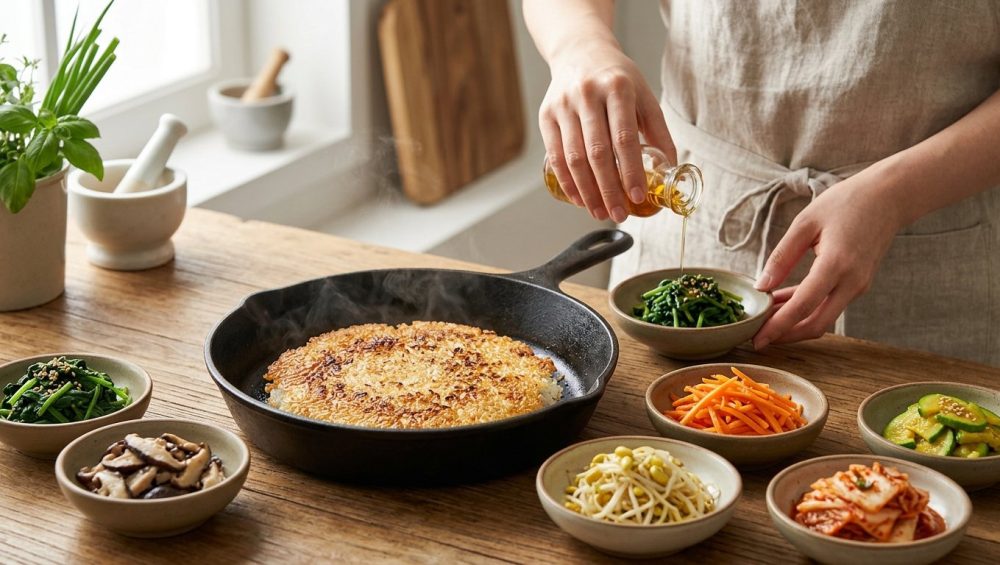
The Tragedy of the Mushy Bowl and the Magic of Mindful Cooking
Listen, we need to have a serious talk about your rice.
There are few culinary disappointments more profound than ordering dolsot bibimbap at your favorite Korean restaurant, eagerly anticipating that glorious, crackling sizzle as the heavy stone bowl hits your table, and then trying to recreate that exact magic at home—only to end up with a lukewarm, soggy bowl of sadness. You followed the recipe. You chopped the vegetables. You bought the expensive gochujang. So why does your homemade version taste like a damp, uninspired salad sitting on top of a sponge?
I survive Monday through Friday by utilizing every kitchen shortcut known to humanity. I am the queen of the 20-minute sheet pan dinner because, frankly, time is money and weeknights are chaotic. But the weekends? The weekends are sacred. On the weekends, I am a culinary architect, and I believe that cooking should be a deliberate, intentional practice. If you want to host a relaxed dinner party that actually leaves your guests speechless, you don’t need a culinary degree, and you certainly don’t need to order takeout. You just need to understand the fundamental mechanics of heat, moisture, and patience.
Today, we are stripping away the pretentious chef-speak and diving deep into the exact science of achieving the perfect crispy rice bottom—known as nurungji—without needing a specialized stone dolsot. We are also going to explore the highly methodical, incredibly meditative preparation of Korean vegetable sides (namul). By the end of this masterclass, you will possess the exact heat-control techniques and moisture-management strategies required to elevate a simple build-your-own dinner into an unforgettable, mindful gathering. Grab your favorite heavy skillet, pour yourself a glass of wine, and let’s fix your rice.
The Anatomy of Bibimbap: A Masterclass in Balance
Before we can master the dish, we must respect its architecture. Bibimbap literally translates to “mixed rice,” but reducing this masterpiece to a mere rice bowl is a culinary insult. It is a meticulously assembled ecosystem of flavor, texture, and temperature.
At its core, a proper dolsot-style bibimbap consists of four distinct pillars. First, there is the nurungji, the scorched, caramelized layer of rice at the bottom that provides an essential, glass-like crunch. Second, there is the namul, the array of gently seasoned, individually prepared vegetable side dishes that bring vibrant color, earthy nutrition, and varied textures to the bowl. Third, we have the rich, savory elements: typically a marinated protein like bulgogi-style beef or seared tofu, crowned with a perfectly cooked sunny-side-up egg. Finally, the entire dish is bound together by a sweet, spicy, and acidic gochujang-based sauce.
The beauty of this dish lies in its interactive nature. It is served beautifully composed, a pristine color wheel of ingredients, but the diner is tasked with violently mixing it all together right before eating. The crispy bits of rice are shattered and distributed throughout, the rich egg yolk breaks and coats the grains, and the spicy sauce permeates every single bite. It is a triumph of balance. But if the foundation—the crispy rice—fails, the entire structure collapses.
The Core Problem: The Thermodynamics of Crispy Rice
The reason your rice isn’t crisping comes down to a fundamental misunderstanding of thermodynamics and moisture management. The chemical process responsible for that beautiful, savory, golden-brown crust is called the Maillard reaction. This reaction involves amino acids and reducing sugars rearranging themselves under heat to create hundreds of complex flavor compounds.
Here is the hard scientific truth: the Maillard reaction cannot occur in the presence of excess moisture. Water boils at 212°F (100°C). As long as there is liquid water pooling at the bottom of your pan, the temperature of the rice in contact with the metal cannot physically exceed 212°F. The Maillard reaction, however, requires temperatures upwards of 300°F (150°C) to truly activate.
If your rice is too wet, it will simply steam in the pan instead of frying. This is the exact same reason why your fried rice is always mushy. To achieve nurungji, we must aggressively manage the moisture content of our grains and utilize a cooking vessel capable of delivering intense, sustained, and highly conductive heat. Steam is the enemy of crispness.
The Golden Rule: Why We Must Banish Toxic Cookware
Listen to me carefully: if you are still trying to achieve a restaurant-quality hard sear on a scratched, peeling, mystery-metal non-stick pan that you bought for twelve dollars a decade ago, we need to have an intervention. You are not just ruining your food; you are actively sabotaging your own culinary potential.
I have zero patience for cheap, toxic kitchenware. Teflon and cheap ceramic coatings are designed to be slippery, which inherently prevents food from properly gripping the pan to form a crust. Furthermore, these flimsy aluminum pans lack thermal mass. The moment you press a large volume of room-temperature rice into a thin non-stick skillet, the temperature of the pan plummets. Instead of searing, the pan struggles to recover its heat, and your rice sits there gently sweating in its own moisture.
If you are serious about banishing toxic kitchen gear, this is the meal that proves why heavy metal wins. To replicate the intense, sustained heat of a traditional Korean earthenware stone bowl (dolsot), you need a vessel with immense thermal retention. You need a heavy cast-iron skillet or a thick carbon steel pan. These materials absorb heat slowly but hold onto it fiercely, radiating an even, blistering temperature that drives off moisture and forcefully triggers the Maillard reaction. Understanding the thermodynamics of carbon steel pans and cast iron is the single greatest leap you can make as a home cook.
The Cast-Iron Workaround: Replicating the Dolsot at Home
You do not need to purchase individual, heavy stone bowls to make mind-blowing crispy bibimbap. A standard 10-inch or 12-inch cast-iron skillet is the ultimate workaround, allowing you to create a massive, family-style crispy rice base that can be brought straight to the table.
Here is the exact mechanical process for the cast-iron method:
- The Preheat: Place your clean, dry cast-iron skillet over medium heat. Let it warm up for a full five minutes. Cast iron heats unevenly but retains heat beautifully, so giving it time to preheat ensures there are no cold spots.
- The Oil Slick: Once the pan is hot, add a generous amount of high-smoke-point oil (more on this crucial choice in a moment). Swirl it around so the entire bottom and the lower sides of the skillet are coated.
- The Rice Press: Add your cooked rice to the skillet. Using a rigid spatula or a wet wooden spoon, aggressively press the rice down into an even, flat layer across the entire bottom of the pan. You want maximum surface area contact between the rice and the hot, oiled iron.
- The Sizzle and the Silence: Once the rice is pressed down, do not touch it. Do not stir it. Do not peek. Let it cook over medium-high heat for about 5 to 8 minutes. You will hear a distinct auditory shift—from a wet, steaming hiss to a sharp, crackling sizzle. That crackle is the sound of the moisture finally evaporating and the starches beginning to fry in the oil.
- The Assembly: While the rice is crisping, you arrange your pre-cooked vegetables and protein on top of the rice in neat, colorful sections.
The Great Oil Debate: The Science of Smoke Points
Here is where 90% of home cooks ruin their bibimbap: they pour dark, toasted sesame oil into a screaming hot cast-iron skillet and wonder why their kitchen suddenly smells like a burning tire factory and their rice tastes like bitter ash.
We must distinguish between the two drastically different types of sesame oil. Toasted sesame oil is a finishing oil. Because it is unrefined and pressed from heavily roasted sesame seeds, it retains delicate flavor compounds and microscopic particulate matter that give it that intoxicating, nutty aroma. However, those exact same compounds cause it to have a pitifully low smoke point of around 350°F (177°C). If you use toasted sesame oil to fry your rice against the blistering surface of a cast-iron pan, those compounds will instantly incinerate, destroying the aroma and imparting a harsh, acrid flavor to your entire meal.
Instead, you must use a high-heat oil to grease your skillet. Refined, light sesame oil has had those impurities filtered out, raising its smoke point to a much safer 410°F (210°C), making it suitable for high-heat searing while still offering a mild sesame background. Alternatively, you can use a completely neutral, high-heat oil like avocado oil, which can withstand a staggering 520°F (271°C) without breaking down. Save your precious, dark toasted sesame oil for a final, glorious drizzle over the top of the assembled bowl right before serving.
The Rice Ritual: Starch Management and Preparation
You cannot use fluffy, long-grain basmati or Uncle Ben’s parboiled rice and expect to achieve a cohesive, crispy crust. Bibimbap requires short-grain or medium-grain white rice (often labeled as sushi rice or Calrose). These varieties contain a higher proportion of amylopectin, a type of starch that becomes sticky and cohesive when cooked, allowing the rice grains to bond together and form a unified, shatteringly crisp sheet at the bottom of your skillet.
However, you must manage the surface starch. If you do not wash your rice before cooking it, the loose exterior starch will turn into a gummy, gelatinous paste, resulting in a dense, gluey block rather than distinct, delightfully chewy grains. You might need a Japanese wash bowl to make the process easier, but regardless of your equipment, you must rinse the rice under cold water until the water runs completely clear. The magic of rinsing your grains is absolutely non-negotiable for this dish.
Furthermore, utilizing day-old, refrigerated rice is a brilliant cheat code for achieving nurungji. As cooked rice sits in the refrigerator, it undergoes starch retrogradation, firming up and losing excess moisture. When this slightly dehydrated rice hits the hot, oiled cast iron, it crisps up significantly faster and more dramatically than freshly steamed, wet rice.
The Meditative Art of Namul: Elevating the Humble Vegetable
While weekday cooking is about frantic survival, weekend cooking should be a restorative practice. Preparing namul—the array of seasoned vegetable side dishes that adorn the bibimbap—is a beautiful, repetitive, and deeply calming process.
Namul (나물) is not just a garnish; it is an ancient culinary philosophy. Originating over 5,000 years ago during periods of food scarcity, the practice of foraging and gently seasoning wild greens evolved into a cornerstone of the Korean table. It represents honesty, simplicity, and a profound respect for the natural essence of the ingredient. You are not masking these vegetables in heavy, cloying sauces; you are coaxing out their best qualities with a gentle touch of garlic, a whisper of salt, and a careful drizzle of toasted sesame oil.
The foundational technique for most green namul is blanching. We plunge the vegetables into generously salted boiling water for mere seconds, then immediately transfer them to an ice water bath (shocking). The salt in the boiling water helps preserve the vibrant green chlorophyll, while the ice bath instantly halts the cooking process, locking in a crisp, tender texture.
Crucially, after shocking, you must aggressively squeeze the excess water out of the vegetables. If your spinach is waterlogged, it will bleed liquid into your bibimbap, ruining the crispy rice we worked so hard to achieve.
Sigeumchi Namul (Garlicky Spinach)
This is the most iconic of all the vegetable sides. Take a large bunch of fresh spinach and blanch it in boiling salted water for no more than 30 seconds. Shock it in ice water, drain it, and squeeze it with your hands until it forms a tight, dry ball. Gently pull the spinach apart and toss it in a bowl with a splash of soup soy sauce (guk-ganjang), finely minced garlic, a pinch of salt, a dash of toasted sesame seeds, and a generous drizzle of toasted sesame oil.
Kongnamul (Crisp Bean Sprouts)
Soybean sprouts bring a vital, watery crunch to the dish. Boil them in salted water for about 3 to 4 minutes. Do not open the lid while they are boiling, or they will develop an unpleasantly raw, fishy smell. Drain, shock, and season them similarly to the spinach, perhaps adding a tiny pinch of gochugaru (Korean chili flakes) for a subtle visual pop and mild heat.
Hobak Namul (Sautéed Zucchini)
Unlike the leafy greens, zucchini requires a different approach to moisture management. Slice the zucchini into thin half-moons. Toss the slices with a heavy pinch of salt and let them sit in a colander for 15 minutes. The salt will draw out the excess water through osmosis. Squeeze the zucchini dry in a clean kitchen towel, then briefly sauté the slices in a hot skillet with a touch of oil and minced garlic just until they begin to soften.
Gosari and Carrots (Earthy Textures)
Gosari (fernbrake or bracken) offers a deeply earthy, meaty texture that is essential for a traditional, authentic bowl. It is typically purchased dried, rehydrated, and then sautéed with soy sauce and sesame oil. If you cannot source gosari, julienned carrots are a fantastic, accessible alternative that provide a beautiful burst of orange color. If you find yourself frustrated and crying while trying to cut matchstick carrots, remember that your dull knife is to blame, or perhaps you are using a cheap, overly hard cutting board that is actively ruining your knives. Sauté the julienned carrots quickly over high heat until they are just pliable but still retain a distinct snap.
The Protein and the Crown Jewel: Searing and Yolk Mechanics
While a vegetarian bibimbap is spectacular on its own, adding a deeply savory protein elevates the dish to a feast. The classic choice is bulgogi-style beef—thinly sliced ribeye or sirloin marinated in a blend of soy sauce, brown sugar, sesame oil, grated garlic, and a touch of grated Asian pear (which contains enzymes that tenderize the meat).
When cooking the beef, you want a hard, aggressive sear. Ensure your stainless steel or cast-iron skillet is properly preheated. If you struggle with lean meats tearing and adhering to your pans, utilize the water drop test to verify the precise moment your skillet has reached the Leidenfrost point, ensuring a perfectly non-stick searing environment. Cook the beef quickly in small batches so it sears rather than steams.
Finally, we arrive at the crown jewel: the egg. A bibimbap without a sunny-side-up egg is incomplete. The egg is not just a protein; the yolk acts as a secondary, luxurious sauce that binds the rice and vegetables together. Fry the egg in a separate, small non-stick skillet over medium heat. You want the whites completely set and the edges slightly laced and crispy, but the yolk must remain perfectly liquid and runny.
The Alchemist’s Sauce: Orchestrating the Gochujang
The final component is the bibimbap sauce. Gochujang is a traditional Korean fermented chili paste made from glutinous rice, fermented soybeans, salt, and gochugaru. It is incredibly thick, deeply savory, slightly sweet, and fiercely pungent. However, straight out of the tub, it is far too dense to mix evenly into a bowl of rice. It must be orchestrated into a balanced, pourable sauce.
In a small bowl, combine two tablespoons of gochujang with one tablespoon of toasted sesame oil, one tablespoon of rice vinegar (for necessary acidity), a teaspoon of sugar or honey (to balance the heat), and a splash of water or apple juice to thin it to your desired consistency. If you enjoy an aromatic kick, you can add a small amount of minced garlic, though if you find raw garlic too harsh, you can mellow the flavor by blooming them in oil for a few seconds before whisking it into the paste.
Assembly, Serving, and the Art of the Interactive Dinner
This is where the magic of the mindful gathering truly solidifies. You have spent the afternoon peacefully prepping your vibrant namul, searing your protein, and whisking your sauce. Now, it is time for the theatrical presentation.
With your cast-iron skillet still sitting over medium heat on the stove, the rice forming its incredible crust, begin arranging your toppings. Place the spinach, bean sprouts, zucchini, and carrots in distinct, triangular sections around the perimeter of the skillet, creating a beautiful, segmented color wheel. Place your seared beef in the center. Carefully slide your pristine sunny-side-up egg directly on top of the beef.
Turn off the stove. Using heavy oven mitts, carefully transfer the entire, fiercely hot cast-iron skillet to the center of your dining table (making absolutely sure to place it on a heavy, heat-proof wooden trivet or cork stand). The skillet will continue to hiss and pop, filling the dining room with the intoxicating aroma of toasted rice and sesame. The cast iron’s massive thermal retention will keep the food piping hot for the duration of the meal, mimicking the exact thermodynamic function of the restaurant dolsot.
Give your guests large spoons and let them marvel at the presentation for exactly ten seconds. Then, instruct them to destroy it. Pour the gochujang sauce over the top and aggressively mix everything together. Break the egg yolk. Scrape the bottom of the skillet to dislodge the golden, shattered shards of nurungji, folding that incredible crunch throughout the seasoned vegetables and tender meat.
The Final Sizzle
You do not need a restaurant reservation or highly specialized, single-use stone bowls to experience the textural masterpiece of a proper, crispy-bottomed bibimbap. By respecting the science of moisture, leaning into the raw thermal power of a heavy cast-iron skillet, and dedicating an hour on a Sunday to the mindful, rhythmic preparation of fresh vegetables, you can transform a handful of humble ingredients into a spectacular, interactive feast.
Throw out your peeling non-stick pans, stop frying with finishing oils, and embrace the sizzle. Your rice—and your weekend dinner guests—will thank you.