If there is one universal truth in the culinary world, it is that weeknight cooking can often feel like an unrelenting chore. You come home exhausted, your patience is thinner than a cheap paring knife, and you just want a healthy side dish that doesn’t require a culinary degree or a mountain of dishes. So, you grab a rock-hard sweet potato from the pantry, stab it violently with a fork, and throw it into a blazing 400°F oven. An hour later, you pull it out, slice it open, and take a hesitant bite.
It is dry. It is chalky. It tastes vaguely like a slightly sweet, orange packing peanut. In a desperate attempt to salvage dinner, you end up drowning the poor tuber in a half-stick of butter, a handful of brown sugar, and maybe even a dusting of cinnamon, completely defeating the purpose of a “healthy” side dish.
If this scenario sounds intimately familiar, I need you to take a deep breath because you are not alone. As a home cook who learned the ropes through sheer trial, error, and setting off the smoke detector more times than I care to admit, I know the weeknight struggle intimately. But I also know that if you want to elevate your food from mediocre to mind-blowing, you need to stop rushing your sweet potatoes.
The difference between the sad, fibrous tuber you make at home and the impossibly creamy, syrupy, melt-in-your-mouth sweet potato you are served at a high-end steakhouse is not a secret chef technique. It is not an injection of maple syrup. It is pure, unadulterated food science. Today, we are going to dive deep into the fascinating biochemistry of the sweet potato, banish the bad habits that are ruining your side dishes, and master a completely hands-off technique that will change the way you cook forever.
The Anatomy of a Misunderstood Tuber
Before we can manipulate the chemistry of our food, we have to understand what we are actually dealing with. U.S. sweet potato consumption has exploded in recent years. According to recent agricultural statistics, per capita consumption has nearly doubled since 2002, jumping from a mere 3.7 pounds per person to a staggering figure today, with the global sweet potato market reaching over $51 billion in 2025 [1, 4.5]. We are eating more of them than ever, largely driven by the wellness industry touting their high beta-carotene and fiber content. Yet, despite this massive surge in popularity, most home cooks are completely botching the execution.
Part of mastering the art of the kitchen is understanding your ingredients at a structural and historical level. First, let’s clear up a botanical annoyance that drives culinary professionals absolutely crazy: sweet potatoes are not yams.
Real yams (Dioscorea) are massive, starchy, bark-like tubers native to Africa and Asia. They are dry, earthy, and require extensive cooking. Sweet potatoes (Ipomoea batatas), on the other hand, belong to the morning glory family and are native to the Americas. The confusion in the United States stems from a 1930s marketing campaign by Louisiana farmers who wanted to distinguish their softer, sweeter, orange-fleshed sweet potatoes from the firmer, white-fleshed varieties grown in other states. They co-opted the African word “nyami” (meaning “to eat”) and branded their crop as “yams.” The misnomer stuck, and now grocery stores perpetually confuse the two.
When you hold a raw sweet potato, you are essentially holding a dense, biological silo of complex carbohydrates. Roughly 20% to 30% of that raw root is pure starch. In its raw, uncooked form, starch is completely tasteless to the human tongue. It is a tightly bound, highly organized chain of glucose molecules that your taste buds simply cannot register as sweet. If you cook the potato too fast or incorrectly, those complex starch chains remain largely intact. The result is that dense, fluffy, and ultimately bland texture that requires a landfill of marshmallows to make palatable.
The Culprit: Why High Heat Ruins Everything
Weekdays are chaotic, and as I always say, time is money. I am the very first person to advocate for culinary shortcuts, efficient prep work, and time-saving hacks when you are just trying to get a nutritious dinner on the table before 8:00 PM. But high heat is the absolute arch-nemesis of the sweet potato.
When you preheat your oven to 400°F or 425°F to roast a whole sweet potato, you are prioritizing speed over chemistry. At those blistering temperatures, the exterior of the potato cooks rapidly, and the internal temperature of the flesh skyrockets in a matter of minutes. You might think you are doing yourself a favor by shaving thirty minutes off your cooking time, but you are actually committing a botanical massacre.
By rapidly heating the sweet potato, you are forcefully evaporating the potato’s natural moisture while simultaneously locking its starches into their complex, tasteless forms. The heat penetrates so quickly that the natural enzymes inside the potato are destroyed before they have a chance to do their job.
And please, for the love of all things culinary, stop wrapping them in foil. I see this mistake constantly. Wrapping a sweet potato in aluminum foil traps all the escaping steam, effectively boiling the potato in its own meager juices rather than allowing the dry, ambient heat of the oven to slowly concentrate the natural sugars. Foil yields a soggy, watery mess. If you want profound flavor, the potato must be roasted naked.
The Science of Sweetness: Meet Beta-Amylase
Here is where we get incredibly nerdy, and I make absolutely no apologies for it. The secret to a dessert-like, naturally syrupy sweet potato lies entirely in an endogenous enzyme called beta-amylase.
Enzymes are biological catalysts; they are proteins that make chemical reactions happen at a rapid pace. In the specific case of the sweet potato, beta-amylase has one glorious purpose in life: to aggressively snip complex, tasteless starch chains into maltose. Maltose is a disaccharide—a simple sugar—that is incredibly sweet and has a rich, complex, almost caramel-like flavor profile.
But beta-amylase is a total diva. It only works under very specific, highly regulated thermal conditions.
The Gelatinization Phase
First, the starch inside the potato must undergo a process called gelatinization. In a raw potato, starch granules are tightly packed and crystalline. When the internal temperature of the potato reaches about 140°F (60°C), these starch granules begin to absorb the potato’s natural water. They swell up, lose their crystalline structure, and burst open. This gelatinization process makes the starch chains accessible to the enzymes.
The Magic Temperature Window
Once the starch is gelatinized, beta-amylase goes to work. The absolute optimal temperature range for this enzyme to function is between 135°F and 170°F (approximately 57°C to 75°C). As long as the internal temperature of the sweet potato remains in this magic thermal window, the enzyme will continuously and aggressively convert bland, mealy starch into sweet, gooey maltose.
The Denaturation Point
However, biology has its limits. Once the internal temperature of the potato breaches 170°F to 176°F (76°C to 80°C), the beta-amylase enzyme denatures. Its protein structure unfolds, and it dies. The starch-to-sugar conversion halts immediately and permanently.
If you roast your potato at 400°F, the internal temperature races through that crucial 135°F-170°F window in a matter of minutes. The enzyme barely has time to wake up before it is incinerated. If you want a sweet potato that doesn’t turn out soggy or taste like damp cardboard, you must intentionally trap it in that thermal sweet spot for as long as humanly possible. The longer it lingers in the enzyme zone, the sweeter the final product will be.
The Low-Temp Bake Masterclass: The Method
This brings us to the ultimate, foolproof, hands-off technique for weekend culinary hobbyists who want perfection. We are going to bake these potatoes at a painfully low temperature for a shockingly long time. This is not a weeknight recipe. This is a Sunday afternoon project that will yield the greatest side dish of your life.
Here is the exact blueprint for enzymatic perfection:
- The Prep: Scrub your sweet potatoes thoroughly under cold water to remove any residual dirt. Dry them completely with a kitchen towel. Take a standard fork and poke each potato exactly three to four times, piercing the skin. This allows steam to escape and prevents the potatoes from exploding in your oven, which is a catastrophic mess you do not want to clean up.
- The Temperature: Preheat your oven to 275°F (135°C). Yes, that low. You are essentially creating a warm sauna for your root vegetables.
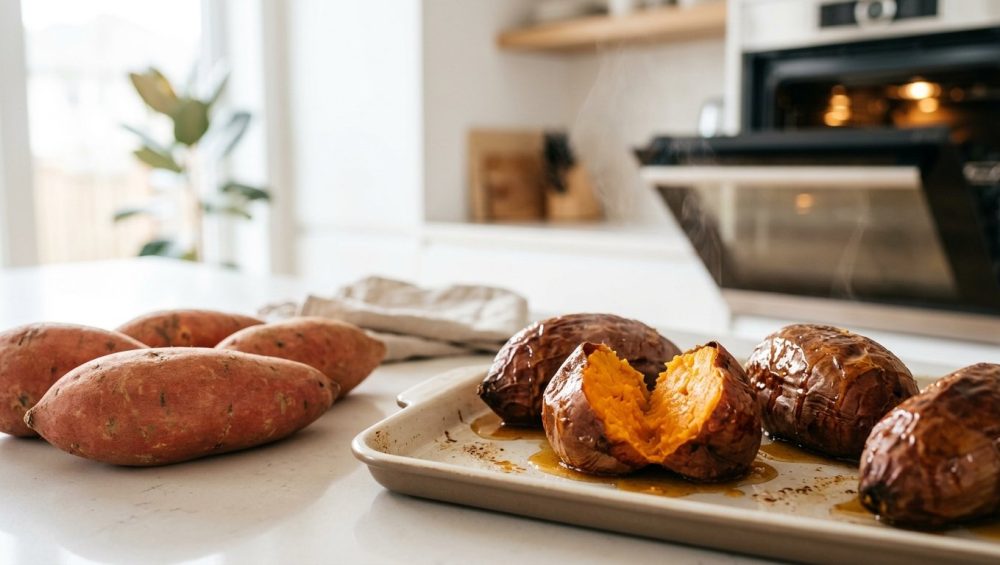
- The Setup: Place the naked, poked potatoes directly on a high-quality, rimmed baking sheet. Do not oil them yet. Do not salt them. Do not wrap them in anything.
- The Time: Bake them undisturbed for 2.5 to 3 hours.
I know exactly what you are thinking. “Three hours for a simple side dish?” Yes. Remember, this is your elaborate weekend cooking project. The beauty of this method is that it is entirely hands-off. While the potatoes are languishing in the oven, you can read a book, prep your main course, fold laundry, or enjoy a glass of wine.
During those three hours, the internal temperature of the potato will slowly, agonizingly creep up. It will spend well over an hour trapped in that 135°F-170°F enzyme-activation zone. The beta-amylase will have an absolute field day, systematically breaking down almost all the available starch into syrupy maltose. By the time the potato finishes cooking, it will be so structurally compromised by the sugar conversion that it will literally collapse under its own weight when you touch it. The skin will be papery and loose, and the interior will be a vibrant, translucent orange pudding.
The “No-Go” Rule on Toxic Kitchen Gear
Before you even think about turning your oven on to attempt this masterclass, we need to have a very serious, brutally honest conversation about what you are putting your food on. As you well know, I have absolutely zero patience for cheap, toxic kitchenware, and neither should you.
If you are roasting your meticulously prepared, organic vegetables on a flimsy, scratched, non-stick aluminum baking sheet that you bought for ten dollars at a discount store, you are making a grave mistake. Those cheap non-stick coatings—often containing PFAS, PFOA, or other “forever chemicals”—degrade under sustained heat. They peel, they scratch, and they leach mystery chemical compounds directly into your food. It is time to start banishing toxic kitchen gear from your life forever. You do not need a culinary degree to cook well, but you do need safe tools.
Furthermore, cheap, thin pans completely lack thermal mass. They heat unevenly and warp violently in the oven. If you have ever been terrified by a loud “BANG!” from your oven mid-roast and wondered why your baking sheets keep warping, it is because the thin layers of cheap metal cannot handle the stress of thermal expansion.
For this low-and-slow bake, you need safe, high-quality, durable equipment that can handle a three-hour stint in the oven without off-gassing. I strongly recommend a heavy-duty, uncoated 3-ply stainless steel baking sheet, a well-seasoned bare cast-iron skillet, or a high-quality ceramic stoneware dish.
Why is this so important for sweet potatoes? Because when the sweet potato finishes baking, the highly concentrated maltose syrup will actually seep out of the fork holes you poked earlier and bubble onto the pan. You want that sticky, delicious, caramelized sugar touching food-safe stainless steel, not a peeling layer of synthetic polymer. Unlike the unappetizing albumin that oozes white stuff from overcooked fish, the sticky substance weeping from a perfectly baked sweet potato is pure, caramelized liquid gold, and you want to be able to scrape it up and eat it safely.
Varieties Matter: Choosing Your Spud
Not all sweet potatoes are created equal, and their unique genetic makeup drastically affects the final result of your bake. The market is dominated by a few key varieties, and knowing the difference will elevate your cooking from amateur to expert.
Beauregard
This is the most common variety you will find in American grocery stores. It has purplish-red skin and bright, vibrant orange flesh. It is incredibly moist and has a naturally high baseline amylase content. When subjected to the low-and-slow roasting method, a Beauregard becomes exceptionally soft, sweet, and syrupy. It is the reliable workhorse of the sweet potato world.
Jewel and Garnet
Often (and incorrectly) labeled as yams in the produce aisle, these varieties have a slightly higher moisture content than Beauregards. Garnets, with their deep red skin and dark orange flesh, are particularly excellent for the low-temp method. Because of their moisture levels, their flesh transforms into a velvety, pudding-like consistency that is almost impossible to overcook.
Japanese Sweet Potatoes (Beni Haruka, Silk Sweet)
If you can find these at a local Asian market or specialty grocer, buy them immediately. They have distinct purple skin and pale, whitish-yellow flesh. They possess an extraordinarily high beta-amylase activity. When slow-baked, the enzyme conversion is so aggressive that they become intensely sweet and sticky, literally oozing nectar as they cook. They have a slightly chestnut-like flavor and a denser, creamier texture than the orange varieties.
Purple Stokes
These are visually stunning tubers with deep, vibrant purple flesh packed with anthocyanins (powerful antioxidants). However, from a culinary perspective, they are naturally drier, denser, and starchier, with lower amylase activity. The low-temp bake will certainly help them immensely, but you should manage your expectations; a Purple Stokes will never achieve the dripping, syrupy texture of a Garnet or a Beni Haruka.
Advanced Techniques for the Culinary Overachiever
For the weekend perfectionists who want to take this biochemistry experiment to its absolute limit, there are two advanced methods you can employ to maximize maltose production and achieve Michelin-star results in your home kitchen.
The Cold-Oven Start
Instead of preheating your oven to 275°F, place your raw, poked sweet potatoes directly onto your baking sheet and put them into a completely cold oven. Then, turn the oven on and set the temperature to 300°F. By starting cold, you force the potato to heat up at an excruciatingly slow pace. This artificially extends the amount of time the internal temperature spends in the 135°F-170°F enzyme-activation window. It is a slightly lazy but highly effective hack that guarantees maximum sweetness.
The Sous-Vide Hack
If you own an immersion circulator, you can achieve absolute, undeniable enzymatic perfection. Vacuum seal your sweet potatoes (whole, do not poke them for this method) and drop them into a water bath set precisely to 150°F (65°C). Leave them in the bath for two to three hours.
At this exact temperature, beta-amylase operates at its absolute peak efficiency without any risk whatsoever of denaturing. It is the scientific ideal. After the bath, the potatoes will be incredibly sweet but structurally very soft, and the skin will be wet. To finish them, remove them from the vacuum bags, pat them completely dry with paper towels, rub them lightly with a high-heat oil (like avocado oil), and blast them in a 450°F oven for 15 to 20 minutes. This secondary high-heat step caramelizes the exterior and crisps the skin while protecting the perfectly converted, syrupy interior. It is a multi-step process, but the results will ruin standard baked potatoes for you forever.
Flavor Pairings That Respect the Science
If you have successfully executed the low-temp bake, your sweet potato is now essentially a dessert. The maltose levels are off the charts. Therefore, adding brown sugar, maple syrup, or miniature marshmallows at this stage is not just redundant; it is a profound culinary insult to the science you just orchestrated.
To build a balanced, sophisticated dish, you need to contrast that intense, natural sweetness with savory, salty, and acidic elements. A fundamental rule of cooking that every home chef must learn is that your dinner actually needs acid to cut through richness and prevent palate fatigue.
Here are a few grown-up, highly curated ways to dress your scientifically perfected sweet potato:
- The Mediterranean Vibe: Split the hot potato open and dollop it generously with full-fat, plain Greek yogurt. Drizzle with a high-quality, nutty tahini, a heavy squeeze of fresh lemon juice, and a sprinkle of flaky Maldon sea salt and za’atar. The tang of the yogurt and lemon perfectly slices through the heavy maltose syrup.
- The Savory Herb: Mash the syrupy flesh with a generous pat of cultured, grass-fed butter, finely chopped fresh rosemary, a dash of smoked paprika, and coarse black pepper. The piney, savory notes of the rosemary ground the sweetness.
- The Spicy Crunch: Top the split potato with a spoonful of fiery chili crisp, toasted pumpkin seeds (pepitas), and a hit of fresh lime zest. The heat, the crunch, and the bright citrus acid will perfectly balance the soft, sugary flesh.
Troubleshooting Your Tuber
Even with foolproof science, things can occasionally go sideways in the kitchen. Let’s address some common pitfalls so you know exactly how to pivot.
- “My potato is still hard in the center.”
You simply didn’t bake it long enough. Sweet potatoes vary wildly in size, girth, and density. A massive, one-pound tuber might need well over three hours at 275°F to fully break down. Trust the process, do not turn up the heat, and leave it in. It is nearly impossible to over-bake a sweet potato at this low temperature. - “My potato turned out excessively wet and mushy.”
If your sweet potato seems to turn mushy rather than creamy and syrupy, you likely bought a variety with an extremely high water content, or you committed the cardinal sin of wrapping it in foil. Remember, the dry, ambient heat of the oven is necessary to slowly evaporate excess water and concentrate the sugars. - “I tried to roast sweet potato cubes, and they didn’t get sweet at all.”
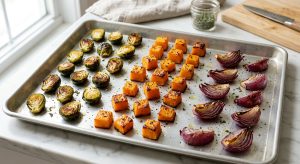
Cubed sweet potatoes are a completely different beast. Because they are cut into small, one-inch pieces, they heat up incredibly fast in the oven, blowing right past the enzyme window before any maltose can form. If you are roasting cubes for a quick weeknight dinner, you must rely on external caramelization (the Maillard reaction) rather than internal enzymatic breakdown. Tossing the cubes in a little oil and preheating the pan in the oven before dropping the cubes onto the hot metal will help develop a flavorful, crispy crust, even if the interior isn’t as syrupy as a whole baked potato.
The Final Bite
Cooking does not have to be an intimidating, chaotic guessing game, and you certainly do not need a professional kitchen or a pantry full of artificial sweeteners to achieve mind-blowing results. By simply understanding the basic biology of your ingredients and respecting the boundaries of heat and time, you can transform the most mundane root vegetable into an absolute culinary masterpiece.
The next time you have a lazy weekend afternoon, do yourself a massive favor. Ditch the microwave, ignore the 400°F quick-roast recipes that promise speed over quality, and let the beta-amylase enzyme do all the heavy lifting for you. Give your food the time it deserves, and your taste buds—and your dinner guests—will thank you.