The Universal Tragedy of a Sad, Separated Salad
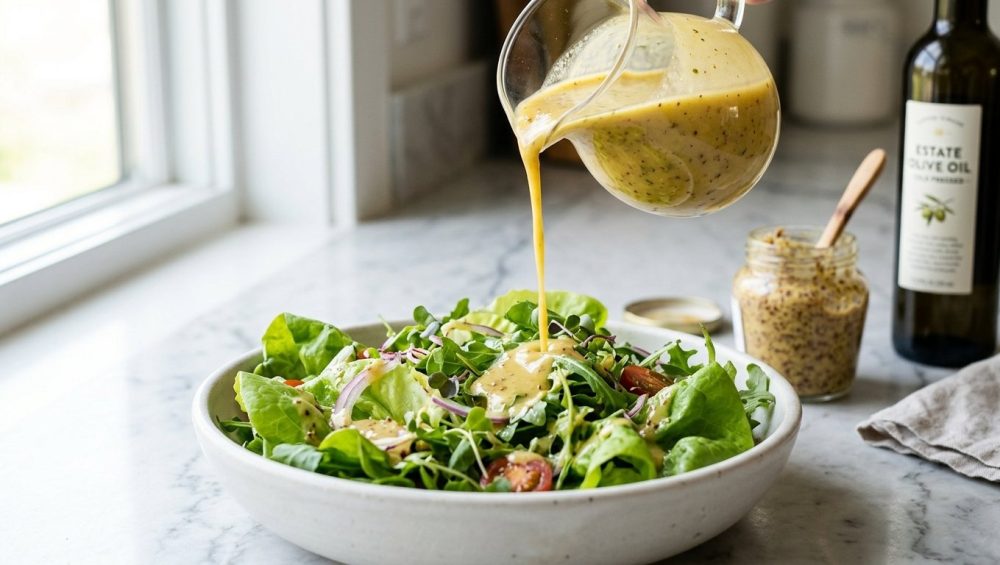
Look, we have all been there. It is a busy Tuesday night, you are exhausted from staring at spreadsheets all day, and you are trying to do the responsible thing by making a healthy dinner. You have chopped the crisp romaine, sliced the heirloom tomatoes, and arranged a beautiful, vibrant salad in your favorite serving bowl. You mix up a quick dressing of oil and vinegar, pour it over the top, and sit down to eat.
But instead of a restaurant-quality experience, you are met with a culinary tragedy. The oil has completely coated the lettuce leaves, leaving them slick, heavy, and greasy. Meanwhile, all the tangy, flavorful vinegar has aggressively slid off the greens and pooled at the very bottom of the bowl in a watery, acidic swamp. You are left eating oily leaves followed by a final bite that is so sour it makes your eyes water. It is frustrating, it is gross, and it is the exact reason why so many weekend culinary hobbyists throw their hands up in defeat and go back to buying overpriced, heavily processed bottles from the grocery store.
Before you even think about tossing those greens, you need to dry your salad greens completely, but more importantly, you need to fix your dressing. I firmly believe that absolutely anyone can cook like an expert without a fancy culinary degree, and that includes mastering the perfect, creamy, clingy vinaigrette. You do not need to suffer through separated, broken dressings ever again. The secret to a foolproof, stable, luxurious vinaigrette is already sitting in your refrigerator door. It is unassuming, it is cheap, and it is a marvel of culinary chemistry: Dijon mustard.
The Billion-Dollar Bottled Dressing Scam
Let’s be brutally honest for a second about the global salad dressing market. According to recent industry data and market research, the global salad dressing market is an absolute financial juggernaut, valued at over $82 billion in 2024 and projected to reach a staggering $142 billion by 2034, growing at a compound annual growth rate of over 5%. That is an astronomical amount of money being spent by consumers who are simply too intimidated to whisk together their own dressings at home.
But what are you actually buying when you pick up that $6 bottle of vinaigrette from the supermarket shelf? Turn the bottle around and read the ingredient list. You are rarely getting high-quality extra virgin olive oil or aged balsamic. Instead, you are paying a premium for cheap, highly refined soybean or canola oils, water, high-fructose corn syrup, and a laundry list of synthetic emulsifiers, artificial preservatives, and mysterious vegetable gums. Manufacturers have to pump their products full of these industrial stabilizers so the dressing can sit on a grocery store shelf for twelve months without separating.
When we are talking about weekday meals, my philosophy is simple: time is money. You might think grabbing a bottle from the fridge is saving you time, but making a restaurant-quality vinaigrette from scratch takes exactly sixty seconds. It tastes infinitely better, it costs pennies on the dollar, and you get to control exactly what goes into your body. You just need to understand a tiny bit of basic kitchen science so you don’t end up storing your beautiful homemade creations in greasy plastic storage containers that ruin the flavor.
The Physics of the Feud: Why Oil and Vinegar Hate Each Other
I have zero patience for pretentious chef-speak, but if you want to stop ruining your salads, we need to talk about chemistry for just a moment. The core problem with a basic vinaigrette is that its two primary ingredients—oil and vinegar—are natural enemies. They are what scientists call immiscible liquids, meaning they fundamentally refuse to mix.
Vinegar is essentially flavored water, and water molecules are polar. They have a slight positive charge on one end and a slight negative charge on the other, much like a magnet. Because of this, water molecules love to stick to other water molecules (a property known as cohesion). Oil, on the other hand, is made up of non-polar lipids. It has no charge whatsoever. When you pour oil and vinegar into the same container, the polar water molecules are so aggressively attracted to each other that they literally squeeze the non-polar oil molecules out of the way, forcing the oil to float to the top because it is less dense.
If you put oil and vinegar in a mason jar and shake it violently, you are using sheer mechanical force to break the oil down into millions of tiny droplets, dispersing them throughout the vinegar. For a few fleeting seconds, it looks cloudy and mixed. This is called a temporary suspension. But the moment you stop shaking, physics takes over. The oil droplets immediately begin bumping into each other, merging back together in a process called coalescence, and within moments, you have two distinct, separated layers again. This is why your salad is always a greasy, watery disappointment.
Enter the Hero: What Exactly is an Emulsion?
To force oil and vinegar to play nicely together and form a long-term bond, you have to create an emulsion. If you are serious about mastering the art of the kitchen, understanding emulsions is non-negotiable. An emulsion is simply a stable mixture of two or more liquids that normally do not mix.
In the culinary world, there are two main types of emulsions: oil-in-water (where tiny droplets of oil are suspended in water, like mayonnaise or milk) and water-in-oil (where tiny droplets of water are suspended in oil, like butter or a classic vinaigrette). But as we just learned, mechanical force isn’t enough to keep them together. You need a chemical mediator. You need a surfactant.
Think of a surfactant (short for surface-active agent) as a microscopic, highly diplomatic negotiator. A surfactant is a unique molecule that is amphiphilic, meaning it has a split personality. One end of the molecule is hydrophilic (water-loving) and the other end is hydrophobic, or lipophilic (fat-loving). When you introduce a surfactant into your oil and vinegar mixture, the water-loving heads bury themselves in the vinegar, while the fat-loving tails grab onto the tiny oil droplets. The surfactant forms a protective, chemical cage around every single microscopic drop of oil, physically preventing them from touching each other and merging back together. The result? A thick, creamy, opaque, luxurious dressing that stays perfectly mixed and clings beautifully to every single leaf of your salad.
The Magic of Dijon: The Science of Mustard Seed Mucilage
So, where do we find these magical surfactant molecules in a standard home kitchen? Egg yolks are famous for containing lecithin, a powerful emulsifier used to make mayonnaise and Hollandaise sauce. But you probably don’t want raw egg yolks in your everyday side salad. Garlic and honey have very mild emulsifying properties, but they aren’t quite strong enough to hold a vinaigrette together for days in the fridge.
The undisputed, heavyweight champion of the vinaigrette world is the mustard seed.
Mustard seeds contain a complex carbohydrate—a type of polysaccharide—in their outer seed coat known as mucilage. Mucilage is a thick, gluey substance that the plant naturally produces to retain water and aid in germination. When mustard seeds are crushed and ground into a paste to make prepared mustard, this mucilage is released.
Scientific studies investigating the functional characteristics of mustard mucilage have proven it to be an incredibly potent hydrocolloid and emulsifier. The mucilage molecules possess the exact amphiphilic properties required to bridge the gap between oil and water. Furthermore, mustard mucilage acts as a thickening agent. It increases the overall viscosity of the vinegar phase, which creates physical drag. This means that even if the oil droplets try to move around and bump into each other, the thickened liquid slows them down, adding a secondary layer of mechanical stability to the emulsion. This dual-action chemical and physical stabilization is exactly why a simple dollop of Dijon mustard transforms a watery mess into a rich, creamy sauce.
Dijon vs. Yellow Mustard vs. Mustard Powder: Why Botany Matters
At this point, you might be tempted to reach into your fridge, grab that neon-yellow squeeze bottle of hot dog mustard, and squirt it into your salad bowl. Stop right there. While all mustards contain some level of mucilage, they are absolutely not created equal, and botany plays a massive role in your culinary success.
Traditional American yellow mustard is made from white mustard seeds (Sinapis alba). While white mustard seeds do contain mucilage, their overall emulsifying capacity is relatively weak, and the condiment is typically diluted with large amounts of harsh, highly acidic distilled white vinegar and turmeric for color.
Dijon mustard, on the other hand, is crafted from brown mustard seeds (Brassica juncea). Food science research has repeatedly demonstrated that the mucilage extracted from brown mustard seeds has a significantly higher viscosity, a superior water-binding capacity, and much stronger interfacial activity (the ability to reduce surface tension between oil and water) than its white seed counterpart. In side-by-side kitchen tests, vinaigrettes made with yellow mustard often break and separate within an hour, while those made with Dijon remain perfectly emulsified for days, or even weeks.
Beyond the chemistry, there is the flavor profile. Authentic Dijon mustard is not made with harsh distilled vinegar; it is traditionally made with verjuice (the tart juice of unripe grapes), white wine, or dry vermouth. This gives Dijon a complex, sharp, elegant, and slightly fruity flavor profile that perfectly complements the delicate notes of a good olive oil and fresh herbs. It provides the chemical glue your dressing needs without making your expensive organic arugula taste like a ballpark frank.
The Golden Ratio: Building the Foolproof Vinaigrette
Now that we understand the science, it is time to put it into practice. Making a vinaigrette is not about following a strict, rigid recipe; it is about memorizing a master ratio and a specific technique. Once you understand the mechanics, a good whisk becomes one of those essential beginner kitchen tools you will reach for daily.
The classic French culinary ratio for a vinaigrette is 3 parts oil to 1 part acid (vinegar or citrus juice). However, modern palates often prefer a punchier, brighter dressing, so many home cooks lean closer to a 2:1 ratio, especially if using a milder acid like a sweet aged balsamic or Meyer lemon juice. Let’s walk through the foolproof, step-by-step masterclass method for a standard batch.
Step 1: The Acid and the Anchor
In a mixing bowl, combine 1 tablespoon of your chosen vinegar, 1 teaspoon of high-quality Dijon mustard, a pinch of kosher salt, and a crack of black pepper. (Salt dissolves in water, but it does not dissolve in oil. If you add the salt after the oil is mixed in, it will remain grainy. Always dissolve your salt in the vinegar first). Whisk the vinegar, mustard, and seasonings together until they form a smooth, uniform, slightly cloudy liquid. You have now dispersed your surfactant (the mustard mucilage) evenly throughout the water phase.
Step 2: The Slow Drizzle
This is the most critical step, and where most rookie cooks fail. Measure out 3 tablespoons of extra virgin olive oil. You must add the oil to the vinegar mixture incredibly slowly—literally drop by drop at first—while whisking vigorously and constantly.
Why? Because you need to give the mechanical force of the whisk time to smash the oil into microscopic droplets, and you need to give the mustard mucilage time to surround and coat each individual droplet. If you dump all the oil in at once, the mucilage gets overwhelmed, the oil droplets instantly coalesce, and your emulsion breaks before it even begins.
As you whisk in the first few drops of oil, you will notice the mixture start to change. It will become lighter in color, opaque, and noticeably thicker. Once this stable base is formed (usually after the first tablespoon of oil is incorporated), you can begin pouring the remaining oil in a slow, thin, steady stream, continuing to whisk vigorously until all the oil is incorporated.
Step 3: The Seasoning and Resting
Taste your creation. Dip a leaf of lettuce into the bowl—do not just taste it off your finger, as you need to know how it tastes on the actual food. Does it need more acid? A pinch of sugar or honey to balance the sharpness? Adjust as necessary. The resulting dressing should be thick enough to coat the back of a spoon, luxuriously creamy, and perfectly stable.
Choosing Your Fats: Not All Oils Are Created Equal
The oil you choose will dictate the entire personality of your vinaigrette, and it is crucial to use the right tool for the job. Because oil makes up 75% of the dressing, you cannot hide cheap, rancid oil behind a wall of mustard and garlic.
Extra Virgin Olive Oil (EVOO) is the gold standard for classic vinaigrettes. It provides a robust, fruity, grassy, and sometimes peppery flavor that elevates simple greens. However, EVOO has a very strong personality. If you are making a delicate dressing—say, a raspberry champagne vinaigrette or an Asian-inspired sesame ginger dressing—a heavy olive oil will completely overpower the other ingredients.
In those cases, you want to reach for a neutral oil. Grapeseed oil, avocado oil, or safflower oil are excellent choices. They provide the necessary fat and texture for the emulsion without bringing any competing flavors to the party. Whatever you do, make sure you store your olive oil properly—in a cool, dark place, away from the heat of the stove. Light and heat cause oils to oxidize and go rancid, which will instantly ruin your carefully crafted dressing.
The Acid Test: Selecting the Right Vinegar
If the oil is the body of the dressing, the acid is the soul. The acid cuts through the richness of the fat and brings a necessary brightness to your meals.
Red wine vinegar is the absolute workhorse of the home kitchen. It is sharp, assertive, and holds up beautifully to strong flavors like feta cheese, kalamata olives, and red onions. White wine vinegar and Champagne vinegar are much softer and more delicate, perfect for tender butter lettuce, fresh berries, and mild goat cheese.
Balsamic vinegar brings a deep, syrupy sweetness and complex notes of fig and molasses. Apple cider vinegar offers a fruity, fermented tang that pairs incredibly well with autumn salads featuring roasted squash and toasted pecans.
And do not forget about citrus! Freshly squeezed lemon, lime, orange, or grapefruit juice can easily stand in for vinegar in your 3:1 ratio, providing a vibrant, fresh, and highly aromatic acid profile. Just remember to throw away those cracked wooden spoons that harbor bacteria and use a proper citrus reamer to get every last drop of juice.
Equipment Check: Ditch the Toxic Gear
I have a strict, non-negotiable “no-go” rule when it comes to cheap, toxic kitchen gear. You cannot expect to create culinary magic if you are working with garbage equipment, and making a highly acidic vinaigrette is the ultimate stress test for your mixing bowls.
Vinegar and citrus juices are highly reactive acids. If you attempt to whisk your vinaigrette in a cheap, unlined aluminum bowl, or a pot made of mystery metal, a chemical reaction will occur. The acid will literally strip microscopic layers of metal off the bowl and leach them directly into your food. Not only is this a fantastic way to ingest toxic heavy metals, but it will also give your beautiful, fresh dressing a distinct, metallic, battery-acid flavor.
You must use non-reactive equipment. High-quality stainless steel mixing bowls are the industry standard for a reason. They are durable, non-reactive, and easy to clean. Heavy-duty glass or ceramic bowls are also excellent choices, provided you invest in quality pieces to avoid the nightmare of shattering glass baking dishes or bowls when they encounter sudden temperature changes.
Furthermore, you need a proper whisk. A flimsy, plastic whisk or a tiny fork is not going to provide the mechanical shearing force required to break the oil into microscopic droplets. You need a sturdy stainless steel balloon whisk or a French whisk. The multiple, flexible tines will agitate the liquid violently, forcing the oil and water to mix rapidly before the mucilage steps in to lock them together.
Troubleshooting: When Good Dressings Go Bad
Let’s say you got distracted by a text message, poured your oil in way too fast, and your dressing looks like a split, curdled, oily nightmare. Do not throw it away! Because you understand the science of emulsions, you know exactly how to fix a separated dressing.
When an emulsion breaks, it means the oil droplets have coalesced and the surfactant (the mustard) is overwhelmed. You cannot just whisk harder to fix it; you have to start a new emulsion and slowly feed the broken dressing into it.
The Mustard Rescue: Grab a clean bowl. Add one teaspoon of fresh Dijon mustard and a tiny splash of water or vinegar. Whisk this together. Now, take your broken, separated dressing and treat it exactly like you treated the plain oil in Step 2. Drizzle the broken dressing into the fresh mustard mixture drop by drop, whisking furiously. The new mustard will provide a fresh army of mucilage molecules to surround the oil, and your dressing will magically come back together, thicker and creamier than before.
The Boiling Water Trick: Sometimes, an emulsion breaks because the oil was too cold and the viscosity was too high. Place one tablespoon of rapidly boiling water into a clean bowl. Slowly whisk your broken dressing into the hot water. The heat lowers the surface tension of the oil, making it easier to break into droplets, while the vigorous whisking re-establishes the emulsion.
The Blender Method: If you are making a massive batch of dressing for a dinner party and you do not want to risk a sore arm, ditch the whisk entirely. Throw your vinegar, Dijon, and seasonings into a blender or a food processor. Turn the machine on high, and slowly drizzle the oil through the feed tube in the lid. The mechanical blades spin at thousands of revolutions per minute, pulverizing the oil into such infinitesimally small droplets that the emulsion becomes practically unbreakable.
Storage and Shelf Life: Keeping the Magic Alive
One of the greatest benefits of making a properly emulsified Dijon vinaigrette is its shelf life. Because the oil and vinegar are chemically bound together by the mustard mucilage, a well-made vinaigrette can sit in a sealed glass jar in your refrigerator for up to two weeks without separating.
However, you will likely notice a phenomenon when you pull your leftover dressing out of the fridge the next day: it has turned into a solid, unpourable brick. Do not panic. This does not mean your emulsion broke; it simply means thermodynamics are at play.
Extra virgin olive oil contains a high percentage of saturated and monounsaturated fats, which naturally solidify and turn cloudy at refrigerator temperatures (around 38°F or 3°C). The water in the vinegar remains liquid, but the oil droplets suspended within it have frozen solid. To bring your dressing back to life, simply leave the jar on the kitchen counter for 15 to 20 minutes before serving. The oil will gently warm up and return to its liquid state. Give the jar a quick, vigorous shake to wake up the ingredients, and it will be perfectly creamy and ready to pour. Never microwave your vinaigrette to speed up this process, as the intense heat will permanently destroy the emulsion and leave you with a boiling, separated mess.
Beyond Salads: How to Use Your Stable Vinaigrette Every Day
Once you have mastered the Dijon vinaigrette, you have unlocked one of the most versatile culinary weapons in the home kitchen. This stable emulsion is not just for tossing with mixed greens; it is a weekday meal-prep powerhouse.
The Ultimate Marinade: Because your vinaigrette is a stable mixture of fat, acid, and powerful aromatics, it makes an incredible marinade for proteins. The acid from the vinegar tenderizes tough cuts of meat, while the emulsified oil carries fat-soluble flavor compounds deep into the tissue. Toss chicken breasts, pork chops, or flank steak into a bag with your Dijon dressing before you leave for work. When you get home, the meat will be incredibly flavorful and ready for the grill. Just be sure you are using a sharp, high-quality knife to slice your proteins, because using a cheap glass cutting board is actively dulling your chef’s knife and ruining the texture of your meat.
Vibrant Pan Sauces: If you sear a piece of chicken or fish in a stainless steel skillet, you are left with beautiful, caramelized brown bits stuck to the bottom of the pan (the fond). Deglaze the pan with a splash of white wine, let it reduce, and then remove the pan from the heat. Vigorously whisk in a few tablespoons of your homemade Dijon vinaigrette. The emulsion will bind with the pan juices, creating a glossy, luxurious, restaurant-quality pan sauce in seconds. (Please note: only do this in a high-quality stainless steel or carbon steel pan. Subjecting cheap aerosol cooking sprays and high heat to a scratched Teflon pan is a guaranteed way of ruining your nonstick pans and releasing toxic fumes into your food).
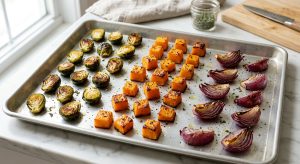
Roasted Vegetables: Toss broccoli florets, Brussels sprouts, or cubed sweet potatoes in your vinaigrette before roasting them at 400°F. The emulsified oil ensures that every single piece of vegetable is evenly coated in fat for perfect browning, while the mustard and vinegar caramelize in the high heat, creating a deep, savory, sweet-and-sour flavor profile that is utterly addictive.
The next time you are standing in the condiment aisle, staring at a wall of overpriced, artificially stabilized bottles of sadness, walk away. Head to the produce section, grab some fresh greens, and remember that you have the power of culinary science on your side. With a bowl, a whisk, some good olive oil, and a spoonful of magical Dijon mustard, you can create a masterpiece that will elevate your weeknight dinners from a stressful chore into an absolute triumph. Keep whisking, keep experimenting, and never settle for a soggy salad again.