Let’s be brutally honest for a second: there are few things in this world more deeply disappointing than spending your precious Tuesday evening crafting a beautiful, aromatic pasta sauce, only to sit down at the dinner table and find a watery, separated puddle of tomato-tinted sadness pooling at the bottom of your bowl. You take a bite, and the noodles are completely naked. The sauce has slipped right off, refusing to cling to the pasta, leaving you with a mouthful of dry carbs and a side of culinary regret.
If this sounds familiar, I need you to put down your whisk, take a deep breath, and listen to me very carefully. You do not need to go to culinary school in Florence to fix this. You do not need to buy a fifty-dollar jar of imported truffles. The reason your pasta sauce is a watery, slippery mess has nothing to do with your cooking skills and everything to do with a piece of plastic currently sitting in your kitchen cabinets.
I am talking about your sink colander.
As a home cook who has survived more weeknight kitchen disasters than I care to admit, I am here to tell you that the traditional method of lugging a heavy, boiling pot of water across the kitchen to dump it down the drain is not just dangerous and inefficient—it is actively destroying your meals. To achieve that glossy, velvety, restaurant-quality emulsion that clings to every single noodle, you need to fundamentally change your workflow. You need to understand the basic culinary science of starch. And most importantly, you need to embrace the absolute genius of the wire spider skimmer.
The Tragedy of the Sink Colander: Why We Need to Talk About Your Draining Habits
Let’s walk through the standard, outdated American workflow for making a pasta dinner. You boil a massive cauldron of water. You drop in your spaghetti. Ten minutes later, you grab your oven mitts, wrestle this incredibly heavy, sloshing pot of 212°F water over to your sink, and dump the entire contents into a plastic colander. A massive facial of steam blinds you, the pasta sticks together in a giant, sad clump, and all of your cooking liquid washes down the drain.
First of all, from a pure efficiency standpoint, this is a nightmare. Time is money, people. By dumping the pasta into the sink, you are allowing the noodles to rapidly cool down. As they cool, the starches on their surface turn into a sticky glue, causing the pasta to clump together into an unmanageable brick.
But my biggest grievance with this method goes far beyond workflow. We need to have a serious conversation about the materials you are using. I have zero patience for cheap, synthetic kitchen tools, and I am militant about banishing toxic kitchen gear from any home I step foot in. If you are using a plastic colander, you are actively degrading it every single time you expose it to boiling water.
Recent studies from the National Institute of Standards and Technology (NIST) have revealed that when everyday consumer plastics are exposed to hot water, they can release trillions of microscopic particles—both microplastics and nanoplastics—per liter. We are talking about microscopic fragments shedding directly into the food you are about to feed your family. If you have ever scrubbed your dishes and noticed how your plastic containers stain orange after holding hot leftovers, you have witnessed this material degradation firsthand. The plastic breaks down under thermal stress. Pouring boiling water over a plastic mesh basket is essentially seasoning your spaghetti with chemical polymers.
Even if you use a metal colander, the fundamental culinary crime remains the same: you are throwing away your pasta water. And in the culinary world, throwing away your pasta water is a fireable offense.
The Culinary Science of Starch Emulsion (And Why Your Sauce is Sad)
To fix your weeknight dinners, we have to talk about science. Don’t panic, there will be no pop quiz, but you need to understand what is happening inside that boiling pot.
When you drop dry pasta into hot water, it doesn’t just get soft. As the pasta cooks, it releases amylose and amylopectin—two types of complex starch molecules—directly into the surrounding liquid. This is why your pasta water turns cloudy and opaque. It is no longer just tap water; it is a highly active, starch-rich suspension.
Now, let’s look at your sauce. Whether you are making a rich Bolognese, a classic marinara with extra virgin olive oil, or a decadent Alfredo, your sauce contains fat. As we all learned in elementary school science class, oil and water vehemently hate each other. They naturally repel one another. When you are staring at your plate trying to figure out why your pasta sauce separates into a greasy oil slick and a watery perimeter, it is because those two elements have broken apart.
Starch is the ultimate culinary peacemaker. It acts as a natural emulsifying agent. When you introduce the starchy pasta water to the fats in your sauce and apply vigorous physical agitation, the starch molecules physically bind the fat and the water together. They force these opposing forces into a stable, creamy, velvety suspension.
This is the secret to restaurant-quality pasta. If you are constantly wondering why your pasta sauce slides off the noodles, leaving them naked and flavorless, it is because you dumped your binding agent down the sink. Without that starchy glue to marry the sauce to the carbohydrate, your dish will never come together.
The Magic of Mantecatura
In Italy, this scientific process of forcing an emulsion between fat, starch, and liquid is known as mantecatura. Derived from the Spanish word for butter or fat, mantecatura is the vigorous, off-the-heat tossing and stirring of pasta (or risotto) to create a luxurious, naturally thickened sauce without ever needing to rely on heavy cream. It relies on five essential components: fat, water, heat, starch, and intense physical agitation. When you master this, you can make a mind-blowing Cacio e Pepe using literally nothing but cheese, black pepper, and pasta water.
Enter the Spider Skimmer: The Hero Your Kitchen Deserves
So, if we agree that the sink colander is a toxic, inefficient workflow killer, and we agree that we desperately need to keep our pasta water, how do we get the noodles out of the pot?
You buy a spider skimmer.
Originally an essential tool in Asian cuisines for retrieving fried foods from screaming-hot oil or plucking delicate dumplings from boiling broths, the spider skimmer is a wide, shallow wire basket attached to a long handle. It is, without a doubt, the greatest pasta-handling tool ever invented.
Why not just use tongs? Because tongs are aggressive. They pinch, tear, and mangle delicate noodles, and they are completely useless if you are cooking short shapes like penne, rigatoni, or orecchiette. Why not a slotted spoon? Because a slotted spoon is entirely too small. You will be standing over the stove scooping tiny portions for five minutes, during which time the pasta left in the pot will turn to mush.
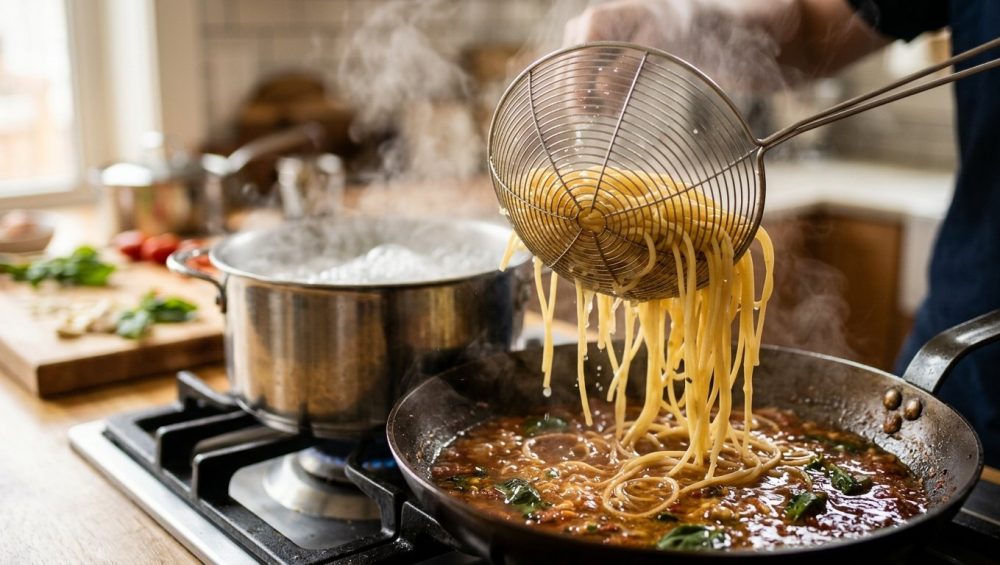
A wide-brimmed stainless steel spider skimmer allows you to gently scoop massive amounts of pasta at once. Most importantly, it allows you to transfer the noodles directly from the boiling pot into your adjacent skillet of simmering sauce.
Here is the brilliant part: as you scoop the pasta with the wire mesh, it naturally carries the absolute perfect amount of starchy cooking water clinging to the noodles and the basket. You don’t have to measure it. You don’t have to awkwardly dip a coffee mug into a boiling pot to reserve water. The spider skimmer acts as the perfect transport vehicle, bringing the starch directly to the fat, setting you up for a flawless emulsion.
The “Less is More” Water Revelation
Before we get into the step-by-step technique, we need to debunk one of the most pervasive, stubbornly held myths in the history of home cooking: the idea that you must boil pasta in a massive, rolling ocean of water.
Somewhere along the line, home economics textbooks started preaching the “gallon of water per pound of pasta” rule. Food scientists and culinary experts have rigorously tested this, and it is complete nonsense. This rule was popularized in the mid-20th century because older gas ranges and cheap aluminum pots had terrible heat distribution, and a massive volume of water was required to prevent the temperature from dropping too drastically when the pasta was added.
With modern stovetops and decent cookware, you do not need a cauldron. In fact, cooking your pasta in less water is significantly better for your sauce.
Why? Because the amount of starch a pound of pasta releases is a fixed variable. If you dilute that fixed amount of starch into a massive gallon of water, your pasta water will be weak and thin. However, if you boil that same pound of pasta in just enough water to comfortably submerge it, you exponentially concentrate the starch.
The result is a thick, cloudy, hyper-concentrated liquid gold that acts as a powerhouse binding agent for your sauce. As a bonus, a smaller pot of water comes to a boil infinitely faster, saving you precious time on a frantic weeknight. Just be mindful of your heat management; highly concentrated starchy water creates a lot of foam, which is exactly why your pasta water always boils over if you leave the lid on or walk away from the stove.
The Step-by-Step Masterclass: How to Execute the Perfect Pan Finish
Alright, let’s put the science into practice. This is the exact, no-nonsense workflow you will use from now on to ensure your weeknight pasta rivals your favorite upscale Italian bistro.
Step 1: The Concentrated Boil
Fill a medium pot with just enough water to cover your pasta. Bring it to a boil and salt it. A quick warning here: because we are using less water, the salt concentration will be higher, and because we are going to reduce this water into our sauce, you do not want it to taste “as salty as the sea.” Salt it generously, but keep it balanced.
Step 2: The Strategic Undercook
Drop your pasta. Now, look at the cooking time on the box. Subtract three minutes from whatever number is printed there. If it says 10 minutes, you are setting a timer for 7 minutes. Overcooking noodles in boiling water is one of the most tragic beginner cooking mistakes that will instantly ruin your dish. The pasta is going to finish cooking in the sauce, absorbing flavor rather than just absorbing plain water.
Step 3: The Direct Transfer
While the pasta is boiling, have your sauce simmering in a wide skillet on the burner right next to it. When your timer goes off, take your spider skimmer, scoop the undercooked pasta, and drop it directly into the bubbling sauce. Do not drain the pot! Leave that starchy water right where it is.
Step 4: The Agitation (Mantecatura)
Turn the heat under your sauce skillet up to medium-high. You want the sauce bubbling vigorously. Now, start tossing. If you don’t know how to flip the pan like a professional line cook, just use your spider skimmer or a wooden spoon to stir the pasta aggressively. You need physical friction. The noodles rubbing against each other and the pan will release even more starch.
Step 5: The Starch Splash and Fat Finish
As the pasta finishes cooking in the skillet, the sauce will start to reduce and tighten up. Use a ladle to scoop a bit more of your highly concentrated, reserved pasta water from the boiling pot and splash it into the skillet. Keep stirring. In the final thirty seconds, pull the skillet completely off the heat. Add your finishing fat—a cold knob of butter, a drizzle of good olive oil, or a handful of freshly grated Parmigiano-Reggiano. Toss vigorously one last time.
Watch what happens. The watery tomato liquid and the fat will suddenly bind together into an incredibly glossy, thick, velvety coating that hugs every single curve of the pasta. You have successfully achieved an emulsion.
Debunking the Worst Pasta Myths That Are Ruining Your Dinner
Because I am your biggest cheerleader, I also have to be your toughest critic. If you are doing any of the following things in your kitchen, you need to stop immediately.
Myth 1: You need to rinse your pasta after boiling.
Unless you are making a cold macaroni salad for a summer barbecue, running your cooked pasta under tap water is literal culinary treason. You are actively washing away the beautiful, sticky surface starches that we just spent all this time trying to utilize. Never rinse hot pasta.
Myth 2: You should add olive oil to the boiling water to prevent sticking.
I will yell this from the rooftops until I lose my voice: pouring oil in your pasta water is a massive mistake. Yes, it stops the noodles from sticking to each other, but it does so by coating them in a slick, hydrophobic barrier. When you transfer those oil-slicked noodles to your sauce, the sauce will slide right off. If you want to prevent sticking in the pot, just stir the pasta a few times during the first two minutes of boiling.
Myth 3: The “Naked Noodle” Plating Method.
Serving a pile of plain, white, sticky pasta on a plate and ladling a scoop of sauce on top is a crime against carbohydrates. Pasta is not a bed for your sauce; they are meant to be a unified dish. The pasta must marry the sauce in the pan, absorbing the flavors and releasing its starches to create the final texture.
Beyond Pasta: Why the Spider Skimmer is a Weeknight Workhorse
Once you buy a stainless steel spider skimmer, you will realize it is one of the most versatile tools in your kitchen arsenal. It buys you time and saves you from doing extra dishes, which is the ultimate weeknight victory.
The One-Pot Veggie Blanch:
Making pasta primavera? Drop your broccoli florets and green beans into the boiling water first. Two minutes later, scoop them out with the spider skimmer and set them aside. Now, use that exact same boiling water to cook your pasta. You just saved yourself from washing a second pot.
Safe Pan-Searing:
If you have ever been frustrated by why your chicken or vegetables sticks to your stainless steel pans, it is usually because the surface of the food was too wet when it hit the hot oil. The wide surface area of a wire spider skimmer allows you to thoroughly drain blanched potatoes, boiled wings, or poached proteins before they hit a searing hot skillet, ensuring a perfect crust.
Fearless Deep Frying:
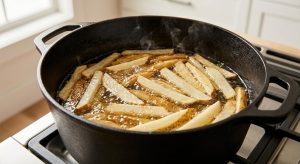
If you ever dabble in shallow frying or deep frying, a metal spider is mandatory. It allows you to safely lower and retrieve foods from 350°F oil without splashing, and without the terrifying risk of a plastic tool melting into your hot oil.
The Final Bite
At the end of the day, mastering the art of the kitchen isn’t about memorizing pretentious French culinary terms or buying a stove that costs more than a used car. It is about understanding the basic science of your ingredients and working smarter, not harder.
You have the power to make mind-blowing, restaurant-tier food in your own home tonight. All it takes is a little bit of starch, a little bit of friction, and a refusal to ever dump your liquid gold down the drain again. Throw away that melting plastic colander, invest fifteen dollars in a wire spider skimmer, and watch how effortlessly your cooking transforms. Now go make some pasta, and for the love of all things holy, please don’t overcook it.