Listen up, weekend warriors. We need to have a serious, brutally honest conversation about the utensil crock sitting on your kitchen counter right now. Specifically, we need to talk about that traditional, perfectly round wooden spoon you have been holding onto for the last decade. You know the exact one I am talking about. It is stained halfway up the handle from a tragic, unattended encounter with a bubbling pot of marinara sauce in 2019. It looks delightfully rustic, like something a cartoon grandmother would use to chase a mischievous cat out of a farmhouse kitchen. It carries a sense of deep culinary nostalgia.
I hate to be the bearer of bad news, but that round wooden spoon is actively holding you back. It is the sworn enemy of flavor. It is a functionally obsolete relic that is quietly sabotaging your pan sauces, your weekend stews, and your rapid-fire weeknight stir-fries.
If you want to stop leaving the absolute best, most complex parts of your meal glued to the bottom of your skillet, you need to upgrade to a flat-edged wooden spoon. You might see it labeled as a wooden spatula, a flat turner, or a straight-edged scraper. Whatever marketing term the manufacturer slapped on the label, this single, inexpensive tool swap is going to completely revolutionize how you extract flavor in a home kitchen. You do not need a culinary degree from Le Cordon Bleu, and you do not need to learn pretentious chef-speak. You just need a basic understanding of kitchen physics and a tool that actually makes contact with your cookware. Let’s dive into the glorious, deeply savory science of why this simple upgrade changes absolutely everything.
The Maillard Reaction: Unlocking the Holy Grail of Flavor
To truly understand why a round spoon is a culinary tragedy, we first need to take a brief detour into the science of browning. When you drop a beautifully dry-brined steak into a ripping hot skillet, or when you aggressively pan-fry a batch of wild mushrooms, you are triggering a miraculous chemical process known as the Maillard reaction.
Named after the French chemist Louis Camille Maillard, who first described the phenomenon in 1912, this non-enzymatic browning is a complex chemical dance between amino acids (the building blocks of proteins) and reducing sugars. When food hits high heat—typically accelerating rapidly between 280°F and 330°F (140°C to 165°C)—these compounds rapidly break down and recombine. This reaction is what transforms raw, boring proteins into a deeply savory, golden-brown masterpiece. It generates thousands of brand-new flavor compounds that give roasted coffee beans, seared meats, and toasted bread their irresistible, mouth-watering aromas. It is important to note that this is distinctly different from caramelization, which involves the breakdown of pure sugars at slightly higher temperatures.
But here is the catch that ruins so many home-cooked meals: not all of those magnificent flavor compounds stay attached to your food. As the moisture cooks out of your protein and the surface temperature spikes, a significant portion of those caramelized sugars and proteins fuse directly to the hot metal bottom of your pan. In the professional culinary world, this crusty, dark, caramelized layer of stuck-on goodness is called fond. The term comes from the French word for “base” or “foundation,” and historically, classical French chefs referred to these specific pan deposits as sucs.
Fond is the holy grail of everyday cooking. It is a concentrated flavor bomb. It is the absolute difference between a watery, sad weeknight dinner and a rich, restaurant-quality masterpiece. If you have ever panicked because your meat sticks to stainless steel, take a deep breath. You are not ruining dinner; you are actually creating the perfect foundation for a rich, complex pan sauce. The real problem only arises when you attempt to get that glorious fond off the pan and back into your food using the wrong equipment.
The Anatomy of a Kitchen Failure: Why Round Spoons Suck at Deglazing
Let’s do a quick, painless geometry lesson. Your skillet is a flat plane. A traditional wooden spoon is a curved sphere. When you press a curved, convex edge against a perfectly flat surface, you get exactly one tiny, microscopic point of physical contact.
Imagine trying to shovel a foot of heavy snow off your driveway using a baseball bat. That is exactly what you are doing when you use a round spoon to scrape up fond. You are aggressively pushing a tiny, useless dot of wood across a vast sea of caramelized flavor. You might clear a few millimeter-wide streaks, but you are leaving 95% of the good stuff cemented to the metal.
When you deglaze a pan—meaning you pour in a cold liquid like wine, broth, or even water to rapidly cool the metal and dissolve those browned bits—you have a very short, critical window of time. The liquid immediately begins to boil and evaporate. You need to scrape that fond up before the liquid reduces into nothingness. If you are furiously scrubbing back and forth with a round spoon, you are wasting precious time and energy. Time is money, my friends, especially on a Tuesday night when you just want to eat your chicken and go to sleep.
Worse, when you fail to scrape up the fond efficiently, it stays stuck to the pan through the rest of the cooking process. Eventually, it burns, turning from a savory delight into an acrid, bitter disaster. Instead of turning burnt bits into sauce, you are just making your entire dish taste like a charcoal briquette, while simultaneously creating a nightmare dishwashing scenario for yourself later that evening.
Enter the Flat-Edged Wooden Spoon: Your Kitchen’s Unsung Hero
This brings us to the ultimate, non-negotiable upgrade: the flat-edged wooden spoon. It is exactly what it sounds like—a wooden utensil with a straight, blunt edge at the top. Some variations feature a slight asymmetrical angle to help you reach perfectly into the curved corners of your sauté pans, while others are perfectly straight.
When you press a flat edge against the bottom of a hot skillet, you instantly create a massive surface area of contact. Instead of a single, pathetic dot of pressure, you have two or three solid inches of scraping power. With one firm, deliberate swipe of a flat wooden spatula, you can lift an entire runway of caramelized fond straight off the metal.
It is incredibly satisfying. It is ruthlessly efficient. It guarantees that every single drop of flavor you worked so hard to build via the Maillard reaction ends up in your sauce, not washed down the drain.
Furthermore, a flat wooden edge is incredibly safe for your expensive cookware. Unlike aggressive metal spatulas that will permanently scratch the enamel of your pricey cast-iron Dutch ovens (I am looking at you, Le Creuset and Staub owners) or gouge the delicate coatings of your nonstick skillets, wood is inherently gentle. You can scrape with the furious intensity of a thousand Gordon Ramsays, and you will not damage the cooking surface. You won’t find yourself ruining your nonstick pans with a wooden tool. In fact, strictly avoiding metal utensils is the absolute best way to prevent your coated pans from losing their slip prematurely.
The Toxic Truth: Why You Can’t Just Use Plastic or Silicone
Now, I can already hear some of you arguing with me through the screen: “But Sassy Sous-Chef, what about my trusty black nylon spatula? What about my bright red silicone scraper? Won’t those work just as well?”
Absolutely not. Do not even get me started on cheap synthetic utensils. If you have been reading my articles for any length of time, you know I have a strict, uncompromising rule on toxic kitchen gear. I am fully committed to banishing toxic kitchen gear from your life forever, and plastic utensils are public enemy number one.
Let’s talk about plastic and nylon first. When you sear meat and deglaze a pan, that metal is incredibly hot—often well over 350°F. Cheap plastic and nylon utensils are notorious for melting, chipping, and degrading under high heat. Recent studies have revealed horrifying truths about these tools. Research from the University of Rochester highlighted that black plastic spatulas and utensils often contain highly toxic chemicals, including brominated flame retardants and heavy metals, because they are frequently manufactured from recycled electronic waste. Furthermore, a 2018 study from the University of Birmingham found that 34% of the plastic kitchen utensils they analyzed contained measurable concentrations of these dangerous retardants.
Beyond the chemical additives, the simple friction of scraping a hot, textured pan with a synthetic tool causes it to rapidly shed microplastics directly into your dinner. A recent study highlighted that the average home cook is unwittingly seasoning their food with thousands of microscopic plastic particles every year just by using degrading nylon tools. You do not want a side of endocrine-disrupting chemicals with your pan-seared pork chops. And just like the annoying way your plastic containers turn orange after storing leftover spaghetti, cheap synthetic utensils will permanently stain, warp, and degrade over time.
Silicone is generally much safer and far more heat-resistant than nylon, but it suffers from two major functional flaws for this specific task. First, it is entirely too flexible. You need rigid, unyielding leverage to scrape up stubborn, baked-on fond. A floppy silicone edge will just bend uselessly against the crust, gliding over the flavor rather than lifting it. Second, silicone is notorious for aggressively retaining volatile odors. If your spatula smells like garlic and onions from Tuesday’s stir-fry, you certainly do not want to use it to fold a delicate vanilla cake batter on Wednesday.
Wood is the only material that offers the perfect culinary trifecta: it is rigid enough to scrape with force, gentle enough not to scratch your pans, and 100% natural and non-toxic.
Material Matters: Choosing the Right Wood for the Job
Of course, not all wood is created equal. If you head to a big-box grocery store and buy the cheapest wooden spoon available in the clearance aisle, you are likely buying a low-quality softwood like pine, or a poorly constructed bamboo composite. Softwoods are highly porous, meaning they eagerly absorb moisture, harbor bacteria, and splinter easily under pressure. Bamboo, while highly sustainable, is technically a grass, not a wood. Bamboo utensils are often held together with industrial glues that can break down and leach into hot liquids over time.
You need a dense, durable hardwood. In the woodworking world, the hardness and durability of a wood species are measured by the Janka hardness scale. The higher the number (measured in pounds-force, or lbf), the more resistant the wood is to denting, scratching, and general wear and tear.
Here are the absolute best materials to look for when upgrading your kitchen arsenal:
Hard Maple (Janka Rating: ~1,450 lbf)
Hard maple is the undisputed king of the kitchen. It is incredibly durable and features a very tight, uniform grain structure. This tight grain prevents the wood from absorbing liquids and food juices, making it exceptionally hygienic and resistant to bacterial growth. It is lightweight, smooth, and will last for decades if treated properly.
European Beechwood (Janka Rating: ~1,300 lbf)
Beechwood is a fantastic, budget-friendly option that performs beautifully. It is highly stable, meaning it resists warping and expanding even when exposed to rapid temperature changes in a hot pan. It has a smooth texture and an even grain that makes it a joy to hold.
Walnut (Janka Rating: ~1,010 lbf)
If you want a tool that is as beautiful as it is functional, walnut is your go-to hardwood. It is slightly softer and lighter than maple, but still highly durable for daily cooking. More importantly, walnut contains natural compounds called juglones, which possess inherent antimicrobial properties that actively inhibit the growth of harmful microorganisms on the utensil’s surface.
Cherry (Janka Rating: ~950 lbf)
Cherry wood is slightly softer on the Janka scale, but it is beloved by woodworkers and chefs alike. It has a gorgeous reddish-brown hue that actually deepens and grows richer as it ages and is exposed to light. It is a fantastic middle-ground option that combines excellent workability with long-term durability.
Whatever you do, invest in a single piece of solid hardwood. If you have ever frustratingly wondered wooden spoons keep cracking and splitting down the middle, it is almost always because you are buying cheap, porous softwoods and improperly subjecting them to extreme moisture.
The Step-by-Step Masterclass to Deglazing Like a Pro
Alright, you have banished the melting plastic, thrown out the useless round spoon, and armed yourself with a beautiful, flat-edged maple spatula. Let’s put it to work and make a pan sauce that will make you weep with joy. Here is exactly how you execute the perfect deglaze, step by agonizing step:
1. The Hard Sear
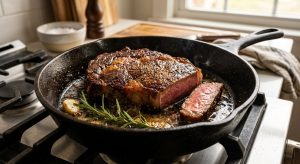
Get your stainless steel, carbon steel, or cast-iron skillet ripping hot. Add your high-heat cooking fat, and sear your protein (whether that is bone-in chicken thighs, a thick ribeye steak, or thick-cut pork chops). Crucially, do not crowd the pan. If you pack too much food into the skillet, the temperature will plummet, the meat will release its water, and your food will steam rather than sear. The Maillard reaction cannot occur in the presence of boiling water (which caps at 212°F). Let the heat do its job. When the meat has a perfect, crusty exterior, remove it to a plate and set it aside to rest.
2. The Fond Assessment
Look closely at the bottom of your hot pan. You should see a beautiful, golden-brown to dark-mahogany crust—the fond. If the residue is pitch black, smoking aggressively, and smells like acrid ash, you burned it. There is no saving burnt fond; it will make your sauce taste like a bitter mistake. Wipe it out and start over. But if it smells deeply savory, roasted, and appetizing, you are in business. Pour off any excess rendered fat, leaving just a thin, glossy tablespoon behind to cook your aromatics.
3. The Aromatic Sizzle
Toss in your finely minced shallots, garlic, or fresh thyme. Let them sizzle in the residual fat for about thirty seconds to a minute. This step builds incredible depth of flavor.
4. The Deglaze and Scrape
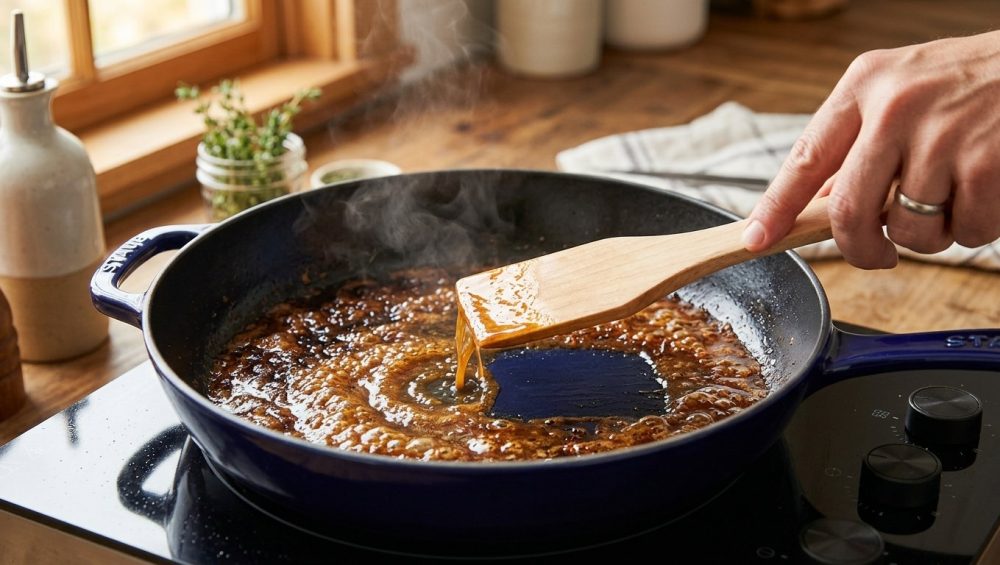
Now, pour in your cold deglazing liquid. A dry white wine (like Sauvignon Blanc), a robust red wine, chicken stock, or even a splash of apple cider vinegar works wonders. The moment the cold liquid hits the hot metal, it will violently bubble, hiss, and steam. This rapid, aggressive temperature change is what mechanically loosens the fond from the pan.
Immediately take your flat-edged wooden spoon and bear down on the bottom of the pan. Push that flat edge firmly across the metal. You will feel the crust instantly lifting away, dissolving seamlessly into the bubbling liquid. Because you are using a flat edge, you will clear the entire surface of a 12-inch skillet in three or four highly efficient swipes.
5. The Reduction
Now, you must be patient and reduce the liquid. Let it simmer aggressively until the water evaporates, concentrating the flavors and thickening the texture. You are looking for nappe consistency—meaning the sauce is thick enough to coat the back of your spoon without immediately running off. If your pan sauces are watery and disappointing, it is almost always because you lacked the patience to let the liquid reduce by at least half its original volume.
6. The Mounting (Monter au Beurre)
Turn off the heat completely. Toss in a tablespoon of cold, unsalted butter (the French culinary term for this is monter au beurre, or mounting with butter). Swirl the pan continuously off the heat until the butter melts and emulsifies into the sauce. This final step gives the sauce a glossy, velvety finish and rounds out any sharp acidic notes from the wine. Pour it generously over your resting meat, and prepare to be amazed by what you just created in under ten minutes.
Beyond Deglazing: The Unrivaled Versatility of the Flat Edge
While the flat-edged wooden spoon is the undisputed, heavyweight champion of pan sauces, its immense utility does not stop there. Once you introduce this tool to your daily cooking routine, you will find yourself reaching for it constantly for almost every task.
Breaking Up Ground Meat: Trying to brown ground beef or turkey for taco night with a round spoon is an exercise in utter futility. You end up just mashing the meat into weird, uneven clumps. The flat edge allows you to chop, smash, and separate the meat directly in the pan, breaking it into perfectly even crumbles in seconds.
Mastering the Stir-Fry: A flat edge acts like a miniature, highly precise shovel. It allows you to easily scoop completely under vegetables and noodles, tossing them efficiently in a hot wok or skillet without crushing them.
Conquering Risotto: Making a proper risotto requires near-constant stirring to release the starches from the Arborio rice. A flat-edged spoon sweeps flush against the bottom of the pot, ensuring absolutely no grains of rice stick and burn to the bottom, while treating the grains gently enough not to turn them into mush.
Folding Heavy Batters: While a flexible silicone spatula is best for scraping the last bit of wet batter out of a mixing bowl, a rigid, flat wooden spoon is excellent for folding heavy, dense doughs (like chocolate chip cookie dough or thick bread dough) that would snap a flimsy plastic tool right in half.
Cleaning on the Fly: A flat wooden edge is basically a heavy-duty squeegee for your cookware. It makes cleaning up so much easier because you are essentially scrubbing the pan while you cook. By the time dinner is plated, your skillet is practically wiped clean.
Proper Maintenance for Your Wooden Gear
If you want your new hardwood spatula to last a lifetime—and it absolutely can—you need to treat it with a modicum of respect. Wood is a natural, porous, living material. If you subject it to extreme, hostile environments, it will warp, crack, and harbor nasty bacteria.
Never Use the Dishwasher: This is the golden rule. The intense, prolonged heat, the harsh, abrasive chemical detergents, and the extended soaking cycles will violently strip the natural oils from the wood. This causes the wood fibers to dry out, swell, and eventually split down the middle. Hand wash your wooden utensils with warm water and mild dish soap immediately after use.
Dry Completely: Do not let them sit in a puddle of dirty water at the bottom of the sink, and do not leave them wet on the counter. Towel dry them immediately, or stand them upright in a well-ventilated utensil crock so air can circulate completely around the entire tool.
Hydrate and Oil Regularly: Just like your own skin in the dead of winter, wood gets dry. Once a month, rub your wooden utensils down with food-grade mineral oil or a specialized beeswax wood conditioner. This simple step prevents external moisture and food stains from penetrating the grain, and it keeps the wood looking vibrant and beautiful. Never use olive oil, vegetable oil, or canola oil to condition your wood, as these culinary fats will eventually go rancid at room temperature and ruin the tool with a terrible odor.
If you take care of your tools, they will take care of you. It is the exact same philosophy I apply to everything in the kitchen. You wouldn’t throw your expensive German chef’s knife in the dishwasher if you wanted to stop dulling your knives, and you shouldn’t abuse your beautiful wooden spoons either. If the wood ever gets a little fuzzy or rough from prolonged use, simply take a piece of 220-grit sandpaper, give it a quick rub down until it is smooth again, apply a fresh coat of mineral oil, and it will look brand new.
The Final Verdict
Cooking at home does not have to be overly complicated, and it certainly does not require a kitchen stuffed full of expensive, single-use gadgets that plug into the wall. The absolute best food comes from mastering basic, foundational techniques and using the right, high-quality tools for the job.
The round wooden spoon had a good run. It looked cute in rustic lifestyle magazines. But in the real world, where we want maximum flavor with minimum effort, it is entirely obsolete.
Upgrading to a flat-edged wooden spoon is a tiny, ten-dollar investment that yields massive, immediate culinary returns. It protects you and your family from the toxic nightmare of melting plastics. It saves you from the physical labor of scrubbing cemented fond off your pans at 9:00 PM. Most importantly, it ensures that every single ounce of that complex, savory Maillard reaction ends up exactly where it belongs: on your plate, elevating your food from ordinary to extraordinary.
So, do yourself a massive favor this week. Ditch the round spoon, grab a flat-edged hardwood spatula, and stop leaving your flavor behind. Your tastebuds—and your dish sponge—will thank you.