Listen up. You do not need a culinary degree, a trust fund, or a kitchen that looks like a spaceship to make mind-blowing food. What you do need is a basic understanding of heat, a refusal to buy toxic garbage disguised as cookware, and the common sense to stop crowding your sauté pan.
If you are currently surviving on a rotation of sad, unseasoned chicken breasts and overpriced takeout, consider this your culinary intervention. I am here to share the practical, hard-earned kitchen discoveries that separate the weekend hobbyist from the confident home cook. We are going to strip away the pretentious chef-speak, rely on actual science, and focus on what works. Because frankly, your time is money, and nobody has the patience to spend three hours on a Tuesday night making a weekday dinner that ends up tasting like salted cardboard.
Grab your notepad, pour yourself a glass of wine, and let’s fix your cooking.
The Weekday Survival Guide: Maximum Flavor, Minimum Tears
Let’s look at the cold, hard facts. A January 2026 survey by Merchant Gourmet revealed that 60% of Gen Z adults feel they have less time than ever to cook, with nearly half stating they have under 30 minutes on a weeknight to throw a meal together. Over the past decade, the average time spent cooking during the week has plummeted by 20%. Yet, despite our collective exhaustion, a 2025 industry report shows that 81% of Americans still cook more than half of their meals at home, averaging between 41 and 57 minutes in the kitchen daily.
The math is simple: you are cooking, but you are stressed about it. The secret to weekday survival isn’t a magical 15-minute recipe—it’s ruthless efficiency and smart prep.
The Magic of Prep-Ahead Aromatics
Every great dish in Western cooking starts with a holy trinity of aromatics. The French have mirepoix (onions, carrots, celery). The Italians have soffritto. The Cajuns have their own trinity (onions, celery, bell peppers). If you are coming home at 6:00 PM and spending 15 minutes crying over an onion, you have already lost the battle.
Spend exactly 20 minutes on Sunday afternoon chopping your aromatics. Dice your onions, carrots, and celery. Peel your garlic. Store them in airtight glass containers in the fridge. When Tuesday rolls around, you grab a handful of your pre-chopped aromatics, toss them into a hot pan with olive oil, and you instantly have the foundation for a soup, a stew, a braise, or a killer pan sauce. You have just bypassed the most tedious part of cooking. It’s not cheating; it’s working like a professional prep cook in your own home.
Sheet Pan Dinners That Don’t Suck
The internet has sold you a lie about sheet pan dinners. The promise is alluring: toss raw meat and vegetables onto a single pan, bake it, and enjoy a flawless meal with zero cleanup. The reality? You usually end up with a swamp of steamed, gray chicken and mushy broccoli.
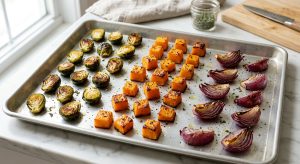
Here is how you actually execute a sheet pan dinner: First, preheat the pan. Put your heavy-duty baking sheet into the oven while the oven preheats. When your food hits the hot metal, it immediately begins to sear, rather than slowly sweating out its moisture. Second, cut your vegetables according to their density. Root vegetables like potatoes and carrots need a 20-minute head start before you add delicate vegetables like zucchini or asparagus. Finally, oil and season your ingredients in a bowl before putting them on the pan. Drizzling oil haphazardly over a crowded pan is a rookie mistake that guarantees uneven cooking.
The Freezer is Your Best Friend (Not a Graveyard)
Your freezer is not a black hole where good intentions go to die in a shroud of freezer burn. It is a tactical time-saving asset. The trick is how you freeze. Stop throwing bulky, round plastic containers into the freezer; they take up too much space and take three business days to thaw.
Instead, freeze liquids—like homemade chicken stock, leftover chili, or pasta sauce—flat. Pour the cooled liquid into high-quality, reusable silicone freezer bags, seal them, and lay them completely flat on a baking sheet in the freezer. Once frozen solid, you can stack them vertically like books on a shelf. They thaw in a fraction of the time, save immense amounts of space, and ensure you are never more than 15 minutes away from a homemade meal. Label everything with blue painter’s tape and a sharpie. You think you will remember what that red brick of sauce is three months from now. You won’t.
Demystifying Heat: Why Your Food Tastes Sad
If your food looks pale and tastes like regret, you do not have a seasoning problem; you have a heat problem. Cooking is just applied thermodynamics, and mastering heat is the single biggest leap you will make as a home cook.
The Maillard Reaction for Mere Mortals
In 1912, a French chemist named Louis-Camille Maillard discovered the holy grail of culinary science: the Maillard reaction. This is a complex series of chemical reactions between amino acids and reducing sugars that occurs when food is subjected to heat, resulting in hundreds of new flavor and aroma compounds,. It is the reason a seared steak tastes infinitely better than a boiled one, the reason bread crust is delicious, and the reason roasted coffee smells like heaven,.
Here is what you need to know: The Maillard reaction kicks into high gear at temperatures around 285°F (140°C) and above,. Do you know what temperature water boils at? 212°F (100°C). This means that if there is surface moisture on your food, the temperature of that food cannot exceed 212°F until all the water has evaporated,.
If you take a wet piece of chicken out of its packaging and throw it directly into a hot pan, the heat energy goes into turning that surface water into steam, not into browning the meat. You are literally steaming your chicken in its own juices. Pat your proteins bone-dry with a paper towel before they hit the heat. It is a non-negotiable rule.
Stop Crowding the Pan (Seriously, Stop It)
I see you trying to cook four massive pork chops in a single 10-inch skillet. Stop it. When you crowd a pan, you trap the steam escaping from the food. Furthermore, you introduce too much cold mass to the hot pan all at once, causing the temperature of the metal to plummet below that crucial 285°F threshold,.
Once the temperature drops, the meat releases its juices, the liquid pools in the pan, and the Maillard reaction stops dead in its tracks. You are now boiling your meat. If you need to cook a large batch of food, do it in shifts. Yes, it takes an extra ten minutes. But those ten minutes are the difference between a golden, crusty, restaurant-quality sear and a gray, rubbery disaster.
The “No-Go” Zone: Purging Toxic Kitchenware
We need to have a serious talk about the equipment you are using. I have zero patience for the culinary industry pushing cheap, disposable, toxic garbage onto the home cook. If you are cooking your family’s dinners on a scratched, peeling, $15 non-stick pan you bought at a big-box store five years ago, you need to throw it in the trash today.
The Death of Cheap Non-Stick (And Good Riddance)
Cheap non-stick pans are coated with PTFE (Teflon), which belongs to a class of synthetic chemicals known as PFAS (per- and polyfluoroalkyl substances). These are often referred to as “forever chemicals” because they do not break down in the environment—or in your body. When you heat a cheap non-stick pan past 500°F (which happens incredibly fast if the pan is empty), the coating begins to degrade, releasing toxic fumes that can literally kill pet birds and cause “Teflon flu” in humans.
If you think I’m being dramatic, look at the sweeping global regulatory crackdowns happening right now. In February 2025, France passed Law 2025-188, which banned PFAS in various consumer goods like cosmetics and textiles starting January 1, 2026,. While the cookware industry aggressively lobbied to get a temporary carve-out in France, the regulatory hammer is still falling. The European Union’s Packaging and Packaging Waste Regulation (PPWR) dictates that by August 12, 2026, food contact packaging containing restricted levels of PFAS will be banned from the EU market,. Denmark is implementing bans on PFAS in consumer clothing and footwear by July 2026. Stateside, the EPA’s TSCA reporting rule mandates that manufacturers must report PFAS usage starting in April 2026.
The era of toxic forever chemicals in our kitchens is ending. Do not wait for the law to catch up; protect your household now. You do not need cheap non-stick. You need the big three: Carbon Steel, Stainless Steel, and Cast Iron.
Carbon Steel: The Unsung Hero of the Home Kitchen
If you walk into a high-end restaurant kitchen, you will not see flimsy non-stick pans. You will see stacks of carbon steel. Carbon steel is the lighter, smoother, more agile cousin of cast iron. It heats up incredibly fast, responds instantly to temperature changes, and, most importantly, it develops a natural, non-toxic, non-stick patina through a process called seasoning (baking thin layers of polymerized oil onto the metal).
Yes, carbon steel requires a tiny bit of maintenance. You cannot put it in the dishwasher, and you must dry it immediately after washing to prevent rust. But in exchange for a minute of care, you get a pan that will outlive you, can sear a steak beautifully, and can slide a fried egg around like an ice skater.
Stainless Steel and Cast Iron: The Indestructible Duo
For everything acidic—like a slow-simmered tomato sauce or a wine-based pan reduction—you need stainless steel. Acid strips the seasoning off carbon steel and cast iron, but stainless steel is completely non-reactive. It is practically indestructible. To prevent food from sticking to stainless steel, you must master temperature control. Wait until the pan is hot enough that a drop of water beads up and dances across the surface like mercury (the Leidenfrost effect) before adding your oil and your protein.
Cast iron, on the other hand, is your heavy artillery. It takes a long time to heat up, but once it gets hot, it stays hot. Its massive thermal retention makes it the ultimate tool for searing thick cuts of meat, shallow-frying chicken, or baking a crusty skillet cornbread. Stop being intimidated by cast iron. Wash it with modern dish soap (it does not contain lye anymore, so it won’t strip your seasoning), dry it on the stove, wipe it with a drop of oil, and get on with your life.
Flavor Bombs: The Secret Arsenal of the Home Cook
We are living in a golden age of culinary accessibility. According to the December 2025 “Plate of the Nations” report by HelloFresh, which analyzed nearly a billion meals across 18 countries, dinner is no longer a local affair. In 83% of the markets studied, the most-cooked dish of the year originated from another country. Home cooks are aggressively adopting fusion and global flavors. To keep up, you need to understand the building blocks of flavor.
Acid: The Missing Link in Your Cooking
If you taste a soup, a stew, or a sauce and think, “This needs something,” your first instinct is probably to reach for the salt. Put the salt down. Nine times out of ten, what your dish actually lacks is acidity.
Acid is the highlighter of the culinary world. It cuts through rich, fatty, heavy dishes and wakes up the palate. A squeeze of fresh lemon juice over a rich chicken braise, a dash of apple cider vinegar in a pot of chili, or a splash of white wine in a mushroom sauté will elevate the dish from heavy and muddy to bright and complex. Keep a variety of acids on hand: lemons, limes, red wine vinegar, rice vinegar, and balsamic. Learn to balance fat and salt with acid, and you will cook like a professional.
Umami on a Budget (MSG is Fine, Relax)
Umami is the fifth basic taste—a deep, savory, meaty richness derived from glutamates. If you want your food to taste deeply satisfying, you need to layer umami.
First, let’s address the elephant in the room: MSG (Monosodium Glutamate) is perfectly safe. The stigma against it was born out of xenophobic pseudo-science decades ago. It is literally just sodium and glutamate (an amino acid found naturally in tomatoes and cheese). A tiny pinch of MSG will make your savory dishes explode with flavor.
If you prefer natural umami bombs, keep your pantry stocked with anchovy paste, high-quality soy sauce, fish sauce, and tomato paste. A squirt of anchovy paste melted into the base of a beef stew will not make it taste like fish; it will make it taste intensely, unforgettably beefy. Save your Parmesan cheese rinds and toss them into simmering soups or pasta sauces to extract every last drop of savory goodness.
Fresh Herbs vs. Dried: Knowing When to Hold ‘Em
Stop using dried herbs as a 1:1 replacement for fresh herbs. They behave completely differently. Dried herbs are concentrated and take time to release their flavor. They should be added early in the cooking process—bloomed in hot oil alongside your onions and garlic—so their tough cell walls can break down and infuse the dish. Hearty, woody herbs like oregano, rosemary, and thyme dry beautifully and belong in your spice rack.
Fresh, delicate herbs like parsley, cilantro, basil, and dill lose their vibrant flavor if cooked too long. They are finishing herbs. Chop them right before serving and fold them into the dish off the heat to preserve their bright, volatile essential oils.
Essential Gear That Won’t Poison You (Or Break the Bank)
The kitchen gadget industry is a multi-billion-dollar scam designed to sell you single-use plastic junk. You do not need an avocado slicer, a garlic press, or a strawberry huller. You need a few high-quality, durable tools.
The Only Three Knives You Actually Need
Do not buy a 15-piece knife block. You are paying for 12 knives you will never use, usually made of cheap, stamped steel that won’t hold an edge. You only need three knives:
- An 8-inch Chef’s Knife: This is the workhorse. Spend your money here. Look for high-carbon stainless steel that feels balanced in your hand. You will use this for 90% of your prep work.
- A Paring Knife: A small, 3-to-4-inch blade for delicate, off-the-board work, like peeling apples, mincing a single clove of garlic, or hulling strawberries.
- A Serrated Bread Knife: A long, scalloped blade that can saw through crusty sourdough bread or delicate tomato skins without crushing the interior. You don’t need an expensive one; even the pros buy cheap serrated knives and replace them when they go dull.
Digital Meat Thermometers: Your Kitchen Guardian Angel
If you are cooking meat by poking it with your finger or cutting it open to “check the color,” you are playing a losing game. The difference between a juicy pork chop and a dry, chalky hockey puck is about five degrees.
Buy a fast, accurate digital instant-read thermometer. It is the single most important tool for building confidence in the kitchen. Understand the concept of “carryover cooking”: meat continues to cook and rise in temperature by 5 to 10 degrees after you take it off the heat. If you want a medium-rare steak (135°F), you must pull it from the pan at 125°F and let it rest. The thermometer removes the anxiety of undercooking poultry and the tragedy of overcooking expensive beef.
The Heavy-Duty Cutting Board
Throw away your glass cutting boards immediately. Glass destroys the edge of your knife in seconds, and the sound of steel scraping against glass is a crime against humanity. Flimsy, thin plastic mats are just as bad; they warp in the dishwasher and slip on the counter, creating a massive safety hazard.
Invest in a heavy, thick end-grain wood cutting board or a professional-grade, high-density polyethylene (HDPE) plastic board. Place a damp paper towel underneath the board before you start chopping. This creates friction and anchors the board to the counter, preventing it from sliding while you wield a sharp chef’s knife.
Weekend Projects: When You Actually Have Time to Care
Weekdays are for survival and efficiency. Weekends are for romance, experimentation, and taking the time to truly understand the alchemy of cooking. When you aren’t rushing to get a meal on the table, you can tackle the projects that build real culinary intuition.
The Art of the Slow Braise
Braising is the ultimate culinary magic trick. It takes the cheapest, toughest, most unyielding cuts of meat—like beef chuck, pork shoulder, or short ribs—and transforms them into luxurious, melt-in-your-mouth masterpieces.
The science is simple but requires patience. Tough cuts of meat are riddled with connective tissue, specifically collagen. If you cook a beef chuck roast quickly like a steak, it will be unchewable. But when you subject that same cut of meat to a low, slow, moist heat environment (around 275°F to 300°F in the oven) for several hours, the collagen literally melts, transforming into rich, unctuous gelatin. This gelatin coats the muscle fibers, making the meat incredibly tender and giving the braising liquid a velvety, lip-smacking texture. Sear the meat hard first to build the Maillard crust, deglaze the pan with wine to lift the fond (the browned bits), add your aromatics and stock, cover it tightly, and walk away. Time does the heavy lifting.
Baking Bread Without a Culinary Degree
Baking bread terrifies novice cooks because it relies on precise ratios and living organisms (yeast). But understanding high-hydration, no-knead bread is a game-changer.
You do not need to stand at the counter aggressively kneading dough for twenty minutes. Time can develop gluten just as effectively as mechanical kneading. By mixing flour, water, salt, and a tiny amount of yeast into a shaggy, wet dough (high hydration) and letting it sit at room temperature for 12 to 18 hours, enzymes break down the starches, and the gluten network naturally aligns itself.
Bake this dough in a preheated cast iron Dutch oven. The heavy lid traps the moisture evaporating from the wet dough, creating a steam chamber. This steam keeps the crust of the bread soft for the first 20 minutes of baking, allowing the loaf to rapidly expand (oven spring). When you remove the lid for the final stretch of baking, the dry heat caramelizes the crust, resulting in a crackling, artisan-quality loaf that looks like you bought it at a Parisian bakery.
Listen, cooking is not an innate talent bestowed upon a lucky few at birth. It is a series of repeatable, understandable techniques. It is about controlling heat, balancing flavors, ditching the toxic shortcuts, and giving yourself the grace to mess up occasionally. Equip your kitchen properly, trust the science over the marketing hype, and stop crowding your pans. You are entirely capable of making the best food you have ever eaten, right in your own kitchen. Now get off your screen, go sharpen your chef’s knife, and get to work.