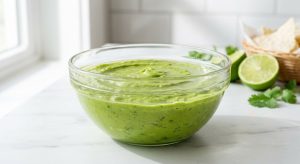
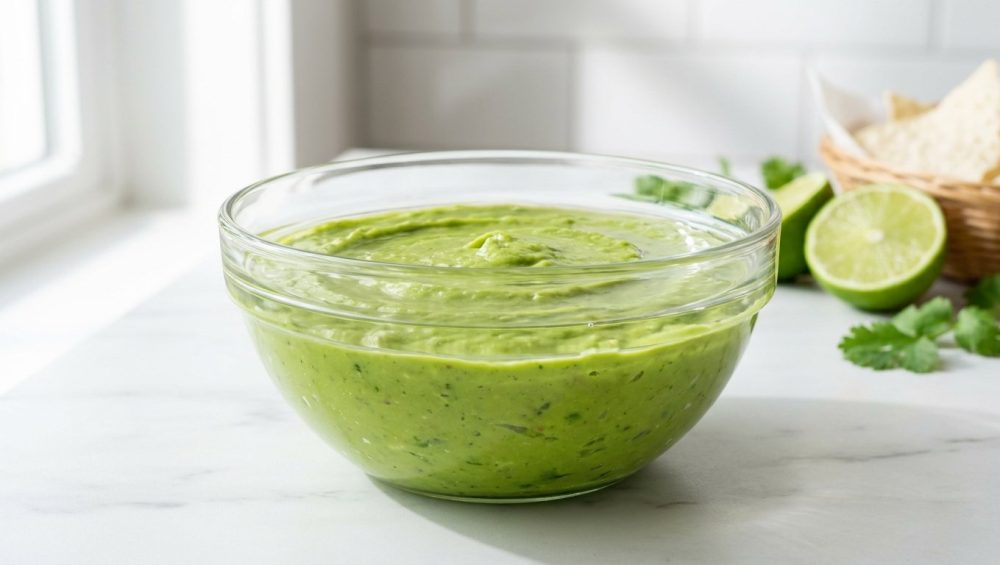
Let me guess: you spent twelve dollars on three supposedly perfect avocados, sacrificed a goat to the ripeness gods, and precisely mashed together the ultimate bowl of guacamole for your weekend dinner party. You set it on the counter, turned your back to check on the margaritas for exactly twelve seconds, and when you turned back around, your vibrant, emerald-green masterpiece had transformed into a bowl of oxidized, brownish-gray sludge.
There is nothing more frustrating than when your homemade guacamole turns brown before your party even starts. It is a culinary tragedy that has plagued home cooks for generations. You don’t need a culinary degree to make mind-blowing food, but you do need a basic understanding of kitchen science to outsmart a piece of fruit.
For decades, we have been fed pretentious chef-speak and old wives’ tales about how to keep our dips looking fresh. We’ve been told to bury the avocado pit in the bowl, to drown the mixture in aggressive amounts of lime juice, or to wrestle with cling wrap until we are red in the face. Spoiler alert: none of those methods actually work for long-term storage. If you want to survive weekday meal prep and host flawless weekend gatherings without losing your mind, you need efficiency, shortcuts, and scientifically proven techniques.
Today, we are going to completely dismantle the myths surrounding avocado oxidation. We are going to dive deep into the cellular biology of why this fruit is such a diva, and I am going to teach you the ultimate, foolproof, restaurant-industry secret to keeping your guacamole vibrantly green for days.
The Science of the Sludge: Why Good Guacamole Goes Bad
Before we can fix the problem, we have to understand the enemy. We all know why avocados turn brown in the first place, right? Well, sort of. Most people vaguely point their fingers at “the air,” but the actual biochemical warfare happening inside your bowl is fascinating.
The Cellular Breakdown
When an avocado is sitting whole and unblemished on your countertop, it is in a state of biological harmony. Inside the plant cells of the avocado flesh, there are specific vacuoles that contain organic chemical compounds known as phenols. Floating around in the cytoplasm of those exact same cells is an enzyme called Polyphenol Oxidase (PPO). As long as the avocado remains whole, the phenols and the PPO are kept strictly separated by cellular membranes. They live in the same house, but they stay in different rooms.
The moment you take a knife to that avocado, scoop out the flesh, and aggressively mash it with a fork, you are committing widespread cellular destruction. You are tearing down the walls between the rooms. Suddenly, the phenols and the PPO are forced to mix. But even then, they need a third partner to initiate the browning process: oxygen.
The Oxidation Chain Reaction
When the mashed avocado is exposed to the oxygen in your kitchen air, the PPO enzyme acts as a biological catalyst. It facilitates a reaction that hydroxylates the phenolic compounds, converting them into highly reactive molecules called quinones.
These quinones do not like to be alone. They rapidly link together in a process called polymerization, forming long, complex chains. These polymerized chains are called melanins—the exact same class of dark pigments that give human skin its color, cause apples to brown when sliced, and turn your beautiful green guacamole into a swampy, unappetizing mess.
The Staggering Cost of Aesthetic Spoilage
This isn’t just a minor annoyance for your dinner party aesthetics; it is a massive driver of global food waste. Recent agricultural and retail statistics indicate that a staggering 34% of all avocados purchased are ultimately thrown away by consumers. A massive portion of this waste is driven purely by enzymatic browning. People see the brown layer, assume the dip has rotted, and scrape expensive, perfectly edible food directly into the trash. You’ve probably searched the internet for enzymatic browning prevention strategies, only to find a graveyard of bad advice. Let’s walk through that graveyard right now.
The Graveyard of Failed Guacamole Hacks
The internet is absolutely flooded with terrible advice. As a home cook who values time and money, you cannot afford to rely on superstitious culinary myths. Let’s aggressively debunk the most popular, yet ultimately useless, methods for preserving guacamole.
The Pit Myth: A Monument to Superstition
Somewhere along the line, a rumor started that leaving the avocado pit (the seed) submerged in the center of your guacamole would magically prevent the entire bowl from turning brown. Let me be brutally honest: the pit does absolutely nothing chemically. It does not emit a magical, anti-oxidizing aura. It does not communicate with the mashed flesh to halt the PPO enzymes.
The only reason the pit appears to work is because it is a solid physical object resting on top of the dip. It physically blocks the oxygen from touching the exact square inch of guacamole directly beneath it. You would achieve the exact same level of protection if you placed a golf ball or a clean river rock in the middle of your bowl. The rest of the exposed surface will still turn brown. Throw the pit in the compost bin where it belongs.
The Citrus Overload: Why Lime Juice Eventually Fails
Every standard guacamole recipe calls for lime or lemon juice. Citrus juices contain high levels of ascorbic acid (Vitamin C) and citric acid. Because PPO enzymes operate best at a neutral pH (around 6.5 to 7.5), introducing a harsh acid drastically lowers the pH of the environment, which temporarily stuns the enzymes and slows down their activity. Furthermore, ascorbic acid acts as a natural antioxidant, essentially sacrificing itself to the oxygen before the phenols have a chance to react.
However, this is only a temporary delay. The oxygen in the air is relentless, and eventually, the ascorbic acid is entirely consumed. Once the antioxidant barrier is depleted, the PPO wakes up, the quinones form, and the browning resumes.
More importantly, relying solely on lime juice to prevent browning ruins your food. To add enough acid to halt the browning for a full 24 hours, you would have to dump so much lime juice into the bowl that the delicate, creamy, nutty flavor of the avocado would be completely obliterated. You are making guacamole, not an avocado ceviche.
The Plastic Wrap Struggle: A Porous Disappointment
The most common advice from professional kitchens is to take a sheet of plastic cling wrap and press it directly against the surface of the guacamole. In theory, this creates a physical barrier against the air. In reality, it is a frustrating, messy disappointment.
First, standard consumer-grade polyethylene plastic wrap is actually microscopically porous to oxygen. Over the course of a day or two, oxygen molecules will permeate the plastic and reach the food. Second, guacamole does not have a perfectly smooth surface. It is textured with chunks of avocado, diced onions, and jalapeños. When you press the plastic wrap down, you inevitably trap dozens of tiny, microscopic air pockets in the crevices. Those tiny pockets of oxygen are more than enough to trigger the PPO enzymes, leaving your dip mottled with unappetizing brown spots.
The Onion Trick: A Pungent Mistake
Another popular hack involves chopping raw onions, scattering them over the top of the guacamole, and sealing the container. This relies on the sulfur gases naturally emitted by cut onions to halt the oxidation process. While the chemistry is sound—sulfur compounds do inhibit PPO—the culinary result is a disaster. If you leave your guacamole trapped in a sealed container with a heavy concentration of raw onion gas for 24 hours, the entire dip will absorb that aggressive, pungent sulfur flavor. It completely overpowers the dish.
The Water Shield: Your Foolproof Culinary Forcefield
If we know that oxygen is the enemy, and we know that plastic wrap, pits, and lime juice are fundamentally flawed, what is the solution? We turn to the absolute laws of physics and fluid dynamics. We use water.
Once you understand the magic of a water barrier, you will never go back to your old methods. By pouring a thin layer of water directly over the surface of your prepared guacamole, you create a flawless, hermetic seal that completely locks out oxygen.
Why It Doesn’t Ruin the Guacamole (The Magic of Lipids)
I know exactly what you are thinking. “If I pour water on my guacamole, won’t it turn into a soggy, watery, disgusting soup?”
The answer is a definitive no, and it all comes down to the lipid density of the fruit. Hass avocados are incredibly rich, containing anywhere from 15% to 20% fat by weight. In the scientific world, fats and oils are hydrophobic, meaning they actively repel water. When you pack your guacamole tightly into a container and pour water over the top, the fat content of the avocado acts as a natural waterproof shield. The water literally cannot penetrate the dense, lipid-rich matrix of the dip. It simply rests on top, filling in every single microscopic crevice, displacing 100% of the oxygen, and creating a perfect, impenetrable barrier.
The Step-by-Step Masterclass
Here is exactly how to execute the water shield method for flawless, make-ahead guacamole:
- Prep and Mash: Prepare your guacamole exactly how you normally would. Add your avocados, lime juice, salt, cilantro, jalapeños, and onions.
- Pack it Tight: Transfer the finished guacamole into a high-quality, non-toxic storage container. Using the back of a spoon, aggressively pack the dip down into the bottom of the container. You want to eliminate any trapped air bubbles hidden beneath the surface.
- Smooth the Surface: Use the back of your spoon to smooth the top layer of the guacamole until it is as flat and level as possible.
- The Gentle Pour: Take a cup of lukewarm or cold tap water. Hold a spoon upside down just above the surface of the guacamole, and gently pour the water over the back of the spoon. This dissipates the force of the water, preventing it from cratering or disturbing the smooth surface of your dip. Pour just enough water to create a half-inch layer covering the entire surface.
- Seal and Chill: Place an airtight lid on the container and put it in the refrigerator. The cold temperature of the fridge further slows down any residual enzymatic kinetics, while the water shield completely blocks the oxygen.
- Drain and Serve: When you are ready to eat—whether it’s three hours later or three days later—simply take the container to the sink, tilt it, and gently pour the water off the top. Take a spoon, give the guacamole a quick, vigorous stir to incorporate the microscopic drops of moisture left behind, and serve. It will be as vibrantly green and texturally perfect as the second you mashed it.
The FDA Warning: A Crucial Food Safety Distinction
Because I strictly advocate for the home cook, I refuse to let you fall victim to dangerous internet trends. In 2021 and 2022, a viral social media hack circulated claiming that you could keep whole or halved uncut avocados fresh for weeks by submerging them entirely in a jar of water in the fridge.
The U.S. Food and Drug Administration (FDA) quickly stepped in and issued a severe health warning against this practice. The skin of an avocado is heavily textured and can harbor dangerous human pathogens, specifically Listeria monocytogenes and Salmonella. When you submerge a whole avocado in a jar of water, you are creating a perfect, aqueous breeding ground for these bacteria to multiply. FDA scientists proved that if an avocado is continuously submerged, Listeria can actually penetrate the skin and infiltrate the edible flesh within 15 days.
Why the Water Shield on Mashed Guacamole is Completely Safe:
It is absolutely critical to understand why our water shield method on prepared guacamole is safe, while the whole-avocado water bath is dangerous.
First, we are washing our produce and discarding the skin before mashing. Second, our prepared guacamole contains a significant amount of lime juice (citric acid). This lowers the internal pH of the dip, creating a highly acidic, hostile environment that naturally inhibits rapid bacterial growth. Third, we are not storing this for weeks; the water shield method is designed to hold prepared guacamole safely in the refrigerator for up to 3 days. Always practice standard food safety, wash your produce, and never keep leftovers past the 3-to-4 day mark.
Time is Money: Prepping Like a Weekday Warrior
As a busy professional, I firmly believe that time is money. Weekday meals require rigorous efficiency and clever shortcuts. You do not have the time or the patience to stand at your kitchen island at 6:30 PM on a Tuesday, desperately trying to mash rock-hard avocados while your children scream for dinner.
The water shield method is the ultimate meal-prep hack. It buys you the luxury of time. You can easily prepare a massive batch of guacamole on a lazy Sunday afternoon, apply the water shield, and leave it in the fridge. On Tuesday night for Taco Tuesday, your prep work is already done. You simply pour off the water, stir, and serve.
The Flavor Maturation Bonus
Here is a secret that pretentious restaurant chefs rarely share with home cooks: guacamole actually tastes better on day two.
When you mix raw onions, fresh garlic, jalapeños, and cilantro into mashed avocado and serve it immediately, the flavors are fragmented. The raw alliums (the onions and garlic) often have a harsh, biting sharpness that dominates the palate. Stop crying over your cutting board; usually, the real culprit is just a dull knife crushing the cell walls, releasing volatile sulfur compounds into your eyes. But even perfectly diced onions need time to mellow.
When you use the water shield method and allow your guacamole to rest in the refrigerator for 24 hours, a beautiful process of flavor maturation occurs. The harsh bite of the raw onions mellows out. The fat of the avocado absorbs the essential oils from the cilantro and the capsaicin from the jalapeños. The lime juice lightly cures the ingredients, resulting in a cohesive, deeply balanced, and complex flavor profile that you simply cannot achieve when serving it fresh off the cutting board.
The “No-Go” Rule: Stop Poisoning Your Produce
Now, we need to have a serious conversation about the equipment you are using. I have a strict “No-Go” rule when it comes to toxic, cheap kitchen gear. You can buy the most expensive, organic, perfectly ripe avocados on the planet, but if you are storing your food in degrading, chemically unstable containers, you are ruining your health and your food.
If you’re serious about banishing toxic kitchen gear, you need to rethink your storage. Never store acidic, fat-rich foods like guacamole in cheap, scratched plastic containers.
The Danger of Cheap Plastics
Guacamole is highly acidic due to the lime juice, and it is highly lipophilic (fat-rich). When acidic and fatty foods sit in cheap plastic containers for days, they can actively degrade the polymer matrix of the plastic. This causes the plastic to leach endocrine-disrupting chemicals—like BPA, BPS, and various phthalates—directly into your food.
Furthermore, cheap plastics are highly porous and prone to holding onto ghost flavors and stains. We’ve all seen how cheap food storage containers stain after one batch of chili, turning a permanent, cloudy orange. If a container is holding onto the smell of last month’s garlic chicken, those volatile compounds will leach right back into your delicate guacamole.
Upgrade Your Arsenal
Throw away the mystery plastics. Invest in high-quality, tempered glass food storage containers with locking silicone-gasket lids. Glass is completely inert, meaning it will never react with the acid in your lime juice, it will never leach chemicals into your food, and it will never absorb odors.
When prepping your ingredients, ensure you are using a heavy-duty, solid wood cutting board. Also, ditch those porous bamboo cutting boards that dull your blades and harbor bacteria. To quickly transfer your diced jalapeños and onions, a stainless steel bench scraper is an absolute lifesaver. And don’t even get me started on why some silicone spatulas taste like soap when you use them to scrape the bowl—always buy 100% platinum-cured, food-grade silicone that doesn’t contain cheap plastic fillers.
Pro-Level Execution and Troubleshooting
Even with a foolproof scientific method, the devil is in the details. Here are a few rapid-fire troubleshooting tips to ensure your water-shielded guacamole comes out perfectly every single time.
What Temperature Should the Water Be?
Do not use hot water. Hot water will actually begin to gently cook the surface layer of the avocado, altering the texture and introducing a weird, mushy mouthfeel. You want to use cold or lukewarm tap water. Cold water is generally preferred because it instantly drops the surface temperature of the guacamole, further inhibiting any rogue enzymatic activity before you even get the container into the refrigerator.
Draining and Stirring Dynamics
When it is time to serve, do not overthink the draining process. Take the lid off, tilt the glass container over your sink, and let gravity do the work. You do not need to dab the surface with a paper towel—in fact, doing so will just result in a fuzzy, paper-covered mess.
There will inevitably be a few microscopic drops of water clinging to the top layer of the dip. This is actually a good thing. When you take a spoon and give the guacamole a vigorous stir before serving, that tiny fraction of moisture emulsifies into the fat of the avocado. It slightly loosens the dip, restoring the incredibly creamy, luscious texture that often tightens up when avocados are subjected to the cold temperatures of a refrigerator.
The Alternative Liquid Shields
While water is the cheapest, most flavor-neutral barrier available, it is not the only liquid that works. If you are feeling particularly adventurous, you can use other liquids to create the oxygen barrier, provided they are denser than air and do not contain oxygen themselves.
Some chefs swear by pouring a very thin layer of neutral oil (like avocado oil or light olive oil) over the top of the guacamole. While this effectively blocks the oxygen, it introduces a heavy, greasy mouthfeel to the dip when you stir it back in, adding unnecessary calories and altering the texture. Stick to the water shield; it is flavorless, calorie-free, and drains away effortlessly.
Reclaiming Your Kitchen Confidence
Cooking should never be a source of anxiety. You do not need a Michelin star to understand the basic biology of a fruit, and you certainly do not need to accept the inevitability of brown, oxidized food.
The water shield method is the perfect representation of what it means to be a smart, resourceful home cook. It requires zero expensive gadgets, zero obscure chemical preservatives, and zero culinary pretension. It relies entirely on the basic, undeniable laws of physics to solve a universal kitchen problem.
By understanding how Polyphenol Oxidase reacts with oxygen, and by leveraging the hydrophobic nature of avocado lipids, you have essentially hacked the biological clock of your produce. You can now confidently prepare massive batches of guacamole days in advance, reclaim your precious weekday evenings, and host dinner parties without the last-minute stress of frantically mashing avocados while your guests are ringing the doorbell.
So pour a glass of wine, sharpen your knives, and start prepping. You have the science on your side, and your guacamole is going to stay flawlessly, beautifully green.