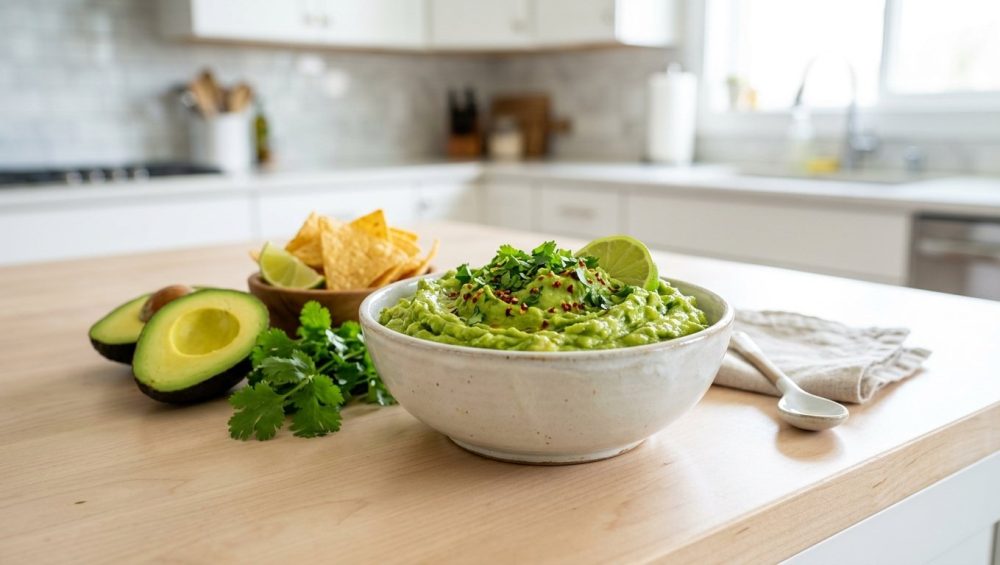
Listen up, folks. We need to have a serious talk about the green gold in your kitchen, because I am officially exhausted by the amount of perfectly good avocado that ends up in the trash. You know the exact scenario I am talking about. You are prepping for a weekend gathering, you mash up a gorgeous, vibrant bowl of guacamole, and you set it in the fridge. Two hours later, you pull it out, and it looks like a bowl of oxidized, grayish-brown swamp mud. It is visually horrifying, it is a massive waste of money, and frankly, it is entirely preventable.
Before you start crying over your cutting board and making rookie kitchen mistakes out of pure frustration, let’s get one thing straight: you do not need a culinary degree to outsmart an avocado. You just need a basic understanding of middle-school science and the willingness to ditch the old wives’ tales that have been failing home cooks for decades. If you want to master the art of effortless hosting, you need dips and dishes that you can prep ahead of time without them self-destructing in the refrigerator.
Today, we are going to completely dismantle the frustrating science of enzymatic browning. We are going to debunk the absurd myths about avocado pits and lime juice, and I am going to teach you a foolproof, flavorless water-barrier technique that physically blocks out oxygen to keep your dip vibrant green for days. Put down the plastic wrap, grab a notebook, and let’s dive into the chemistry of your favorite dip.
The Biochemistry of Betrayal: Why Your Guacamole Turns Brown
To defeat the enemy, you must first understand the enemy. Your guacamole does not turn brown because it is “going bad” or rotting in the span of two hours; it turns brown because of a highly specific chemical reaction called enzymatic browning.
When an avocado is whole and intact, its internal flesh is perfectly protected from the outside world by its thick, leathery skin. The cells inside the avocado are happily minding their own business. However, the moment you slice into that fruit with your knife, you rupture those cellular walls. This structural damage exposes the internal components of the avocado to the ambient air in your kitchen.
Here is where the chemistry kicks in. Avocados are packed with an enzyme called polyphenol oxidase (PPO), as well as a group of antioxidants known as phenolic compounds. In a whole avocado, these two components are kept in separate cellular compartments. But when you mash the avocado for guacamole, you mix them all together. Once this PPO and phenolic cocktail is exposed to oxygen, a rapid oxidation process begins. The polyphenol oxidase acts as a catalyst, using the ambient oxygen to convert those phenolic compounds into new molecules called quinones.
Quinones are highly reactive. They do not just sit there; they immediately begin linking together in long chains, undergoing polymerization reactions. The end result of this polymerization is a dark, complex polymer called melanin. Yes, this is the exact same pigment that gives human skin its color and helps apples and bananas turn brown. The brown layer on your guacamole is literally a shield of melanin that the plant cells produce as a defense mechanism against tissue damage.
This reaction is inevitable once the flesh is exposed to air. It happens most aggressively at a pH level between 5.0 and 7.0, which happens to be the exact natural resting pH of an avocado. Because this is a chemical reaction driven by atmospheric oxygen, there is only one true way to stop it: you must completely and entirely cut off the oxygen supply.
The Global Cost of Sad Guacamole: A War on Waste
If you think scraping a layer of brown sludge off your dip is just a minor kitchen annoyance, I need you to look at the bigger picture. We are in the middle of a global food waste crisis, and we all need to stop throwing away sad veggies and incredibly resource-intensive fruits.
According to the latest 2026 data from ReFED and the United Nations Food and Agriculture Organization (FAO), roughly one-third of all food produced for human consumption is lost or wasted globally every single year. That is approximately 1.3 billion tonnes of food. In the United States alone, the average household throws away about $1,500 worth of food annually, contributing to a staggering 60 million tons of food waste that mostly ends up emitting methane in landfills.
Avocados are not cheap, and they are not easy to grow. It takes anywhere from 30 to 60 gallons of applied water to grow a single pound of avocados, depending on the region. Furthermore, the massive global demand for avocados has historically driven deforestation and heavy agricultural strain in major producing regions like Michoacán, Mexico (though the industry is currently making strides toward deforestation-free supply chains by 2030).
When you throw away half a bowl of guacamole because it oxidized, you are not just throwing away three dollars; you are throwing away the massive amount of water, labor, transportation fuel, and packaging that went into getting those avocados to your cutting board. Preserving your food is not just about saving your dinner party aesthetics; it is a fundamental responsibility of the modern home cook.
Debunking the Culinary Fairy Tales: Why Traditional Methods Fail
For decades, well-meaning cooks and desperate party hosts have passed down a series of “hacks” to keep guacamole green. Let me be brutally honest: most of them are complete garbage. Let’s break down exactly why the most common methods fail you.
The Pit Myth
Somewhere along the line, a rumor started that leaving the avocado pit right in the center of the guacamole bowl would magically prevent the whole batch from turning brown. This is a fundamental misunderstanding of physics.
The pit does not emit a magical, anti-oxidizing force field. The only reason the guacamole directly underneath the pit stays green is because the heavy, dense pit is physically resting on the surface of the dip, blocking the oxygen from touching that specific, two-inch circle of flesh. The rest of the bowl, which is still exposed to the air, will turn brown just as fast. You are sacrificing valuable bowl real estate for a trick that does absolutely nothing for 90% of your food.
The Lime Juice Flood
Many recipes tell you to squeeze extra lime or lemon juice over the top of your guacamole to keep it fresh. The science behind this is technically sound, but the culinary execution is a disaster.
Enzymatic browning thrives in a neutral pH environment. The ascorbic acid (Vitamin C) and citric acid in citrus juice lower the surface pH of the guacamole, creating an acidic environment that temporarily denatures the polyphenol oxidase enzymes and slows down their activity. Sometimes, you might want to stop reaching for the salt and rely on acid to brighten a dish, but there is a strict limit.
To actually halt the browning process for more than a few hours using citrus juice, you have to use so much of it that you completely ruin the flavor profile of the guacamole. You end up with a harsh, aggressively tart, acidic soup that completely masks the rich, buttery, nutty flavor of the avocado. You are saving the color by destroying the taste, which defeats the entire purpose of making the dish.
The Onion Trick
Another popular internet hack involves chopping up raw white onions, placing them in an airtight container, and resting the bowl of guacamole on top of them. The theory is that the sulfur compounds released by the chopped onions will act as a preservative gas, shielding the avocado from oxygen.
While sulfur dioxide is indeed used as a preservative in the commercial food industry, the amount of gas released by a few chopped onions is highly inconsistent. More importantly, avocados are incredibly high in fat, and fat is a sponge for ambient odors. If you trap your delicate guacamole in a sealed container with raw, pungent onion gas for 24 hours, your dip is going to taste like a harsh, sulfurous onion bomb.
The Plastic Problem: A Toxic and Flawed Solution
The most universally recommended method by professional chefs and culinary magazines is to take a sheet of plastic wrap and press it directly against the surface of the guacamole, ensuring there are no air pockets. While this method does physically block oxygen, I absolutely refuse to recommend it.
First of all, I am extremely passionate about banishing toxic kitchen gear from my house, and cheap plastic wrap is at the top of my hit list. Many commercial plastic wraps are manufactured with polyvinyl chloride (PVC) or low-density polyethylene (LDPE), and they often contain plasticizers, phthalates, and other chemical additives designed to make the film stretchy and clingy.
When you press these cheap plastics directly into a food that is high in fat (avocado) and high in acid (lime juice), you create the perfect chemical environment for leaching. The fats and acids can degrade the structural integrity of the plastic over time, allowing microplastics and endocrine-disrupting chemicals to migrate directly into your food. I do not care how convenient it is; we are not serving chemical-leached dip to our families.
Secondly, from a purely mechanical standpoint, the plastic wrap method is incredibly annoying and prone to failure. Guacamole is chunky. It has diced tomatoes, jalapeños, and onions protruding from the surface. It is nearly impossible to press a rigid sheet of plastic completely flat against a highly textured, chunky surface without leaving dozens of microscopic air pockets. Every single one of those trapped air bubbles contains oxygen, and every spot where the air touches the avocado will develop a brown, oxidized spot by the next morning.
The Secret Power of the Water Shield: A Masterclass in Hydrodynamics
If we cannot use toxic plastic, and we cannot drown the dip in lime juice, how do we create an impermeable, food-safe, flavorless oxygen barrier? We use the most basic, abundant resource in your kitchen: cold tap water.
The water barrier method is the ultimate, scientifically backed solution for preserving guacamole. It works flawlessly because it relies on the fundamental principles of hydrodynamics and lipid chemistry.
The Science of Hydrophobia
Avocados are famously high in fat. A standard Hass avocado is composed of roughly 15% to 20% healthy monounsaturated fats. Because of this incredibly high lipid content, the mashed flesh of the avocado is inherently hydrophobic—meaning it violently repels water.
If you pour a layer of water over a bowl of mashed potatoes or hummus, the water will immediately soak into the starches, turning the dish into a soggy, ruined mess. But when you pour water over the surface of properly mashed guacamole, the fat content of the avocado acts as a natural waterproofing agent. The water cannot penetrate the dense lipid structure. Instead, it simply pools on top, resting peacefully on the surface without mixing in or diluting the flavor.
The Oxygen Blockade
Water is exceptionally dense compared to atmospheric air. By creating a continuous, unbroken layer of water across the entire surface of the guacamole, you are building a literal liquid wall. Ambient oxygen from the refrigerator cannot pass through this water layer to reach the avocado flesh. Because the water is a liquid, it perfectly conforms to every single bump, chunk of tomato, and crevice on the surface of the dip, eliminating the microscopic air pockets that plastic wrap leaves behind.
Without access to oxygen, the polyphenol oxidase enzymes are completely paralyzed. The phenolic compounds cannot oxidize, the quinones cannot form, and the melanin cannot polymerize. Your guacamole will stay vibrantly, shockingly green for up to three full days in the refrigerator.
Step-by-Step Execution: How to Build the Perfect Water Shield
Executing the water shield is incredibly simple, but precision matters. If you do it sloppily, you risk compromising the texture. Follow these exact steps for flawless results.
Step 1: The Final Mix and Pack
Once your guacamole is perfectly seasoned and mixed, transfer it to your storage container. Using the back of a sturdy metal spoon, aggressively pack the guacamole down into the container. You want to eliminate any internal air bubbles trapped inside the dip.
Step 2: The Surface Smoothing
This is the most critical step. You must use the back of your spoon to smooth the top surface of the guacamole until it is as flat and level as freshly poured concrete. If you have jagged peaks and deep valleys in your dip, the water will not cover it evenly, and exposed peaks will turn brown. Push down any rogue chunks of tomato or onion so the surface is uniformly flat.
Step 3: The Gentle Pour
Take a cup of cold, filtered tap water. Do not use warm water, as heat accelerates enzymatic activity and can encourage bacterial growth. Hold the cup close to the edge of the container and gently, slowly pour the water down the inside wall of the container. Do not dump the water directly into the center of the guacamole, as the force of the stream will crater the dip and mix the water into the fat.
Step 4: The Half-Inch Rule
Pour just enough cold water to cover the entire surface of the guacamole by about half an inch. You do not need a deep swimming pool; you just need a continuous, unbroken liquid seal. Ensure the water touches all the interior walls of the container, completely locking out the air.
Step 5: The Airtight Seal
Place a high-quality, airtight lid on your container and place it in the refrigerator. The water shield protects the top surface, but an airtight lid is still necessary to prevent the water from evaporating and to protect the container from absorbing ambient refrigerator odors.
Step 6: The Drain and Stir
When you are ready to serve, remove the container from the fridge. Carefully tilt the container over the sink and pour off the water. Because the avocado fat repelled the liquid, the water will slide right off. If there is a microscopic film of moisture left on the top, simply take your spoon and give the guacamole one vigorous stir. The tiny amount of residual moisture will seamlessly emulsify into the dip, and your guacamole will look exactly as green and fresh as the minute you mashed it.
Optimizing the Shield: Container Science and Storage Mechanics
The water shield is a brilliant technique, but it is only as good as the vessel you build it in. If you are still storing your food in cheap, warped plastic takeout bins, we need to have an intervention.
Those cheap plastic tubs hold odors and stains, and if you’re wondering how to actually clean them, the answer is usually to throw them out. Plastic is porous. Over time, it develops microscopic scratches that harbor bacteria, trap old food oils, and allow air to seep in. Furthermore, plastic is a terrible thermal conductor. It takes a long time to chill down in the refrigerator, meaning your guacamole stays in the “danger zone” of temperature for longer, accelerating both oxidation and spoilage.
If you’re tired of cheap tools breaking and wondering what to buy instead, invest in a set of heavy-duty, tempered glass storage containers with silicone-gasket locking lids. Glass is entirely non-porous, meaning it will never absorb the smell of the raw garlic and jalapeños in your dip. It is chemically inert, so it will never leach endocrine disruptors into your food. Most importantly, glass has excellent thermal mass. Once it gets cold in the fridge, it stays cold, providing a stable, chilled environment that drastically slows down enzymatic degradation.
When choosing your container for the water shield method, shape matters. Always opt for a container that is narrow and deep, rather than wide and shallow. A wide, shallow container creates a massive surface area of guacamole that needs to be protected, requiring more water and increasing the risk of the water barrier breaking if the container is jostled. A narrow, deep container minimizes the exposed surface area, making the water shield thicker, more stable, and easier to pour off later.
Furthermore, where you place that container in the refrigerator is critical. Do not store your guacamole in the refrigerator door. The door is the warmest part of the fridge and is subject to massive temperature fluctuations every time you open it to grab the milk. Temperature fluctuations cause micro-condensation and can disrupt the stability of your water shield. Store your glass container on the bottom shelf, pushed toward the back. This is the coldest, most thermally stable zone in your appliance.
Advanced Troubleshooting: When the Water Shield Goes Wrong
Even with the best techniques, home cooking is an unpredictable science experiment. If you try the water shield and run into issues, do not panic. Here is exactly how to troubleshoot the most common problems.
“My guacamole got watery and slimy.”
If your dip feels waterlogged after draining, you made one of two mistakes. First, you might have poured the water on too aggressively, cratering the surface and physically churning the water into the avocado mash. Always pour gently down the side of the container. Second, your guacamole might not have had enough fat content to repel the water. If you bulked up your dip with excessive amounts of watery ingredients—like a massive ratio of diced tomatoes or cucumber—the water shield will soak into those watery vegetables instead of being repelled by the avocado fat. Keep your guacamole avocado-heavy if you plan to use this storage method.
“The edges still turned brown.”
If the center of your dip is bright green but the perimeter is brown, your water shield did not reach the edges of the container. This usually happens if you did not smooth the surface properly, leaving the edges of the guacamole riding high up the walls of the glass. The water pooled in the center, leaving the elevated edges exposed to the air. Next time, use your spoon to scrape down the sides of the container and ensure the surface is perfectly flat before pouring the water. It’s the exact same reason why your garlic always burns when you throw it in the pan too early: bad timing and uneven exposure.
“Can I keep it like this for a week?”
Absolutely not. The water shield is a physical barrier against oxygen, but it is not a magical pause button on bacterial growth or structural degradation. Avocados are highly perishable. Even completely submerged in water and stored in a glass airtight container, the cellular walls of the mashed avocado will eventually begin to break down, resulting in a mushy, unpleasant texture. The water shield is designed to buy you 48 to 72 hours of perfect, vibrant green storage. Anything beyond three days, and you are pushing the limits of food safety and textural integrity. Make it on Friday night, serve it on Saturday, finish the leftovers on Sunday.
The Empowerment of the Home Cook
Cooking should not be a source of stress, and you should never feel like you are at the mercy of a temperamental piece of produce. Understanding the basic science of your ingredients gives you total control over your kitchen. You do not need to rely on toxic plastics, you do not need to ruin your food with excessive lime juice, and you certainly do not need to throw away expensive groceries just because they sat on the counter for an hour.
By utilizing the hydrodynamic power of a simple water shield, you can prep your party dips days in advance, lock in that vibrant green color, and serve a dish that looks as incredible as it tastes. This simple trick will help you eliminate kitchen chaos for good, giving you back your time and your sanity.
Treat your ingredients with respect, understand the chemistry behind the food, and just like you need to stop ruining your nonstick pans with aerosol sprays, you need to stop ruining your avocados with bad storage habits. Now get into the kitchen, mash up some green gold, and build that water shield. Your weekend self will thank you.