The Universal Tragedy of Ruined Breakfast Meat
Let us have a brutally honest conversation about everyone’s favorite breakfast staple. You wake up on a Saturday morning, brew a pot of coffee, and decide to treat yourself to a diner-quality breakfast. You pull a package of thick-cut bacon from the fridge. You place your favorite skillet on the stove, crank the dial to medium-high, and wait for the metal to get ripping hot. After all, that is exactly how you sear a steak, right? You want that immediate, satisfying sizzle.
So, you drop the strips into the hot pan. Immediately, the kitchen sounds like a warzone. Grease aggressively launches itself onto your forearms, your stovetop, and your backsplash. But worse than the mess is what is happening in the pan. The long, beautiful strips of pork belly violently seize up. They curl into deformed, twisted little knots. The edges turn black and taste like carbon, while the fat in the center remains flabby, white, and unrendered. By the time you pull them out of the skillet, your glorious strips of bacon have shrunk to a fraction of their original size, looking more like sad, burnt commas than the flat, crispy ribbons you were promised.
If this sounds familiar, take a deep breath. You are not a bad cook. You have just been lied to by decades of bad kitchen habits.
The secret to perfectly flat, evenly crisped, melt-in-your-mouth bacon does not require a culinary degree, a commercial flat-top griddle, or a blowtorch. It requires the exact opposite of everything you have been taught about cooking meat. The secret is patience, simple thermodynamics, and a completely cold pan. As a home cook who spends my weekdays prioritizing efficiency and my weekends chasing culinary perfection, I am a massive advocate for working smarter, not harder, and banishing toxic kitchen gear and outdated techniques from your home. Today, we are going to break down the exact science of rendering fat, why high heat is destroying your breakfast, and how the cold-pan method will change your weekend routine forever.
The Anatomy of a Pork Belly Strip: What Are We Actually Cooking?
To understand why bacon behaves the way it does in a skillet, we have to stop treating it like a standard cut of meat. Bacon is not a steak. It is not a chicken breast. It is a highly complex, cured cross-section of pork belly, and it requires a completely different set of rules.
A strip of bacon is a matrix made up of three primary components: lean muscle tissue, dense subcutaneous fat, and connective tissue (primarily collagen). When you look at a raw slice, you can clearly see the distinct layers. The pink sections are the lean muscle fibers, and the white sections are the fat.
But there is a fourth, invisible component that plays a massive role in why your bacon shrinks and splatters: water.
Unless you are buying traditional, dry-cured bacon straight from a boutique butcher who hangs their meat in a cellar for months, you are likely buying commercial supermarket bacon. The vast majority of mass-produced bacon is “wet-cured.” This means the pork belly is injected with a liquid brine solution containing water, salt, sugar, sodium nitrite, and flavorings to cure it rapidly and add weight. Depending on regional regulations and the manufacturing process, commercial bacon can contain a significant percentage of added water weight.
When you throw wet-cured bacon into a hot pan, that water has to go somewhere. Water boils and evaporates at 212°F (100°C). If your pan is sitting at 375°F, the water inside the bacon violently flashes into steam. This rapid expansion of steam causes the microscopic pockets of moisture in the meat to explode outward, carrying hot grease with it. This is exactly what causes those painful grease splatters that ruin your stovetop. Just like how kitchen knives get dull when you abuse them on glass cutting boards, your bacon gets abused and ruined when you subject its delicate water-to-fat ratio to immediate thermal shock.
The Science of Shrinkage: Why High Heat is the Enemy
Now, let us talk about the proteins and the fat, because this is where the real tragedy of shrinkage occurs.
Meat is primarily composed of two proteins that matter during the cooking process: myosin and actin. According to food science and thermodynamics, these proteins react to heat at very different temperatures. Myosin begins to denature (unwind and change shape) between 104°F and 122°F (40°C – 50°C). When myosin denatures, the muscle fibers shrink slightly in diameter, but the meat remains relatively tender.
Actin, on the other hand, is the troublemaker. Actin denatures at a much higher temperature, specifically between 150°F and 163°F (66°C – 73°C). When actin denatures, the protein fibers become incredibly firm and shorten in length dramatically. This reaction is primarily responsible for the severe toughening of meat fibers and extreme moisture loss.
Furthermore, bacon is loaded with collagen, the connective tissue that holds the muscle and fat together. When collagen is subjected to rapid, high heat, it does not have time to slowly dissolve into silky gelatin. Instead, it contracts violently, pulling tight like a rubber band snapping back.
When you drop a cold strip of bacon into a preheated 400°F skillet, you are triggering a catastrophic chain reaction. The exterior of the meat instantly blasts past the myosin denaturation phase and slams right into the actin denaturation phase. The muscle fibers seize and violently contract. The collagen snaps tight. Because the lean muscle shrinks significantly faster than the fat, the entire strip curls up on itself.
Meanwhile, pork fat needs time to render. Rendering is the process of slowly melting solid fat into a liquid. If the pan is too hot, the lean muscle burns and blackens before the fat has a chance to melt. You are left with burnt meat and chewy, unrendered fat. While some cooks try to cheat this process by pressing the meat down with a vented chef’s press, the real solution is simply controlling your temperature from the very beginning.
The Cold Pan Method: A Step-by-Step Masterclass
The solution to curling, shrinking, and burning is elegantly simple: start with a cold pan. By placing the bacon in a cold skillet and bringing the temperature up gradually, you allow the fat to slowly render out before the lean muscle fibers ever reach the temperature that causes them to seize.
Here is the foolproof, step-by-step masterclass for flawless stovetop bacon.
Step 1: The Cold Lay
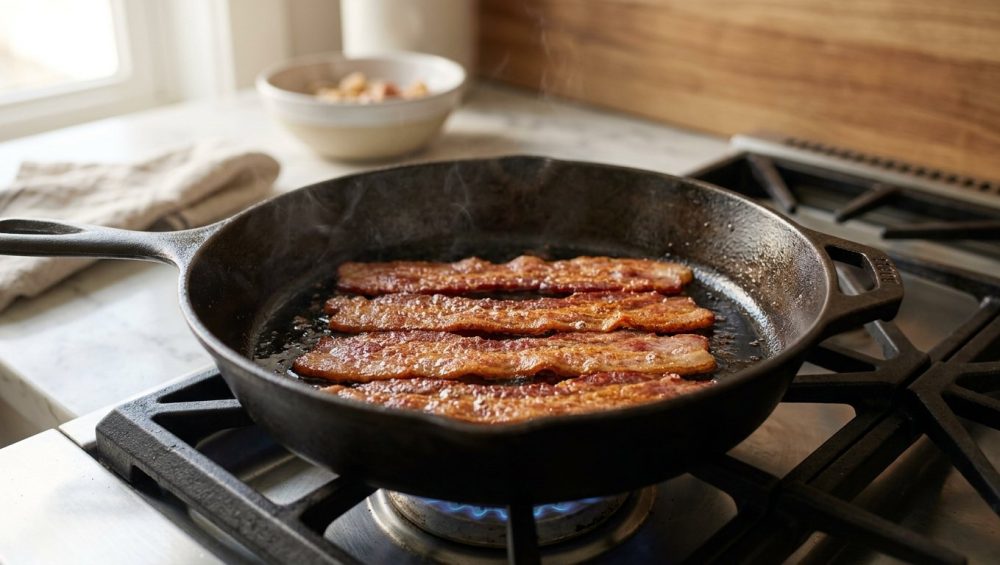
Take your heaviest skillet out of the cabinet and set it on the stove. Do not turn the burner on yet. Lay your bacon strips flat in the cold pan. It is perfectly fine if the edges overlap slightly; as the fat renders and the water evaporates, the strips will naturally shrink a bit and make room for themselves.
Step 2: The Gentle Warm-Up
Turn your burner to medium-low. Do not get impatient and crank it to high. We want a slow, steady climb in temperature. As the pan warms up, the bacon will begin to gently sweat. You will see a milky liquid begin to pool around the edges of the strips. This is the water and the initial fat beginning to release.
Step 3: The Rendering Phase
After a few minutes, the water will begin to bubble and evaporate. Because the temperature is rising slowly, the water boils off gently rather than aggressively exploding. Unlike searing a steak where you might rely on the water drop test to ensure a ripping hot surface, bacon requires a calm, low-temperature environment. Once the water is gone, the bacon will begin to fry in its own freshly rendered liquid fat. You will hear the sound change from a wet, sputtering boil to a crisp, rhythmic sizzle.
Step 4: The Flip
Because the bacon is cooking slowly in its own fat, you do not need to constantly baby it. Let it cook undisturbed until the bottom side is a deep, golden brown and the fat looks slightly translucent rather than opaque white. Use a pair of tongs to flip the strips. You will notice that because the proteins were heated gently, the strips are lying perfectly flat against the bottom of the pan. No curling, no seizing.
Step 5: The Drain
Once both sides are evenly crisped to your liking, immediately remove the bacon from the pan and transfer it to a plate lined with paper towels. Bacon will continue to cook slightly from residual heat after it is removed from the pan, so pull it about thirty seconds before it looks completely done.
The “Splash of Water” Technique: A Weekend Perfectionist’s Secret
If you want to take the cold pan method to the absolute next level of culinary perfection, there is a brilliant variation that involves adding water to the pan. Yes, I know I just spent three paragraphs explaining how water causes grease splatters, but hear me out.
If you place your strips in a cold pan and add just enough cold water to coat the bottom of the skillet, you create a temperature buffer. As you turn the heat on, the water comes to a boil. Because water cannot exceed 212°F (100°C) until it fully evaporates, the temperature of the pan is locked at the boiling point.
This temperature is high enough to render the solid fat into liquid, but low enough that the meat proteins will not aggressively seize or burn. The bacon essentially simmers, allowing the fat to melt beautifully while the meat stays tender. By the time the water completely boils off, the pan is left with nothing but liquid pork fat and perfectly flat strips of bacon. From there, the temperature rises, and the bacon crisps up evenly in its own rendered grease. If you have the time on a Sunday morning, I highly recommend you start it in water and watch the magic happen. The result is bacon that shatters on the outside but remains incredibly tender and chewy on the inside.
The Equipment: Banish the Toxic Non-Stick
We need to have a serious talk about the pan you are using. If you are cooking your bacon in a cheap, scratched, peeling Teflon non-stick pan, you need to stop immediately. I have zero patience for toxic kitchen gear, and neither should you.
Traditional non-stick pans are coated with a synthetic polymer called polytetrafluoroethylene (PTFE). While PTFE is generally stable at low temperatures, it becomes highly dangerous when exposed to high heat. Scientific studies and safety guidelines confirm that PTFE begins to degrade and break down at temperatures above 500°F (260°C).
You might be thinking, “I never cook at 500 degrees!” But here is the terrifying truth: an empty, lightweight non-stick pan placed on a high-heat burner can reach 500°F in just two to five minutes. When PTFE overheats, it releases toxic fluorocarbon gases. In humans, inhaling these fumes causes a condition known as “polymer fume fever” or the “Teflon flu,” which results in chills, headaches, chest tightness, and coughing. In pet birds, whose respiratory systems are highly efficient, these fumes are famously lethal within minutes.
Furthermore, the delicate chemical coating of these pans is easily ruined by improper care. Using metal utensils scratches the surface, and using aerosol cooking sprays leaves a polymerized residue that permanently destroys the non-stick properties over time. You do not need a non-stick pan to cook bacon. Bacon is quite literally composed of solid fat; it provides its own non-stick surface as it renders.
Cast Iron and Carbon Steel: The Heavy Lifters
If you want to cook like a pro, you need to use the tools the pros use. For bacon, you want a pan with significant thermal mass that can hold and distribute heat evenly.
I highly recommend investing in authentic carbon steel pans. Carbon steel offers the incredible heat retention of cast iron but is significantly lighter and more responsive to temperature changes. When properly seasoned, carbon steel develops a natural, completely non-toxic, non-stick patina that rivals any factory Teflon coating.
Alternatively, a classic cast iron skillet is the undisputed champion of weekend breakfasts. Cast iron takes a while to heat up, which actually works perfectly in tandem with the cold-pan method. The slow, gradual absorption of heat by the heavy iron gently coax the fat out of the bacon without shocking the meat. Plus, frying bacon is one of the absolute best ways to build and maintain the seasoning on your cast iron. The liquid pork fat bakes into the microscopic pores of the iron, creating a slick, blackened surface.
Proper maintenance is easy. Wash it gently, dry it thoroughly on the stove, and rub a tiny drop of oil into the warm metal to ensure a rust-free skillet for your next meal. Never let it soak in the sink, and never put it in the dishwasher.
Stovetop vs. Oven: The Weekday vs. Weekend Debate
As a busy professional, I live by a strict culinary code: time is money on weekdays, but weekends are for craftsmanship.
The cold-pan stovetop method is perfect when you are cooking two to four slices of bacon for a quick Tuesday morning breakfast or a lunchtime BLT. It is contained, it is relatively fast, and you can easily monitor the progress while you scramble eggs in another pan.
However, if you are hosting a Sunday brunch, feeding a family of five, or meal-prepping a whole pound of bacon for the week, cooking on the stovetop is a logistical nightmare. You will have to cook in multiple batches, babysit the pan for forty minutes, and deal with inevitable grease splatters.
For large batches, the oven method reigns supreme. And the best part? The oven method utilizes the exact same cold-start science as the stovetop method.
To execute the perfect oven bacon, line a heavy-duty aluminum rimmed baking sheet with parchment paper or heavy-duty aluminum foil. Lay your strips out flat. Do not preheat the oven. Place the cold baking sheet directly into the cold oven, and then turn the temperature to 400°F (200°C).
As the oven gradually preheats, the bacon slowly renders its fat, exactly like it does in a cold skillet. By the time the oven reaches its target temperature, the fat is fully melted, and the bacon begins to fry in the puddle of grease on the baking sheet. Depending on the thickness of your bacon and the speed of your oven, it takes about 18 to 25 minutes. The result is a massive batch of flawlessly flat, evenly cooked bacon, with zero stovetop mess.
Liquid Gold: Harvesting, Straining, and Storing Bacon Fat
One of the greatest crimes a home cook can commit is pouring leftover bacon grease down the kitchen sink. Not only will it instantly solidify and destroy your plumbing, but you are throwing away culinary liquid gold.
Rendered bacon fat is a highly stable, incredibly flavorful cooking oil. It has a relatively high smoke point, making it perfect for searing steaks, roasting potatoes, frying eggs, or popping popcorn. It adds a deep, smoky, savory umami backbone to anything it touches.
To save your bacon fat, let the pan cool for about ten minutes after you finish cooking. You want the grease to still be fully liquid, but not dangerously hot. Place a fine mesh splatter screen or a small metal sieve over a heat-proof glass mason jar, and carefully pour the grease through the mesh. Straining is crucial; you must remove the tiny, burnt bits of meat and pepper left in the pan. If you leave those food particles in the grease, they will eventually turn rancid and spoil the fat.
Once strained, let the jar cool completely at room temperature until the fat solidifies into a beautiful, creamy white paste. Seal it with a lid and store it in the refrigerator. Properly strained and refrigerated bacon fat will easily last for up to six months.
Troubleshooting Common Bacon Disasters
Even with the cold pan method, there are a few variables that can throw off your breakfast game. Here is how to troubleshoot the most common issues.
The Sugar Burn
If you are buying maple-cured bacon, applewood smoked bacon with a brown sugar rub, or any variety that contains high amounts of added sugar, you have to be incredibly careful with your heat. Sugar burns at around 350°F (175°C). If your pan gets too hot, the sugar will caramelize and then rapidly turn into black, bitter carbon before the fat has a chance to render. If you are cooking sweet bacon, keep your burner strictly on low. It will take longer, but it is the only way to prevent a scorched mess.
The Crowded Pan
I know it is tempting to squeeze six strips into a 10-inch skillet, but overcrowding is a massive mistake. When you pack the meat in too tightly, the water evaporating from the bacon has nowhere to go. It gets trapped under the meat, creating a steaming effect rather than a frying effect. Your bacon will turn out gray, flabby, and rubbery. Leave at least a quarter-inch of space between each strip. If you have too much bacon for one pan, use the oven method.
The Sticking Issue
Bacon should naturally release from the pan once the fat renders. However, if you are using a stainless steel pan or a poorly seasoned cast iron skillet, you might experience some sticking. If your skillet leaves black specks of torn meat on your freshly cooked strips, you are likely trying to flip the bacon too early. Meat has a natural tendency to hold onto metal until the Maillard reaction (browning) creates a crust. Be patient. Let the bacon cook until it naturally releases from the surface.
The Thickness Factor
Not all bacon is created equal. Standard supermarket bacon is sliced very thin, which means it cooks rapidly and has a higher tendency to curl if you aren’t careful with your heat. Thick-cut bacon, often sourced from local butchers, is much more forgiving. It has the structural integrity to stay flat, and it provides that incredible textural contrast of a shatteringly crisp exterior and a meaty, chewy interior. If you are using thick-cut bacon, the cold pan method is absolutely mandatory, as the thick band of fat requires significantly more time to render down than thin-sliced varieties.
The Final Sizzle
Cooking is not about memorizing complex recipes or buying the most expensive gadgets on the market. It is about understanding the basic rules of thermodynamics and how ingredients react to heat.
For decades, we have been told that a hot pan is the secret to a good sear. And while that is true for a ribeye steak, it is a death sentence for a strip of pork belly. By simply starting with a cold pan, you respect the delicate balance of muscle, fat, and collagen. You allow the water to evaporate gently, the fat to render slowly, and the proteins to cook without seizing.
So this weekend, when you pull that package of bacon out of the fridge, resist the urge to crank the dial on your stove. Take a breath, lay the strips in a cold skillet, and let the slow, rhythmic sizzle do the work for you. Your tastebuds, your stovetop, and your sanity will thank you.