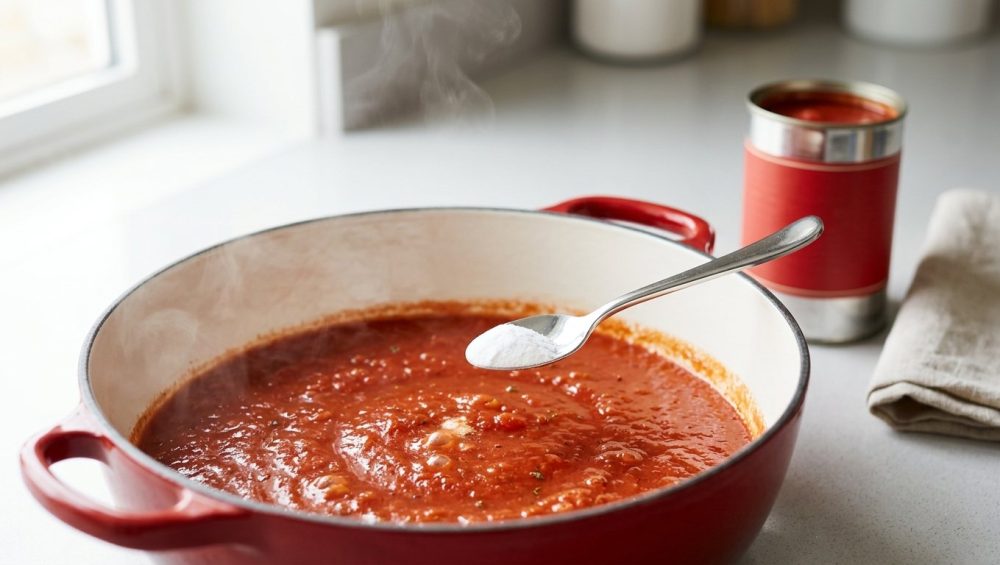
Listen up, weekend warriors. We need to have a serious, brutally honest conversation about what is happening in your kitchen on a Tuesday night. You come home exhausted from work, you boil a pot of water, and you crack open a can of crushed tomatoes to throw together a quick marinara. You let it simmer for ten minutes, dip a spoon in to taste it, and your face instantly puckers. The sauce is sharp, it is metallic, and it aggressively bites the back of your jaw.
What do you do next? If you are like ninety percent of home cooks, you reach into your pantry, grab a fistful of refined white sugar, and dump it straight into the pot.
Stop it. Just stop.
We are making dinner, not dessert. You do not need to turn your savory pasta dish into a cloying tomato jam just to make it palatable. If you want to master simple weeknight dinners, you have to stop relying on brute-force flavor masking and start utilizing basic, elementary food science. You absolutely do not need a pretentious culinary degree to cook like an expert, but you do need to understand what is actually happening inside your cookware.
The secret to a rich, deeply savory, perfectly balanced tomato sauce is not hiding in your sugar bowl. It is sitting right there in that little orange box in your baking cabinet. I am talking about baking soda. A microscopic pinch of sodium bicarbonate is the ultimate culinary equalizer. It works instantly, it costs practically nothing, and it completely neutralizes the harsh acidity of canned tomatoes without adding a single empty calorie to your meal.
This is not just a quirky internet cooking hack; this is hard, objective chemistry. Today, we are going to completely deconstruct the science of tomato sauce. We will examine exactly why canned tomatoes are so acidic in the first place, how the commercial food industry has tricked you into eating sugar-laden pasta, and exactly how a tiny pinch of baking soda can permanently transform your daily cooking routine. Grab your whisk, put away the sugar bowl, and pay attention. Class is in session.
The Great Sugar Illusion: Why Sweetening Your Sauce is a Culinary Scam
Let’s get one thing straight: adding sugar to tomato sauce is a tradition born out of necessity, but it has morphed into a massive culinary crutch. Historically, Italian cooks would occasionally add a tiny pinch of sugar to a pot of Sunday gravy if the end-of-season tomatoes they harvested were under-ripe and lacked natural sweetness. It was an adjustment of last resort. Fast forward to today, and pouring heaps of sugar into a skillet of marinara has become a mindless reflex.
But here is the scientific reality: sugar does absolutely nothing to change the pH level of your sauce. It does not remove the acid. It does not neutralize the sourness. All sugar does is put a sensory band-aid over the problem. It distracts your palate by overwhelming your taste buds with sweetness, effectively confusing your brain. Underneath all of that added sweetness, the harsh, sour ping of the acidic tomatoes is still entirely present. You are just eating sour sugar paste. Realizing that you can fix the root cause of the problem instead of just covering it up is a massive step in conquering weeknight cooking anxiety.
Worse yet, the commercial food industry has weaponized this illusion. If you look at the nutritional labels of standard store-bought pasta sauces, the statistics are genuinely horrifying. Many popular supermarket brands contain anywhere from 5 to 10 grams of sugar per half-cup serving. In some extreme cases, a single half-jar portion of commercial bolognese can contain over 18 grams of sugar. To put that into perspective, the recommended daily limit for added sugars is roughly 24 to 30 grams for most adults and children. You could easily hit your entire daily sugar allowance just by eating a plate of spaghetti on a Wednesday night.
As a home cook, you have the power to completely bypass this nonsense. By utilizing baking soda, you can achieve a restaurant-quality, perfectly balanced flavor profile without turning your savory dinner into a stealthy dessert.
The Food Chemistry of Canned Tomatoes: A Quick, Painless Science Lesson
To understand why we need baking soda, we first have to understand why canned tomatoes are so aggressive in the first place. Why do they taste so sharp straight out of the tin? The answer comes down to food safety regulations and the logarithmic pH scale.
Tomatoes are botanically a fruit, and in their fresh, natural state, they generally hover between 4.30 and 4.90 on the pH scale. However, in the world of commercial food preservation, that number is dangerously borderline. In order to safely process and water-bath can tomatoes without the risk of deadly botulism (caused by Clostridium botulinum bacteria), the FDA and USDA require the internal pH of the canned product to be strictly 4.6 or lower. Because natural tomatoes can easily exceed this pH threshold depending on the variety, soil, and ripeness, commercial canneries cannot leave it to chance.
To guarantee that every single can is shelf-stable and safe for consumption, manufacturers pump the tomatoes full of added citric acid. This artificial acidification forcefully drops the pH level down into the safe zone. While this keeps you safe from foodborne illness, it absolutely wrecks the flavor profile of the tomato. That heavy dose of added citric acid is exactly what hits the back of your throat, and it is a major reason why your tomato sauce tastes metallic and harsh right out of the pantry.
The pH scale is logarithmic, meaning a pH of 4.0 is ten times more acidic than a pH of 5.0. Therefore, even a slight drop in pH caused by commercial citric acid additions translates to a massive, highly noticeable sensory difference on your tongue. You are essentially cooking with a mild, tomato-flavored lemon juice.
Enter Baking Soda: The Ultimate Culinary Equalizer
If sugar is just a cheap mask, what is the actual cure? Enter sodium bicarbonate, universally known as baking soda. Baking soda is an alkaline substance, meaning it is a base. It sits at roughly 8.3 on the pH scale. When you introduce a base to an acid, a literal chemical reaction occurs. They neutralize each other.
When you drop a pinch of baking soda into your simmering, highly acidic tomato sauce, the sodium bicarbonate instantly reacts with the citric acid. You do not have to take my word for it; you will see it happen with your own eyes. The sauce will immediately begin to foam and bubble. That visible fizzing is the release of carbon dioxide gas (CO2).
The chemical equation looks like this: Sodium Bicarbonate + Citric Acid → Sodium Citrate + Water + Carbon Dioxide.
Let’s break down why this is nothing short of culinary magic. The carbon dioxide simply bubbles away and evaporates into the air. The harsh hydrogen ions that were attacking your taste buds are converted into harmless water. And what is left behind in the pot? Sodium citrate.
Sodium citrate is a completely harmless, naturally occurring salt that actually benefits your cooking. In modernist cuisine, chefs use sodium citrate as a powerful emulsifier to make ultra-smooth cheese sauces. In your marinara, this trace amount of sodium citrate helps bind the water and fats together, resulting in a sauce that feels silkier, richer, and more cohesive on the palate. You are not just eliminating the bad flavors; you are actively improving the texture of the dish.
Now, to be perfectly clear, we are not trying to eliminate the acidity entirely. A great Italian red sauce needs a backbone of brightness to cut through the heavy starch of the pasta. If you neutralize all the acid, the sauce will taste flat, flabby, and lifeless. This is precisely why your dinner actually needs acid to taste vibrant. Our goal is simply to take the aggressive, metallic edge off the canned tomatoes, bringing the pH back up to the natural, sweet level of a perfectly vine-ripened summer heirloom.
The Sassy Sous-Chef’s Step-by-Step Guide to Neutralizing Tomato Sauce
Knowing the science is only half the battle. Executing it without ruining your dinner requires a bit of finesse. Baking soda is incredibly potent. If you treat it like kosher salt and haphazardly toss a heavy spoonful into your skillet, your sauce will instantly turn into a soapy, alkaline disaster. Here is my foolproof, step-by-step method for getting it right every single time.
Step 1: Build Your Base and Simmer
Do not add baking soda to raw, cold tomatoes. You need to build your flavor foundation first. Sauté your onions in high-quality olive oil, add your aromatics, and deglaze the pan, making sure you are turning burnt bits into sauce for maximum umami. Pour in your canned crushed tomatoes or puree. Let the sauce come to a gentle simmer for at least 10 to 15 minutes. Heat accelerates chemical reactions, so the sauce must be hot for the baking soda to properly do its job.
Step 2: The Micro-Dose
This is the most critical step. For a standard 28-ounce can of tomatoes, you need no more than 1/8 to 1/4 teaspoon of baking soda. I highly recommend starting with just 1/8 of a teaspoon. Measure it. Do not eyeball this. Sprinkle it evenly over the surface of the bubbling sauce.
Step 3: Stir and Watch the Magic
Immediately grab your wooden spoon and stir vigorously. The sauce will turn slightly pale and begin to foam up. This is the carbon dioxide escaping. Do not panic; the foam will subside within 30 to 60 seconds. Keep stirring until the bubbles completely disappear and the sauce returns to its deep, rich red color.
Step 4: The Taste Test Protocol
Once the fizzing has stopped, take a clean spoon, blow on it, and taste the sauce. Roll it around your tongue. You should immediately notice that the sharp, metallic bite at the back of your jaw is gone. The natural, earthy sweetness of the tomatoes should now be front and center. If the sauce still tastes slightly too aggressive, you can add one more microscopic pinch (a literal dusting) and stir again.
If you accidentally add too much and the sauce tastes soapy or flat, you have pushed the pH too high into the alkaline zone. Do not throw the pot out! You can easily reverse the reaction by adding a splash of balsamic vinegar, a squeeze of fresh lemon juice, or a teaspoon of dry red wine to bring the acidity back down.
Time is Money: Why This Hack Saves Your Weeknight Dinners
I am a massive advocate for the home cook, but I am also a realist. We all love the romantic idea of an Italian grandmother standing over a hot stove, slowly stirring a pot of Sunday gravy for six hours. And yes, traditional slow-simmering is an incredibly effective way to fix acidic tomatoes.
When you simmer a tomato sauce for four hours, you are slowly evaporating the water content, concentrating the natural fructose (fruit sugars) within the tomatoes, and allowing the harsh volatile acids to slowly cook off and mellow out. The long application of heat naturally balances the flavor profile.
But let’s be brutally honest: nobody has time for that on a random weekday. When it is 6:30 PM on a Wednesday, you are hungry, the kids are screaming, and you need food on the table immediately. You do not have four hours to wait for natural fructose concentration, and you certainly don’t want to serve a watery, broken mess, which often leaves beginners wondering why your pasta sauce separates on the plate.
This is why the baking soda hack is a lifesaver. It acts as a culinary time machine. It fundamentally alters the pH chemistry of the sauce in roughly ten seconds, mimicking the mellow, rounded flavor profile of a sauce that has been simmering all afternoon. It buys you the luxury of time. You get the deep, savory, complex flavor of a slow-cooked weekend project with the ruthless efficiency required for a weeknight survival meal.
The “No-Go” Rule: Stop Cooking Acidic Sauces in Toxic Gear
I cannot write a masterclass on tomato sauce without addressing the elephant in the room. You can perfectly execute the baking soda trick, balance your pH to the exact decimal, and perfectly season your dish, but if you are cooking your marinara in cheap, toxic garbage, your dinner is still going to taste like a battery.
I have a strict “no-go” rule when it comes to toxic kitchenware, and when you are finally banishing toxic kitchen gear from your home, your pans should be the first thing in the trash. Tomatoes are highly acidic. If you simmer an acidic liquid in a reactive metal pan—like cheap, unanodized aluminum, unlined copper, or a heavily scratched non-stick Teflon skillet—the acid will literally strip the metal and the chemical coatings right off the pan and leach them directly into your food.
If your non-stick skillet has a peeling coating that looks like a bad sunburn, throw it away immediately. Not only are you ingesting microplastics and forever chemicals (PFAS), but the exposed aluminum underneath is reacting with your tomatoes, creating a profoundly bitter, metallic taste that no amount of baking soda can fix.
If you want to cook acidic foods safely and deliciously, you must use non-reactive cookware. Your best options are tri-ply stainless steel, enameled cast iron (like a Le Creuset or Staub Dutch oven), or high-quality pure ceramic. Stainless steel is virtually indestructible and completely inert, meaning it will never alter the flavor of your food. And yes, despite what you may think, learning the temperature control required for making your stainless steel pan actually non-stick is incredibly easy once you understand the Leidenfrost effect. Invest in safe, durable gear. Your health, and your taste buds, will thank you.
Beyond the Pinch: Other Science-Backed Flavor Enhancers for Marinara
Baking soda is the ultimate tool for neutralizing acid, but a truly mind-blowing tomato sauce requires layers of complex flavor. Once you have balanced the pH, you need to build the profile. Here are my favorite, non-sugar methods for elevating a basic can of tomatoes into absolute kitchen artistry.
The Magic of Dairy Fat
If your sauce still feels a bit hollow after the baking soda treatment, do what the French do: monter au beurre (mount it with butter). Swirling a tablespoon of cold, unsalted butter into your sauce right before serving works wonders. The dairy fat coats your tongue, physically shielding your taste buds from any lingering sharp notes, while giving the sauce a luxurious, glossy finish.
Natural Vegetable Sweetness
Instead of refined white sugar, use the natural, complex sugars found in root vegetables. Grating half of a peeled carrot directly into the sauce while it simmers is an old-school Italian trick. The carrot practically melts into the liquid, releasing natural sweetness and earthy depth without turning the sauce into candy.
Blooming Your Aromatics
Never dump raw spices into a wet sauce. Spices contain essential oils that are fat-soluble, not water-soluble. You must bloom your dried oregano, basil, and red pepper flakes in the hot olive oil for thirty seconds before adding the tomatoes. Furthermore, you must stop adding garlic first when sautéing your base; garlic burns in seconds and turns irreversibly bitter. Sauté your onions first, and add the minced garlic at the very end just until it becomes fragrant.
The Umami Bomb
Tomatoes are naturally packed with glutamates, which provide that savory, meaty flavor known as umami. You can amplify this exponentially by dropping a leftover Parmesan cheese rind into the simmering sauce. As the hard rind gently melts, it infuses the sauce with incredible depth and saltiness. Alternatively, a tiny squeeze of anchovy paste or a dash of fish sauce works miracles. I promise it will not taste like fish; it will just taste fiercely savory.
Frequently Asked Questions from Clueless Cooks
I know that introducing chemistry into the kitchen can intimidate beginners. Let’s clear up the most common points of confusion so you can cook with absolute confidence.
Can I just use baking powder instead?
Absolutely not. Under no circumstances should you put baking powder in your pasta sauce. Baking soda is 100% pure sodium bicarbonate. Baking powder is a mixture of sodium bicarbonate, cornstarch, and—crucially—powdered acids (like cream of tartar). If you add baking powder, you are literally adding more acid back into the pot, completely defeating the purpose.
Will baking soda make my sauce taste salty?
As we discussed, the chemical reaction produces sodium citrate, which does have a mild, salty profile. However, because we are using such a microscopic amount (1/8 to 1/4 teaspoon for a whole pot), the added saltiness is practically imperceptible. That said, as a best practice, you should always hold off on doing your final kosher salt seasoning until after you have added the baking soda and tasted the result.
Does this trick work for other tomato-based dishes?
Yes! This exact same chemical principle applies to anything heavily reliant on canned tomatoes. Whether you are making a fiery arrabbiata, a creamy vodka sauce, a massive pot of weekend chili, or a comforting bowl of tomato bisque, a pinch of baking soda will seamlessly round out the harsh edges.
Does it matter what kind of canned tomatoes I buy?
Yes and no. The baking soda trick will save a cheap can of supermarket generic crushed tomatoes. However, starting with a higher quality product always yields better results. Look for whole peeled San Marzano tomatoes (which naturally have a slightly sweeter profile and thicker flesh) and crush them by hand. Check the ingredient label; if you can find a brand that does not list “citric acid” or “calcium chloride” as added ingredients, you are already starting miles ahead of the competition.
Conclusion: Reclaiming Your Kitchen Confidence
Cooking should never be a source of stress, and you should never feel like you have to blindly follow outdated rules just because a recipe blog told you to. Dumping sugar into your savory dinners is a lazy habit that we are leaving in the past. By understanding the simple, elegant chemistry of sodium bicarbonate, you can instantly elevate your food, impress your family, and cut out unnecessary refined sugars without sacrificing an ounce of flavor.
So the next time you are standing at the stove, exhausted, trying to get dinner plated before the pasta water always boils over, remember that you have the power of science on your side. Grab that little orange box, sprinkle in a pinch of magic, watch the bubbles rise, and taste the difference. You are officially cooking like a pro. Now go pour yourself a glass of wine; you’ve earned it.