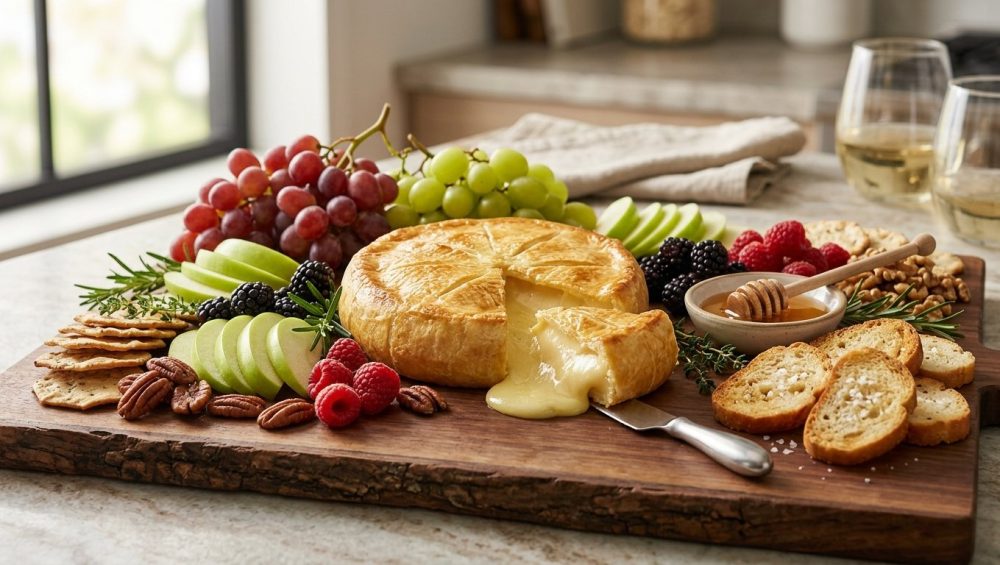
Picture this: You have curated the perfect weekend charcuterie board. The Marcona almonds are toasted, the artisanal crackers are fanned out with geometric precision, and the wine is breathing. You pull your beautiful, expensive wheel of baked brie out of the oven, ready to present a molten, elegant centerpiece to your guests. But as you set it down, the rind ruptures. A tidal wave of greasy, separated dairy lava erupts across the board, swallowing your carefully arranged figs and turning your pristine appetizer into a chaotic puddle of oily sadness.
If you want to actually host a relaxed dinner party instead of hyperventilating over a ruined appetizer, you need to understand the science of what just happened. Baking a wheel of soft cheese seems like the easiest trick in the culinary playbook—you just apply heat to fat, right? Wrong. A wheel of brie is a complex, living matrix of proteins, moisture, and fragile mold. When you throw it into a hot oven without respecting its structural mechanics, you are essentially building a dairy-based pressure cooker.
I have zero patience for pretentious chef-speak, but I also refuse to let home cooks fall victim to bad advice. You do not need a culinary degree to make mind-blowing food, but you do need to understand the basic physics of your ingredients. We are going to break down exactly why your cheese explodes, how to control your oven temperatures, and the foolproof scoring techniques that will guarantee a picture-perfect, stress-free cheese board every single time.
The Anatomy of a Cheese Disaster: Why Your Brie Explodes
To understand why your appetizer just turned into an active volcano, we have to look at the anatomy of the cheese itself. Brie is a soft-ripened cheese, which means it boasts a very high moisture content—typically hovering between 48% and 52% water—alongside a butterfat content of roughly 27% to 30%.
That gorgeous, velvety white exterior that encases the gooey center is called a bloomy rind. It is formed by inoculating the cheese curds with an edible mold called Penicillium candidum. As the cheese ages, this mold blooms on the outside, breaking down the proteins from the exterior inward and creating that seductive, creamy layer just beneath the surface. But in the oven, this rind serves a completely different purpose: it acts as a structural straightjacket.
When you expose a high-moisture cheese to the intense ambient heat of an oven, the water trapped inside the protein matrix begins to heat up and convert into steam. Steam expands. Because the Penicillium candidum rind is incredibly resilient and relatively impermeable, it traps that expanding water vapor inside the wheel. As the internal temperature climbs, the vapor pressure pushes outward against the rind.
Simultaneously, the heat is melting the butterfat and relaxing the casein proteins that hold the cheese together. If the steam pressure exceeds the tensile strength of the rind before you pull the cheese from the oven, the rind suffers a catastrophic structural failure. It tears open, and the pressurized steam violently forces the liquified fat and denatured proteins out through the breach. Congratulations, your brie has just exploded.
The Thermodynamics of Baked Cheese (No Culinary Degree Required)
Let’s get a little nerdy for a second, because understanding the thermodynamics of dairy is the secret to never ruining a cheese dish again. Cheese is essentially an emulsion of fat and water, suspended in a web of casein proteins. When cheese is cold, this protein web is tight and firm. As you apply heat, the kinetic energy causes the protein chains to relax and uncoil, allowing the trapped fat and moisture to flow freely. This is the magical “ooze” we are looking for.
However, heat is a double-edged sword. If you heat the cheese too aggressively, or take the internal temperature too high, those relaxed protein chains will suddenly contract and tangle together, aggressively squeezing out all the water and fat. You have likely seen this exact chemical failure when your cheese sauce turns grainy on the stovetop. It is a process called syneresis.
When syneresis happens inside a wheel of baking brie, the smooth emulsion breaks completely. The water turns to aggressive steam, the fat separates into a clear, greasy oil, and the proteins clump into a rubbery, squeaky mass. This is why an over-baked wheel of brie doesn’t just leak—it leaks a disgusting, separated slick of yellow butterfat while leaving behind a hard, waxy puck of ruined cheese.
The Cardinal Sin: Skipping the Score
If there is one absolute, non-negotiable rule of baking brie, it is this: you must score the rind. Throwing a naked, uncut wheel of cheese into a hot oven is a rookie mistake that guarantees a blowout. You know that terrifying metallic bang when your cheap baking sheets pop in a hot oven? Your cheese is experiencing that exact same thermal stress, just without a way to vent it.
Scoring the rind serves two critical scientific functions. First, it creates a chimney. By cutting through the top layer of the Penicillium candidum, you provide an escape route for the expanding steam. Instead of building up explosive pressure against the walls of the rind, the water vapor gently vents out of the top. Second, scoring allows the radiant heat of the oven to penetrate the center of the cheese more efficiently, ensuring an even melt without requiring you to overcook the exterior.
The Crosshatch Technique
The most effective way to score your cheese is the crosshatch method. Using the tip of a very sharp paring knife, make parallel cuts across the top of the rind, spaced about half an inch apart. Then, rotate the wheel 90 degrees and make another set of parallel cuts, creating a checkerboard pattern.
The depth of your cuts is crucial. You only want to slice through the top rind and maybe a millimeter into the cheese paste. Do not stab your knife all the way to the bottom of the wheel, or you will create a channel for the cheese to leak out the sides.
The “Decapitation” Method
Some home cooks prefer to slice the entire top rind off the wheel before baking. While this certainly prevents explosions, it removes the structural integrity of the cheese. Without the top rind to hold everything together, the sides can easily collapse outward as the center turns to liquid. If you absolutely despise eating the top rind, use a sharp knife to trace a circle around the top, leaving a sturdy 1/4-inch border of rind intact around the edge. This acts as a retaining wall, keeping your molten cheese safely contained while giving you an open pool of goodness to dip into.
Temperature Control: Stop Treating Your Cheese Like a Chuck Roast
I see recipes online telling people to blast their brie at 425°F (220°C) to “get it done faster.” Let me be brutally clear: time is money during the week, but when you are handling delicate weekend appetizers, rushing the heat is a guaranteed path to disaster. High ambient heat causes the exterior of the cheese to hit the boiling point of water before the center has even begun to soften.
The ideal baking temperature for a standard wheel of brie is 350°F (175°C). At this moderate temperature, the thermal transfer is gentle enough to melt the interior fats without instantly vaporizing the moisture and denaturing the proteins.
The 140-Degree Sweet Spot
Your goal is not to cook the cheese; your goal is to change its physical state from a solid to a highly viscous liquid. This transformation happens perfectly when the internal temperature of the cheese reaches roughly 140°F (60°C). At 140°F, the butterfat is fully liquified, and the casein proteins are perfectly relaxed, creating maximum “ooze”.
If you push the internal temperature past 150°F (65°C), you cross the threshold into syneresis. The emulsion breaks, the proteins seize, and your cheese is ruined. If your cheese is still cold in the middle after a standard bake time, it is highly likely your meat thermometer is lying to you because it hasn’t been calibrated, or your oven runs notoriously cold. Invest in an oven thermometer and trust the process.
For an 8-ounce baby wheel of brie, bake for exactly 12 to 15 minutes at 350°F. For a larger 16-ounce wheel, you will need 15 to 20 minutes. Do not walk away. Do not start vacuuming. Stand by the oven and watch it. When the scored cuts on top begin to flare open and the cheese looks visibly soft and slightly domed, pull it immediately.
The Vessel Matters: Banishing Toxic Gear and Choosing the Right Dish
The equipment you use to bake your cheese is just as important as the temperature of your oven. I am a fierce advocate for the home cook, which means I will not sit quietly while the cookware industry sells you garbage. If you haven’t started banishing toxic kitchen gear from your cabinets yet, let this be your wake-up call. Baking a beautiful, artisanal cheese on a cheap, scratched non-stick pan coated in peeling forever-chemicals is a culinary crime.
The Danger of High Thermal Mass (Cast Iron)
Many rustic-looking recipes suggest baking brie in a miniature cast-iron skillet. Do not do this. Cast iron has an incredibly high thermal mass, meaning it absorbs and holds onto a massive amount of heat. While this is fantastic for searing a steak, it is a death sentence for delicate dairy. A cast-iron skillet will continue to pump intense heat into the bottom of your cheese long after you pull it from the oven. The bottom rind will scorch, the fat will rapidly oxidize, and your brie will split and leak before it ever reaches the table.
The Risk of Thermal Shock (Glass)
Glass baking dishes are another common pitfall. We have all heard the horror stories of a glass baking dish shattered across the kitchen floor because someone moved it from a 400-degree oven straight onto a cold granite countertop. Beyond the safety hazard of thermal shock, glass is an insulator that heats unevenly, often resulting in a cheese wheel that is boiling on the edges and solid in the center.
The Superiority of Snug Stoneware
The absolute best vessel for baking brie is a heavy-duty ceramic or natural stoneware dish that is only slightly larger than the wheel of cheese itself. A snug fit provides physical support to the sidewalls of the rind, acting as a brace that prevents the cheese from collapsing outward as it melts. Furthermore, the thermal retention in natural stoneware is ideal for this application because it absorbs heat gradually and holds it beautifully on the table, keeping your cheese perfectly gooey for up to 30 minutes without scorching the bottom.
The Baking Process: Step-by-Step to Gooey Perfection
Now that we understand the science, the temperature, and the equipment, let’s walk through the exact, foolproof process for baking the perfect wheel of brie.
Step 1: The Pre-Chill
Do not let your brie sit out at room temperature before baking. I know standard cheese board protocol dictates bringing cheese to room temperature to enhance the flavor, but baked brie plays by different rules. You want the cheese to go into the oven cold. A chilled wheel of cheese ensures that the exterior rind doesn’t overheat and rupture before the ambient heat has a chance to penetrate and melt the center. Keep it in the refrigerator until the exact moment you are ready to score it.
Step 2: The Parchment Sling
If you do not own a perfectly sized ceramic baker and must use a flat baking sheet, you absolutely must use a parchment paper sling. Cut a square of high-quality parchment paper slightly larger than the cheese. Place the chilled, scored wheel on the paper, and place the paper on a heavy-duty baking sheet. If your flimsy aluminum baking sheets keep warping in the oven, causing your cheese to slide around like a hockey puck, upgrade to a commercial-grade half-sheet pan immediately.
When the cheese is done baking, it will be as delicate as a water balloon. You cannot pick it up with a spatula without tearing the bottom rind. Instead, grab the corners of the parchment paper and gently lift the entire package, transferring it seamlessly to your serving board.
Step 3: The Bake
Place the prepared cheese into the center of a fully preheated 350°F (175°C) oven. Do not use the convection setting, as the fan will aggressively dry out the top rind and cause it to crack. Bake for the allotted time (12-15 minutes for 8oz, 15-20 minutes for 16oz).
You will know the cheese is ready by performing the “jiggle test.” Gently tap the side of the wheel with the back of a spoon. It should ripple and wobble like a bowl of heavy cream. If it feels firm, it needs another minute. If it looks deflated, you have gone too far.
The Art of the Rest: Why Patience Prevents Puddles
This is the second most common point of failure for home cooks. You pull the gorgeous, wobbly wheel of cheese out of the oven, transfer it to your board, and immediately plunge a cheese knife into the center.
Stop. Do not touch it.
When baked brie comes fresh out of the oven, the liquified fat and moisture are at their absolute maximum kinetic energy. The viscosity is practically zero. If you breach the rind right now, the cheese will instantly evacuate its casing, flooding your board in a messy, unstoppable tidal wave of dairy lava.
You must let the cheese rest at room temperature for a minimum of 5 to 10 minutes before serving. During this resting phase, carryover cooking ensures the very center finishes melting, while the outer layers slightly cool and stabilize. The proteins begin to re-establish a loose network, thickening the liquid into a luxurious, slow-moving, scoopable consistency.
This mandated resting period is the true art of effortless hosting, buying you exactly enough time to pour the wine, arrange the crackers, and look like you have your life completely together.
Pastry Perils: Mastering Brie en Croûte Without the Soggy Bottom
Wrapping your brie in golden, flaky puff pastry—a preparation known as Brie en Croûte—is a spectacular way to elevate your appetizer. However, introducing raw dough to high-moisture cheese creates a whole new set of thermodynamic nightmares.
The Insulation Problem
Puff pastry acts as a thermal insulator. When you wrap a wheel of cheese in dough, it takes significantly longer for the oven’s heat to reach the center of the brie. If you just wrap a cold wheel of cheese in raw puff pastry and bake it, one of two things will happen: either the pastry will be golden brown while the cheese inside remains a cold, solid brick, or the cheese will melt beautifully while the pastry touching the rind turns into a raw, gummy, soggy mess.
The Pre-Bake Solution
To achieve a perfectly crisp pastry and a molten interior, you have to manage the moisture. First, always score the cheese before wrapping it. Second, if you are a perfectionist, blind-bake the bottom layer of your puff pastry for 10 minutes before placing the cheese on top. This creates a moisture barrier that prevents the bottom from getting soggy.
The Egg Wash Trap
Most recipes tell you to brush the entire exterior of the pastry with a heavy egg wash to achieve a glossy shine. Be careful here. Egg proteins coagulate rapidly in the oven, creating a hard, brittle shell. If you seal the pastry completely with egg wash, you trap the steam from the cheese inside. The pressure will build until the pastry violently ruptures, leaking cheese all over your baking sheet. Always score the top of your puff pastry with a few sharp slits to allow the internal steam to vent safely.
Leftovers and Reheating: A Sassy Guide to Not Ruining It Twice
Let’s be honest, if you have leftover baked brie, you either invited the wrong people over or you made entirely too much food. But on the rare occasion that you find yourself with half a wheel of congealed, room-temperature cheese at the end of the night, do not throw it away.
Can you reheat it? Yes, but you must do it with respect. Never, under any circumstances, put baked brie in the microwave. Microwaves heat water molecules via dielectric heating, which will instantly boil the moisture inside the cheese, breaking the emulsion and leaving you with a rubbery, greasy bouncy ball.
Instead, place the leftover cheese in a small ceramic dish and reheat it in a 300°F (150°C) oven for about 10 minutes until it softens. Better yet, scoop the cold, leftover brie out of its rind the next day and use it as a base for a wildly decadent macaroni and cheese. Repurposing a fancy weekend appetizer into a quick Tuesday night pasta sauce is my favorite trick for conquering weeknight cooking anxiety without ordering takeout.
The Ultimate Stress-Free Cheese Board Strategy
You have mastered the science of the melt, you have banished the toxic pans, and you have executed the perfect crosshatch score. The final step to a flawless appetizer experience is how you serve it.
A perfectly baked brie is heavy, thick, and viscous. Do not insult your flawless culinary execution by serving it with flimsy, paper-thin water crackers. A weak cracker will snap immediately under the weight of the cheese, leaving a jagged piece of cracker lost in the gooey center and forcing your guests to awkwardly dig it out with their fingers.
You need structural integrity. Serve your baked brie with thick, toasted baguette slices (crostini), hearty seeded crackers, or crisp slices of tart Granny Smith apple.
Furthermore, because melted brie is incredibly rich and coats the palate with heavy butterfat, you must provide acidic accompaniments to cut through the richness. A dollop of tart cherry preserves, a drizzle of high-quality balsamic glaze, or a handful of fresh pomegranate seeds scattered over the top right after it comes out of the oven will elevate the flavor profile from “heavy cheese” to a balanced, professional-tier culinary experience.
Baking the perfect wheel of brie does not require magic, and it certainly does not require a culinary degree. It simply requires a basic understanding of moisture, temperature, and structural mechanics. Stop treating your ingredients like an afterthought, respect the physics of your oven, and you will never have to clean an exploded cheese puddle off your serving board again. Now go preheat your oven, score that rind, and show your weekend guests what a real home cook can do.