Listen, we need to have a serious talk about the absolute massacre happening on your kitchen counter every time a recipe calls for fresh ginger. You grab that gnarly, knobby little root, you pull out your standard metal box grater, and five minutes later, what do you have to show for it? Scraped knuckles, a puddle of wasted juice, and a pile of wet, stringy fibers hanging off the metal holes that looks suspiciously like a shower drain. You scrape and you tap, but you’re left with barely half a teaspoon of actual usable ginger flesh.
It is infuriating, it is a massive waste of time, and frankly, you deserve better. As a weekend culinary hobbyist who relies on clever weekday shortcuts, I am here to tell you that you do not need a culinary degree to make mind-blowing, restaurant-quality food at home. But you do need to stop fighting your ingredients. And the secret to winning the war against fibrous aromatics isn’t better knife skills; it is a specialized Japanese ceramic grater.
The Anatomy of Ginger: Why It Fights Back
Let’s get botanical for a second, because understanding your enemy is the first step to defeating it. The ginger you buy at the grocery store isn’t actually a root at all; it is a rhizome—a subterranean plant stem that sends out roots and shoots from its nodes. If you have been struggling with fresh ginger, it is not because you lack talent in the kitchen. It is because the biological architecture of Zingiber officinale is quite literally designed to be tough, resilient, and highly fibrous.
Recent histological studies on ginger rhizomes reveal a complex internal structure. Beneath the outer cork layers, the rhizome is packed with parenchyma cells containing starch grains and specialized suberized oil cells. These oil cells are where the magic happens—they hold the yellowish to reddish-brown oleoresins, including the highly prized 6-gingerol, which gives ginger its signature pungent, spicy kick. However, protecting these delicate flavor compounds is a dense network of vascular bundles and septate fibers. These fibers run longitudinally through the rhizome, acting like microscopic rebar reinforcing concrete.
When you take a chef’s knife to a piece of ginger, you are forced to slice through these tough vascular bundles. If your blade isn’t honed to a razor’s edge, you end up crushing the fibers rather than slicing them, which presses out the valuable oils onto your cutting board instead of into your food. In fact, battling these tough, woody fibers on a daily basis is exactly why your knives go dull much faster than you would expect. Chopping ginger finely enough to avoid a stringy mouthfeel in your stir-fry is a tedious, time-consuming chore that most weekday home cooks simply do not have the patience for. We want the flavor, the aroma, and the heat, but we want it efficiently.
The Box Grater Betrayal and the Microplane Misstep
So, if chopping is out, grating seems like the logical next step. Enter the standard metal box grater—the most ubiquitous, yet profoundly flawed, tool in the Western kitchen arsenal. Box graters are manufactured by punching holes into sheets of stainless steel or aluminum, creating raised, sharp-edged loops. This design is perfectly adequate for shredding a block of cheddar cheese or a firm carrot. But when you apply it to a highly fibrous rhizome, the physics of the tool completely fail.
When you drag ginger across a punched metal hole, the sharp edge catches the tough septate fibers. Because the hole is open, the fibers are pulled through and snagged, rather than sheared off. The grater effectively acts like a crude comb, ripping the stringy vascular bundles away from the fleshy starch and trapping them in the metal teeth. Within seconds, the holes are completely clogged with a mat of indestructible ginger hair. You are no longer grating; you are just mashing a root against a wall of its own fibers.
“But wait,” you say, “what about my trusty microplane?” Ah, the microplane. A brilliant tool adapted from a woodworking rasp, featuring hundreds of tiny, photo-etched razor blades. If you have ever wondered why your lemon zest is bitter when using a box grater, it’s because it digs too deep into the pith, whereas a microplane perfectly shears off just the essential oil-rich skin. But ginger is not a lemon. While a microplane can grate ginger, it suffers from a similar, albeit miniaturized, clogging issue. The incredibly sharp teeth slice the fibers initially, but the sheer volume of moisture and starch causes the resulting paste to adhere stubbornly to the back of the metal blade. You end up having to carefully scrape the underside of the microplane with a knife, risking your fingers and wasting precious time. Furthermore, the friction generated by the sharp metal teeth can actually heat up the delicate gingerols, causing them to oxidize and lose their bright, punchy aroma before they even hit the pan.
The Hidden Dangers of Cheap Metal Graters
We need to take a quick detour here, because as your resident sassy sous-chef, I have a strict, uncompromising “no-go” rule when it comes to toxic kitchen gear. The kitchenware industry is currently undergoing a massive regulatory shift. As of early 2026, the U.S. home and housewares retail market has ballooned to over $77 billion, and consumers are finally waking up to the materials touching their food. With states like Minnesota actively banning the sale of PFAS-coated cookware, the spotlight is firmly on the safety of our everyday utensils.
Many budget-friendly box graters and cheap metal shredders are made from low-grade aluminum or thinly plated steel. When these reactive metals come into contact with highly acidic or sulfurous ingredients—like ginger, garlic, or tomatoes—a chemical reaction occurs. The acid leaches microscopic metal ions into your food. Have you ever noticed a faint, metallic tang in your homemade marinades? Or wondered why your silicone spatulas taste soapy after stirring a particularly acidic sauce? It is often a result of flavor contamination from cheap, reactive tools interacting with your ingredients.
Moreover, low-quality metal graters are prone to rusting at the welded seams or flaking their cheap tin coatings directly into your food. I do not care how much you want to save a few euros; feeding your family mystery metal flakes is not an acceptable weekday shortcut. You need a tool that is highly effective, fiercely durable, and completely chemically inert.
Enter the Oroshiki: The Japanese Ceramic Grater
The solution to our stringy ginger nightmare has actually existed for centuries. In Japan, the art of grating—breaking down ingredients to their finest, most aromatic paste—is a revered culinary technique. The traditional Japanese grater is known as the oroshigane (literally “grating metal”) or oroshiki (grating vessel).
Historically, the pursuit of the perfect grated texture led Japanese craftsmen down several paths. During the Edo period, the ultimate tool for grating fresh wasabi was made by mounting the skin of an angel shark onto a wooden paddle. The natural, sandpaper-like dermal denticles of the shark skin disrupted the plant cells perfectly, releasing the sweet, pungent umami of the wasabi without generating heat. Later, artisans in cities like Sakai and Tsubame-Sanjo began hand-hammering thick plates of copper, meticulously gouging out rows of incredibly sharp, raised teeth without actually puncturing the metal. These copper oroshigane are still the gold standard in high-end kaiseki restaurants today.
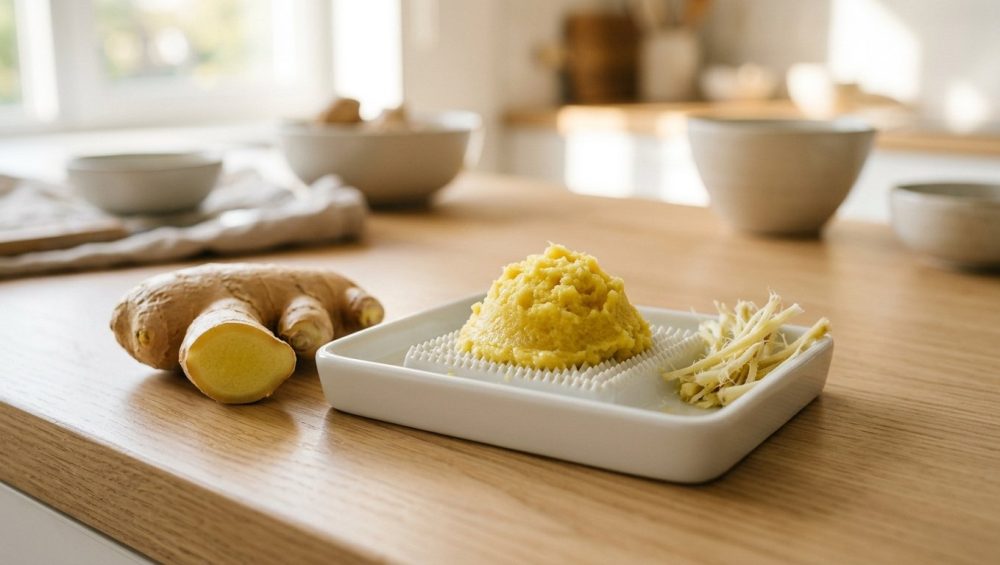
However, for the modern home cook who wants the efficiency of the oroshigane without the exorbitant price tag or the intensive maintenance of hand-hammered copper, Japanese ceramic engineers perfected the ceramic oroshiki. Made from high-fired porcelain or durable stoneware (such as traditional Mino ware), these ceramic graters feature rows of tiny, sharply defined, triangular nubs.
Here is the absolute genius of the ceramic design: the nubs are jagged and hard enough to instantly burst the fleshy starch and oil cells of the ginger, but they are just blunt enough that they cannot cut through the tough vascular fibers. Instead of ripping and trapping the strings like a metal box grater, the ceramic nubs effortlessly puree the soft flesh, while the tough, woody fibers are left completely intact and attached to the root in your hand. You are left with a pristine, velvety ginger paste in the bowl, and a little brush of fibers on the root that you simply snip off and throw away. It is an elegant, scientifically perfect solution to a maddening kitchen problem.
The Science of Ceramic: Pure Flavor, Zero Reactivity
Beyond the mechanical brilliance of the tooth geometry, the material properties of high-fired ceramic make it vastly superior for preparing volatile aromatics. Ceramic is a thermal insulator, whereas metal is a thermal conductor. When you aggressively grate a dense root against a metal surface, kinetic energy is converted into friction heat. This localized heat warms the essential oils, accelerating oxidation and dulling the vibrant, zesty high notes of the ginger. Ceramic remains cool to the touch, preserving the raw, punchy integrity of the 6-gingerol.
Furthermore, ceramic is entirely non-reactive. It will never rust, it will never flake, and it will never interact chemically with the acids in your food. We all know the tragic disappointment when a cheap garlic press makes food bitter by violently crushing the allicin compounds against reactive cast zinc or low-grade aluminum. The ceramic grater treats your ingredients with respect. The paste it produces tastes cleaner, brighter, and more authentic to the raw ingredient than anything produced by a metal blade.
The Sassy Sous-Chef’s Masterclass: How to Use a Ceramic Grater Properly
Alright, grab your wine, push up your sleeves, and let’s get to the actual technique. Using a Japanese ceramic grater is incredibly simple, but there is a specific rhythm to it that will maximize your yield and minimize your effort.
Step 1: The Prep
Start with a firm, plump knob of fresh ginger. If it is wrinkled and soft, it is past its prime and will be difficult to grate on any surface. Do you need to peel it? If you are buying organic ginger and washing it thoroughly, you can absolutely leave the thin skin on; the ceramic nubs will puree it right along with the flesh. If you prefer to peel it, put down the vegetable peeler (which wastes too much flesh) and use the edge of a regular teaspoon to gently scrape away the skin. It navigates the knobby contours perfectly.
Step 2: The Motion
Place your ceramic grater flat on the counter. Most high-quality models come with a silicone ring on the bottom to prevent slipping. You do not even need a cutting board for this, which is a massive relief if you are tired of aggressive chopping and wondering why your wooden cutting board cracks from constant heavy impact and moisture exposure. Hold the ginger root perpendicular to the grater. Instead of swiping aggressively up and down like you are trying to start a fire, move the ginger in smooth, firm, circular motions over the ceramic teeth. This circular action attacks the fibers from multiple angles, rapidly breaking down the flesh while isolating the strings.
Step 3: The Harvest
As you grate, a beautiful, juicy puree will accumulate in the deep moat surrounding the ceramic teeth. You will notice the end of your ginger root starting to look like a tiny, fibrous paintbrush. That is the ceramic grater doing its job—leaving the tough strings behind. Simply take a pair of kitchen shears, snip off that fibrous end, and continue grating the fresh flesh underneath.
Once you have enough paste, you can use a small bamboo brush (often sold with the grater) or a silicone spatula to sweep the puree out of the moat. If your pan sauces are watery and lacking depth, whisking in a teaspoon of this ultra-fine, highly potent ginger juice will instantly elevate the flavor profile and help emulsify the liquid.
Beyond Ginger: The Multi-Tasking Magic of the Oroshiki
Do not for a second think this is a single-use gadget. I despise clutter just as much as I despise toxic gear, so any tool I recommend must earn its keep in the drawer. The ceramic oroshiki is a versatile powerhouse for weeknight flavor building.
Daikon Radish
Grated daikon (daikon oroshi) is a staple condiment in Japanese cuisine, served alongside grilled fish, tempura, and rich meats. The ceramic grater produces a snowy, fluffy mound of radish that perfectly cuts through rich, oily dishes.
Garlic
Mincing garlic into a fine paste with a knife requires salt and a lot of scraping. The ceramic grater turns a clove of garlic into a velvety puree in seconds. Because it bursts the cells without the harsh, metallic friction of a standard press, the resulting flavor is pungent but remarkably sweet and mellow, never bitter.
Tofu Marinades
If you are sick of eating bland tofu, the key is a deeply penetrating marinade. A mixture of soy sauce, sesame oil, and ceramic-grated ginger and garlic creates a micro-suspension of flavor that clings to the tofu far better than roughly chopped aromatics ever could.
Turmeric, Tomatoes, and Apples
Fresh turmeric is notoriously difficult to process and stains everything it touches bright yellow. The ceramic grater handles it effortlessly, and unlike plastic tools, the glazed ceramic washes completely clean without holding onto the stain. Need a quick tomato puree for a pan sauce? Grate a halved tomato flesh-side down; the ceramic teeth will puree the interior and leave the skin safely in your hand. Grating an apple yields a beautiful, smooth puree perfect for adding natural sweetness to curries or meat marinades.
Cleaning and Maintenance: The Ultimate Weeknight Time-Saver
Let’s talk about the aftermath, because time is money, and nobody wants to spend twenty minutes picking fibers out of a tool after a quick weeknight dinner. Cleaning a metal box grater or a microplane after grating ginger requires a specialized brush, a lot of hot water, and the very real risk of slicing your sponge (and your fingers) to ribbons.
The ceramic grater, by contrast, is a revelation. Because the teeth are essentially smooth, glazed ceramic cones, the fibers do not get trapped. You simply hold the grater under warm running water, give it a quick wipe with a soapy sponge, and it is immaculately clean in under five seconds. You don’t need a heavy-duty abrasive brush, and if you have ever stressed over ruining your cast iron with aggressive scrubbing, you will deeply appreciate how gentle and effortless this cleanup process is. It is dishwasher safe, of course, but it cleans up so quickly in the sink that you will rarely need to run it through a cycle.
Buying Guide: What to Look For in a Quality Ceramic Grater
Not all ceramic graters are created equal, and with the influx of cheap knock-offs flooding online marketplaces in 2026, you need to know what to look for to ensure you are getting a reliable kitchen workhorse.
- High-Fired Porcelain or Stoneware: Look for graters made in Japan (specifically regions known for pottery, like Mino or Arita). The ceramic must be high-fired to ensure the teeth are durable and chip-resistant. Cheap, low-fired ceramics will dull quickly and can chip into your food.
- A Deep Moat: The grating surface should be surrounded by a generous, deep well. Ginger and daikon release a massive amount of liquid when grated, and a shallow plate will result in highly flavorful juices spilling all over your countertop.
- A Silicone Base: Grating requires downward pressure and circular motion. A grater with a bare ceramic bottom will slide dangerously across your counter. Ensure the model you buy features a non-slip silicone ring permanently attached to the base.
- Tooth Density: The nubs should be densely packed and distinctly pointed. If they look rounded or spaced too far apart, it will require too much effort to break down the ingredients.
Conclusion: Reclaiming Your Kitchen Sanity
Cooking should be a joyful, creative release at the end of a long day, not a frustrating battle against your own ingredients and tools. By swapping out your brutal, ineffective metal box grater for a beautifully engineered Japanese ceramic oroshiki, you are doing exactly what professional chefs do: you are working smarter, not harder. You are maximizing the flavor of your expensive fresh ingredients, eliminating toxic metals from your food prep, and reclaiming precious minutes during cleanup.
Stop fighting the stringy ginger. Let the ceramic teeth do the work, enjoy the pristine, restaurant-quality puree it produces, and pour yourself another glass of wine. You’ve earned it, and your stir-fries are about to taste better than ever. Now get out there and cook something amazing.