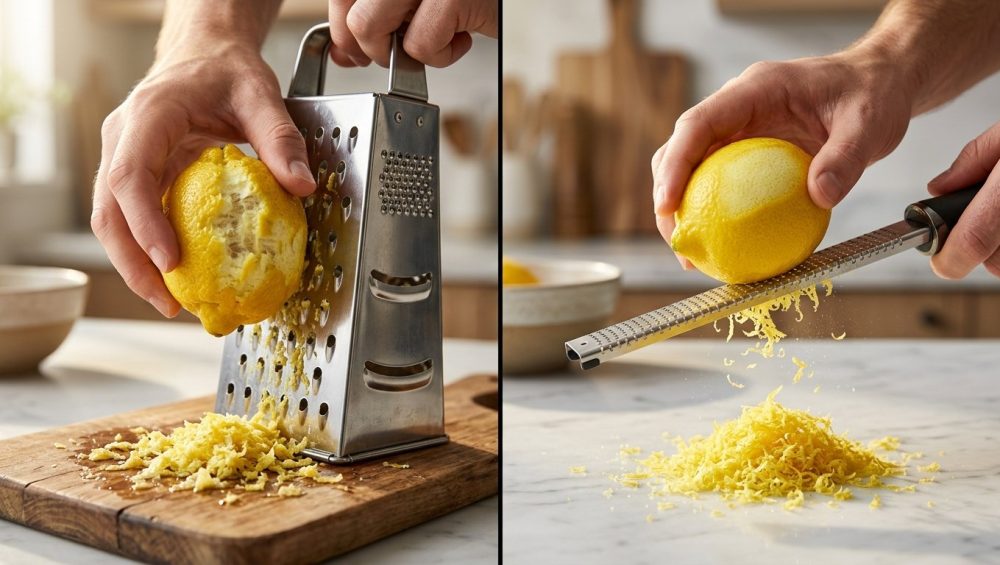
Listen up, weekend culinary warriors. We need to have a serious conversation about what is happening on your cutting boards. Picture this: it is a beautiful Friday evening. You have poured yourself a generous glass of wine, you have queued up your favorite playlist, and you are ambitiously tackling a gorgeous, vibrant lemon ricotta pasta, or perhaps an elaborate weekend lemon tart. You carefully follow the recipe, you grate your citrus, you mix it in, and you take a triumphant taste.
But instead of a bright, floral, sunshine-filled explosion of flavor, your mouth is assaulted by a harsh, astringent, battery-acid bitterness. You immediately blame yourself. You think you lack the “magic touch” that professional chefs possess. You assume you did something wrong, or you start wondering why your dinner tastes boring and slightly ruined despite following the recipe to the absolute letter.
Stop beating yourself up. Put down the whisk, take a sip of that wine, and listen to me: it is not your fault. You do not need a culinary degree to make mind-blowing food in a standard home kitchen. What you do need, however, is to stop sabotaging your own meals with terrible equipment. The culprit behind your bitter lemon dessert isn’t your technique; it is that dull, rusted, knuckle-shredding metal box you call a cheese grater.
Today, we are diving deep into the absolute magic of the microplane grater. We are going to explore the botanical science of citrus fruits, the fascinating industrial history of this accidental kitchen miracle, the manufacturing wizardry that makes it work, and why upgrading this one simple tool will instantly elevate your cooking from amateur hour to absolute perfection. Time is money, and we don’t have time for bad food, so let’s get into it.
The Anatomy of a Citrus Fruit: Why Pith is Public Enemy Number One
To understand why your food tastes bitter, we have to put on our lab coats for a moment and look at the botanical anatomy of a lemon. Nature is brilliant, but she is also fiercely protective of her creations. When you hold a lemon, you are looking at a masterclass in biological defense mechanisms.
A citrus peel is divided into two highly distinct layers, and treating them as if they are the same thing is the first rookie mistake you can make in the kitchen. For example, you might already know how to stop eating bland tofu by manipulating its cellular structure, but manipulating citrus requires a completely different understanding of plant biology.
The Flavedo: The Goldmine of Flavor
The outermost, brightly colored layer of the citrus peel is called the flavedo (or the exocarp). If you look closely at a lemon, an orange, or a lime, you will notice that the skin is not perfectly smooth; it is textured with thousands of microscopic, porous bumps. These tiny bumps are actually delicate oil glands packed to the brim with volatile essential oils, phenolic compounds, and aromatic terpenes.
This is where the magic lives. The flavedo contains all the bright, floral, zesty flavors and the intoxicating aromas that you associate with citrus. When a recipe calls for “lemon zest,” this microscopic, paper-thin outer layer is the only thing you want. You want to gently open those oil glands and capture their contents before they evaporate into the air.
The Albedo: The Bitter Spongy Trap
Directly beneath the brightly colored flavedo lies the albedo (or the mesocarp). This is the thick, white, spongy, marshmallow-like layer that clings to the fruit’s flesh. The albedo serves a vital evolutionary purpose: it acts as a shock absorber so the fruit doesn’t burst when it falls from the tree, and it acts as a chemical deterrent against pests and insects.
How does it deter pests? By being aggressively, offensively bitter. The albedo is absolutely loaded with high concentrations of bitter chemical compounds, most notably naringin and limonin. Limonin is a highly bitter triterpenoid dilactone, and naringin is a flavonoid that gives grapefruits their signature sharp bite. While these compounds have their place in certain complex flavor profiles (like a bitter marmalade), they are catastrophic when accidentally introduced into a delicate lemon vinaigrette or a sweet baked good. The highest concentrations of these bittering agents are found squarely in the albedo.
Therefore, the entire goal of zesting a lemon is an exercise in microscopic precision: you must extract 100% of the oil-rich flavedo while leaving 100% of the bitter albedo behind. And this brings us to the scene of the crime.
The Box Grater: A Kitchen Crime Scene
I want you to walk over to your kitchen drawers, open them up, and look at your grating tools. If you are relying on a standard, four-sided, stamped-metal box grater to zest your citrus, you are committing a culinary felony.
Let’s be brutally honest about what a traditional box grater actually is. It is a tool designed for aggressively shedding large blocks of semi-hard cheddar cheese or turning potatoes into hash browns. It is not a precision instrument.
The Mechanics of Blunt Force Trauma
Standard box graters are manufactured using a process called metal stamping. A massive industrial press literally punches holes through a sheet of cheap steel. Because the metal is thick and the holes are merely punched outward, the resulting “blades” are inherently dull from the very second they leave the factory floor.
When you drag a delicate lemon across these dull, punched-out metal holes, you are not slicing the fruit. You are applying blunt force trauma. You are mashing, bruising, and tearing the peel. It is the exact same mechanical failure that explains why you cry chopping onions—you are crushing the cell walls rather than cleanly slicing through them, causing the volatile compounds to spray everywhere except into your food.
Digging Your Own Bitter Grave
Because a stamped box grater is so dull, human instinct dictates that you have to press down harder to get any results. When you press a lemon hard against a box grater, the dull teeth bite deeply into the skin. They tear right past the paper-thin flavedo and gouge out massive, ragged chunks of the white, bitter albedo.
You end up with a cutting board covered in a mangled, wet pile of white pith heavily laced with limonin and naringin. Meanwhile, the precious essential oils from the flavedo have been violently crushed and smeared all over the dull metal tracks of the grater, completely wasted. You then scrape this bitter, bruised mess into your mixing bowl, bake your dessert, and wonder why it tastes like a chemical spill.
And let’s not even talk about the physical danger. Box graters are notorious knuckle-shredders. Because you have to use excessive force on a slippery, round fruit, one wrong move sends your fingers directly into the cheese-grating teeth. It is a messy, painful, ineffective nightmare.
From the Woodshop to the Kitchen: The Accidental Culinary Revolution
So, how did we solve this problem? We didn’t. A Canadian housewife did, using a tool meant for lumber. The story of the modern microplane is one of my absolute favorite pieces of culinary history, because it proves that sometimes the greatest kitchen innovations come from total desperation.
In the 1990s, a family-owned business in Arkansas called Grace Manufacturing was producing tiny, precision photo-etched parts for mechanical computer printers. When the technology industry rapidly shifted toward laser printers, the Grace brothers—Richard and Jeff—found themselves with a factory full of highly advanced metal-etching equipment and a shrinking customer base. Looking to pivot, they realized their chemical etching process produced terrifyingly sharp edges. They decided to apply this technology to the woodworking industry, creating a new line of long, narrow rasps designed to effortlessly shave and shape hardwood.
Fast forward to 1994, in Ottawa, Canada. A homemaker named Lorraine Lee was in her kitchen attempting to bake a delicate Armenian orange cake. When baking a delicate cake, you already know to stop trusting your oven dial and use a thermometer, but Lorraine found herself fighting a completely different battle. Her dull, stamped-metal grater was mangling the oranges, tearing the skin, and ruining the zest.
Frustrated, she marched into her husband’s workshop. Her husband, Leonard Lee, happened to be the owner of Lee Valley Tools, a highly respected woodworking catalog company. Lorraine grabbed one of his brand-new Grace Manufacturing woodworking rasps, brought it into the kitchen, and slid her orange across the metal blade.
The result was nothing short of miraculous. Because the teeth were surgically sharp, they didn’t tear the fruit. The tool effortlessly sheared off only the outermost layer of the orange. The zest fell from the blade in delicate, lacy, perfect “snowflakes,” leaving the bitter white pith completely untouched on the fruit.
The Lees immediately recognized the genius of what had just happened. They changed the product description in their woodworking catalog to market the tool to chefs, and a culinary legend was born. The Microplane crossed over from the dusty garage workbench to the pristine countertops of Michelin-starred restaurants and home kitchens worldwide.
The Science of Photo-Etching: Why Shearing Beats Tearing
To truly appreciate why this tool is a mandatory upgrade, you have to understand the manufacturing wizardry behind it. We are talking about the massive difference between mechanical stamping and chemical milling.
Just as you must stop ruining your knives by scraping their delicate edges face-down across a cutting board, you must stop ruining your ingredients by dragging them across dull, punched metal.
Genuine microplane graters are created using a highly advanced process called photo-etching. Instead of using brute force to punch holes into thick steel, the manufacturer starts with a sheet of premium, high-grade stainless steel. They apply a specialized, photosensitive resist film to the metal, effectively masking off specific areas. A high-resolution photographic image of the blade’s exact tooth pattern is then exposed onto the film.
The real magic happens next: the steel sheet is sprayed with a highly corrosive ferric chloride chemical solution. This chemical bath literally dissolves the exposed, unprotected metal. Because the metal is dissolved chemically rather than punched mechanically, the resulting edges of the teeth are left incredibly thin and razor-sharp at a microscopic level. In the final step, these ultra-sharp teeth are pushed upward to the perfect cutting angle.
The Flavor Preservation Principle
When you glide a lemon across a photo-etched blade, those microscopic, surgical teeth slice cleanly through the flavedo. They do not bruise the skin. They do not crush the oil glands. They act like tiny scalpels, cleanly shearing off the essential oils and allowing them to fall gently into your bowl.
Because the blade is so sharp, you require almost zero physical pressure. You simply glide the fruit. With no downward pressure, the teeth never dig deep enough to reach the bitter albedo. You get 100% pure, aromatic flavor and 0% bitter pith. It is the exact same chemical principle that explains why your pesto tastes bitter when you aggressively pulverize delicate basil leaves and olive oil in a high-speed blender instead of gently slicing or pounding them. Clean shearing preserves volatile flavor compounds; violent crushing destroys them.
The Toxic Trap: Why Cheap Knockoffs Belong in the Trash
Now, as your sassy sous-chef, this is the part of the masterclass where I have to lay down the law. I am fiercely protective of home cooks, and I have a strict, zero-tolerance policy for garbage equipment. I am absolutely relentless when it comes to banishing toxic kitchen gear from my home, and you should be too.
Because the original Microplane was such a massive, disruptive success in the culinary world, the market was immediately flooded with cheap, imported, knockoff “zesters” sold in grocery store bargain bins for five dollars. Do not buy them. Do not use them. Throw them in the recycling bin immediately.
The Danger of Mystery Metals
Authentic, high-quality photo-etched graters are made entirely in the USA from premium, surgical-grade stainless steel. Stainless steel is naturally food-safe, non-reactive, and highly resistant to rust and corrosion.
Cheap knockoffs, on the other hand, are often manufactured overseas using low-grade carbon steel or mystery metal alloys to cut costs. Because these cheap metals are highly susceptible to rust, the manufacturers coat the graters in a thin layer of shiny chrome plating to make them look like stainless steel.
Here is the horrifying reality of cheap chrome-plated kitchenware: it flakes. When you expose a cheap grater to the friction of zesting, the high acidity of citrus juice, and the heat of your dishwasher, that thin chrome plating begins to blister and peel. Where do those microscopic metal flakes go? Directly into your lemon zest, into your pasta, and into your body.
Furthermore, unregulated, low-quality metal kitchen tools have been repeatedly found to contain trace amounts of highly toxic heavy metals, including lead and cadmium. Lead and cadmium are incredibly dangerous, accumulating in the body and causing severe long-term health issues.
Even if the plating doesn’t contain heavy metals, once the cheap coating flakes off, the underlying low-grade steel is exposed to moisture and immediately begins to rust. Consuming rust particles and jagged flakes of cheap chrome is not a risk you should ever take when feeding yourself or your family.
A genuine, high-quality, photo-etched stainless steel grater costs roughly $15 to $20. It is quite literally one of the cheapest investments you can make in your kitchen. There is absolutely no excuse to risk your health and ruin your food with a toxic, flaking, rusting knockoff. Buy the real deal. Your body and your tastebuds will thank you.
Beyond Citrus: The Microplane as a Culinary Swiss Army Knife
I am a busy professional, and I know you are too. Time is money. While I love specialized tools, I generally despise “unitaskers” that take up precious drawer space for a single, rare job. The beauty of the microplane is that, while it was popularized by citrus, it is actually a culinary Swiss Army Knife. It is a daily driver that will save you time, effort, and tears across a massive variety of ingredients.
The Ultimate Garlic and Ginger Hack
Mincing garlic with a chef’s knife is tedious, and you probably already know that a garlic press makes food bitter because it violently crushes the garlic’s cell walls, releasing an excessive amount of the harsh enzyme alliinase. A microplane solves this entirely. By gently gliding a peeled clove of garlic across the razor-sharp teeth, you instantly create a perfectly smooth, uniform garlic puree that melts seamlessly into salad dressings, marinades, and pan sauces without any harsh, bitter chunks.
The same applies to fresh ginger. Ginger is notoriously fibrous and stringy, making it a nightmare to chop. The photo-etched teeth of a microplane shear right through those tough fibers, yielding a fluffy, pristine ginger snow that is perfect for stir-fries and curries.
Fluffy Clouds of Cheese
If you are still buying pre-shredded cheese in plastic bags, we need to have an intervention. Pre-shredded cheese is heavily coated in anti-caking agents like cellulose (wood pulp) and potato starch to keep it from clumping in the bag. These powders prevent the cheese from melting properly, which is exactly why your cheese sauce breaks into a lumpy, greasy disaster when you try to make macaroni and cheese.
Taking a block of hard cheese—like a beautifully aged Parmigiano-Reggiano or Pecorino Romano—and running it across a microplane is a revelation. Because the tool shaves the cheese into microscopic, lacy ribbons, it creates a massive amount of surface area. A tiny, one-ounce chunk of Parmesan will transform into a giant, airy mountain of fluffy cheese clouds. When you drop these micro-shavings onto hot pasta, they melt instantaneously, creating a silky, luxurious emulsion with your pasta water that a box grater could never achieve.
Finishing Touches: Spices and Chocolate
Pre-ground spices are essentially culinary sawdust. The moment a spice is ground in a factory, its volatile oils begin to evaporate. By the time that jar of pre-ground nutmeg sits on your shelf for a year, it tastes like dust. Taking a whole, hard nutmeg seed and grating it fresh over a bubbling béchamel sauce, a bowl of creamy mashed potatoes, or a holiday cocktail provides an explosive, aromatic punch that will blow your mind.
You can also use your microplane to shave whole cinnamon sticks, grate fresh horseradish root for a prime rib dinner, or dust a block of dark chocolate over a tiramisu or a cappuccino for a professional, bakery-level finish.
Proper Technique: How to Actually Use and Maintain Your Microplane
Having the right tool is only half the battle; you also have to know how to use it. I watch home cooks use their microplanes incorrectly all the time, making the job harder than it needs to be. It is one of the absolute non-negotiable kitchen essentials every beginner needs to elevate their daily cooking, so let’s learn how to treat it right.
The Upside-Down Method
The biggest mistake people make is holding the microplane by the handle, resting the metal tip on the cutting board, and aggressively grating the lemon downward, exactly like they would with a box grater.
When you do this, two bad things happen. First, you cannot see the surface of the lemon you are grating, meaning you will inevitably grate too deep and hit the bitter white pith. Second, all the zest falls in a messy pile on your cutting board, where the precious essential oils immediately start soaking into the wood or plastic.
The Pro Move: Hold the tool upside down.
Hold the handle of the microplane in your dominant hand, but flip it over so the metal channel (the back of the blades) is facing the ceiling. Hold your lemon in your non-dominant hand. Now, gently rub the lemon across the top of the stationary blades.
By doing this, you can look directly at the skin of the lemon as you grate. The second you see the white albedo peek through, you simply rotate the fruit. No guesswork, no bitter pith. Furthermore, as you grate, all of that beautiful, lacy zest collects perfectly inside the metal channel of the tool. When you have enough, you simply flip the tool over your mixing bowl, give the metal edge a firm tap against the rim of the bowl, and the zest falls out in one clean, perfect pile. No wasted oils, no messy cutting board.
Maintenance and Cleaning: Preserving the Edge
Photo-etched blades are microscopic marvels of engineering, but they are also delicate. If you want your tool to last for years, you must maintain it properly.
First, clean it immediately after use. Citrus oils and starches from garlic or cheese will dry quickly and cement themselves into the tiny teeth. Run the tool under warm water the second you are done using it.
When you sponge it down, always wipe with the grain. The blades only cut in one direction. If you scrub against the grain, you will shred your sponge into a million pieces and ruin the razor edge of the metal. Swipe your soapy sponge smoothly in the non-cutting direction, rinse, and let it air dry.
And finally, the golden rule of high-end kitchen gear: Keep it out of the dishwasher. Yes, the box might say “dishwasher safe,” but I am telling you right now, it is a trap. The harsh, abrasive, alkaline detergents used in dishwashers, combined with the high-pressure water blasting the delicate metal against other silverware, will dull those microscopic photo-etched edges incredibly fast. Wash it by hand, dry it carefully, and store it with its protective plastic sheath on so it doesn’t get banged up in your utensil drawer.
Conclusion: The Easiest Kitchen Upgrade You Will Ever Make
Cooking should be a joy. It should be a relaxing, creative outlet at the end of a long day, not a frustrating battle against your own equipment. When you equip yourself with tools that actively fight against you—like dull, toxic, stamped-metal box graters—you are setting yourself up for failure before you even turn on the stove.
Your food deserves better, and frankly, so do you. Throwing away that knuckle-shredding metal tower and upgrading to a genuine, photo-etched stainless steel microplane is the single easiest, most cost-effective way to instantly improve the flavor of your food.
You will extract pure, aromatic, sunshine-filled citrus oils without a trace of bitter pith. You will create fluffy clouds of melting cheese and perfectly smooth garlic purees. You will save time, you will save your knuckles, and you will never ruin a batch of lemon bars ever again.
Now, go pour yourself another glass of wine, grab a fresh lemon, and get to zesting. You’ve got this.