Picture this: It is a crisp Friday evening. You have invited your favorite people over for a cozy night in. You dropped a small fortune on beautiful, artisanal Alpine cheeses. You lit the candles. You poured the wine. You set the pot on the table, dipped the first piece of bread, and pulled up… a greasy, rubbery wad of dairy bubblegum dripping with separated oil.
Absolute nightmare fuel, right?
Listen, I have been there. I have panic-whisked a splitting pot of cheese while my guests politely pretended not to notice my escalating kitchen meltdown. But here is the brutal truth: fondue doesn’t break because the universe hates you. It breaks because cheese is a fragile, temperamental emulsion, and if you disrespect its boundaries, it will punish you.
We are currently living in the golden age of the dinner party renaissance. Recent hospitality data from 2025 and 2026 shows a massive shift away from rigid, pretentious multi-course tasting menus in favor of intimate, emotionally inclusive gatherings. People want to connect. They want to huddle around a communal pot of bubbling, molten gold. And the good news? You do not need a culinary degree to pull this off. You just need a basic understanding of kitchen science, a refusal to use toxic cookware, and a little bit of patience.
Let’s strip away the pretentious chef-speak and dive into the definitive, no-nonsense masterclass on how to create a flawless, silky-smooth cheese fondue.
The Brutal Chemistry of Melted Cheese
If we are going to fix your fondue, we need to talk about what cheese actually is. I promise to keep the science lesson painless, but you need to understand the mechanics of what is happening in that pot.
At its core, cheese is a delicate, three-dimensional matrix of casein proteins, suspended water, and milk fat. Think of this protein matrix like a microscopic sponge. When the cheese is cold, the sponge is firm and holds the fat and water tightly in place. When you apply heat, that protein sponge begins to relax, allowing the fat to melt into a luscious, gooey liquid.
However, this sponge has a breaking point. If you heat the cheese too aggressively, or if you stir it like a maniac, those casein proteins will panic. They tighten up, coagulate, and violently wring out the “sponge.” The water evaporates, the fat is squeezed out to float on the surface, and the proteins clump together into a stringy, dense ball. This is exactly why your cheese sauce turns grainy and separates into an oily disaster.
To prevent this, we have to manipulate the environment in the pot using emulsifiers. We need to physically alter the structure of the cheese so that the fat and water are forced to play nicely together. We do this through two magical elements: acid and starch. When introduced correctly, they dismantle the protein chains just enough to keep them from tangling, ensuring a silky, cohesive dip that stays stable for hours.
The Holy Trinity of Melt: Cheese, Acid, and Starch
A masterclass fondue relies on a strict trinity of ingredients. If you cut corners here, you are setting yourself up for failure. Time is money on a Tuesday night, but on the weekend, we do things right.
The Cheese: Anchors and Supports
Not all cheeses are created equal, and throwing whatever is rotting in your deli drawer into a pot is a guaranteed disaster. A proper fondue requires a blend of cheeses—specifically, an “anchor” and a “support.”
Your anchor cheese provides the structural integrity and the baseline flavor. The undisputed king of the fondue pot is Gruyère. It has the perfect moisture-to-fat ratio, a beautifully nutty flavor profile, and it melts predictably. If you use nothing but Gruyère, you will have a fantastic night.
But we want perfection, which means bringing in a support cheese to add creaminess and complexity. The classic Swiss moitié-moitié (half-and-half) blend pairs Gruyère with Vacherin Fribourgeois. Vacherin is a semi-soft Alpine cheese that melts like an absolute dream at lower temperatures, adding a luxurious, velvety texture to the pot. If you cannot find Vacherin, a high-quality Emmental or Appenzeller will provide that signature Swiss funk and elasticity.
Whatever you do, grate the cheese yourself from a solid block. I cannot stress this enough: the pre-shredded bags ruin everything. They are coated in anti-caking agents like cellulose or potato starch to prevent clumping in the bag. When you try to melt them, those powders create a gritty, broken texture that no amount of whisking can save.
The Acid: Wine and Lemon Juice
You cannot melt cheese into a smooth dip without acid. The tartaric acid found in wine and the citric acid found in lemon juice are the unsung heroes of your fondue pot. They actively shorten the casein protein chains in the cheese, preventing them from linking together into long, rubbery strings.
You want a dry, crisp white wine with high acidity. A Sauvignon Blanc, Pinot Grigio, or a traditional Swiss Chasselas is perfect. Avoid anything sweet or heavily oaked (put the Chardonnay down). Even if you are using wine, a squeeze of fresh lemon juice is highly recommended as an insurance policy to drop the pH just a little bit further.
If you are cooking for a crowd that avoids alcohol, you cannot just substitute plain chicken broth or water and expect it to work. As I constantly remind my readers, an elegant dinner actually needs acid to balance rich fats. You will need to use a non-alcoholic dry wine, or a broth heavily spiked with lemon juice or a splash of white wine vinegar to achieve the necessary chemical reaction.
The Starch: The Ultimate Insurance Policy
Before the cheese ever hits the heat, it needs to be tossed in a tablespoon of cornstarch. This is your safety net. The starch granules coat the shredded cheese, physically preventing the proteins from clumping together. As the cheese melts and releases its liquid, the starch swells and absorbs the water and fat, binding them together into a stable, thickened emulsion.
The “No-Go” Rule: Banish the Toxic Pots
Let’s have a brutally honest chat about your cookware. If you are trying to make fondue in a flimsy, twenty-dollar, non-stick metal pot you bought on clearance, you are sabotaging yourself before you even turn on the stove.
I have a strict personal policy when it comes to banishing toxic kitchen gear, and cheap non-stick fondue pots are at the top of my hit list. Those mysterious chemical coatings degrade, peel, and flake off into your beautiful, expensive cheese. More importantly, thin metal pots (including stainless steel) conduct heat far too aggressively for dairy. They create vicious hot spots that will scorch the bottom of your cheese, causing the entire emulsion to break instantly. Stainless steel is fantastic for searing a steak or hosting a hot-oil meat fondue, but for cheese, it is a liability.
You need thermal mass. You need a vessel that absorbs heat slowly and radiates it evenly, buffering the delicate cheese against the harsh temperature fluctuations of your stove or burner.
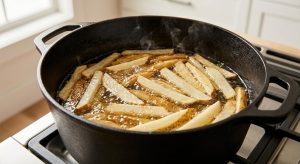
The undisputed gold standard is enameled cast iron. It is heavy, durable, entirely non-toxic, and holds a low, steady heat for hours. The thick cast iron core prevents hot spots, while the glass-like enamel coating ensures the cheese won’t react with raw iron. High-quality, thick ceramic pots (often called caquelons) are the traditional Swiss choice and are also excellent, though they do lose heat slightly faster than cast iron once removed from the stove. Invest in a good enameled cast iron set. It will last you a lifetime, and it doubles as a fantastic vessel for simmering small batches of sauces or gravies.
Curating the Ultimate Grazing Board
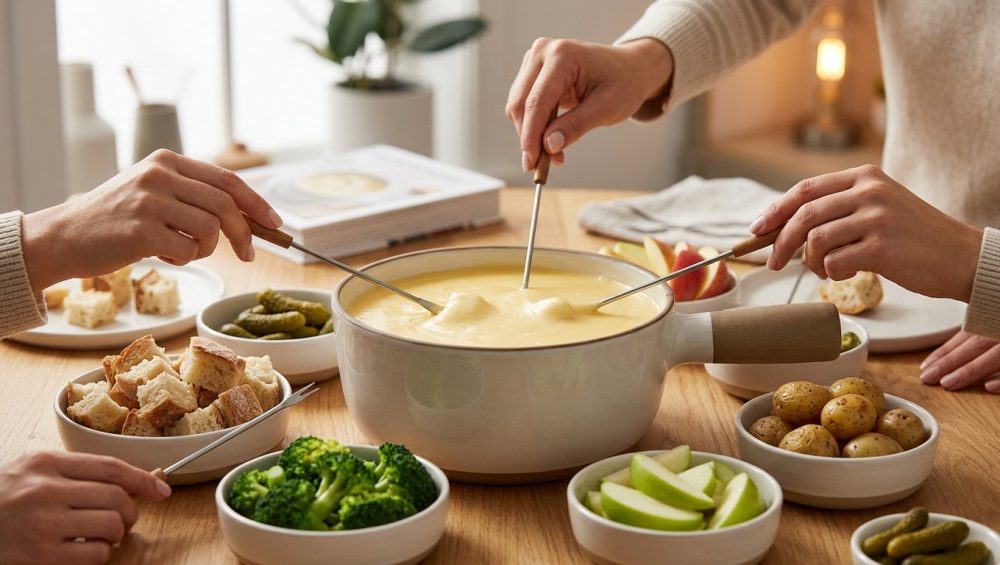
A successful dipping party is won or lost in the prep phase. You want to do all the heavy lifting before your guests arrive so you can actually enjoy your own party. A fondue spread should be a study in contrasts: you want crunchy, soft, salty, sweet, and acidic elements to cut through the intense richness of the cheese.
The Bread
Do not buy a freshly baked, steaming hot loaf of bread for fondue. It is too soft and will disintegrate into the pot, leaving a soggy, depressing bread-sludge at the bottom. You want a crusty, rustic baguette or sourdough that is at least a day old. Cut it into bite-sized cubes, making sure every single cube has a piece of crust attached. The crust provides the structural integrity needed to survive the aggressive swirling motion of the fondue fork.
The Vegetables
Raw vegetables are a rookie mistake. They are packed with water, and when you dip them, that water leaches into the cheese, slowly watering down your emulsion. Plus, raw broccoli is just sad.
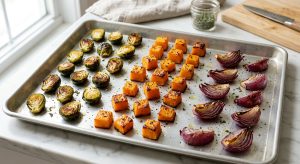
You need to lightly cook your vegetables. Blanch your broccoli and cauliflower florets in heavily salted boiling water for exactly two minutes, then plunge them into an ice bath to lock in their vibrant color and crunch. Roast baby potatoes until they are crispy on the outside and fluffy on the inside.
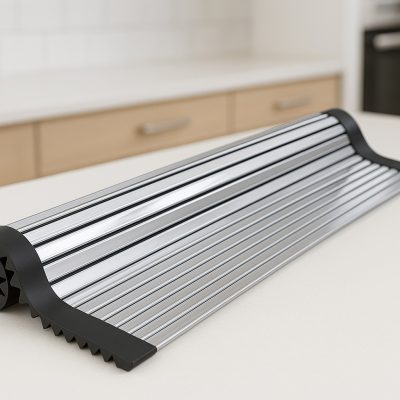
When you are prepping a massive board of vegetables, you are going to be doing a lot of chopping. If you find yourself weeping over a pile of onions or struggling to cleanly slice through a potato, the culprit is your dull knife crushing the cell walls rather than slicing them. Sharpen your blade. And for the love of efficiency, stop scooping up chopped vegetables with the edge of your expensive knife. You need a bench scraper to scoop and transfer your ingredients from the cutting board to the serving platters. It saves time, saves your knife edge, and makes you look like a seasoned pro.
The Accents
To round out the board, add cornichons (tiny pickled cucumbers) and pickled onions. Their sharp, vinegary bite acts as a palate cleanser. Thinly sliced cured meats, like prosciutto, bresaola, or a high-quality salami, bring a savory, salty depth. Finally, add crisp, tart apples (like Granny Smith) and firm pears. The sweet, juicy crunch paired with the savory, nutty cheese is an absolute revelation.
The Masterclass Method: Melting Without the Meltdown
You have your artisanal cheese, your enameled cast iron pot, and your beautifully prepped grazing board. It is time for the main event. Even if you swear you have zero cooking skills, if you follow these exact steps, you will produce a flawless, professional-level fondue.
Step 1: The Garlic Rub
Take a raw clove of garlic, cut it in half, and rub the cut side vigorously all over the inside of your enameled cast iron pot. This leaves a microscopic layer of garlic oils that will perfume the entire dish without overpowering the delicate flavor of the cheese. (You can leave the garlic halves in the pot if you want a stronger flavor, or discard them).
Step 2: The Gentle Simmer
Place your pot on the stove over medium-low heat. Pour in 1 cup of your crisp white wine and a teaspoon of fresh lemon juice. Heat the liquid until it reaches a gentle, bare simmer. You are looking for tiny, champagne-like bubbles breaking the surface. Do not let this come to a rolling boil. Boiling liquid will instantly shock and curdle the cheese proteins.
Step 3: The Handful Method
Grab a small handful of your cornstarch-tossed cheese and drop it into the simmering wine. Do not dump the entire bowl in at once. You must give the cheese time to gently melt and incorporate into the liquid.
Step 4: The Figure-Eight Stir
Using a wooden spoon or a silicone spatula, stir the cheese constantly. But here is the critical secret: do not stir in a circle. Stirring in a continuous circular motion acts like a centrifuge, encouraging the proteins to tangle together and form a giant, rubbery cheese ball in the center of the pot. Instead, stir in a zig-zag or a figure-eight pattern. This sheer physical force breaks up the protein chains and forces them to emulsify with the wine.
Step 5: Patience and Progression
Once the first handful is completely melted and smooth, add the next handful. Continue this process, stirring in a figure-eight, until all the cheese is incorporated. The mixture should look glossy, thick, and velvety. If you want to be traditional, finish it with a splash of Kirsch (a clear cherry brandy) and a pinch of freshly grated nutmeg.
Step 6: The Transfer
Carefully move the pot from the stove to your fondue stand on the dining table. Light the gel burner or tea light underneath. Keep the flame as low as humanly possible. The goal is to maintain the temperature, not continue cooking the cheese.
The Art of the Mindful Dipping Party
Hosting a fondue night is the ultimate hack for a relaxed dinner party. Because all the cooking is done communally at the table, you are not trapped in the kitchen sweating over a hot stove while your guests have all the fun in the living room.
However, a communal pot requires a bit of pacing. Encourage your guests to take their time. A mindful dipping night is meant to be a slow, lingering affair. Pour the wine, put on a great playlist, and let the conversation dictate the pace of the meal.
There are a few unspoken rules of fondue etiquette you should enforce with a wink and a smile. First, no double-dipping. Once it hits your mouth, it does not go back in the pot. Second, the “drop rule.” Traditional Swiss lore dictates that if a man loses his bread in the pot, he has to buy the next round of drinks. If a woman loses her bread, she has to kiss the person to her left. You can modernize this however you see fit—my personal rule is that if you drop your bread, you are on dish duty for the night.
As the evening winds down and the cheese level drops, pay close attention to the bottom of the pot. If you have managed your heat correctly, the remaining cheese will slowly toast into a dark, crispy, golden-brown crust known as la religieuse (the nun). This is a highly coveted delicacy. Scrape it up with a wooden spoon and divide it among your guests. It is the perfect, savory conclusion to the meal.
The Emergency Room: Rescuing a Broken Fondue
Kitchens are unpredictable, and sometimes, despite your best efforts, things go sideways. If you look down and realize your beautiful emulsion is failing, do not panic, and do not throw it away. Almost any fondue disaster can be rescued if you act quickly.
Crisis 1: The Greasy Oil Slick (Separation)
If your cheese looks like a lumpy sponge sitting in a pool of yellow oil, the emulsion has broken. This usually means the heat got too high, or there wasn’t enough acid to keep the proteins short.
The Fix: Immediately turn down the heat. Squeeze in a teaspoon of fresh lemon juice or a splash of warm white wine. Grab a wire whisk and whisk vigorously. The sheer mechanical force, combined with the fresh acid, will usually force the fat back into the matrix. If it is still being stubborn, mix one teaspoon of cornstarch with one tablespoon of cold water to create a slurry, whisk it into the pot, and gently heat until it binds.
Crisis 2: The Concrete Block (Too Thick)
If your cheese is so thick that it is pulling the bread off the forks and threatening to snap your wooden spoon, the moisture has evaporated.
The Fix: Do not add water. Heat up a small amount of white wine (you never want to add cold liquid to hot cheese, as it will cause the fat to seize). Vigorously whisk the warm wine into the pot, a tablespoon at a time, until the cheese relaxes back into a fluid, dippable consistency.
Crisis 3: The Grainy, Gritty Mess
If the texture is sandy or grainy, one of two things happened: you either used pre-shredded cheese coated in anti-caking powder, or you dumped all the cheese in at once and the pot was too cold to melt it properly.
The Fix: If you used pre-shredded cheese, I cannot help you. You have to eat your mistakes and learn for next time. But if it is a temperature issue, bump the heat up just a tiny fraction and whisk continuously. Add a splash of lemon juice to help smooth out the proteins.
Armed with these troubleshooting tactics, you are absolutely guaranteed a perfectly smooth cheese night.
Final Thoughts from the Sous-Chef
Cooking is not about achieving Michelin-starred perfection on your first try; it is about understanding the basic rules of engagement and having the confidence to fix things when they break. Melted cheese is notoriously dramatic, but once you understand the science of the emulsion—the delicate dance between fat, water, acid, and starch—you hold all the power.
So, this weekend, ditch the takeout menus. Banish that peeling, toxic non-stick pot to the recycling bin. Buy a wedge of real Gruyère, open a crisp bottle of wine, and invite your friends over for a meal that forces everyone to slow down, share a space, and savor the moment.
Now, if you will excuse me, I have a crusty baguette calling my name and a pot of molten Gruyère that requires my undivided attention. Cheers, and happy dipping!