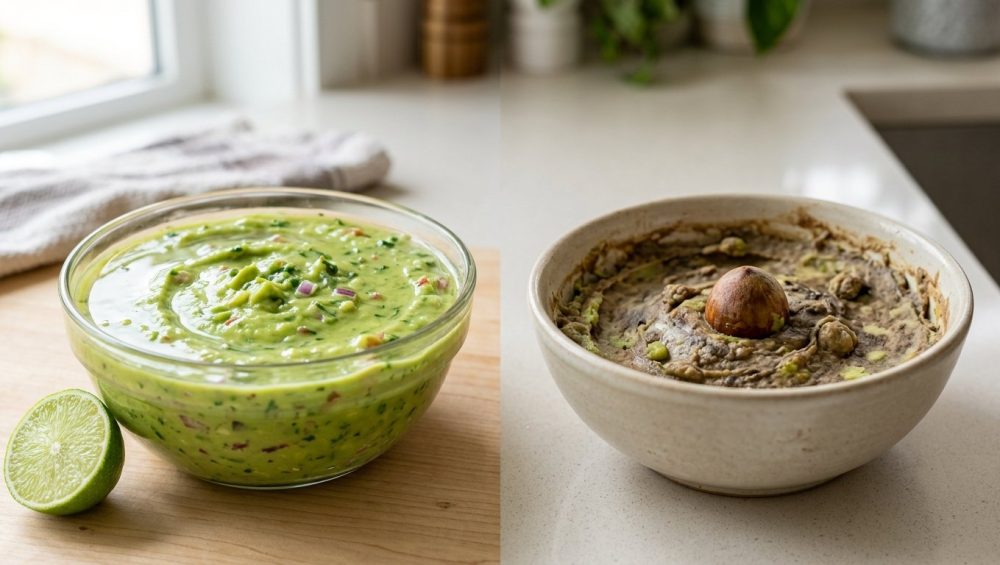
We’ve all been there. You’ve spent a small fortune on perfectly ripe, pebbly-skinned Hass avocados. You’ve painstakingly diced the jalapeños, minced the cilantro, and mashed it all together into a vibrant, emerald-green masterpiece. You set it on the counter, turn your back for what feels like thirty seconds to check on the margaritas, and when you turn around—disaster. Your gorgeous dip has transformed into a sad, grayish-brown sludge that looks like it was scooped out of a puddle in a supermarket parking lot.
It is infuriating. It is financially devastating. And if you are having guests over, it is downright embarrassing.
But here is the good news, my fellow weekend culinary warriors: you do not need a Michelin star or a fancy culinary degree to fix this. You just need a little bit of science. Understanding why your guacamole turns brown is the first step to ensuring it never happens again.
The Science of the Sludge: Meet Polyphenol Oxidase
I know, I know. I promised no pretentious chef-speak, but we have to put on our lab coats for just a minute. The browning of avocados isn’t some vindictive curse from the culinary gods; it is a very specific, highly documented biochemical reaction called enzymatic browning.
Deep within the cellular walls of your beautiful avocado are phenolic compounds. Under normal circumstances, these compounds are perfectly happy minding their own business. But the moment you slice into that avocado with a knife—or aggressively mash it with a fork—you tear those cell walls apart.
This cellular destruction releases an enzyme called polyphenol oxidase (or PPO for short). PPO is an oxygen-hungry little monster. When PPO, the phenolic compounds, and the oxygen in your kitchen air all meet, a rapid chemical reaction occurs. The PPO catalyzes the oxidation of the phenols into quinones. These quinones then link together (polymerize) to form melanins—the exact same dark pigments that give humans a suntan. In an avocado, however, a tan is the last thing we want.
Avocados are particularly susceptible to this process because they have an incredibly high concentration of this enzyme. The reaction happens fast. At room temperature, noticeable browning can begin in as little as ten to fifteen minutes.
Debunking the Myths: What Absolutely Does Not Work
Before we get to the foolproof solutions, we need to aggressively dismantle the terrible advice that has been circulating on the internet and at suburban potlucks for decades.
The “Leave the Pit in the Bowl” Nonsense
If I had a dollar for every time someone told me to just “leave the pit in the guacamole” to keep it green, I could afford to buy a private island. Let me be brutally clear: the pit possesses no magical, anti-oxidizing force field. It does not emit a protective chemical aura.
The only reason the pit does anything is because it physically blocks oxygen from touching the exact square inch of guacamole that sits directly underneath it. You could achieve the exact same result by nestling a clean golf ball or a plastic dinosaur into the center of your dip. The rest of the exposed surface will still turn brown. It is a useless, frustrating myth that needs to be retired permanently.
The “Just Stir the Brown Part In” Strategy
This is the coward’s way out. Yes, the browning is primarily a surface-level issue because that is where the oxygen contact happens. But stirring that oxidized, bitter-tasting brown layer into the pristine green underneath doesn’t fix the problem; it just dilutes the damage. You end up with a bowl of muddy, unappetizing dip that tastes slightly off. We are better than this.
The Sour Cream or Mayonnaise Shield
Some old-school recipes suggest spreading a thick layer of sour cream or mayonnaise over the top of the guacamole to block the air. Does it work? Yes, technically. It creates a fat barrier. But it also completely ruins the flavor profile of your authentic dip. If you wanted a sour cream dip, you would have made one.
The Industrial Secret: High Pressure Processing (HPP)
Have you ever wondered why the pre-packaged guacamole at the grocery store stays miraculously green for weeks in the refrigerated section? It isn’t because they are using better avocados than you. It is because of a commercial technique called High Pressure Processing (HPP).
In the commercial food industry, they seal the guacamole in flexible packaging and submerge it in a massive water chamber. Then, they apply an absolutely mind-boggling amount of hydrostatic pressure—up to 87,000 pounds per square inch (or 6,000 bars). This extreme pressure physically crushes and inactivates the polyphenol oxidase enzyme, effectively stopping the browning process in its tracks without the use of heat or chemical preservatives. It also destroys harmful bacteria, extending the shelf life up to 60 days.
It is a brilliant piece of food technology. Unfortunately, unless you have a multi-million dollar hyperbaric chamber sitting next to your air fryer, you cannot replicate this at home. We have to rely on smarter, more accessible methods.
The Acid Approach: Lemons, Limes, and Ascorbic Acid
Since we can’t crush the enzyme with 87,000 pounds of pressure, we have to attack it chemically. Polyphenol oxidase is a bit of a diva when it comes to its environment. It functions best at a pH of around 5.0. If you make the environment highly acidic, the enzyme throws a tantrum and slows down its activity.
This is why almost every guacamole recipe on the planet calls for citrus juice. Lime juice has a pH of roughly 2.0 to 2.4, which is highly acidic. Furthermore, citrus juices are packed with ascorbic acid (Vitamin C), which acts as a naturally occurring antioxidant. Ascorbic acid essentially sacrifices itself; the oxygen reacts with the Vitamin C before it can react with the avocado’s phenolic compounds.
However, there is a massive catch. Citrus juice only slows the browning; it does not stop it forever. Once the ascorbic acid is used up, the browning resumes. More importantly, you cannot just dump half a cup of lime juice into your dip to keep it green. Your guacamole will become overwhelmingly tart and acidic, completely masking the rich, buttery flavor of the avocado.
To get the most out of your citrus without ruining the dip, you need precision. Ditch the cheap plastic squeezers and invest in a heavy-duty enameled citrus press. It extracts the maximum amount of juice and essential oils from the peel without adding bitterness. Use just enough lime juice to balance the flavors (usually about one tablespoon per large avocado), but do not rely on it as your primary defense against oxidation.
The Holy Grail: The Surface Water Seal Method
If you want to keep your guacamole vibrant, stunningly green for up to three days in the refrigerator, this is the definitive, scientifically backed method. It is cheap, it requires zero special equipment, and it absolutely works.
We call it the Surface Water Seal.
Remember how we established that browning requires oxygen? Well, oxygen diffuses through water at a rate that is roughly 10,000 times slower than it diffuses through the air. By creating a physical barrier of water over the surface of the guacamole, you are completely cutting off the enzyme’s oxygen supply.
Now, I can already hear you panicking: “But won’t the water soak in and make my guacamole a soggy, disgusting mess?”
No. It won’t. And here is the beautiful science behind why: Avocados are incredibly dense and packed with natural fats. As any middle school science teacher will tell you, fat and water do not mix. The guacamole is literally too fatty to absorb the water barrier. The water simply rests on top, acting as a liquid shield.
Step-by-Step: Executing the Water Seal
- The Tight Pack: Transfer your freshly made guacamole into an airtight storage container. Using the back of a spoon, aggressively pack the dip down into the container. You must eliminate every single air pocket hidden beneath the surface. If you leave an air bubble against the side of the container, that spot will turn brown.
- The Smooth Surface: Use the spoon to smooth the top of the guacamole until it is as flat and level as a freshly paved road. A flat surface ensures the water layer sits evenly.
- The Gentle Pour: Take lukewarm or cool filtered water and very gently pour it over the top of the guacamole. You want a continuous layer of water that is about half an inch deep. Make sure the water touches the edges of the container all the way around.
- The Chill: Snap the airtight lid onto the container and place it immediately in the refrigerator. Temperature control is critical here. Cold temperatures further slow down enzymatic activity and prevent bacterial growth.
- The Reveal: When you are ready to serve, take the container out of the fridge. Carefully tilt it over the sink and pour the water off. Give the guacamole a gentle stir to incorporate any microscopic droplets of moisture left behind. It will be as flawlessly green as the moment you mashed it.
This method is the ultimate secret to mastering the art of effortless hosting. You can make a massive batch of guacamole hours (or even a day) before your guests arrive, freeing you up to actually enjoy your own party.
The Plastic Wrap Press: Doing It Right (And Safely)
If the water seal method scares you, the next best option is the plastic wrap press. But most people do this incorrectly. Simply stretching plastic wrap across the top of the bowl does absolutely nothing. The air trapped between the wrap and the dip will still cause oxidation.
To make this work, you must press the plastic wrap directly against the surface of the guacamole, ensuring there is zero air contact. You have to tuck it down into the corners of the container.
However, we need to have a serious conversation about the gear you are using. I have a strict, uncompromising rule about banishing toxic kitchen gear. Cheap, flimsy plastic wraps often contain questionable plasticizers and chemicals that can leach into high-fat foods. Avocados are high-fat foods.
Furthermore, do not store your precious creations in cheap, degraded plastic tubs. We’ve all seen how those plastic containers stay greasy no matter how many times you run them through the dishwasher. That degraded plastic surface harbors odors and bacteria.
If you are going to use the press method, use high-quality, BPA-free, food-safe silicone bowl covers that can be pressed down, or store the dip in a high-quality glass container. Glass is non-porous, non-toxic, and won’t impart a chemical aftertaste to your food.
The Onion Trick: Harnessing Sulfur Compounds
Let’s say you aren’t making a full batch of guacamole. What if you just used half an avocado for your morning toast and want to save the other half for tomorrow? The water seal is messy for a halved avocado. This is where the onion trick shines.
Take a slice of raw red or yellow onion and place it in the bottom of an airtight glass container. Place your leftover avocado half (flesh side up) in the container with the onion and seal the lid.
Why does this work? It’s all about sulfur. When you cut an onion, you rupture its cells, releasing highly volatile sulfur compounds into the air. These are the exact same compounds that make you cry chopping onions.
In the enclosed environment of the storage container, these sulfur gases act as a potent, natural inhibitor to the polyphenol oxidase enzyme. The sulfur compounds are highly reactive and bond with the free oxygen in the container before the oxygen has a chance to react with the avocado’s phenols.
The result? The avocado stays remarkably green. Just be aware that the surface of the avocado might absorb a faint onion aroma. Since most savory avocado applications (like guacamole or avocado toast) already pair beautifully with onion, this is rarely a problem. Just don’t use this trick if you plan on blending that avocado into a sweet morning smoothie, unless you enjoy the taste of regret.
Avocado Prep: Tools and Techniques for the Home Cook
Preventing oxidation starts the moment you begin prepping. The way you handle the ingredients matters immensely.
First, let’s talk about your knife. A razor-sharp chef’s knife slices cleanly through the cellular structure of the avocado, minimizing the amount of cellular damage and, consequently, reducing the amount of PPO enzyme released. A dull knife crushes and tears the flesh, triggering a massive enzymatic response. If you’ve been wondering why your kitchen knives get dull so quickly, it’s likely because you are using the wrong cutting boards (ditch the glass and bamboo; use end-grain wood or high-quality plastic). Keep your blades honed.
When it comes to mashing, ditch the food processor. Blending avocados introduces a massive amount of air (oxygen) into the mixture, practically guaranteeing rapid browning. Use a traditional molcajete (a Mexican mortar and pestle made of volcanic rock) or a heavy-duty fork. You want a chunky texture, not a pureed smoothie. Less surface area exposed means less oxidation.
Be mindful of the other fresh ingredients you fold in. Tomatoes release excess water, which can make the dip soupy and dilute the acid. Seed your tomatoes before dicing them. And treat your cilantro with respect. We’ve all experienced the frustration of watching our fresh herbs get slimy in the crisper drawer. Wash your cilantro, dry it thoroughly in a salad spinner, and chop it with a sharp knife right before folding it into the dip. Bruised, wet herbs will introduce off-flavors and accelerate spoilage.
Perfecting the Rest of Your Taco Night
You have just spent valuable time and energy executing the perfect, scientifically sound guacamole. Do not disrespect that effort by serving it alongside subpar accompaniments.
If you are hosting a taco night, the details matter. There is nothing sadder than watching a guest load up a beautiful, vibrant scoop of guacamole onto a taco, only to have the entire thing fall apart in their hands. If you are struggling with why your tortillas crack, it is because you aren’t heating them properly. Corn tortillas need moisture and heat to become pliable. Steam them wrapped in a damp towel, or blister them quickly in a hot, dry carbon steel skillet.
And please, elevate your side dishes. If you are serving fajitas alongside your pristine dip, stop eating mushy veggies. Bell peppers and onions need high heat and a quick sear to retain their crunch and vibrant color. Don’t crowd the pan, and don’t salt them until the very end, or they will release their moisture and steam instead of fry.
Conclusion: Reclaiming Your Kitchen Confidence
Cooking is not magic. It is just applied chemistry with better smells. You don’t need a culinary degree to make mind-blowing food, and you certainly don’t need to accept defeat when faced with a brown bowl of dip.
By understanding the mechanics of polyphenol oxidase and utilizing smart, efficient techniques like the surface water seal, you are taking control of your kitchen. You are protecting your expensive ingredients, saving yourself time on busy weekdays, and ensuring that your weekend cooking projects are flawless.
So go ahead. Buy the good avocados. Mash them up with confidence. Pour that water seal, snap the lid shut, and walk away knowing that when the time comes to serve, your guacamole will be as brilliantly, defiantly green as it was the second you made it. Now, pour yourself a margarita—you’ve earned it.