The problem with most batched warm beverages is that home cooks treat them like a pot of soup. They dump a couple of bottles of cheap red wine into a stockpot, aggressively toss in handfuls of whatever ground spices they found languishing in the back of their pantry, crank the heat up to high, and walk away. This is not just a culinary misstep; it is a thermodynamic disaster. You are systematically destroying the delicate balance of the wine, vaporizing the alcohol you paid good money for, and extracting the most punishing, astringent compounds from your spices.
When you art of effortless hosting, you realize that the secret to a cozy winter gathering isn’t about frantically hovering over a stove or playing bartender all night. It is about front-loading the science, utilizing the right equipment, and letting the thermodynamics work in your favor so you can actually step away and connect with your guests. You do not need a culinary degree to make mind-blowing food or drinks, but you do need to understand a few basic principles of heat control.
This masterclass is your definitive guide to creating the perfect batch of mulled wine—or Glühwein, vin chaud, whatever you want to call it. We are going to dive deep into the chemistry of ethanol evaporation, the biochemistry of tannin extraction, and the absolute non-negotiable rules for safe, non-toxic cookware. By the time we are done, you will know exactly how to gently heat and maintain the perfect serving temperature for your spiced wine, allowing you to be the relaxed, sophisticated host you were always meant to be.
The Thermodynamics of Ruined Wine: Why Boiling is a Culinary Crime
To understand why boiling mulled wine is an absolute travesty, we have to look at the chemistry of the liquid in your pot. Wine is primarily composed of water and ethanol (alcohol), along with a complex matrix of acids, sugars, and phenolic compounds.
Water, as we all learned in grade school, has a boiling point of 100 °C (212 °F) at sea level. Ethanol, however, is a completely different beast. Because ethanol molecules have less extensive hydrogen bonding than water molecules, it takes less energy to vaporize them. As a result, the boiling point of ethanol is significantly lower, sitting at approximately 78.37 °C (173.1 °F).
When you place a pot of wine on the stove and let it reach a rolling boil, you have already vastly exceeded the boiling point of the alcohol. The ethanol is rapidly converting from a liquid to a gas, escaping into your kitchen exhaust fan instead of staying in the mugs of your guests.
“But I want the alcohol to cook off so it’s not too strong!” I can already hear some of you protesting.
First of all, if you want a non-alcoholic drink, make spiced cider. Second, the idea that alcohol instantly “cooks off” the second it hits a pan is one of the most pervasive rookie kitchen mistakes out there. The United States Department of Agriculture (USDA) actually conducted an exhaustive analytical study to investigate the extent of alcohol lost in food preparation. Their data on alcohol retention is eye-opening.
According to the USDA Table of Nutrient Retention Factors, if you stir alcohol into a mixture and simmer or bake it for 15 minutes, 40% of the alcohol remains. If you simmer it for 30 minutes, 35% remains. Even after simmering a dish for a grueling two and a half hours, 5% of the original alcohol content is still present.
However, in the context of mulled wine, we are not trying to reduce a pan sauce; we are trying to preserve the structural integrity of the beverage. If you boil your wine, you are aggressively accelerating this evaporation process. You end up evaporating off more alcohol than necessary, resulting in a weak, unbalanced final product that lacks the warming, comforting “kick” that defines a proper Glühwein.
Furthermore, as the ethanol vaporizes, it takes many of the volatile aromatic compounds of the wine with it. The nuanced fruity notes, the delicate floral aromas—they are literally vanishing into thin air. You are left with a flat, cooked-tasting grape juice that has been stripped of its character.
The Biochemistry of Bitterness: Tannin Extraction and Temperature
If losing your alcohol wasn’t bad enough, overheating your mulled wine triggers a second, far more insidious chemical reaction: the over-extraction of tannins.
Tannins are a class of polyphenolic compounds naturally found in plants, seeds, bark, wood, leaves, and fruit skins. In the context of wine, they are primarily derived from the grape skins, seeds, and stems, as well as the oak barrels the wine may have been aged in. Tannins are essential for the structure and aging potential of red wine; they act as natural antioxidants and provide a balancing bitterness against the sweetness of the fruit.
However, tannins are also responsible for the sensation of astringency. When you take a sip of a highly tannic wine, the tannin molecules bind with the proteins in your saliva, precipitating them out of solution. Your saliva ceases to be an efficient lubricator, creating that dry, rough, puckering sensation in your mouth. Small tannin molecules are generally perceived as bitter, while larger, polymerized tannin molecules impart that dry astringency.
When making mulled wine, you are introducing a massive secondary source of tannins: whole spices. Cinnamon sticks, cloves, and star anise are absolutely loaded with phenolic compounds.
Here is where the temperature variable becomes critical. The rate of tannin extraction from both the grape seeds (if any remain as microscopic sediment) and the added spices increases exponentially with heat and alcohol concentration. When you boil spices in a wine base, you are creating an incredibly aggressive solvent environment. The high heat rapidly breaks down the cellular structure of the spices, while the alcohol acts as a highly efficient extraction solvent for the catechins and other bitter phenolic compounds.
If you leave spices aggressively boiling in wine, the diffusion of these harsh chemical compounds goes into overdrive. The delicate, warming notes of the cinnamon (cinnamaldehyde) and the sweet, aromatic notes of the cloves (eugenol) are quickly overshadowed by the sheer volume of harsh, bitter tannins being ripped from the woody bark and seed pods.
This is why your boiled mulled wine tastes like liquid sawdust. You have essentially created a hyper-concentrated tannin tincture.
The Ideal Serving Temperature: Hitting the Sweet Spot
So, if boiling is a crime against viticulture, what is the target temperature?
The goal of gently heating spiced wine is to facilitate the diffusion of the pleasant flavor compounds from the spices without hitting the vaporization point of the ethanol or over-extracting the bitter tannins.
The scientific consensus for the ideal serving temperature of mulled wine or Glühwein is to bring the liquid slowly up to around 70 °C (158 °F). You want to maintain the temperature slightly below 70 °C for serving, and you must absolutely ensure that the liquid never exceeds 80 °C (176 °F).
At 70 °C (158 °F), the wine is pleasantly hot to the touch—perfect for wrapping your cold hands around a mug on a snowy evening—but it is safely below the 78.37 °C (173.1 °F) boiling point of ethanol. At this temperature, vapor will gently rise from the surface of the pot, carrying the aromatic spices to your nose, but the liquid will not bubble.
To achieve this precision, you cannot simply guess. You need to use an accurate meat thermometer or a candy thermometer to monitor the liquid. Clip it to the side of your pot or slow cooker and keep a watchful eye on it during the initial heating phase. Once you hit that 70 °C (158 °F) sweet spot, your only job is to maintain it.
The “No-Go” Zone: Toxic Gear That Is Poisoning Your Party
Before we get into the exact methodology of crafting the perfect batch, I need to address a massive pet peeve of mine. As a home cook who values health and high-quality equipment, I have a strict, zero-tolerance policy for cheap, toxic kitchenware.
When you decide to host a relaxed dinner party, the last thing you want to do is serve your beloved friends and family a steaming mug of heavy metals and forever chemicals. Yet, I see people doing this constantly when they make warm batched beverages.
Mulled wine is highly acidic. The pH of most red wine sits somewhere between 3.3 and 3.6. When you heat an acidic liquid for an extended period, it becomes highly reactive. It will aggressively leach chemicals from whatever vessel it is sitting in.
If you are using a scratched, peeling non-stick pans or a cheap slow cooker with a compromised Teflon coating, you are making a grave mistake. Those synthetic polymer coatings degrade under prolonged heat and acidity, releasing per- and polyfluoroalkyl substances (PFAS) directly into your beverage. You do not want a side of microplastics with your cinnamon sticks.
Equally terrifying are vintage or incredibly cheap ceramic slow cooker inserts. Many older or poorly manufactured ceramic glazes contain lead and cadmium. When heated with an acidic liquid like wine, these heavy metals leach out of the glaze and into the food. There is no safe level of lead consumption. Period.
This is why banishing toxic kitchen gear is step one of becoming a competent home cook. You must invest in safe, non-reactive vessels for heating acidic liquids.
The Sassy Sous-Chef’s Approved Vessels for Mulled Wine:
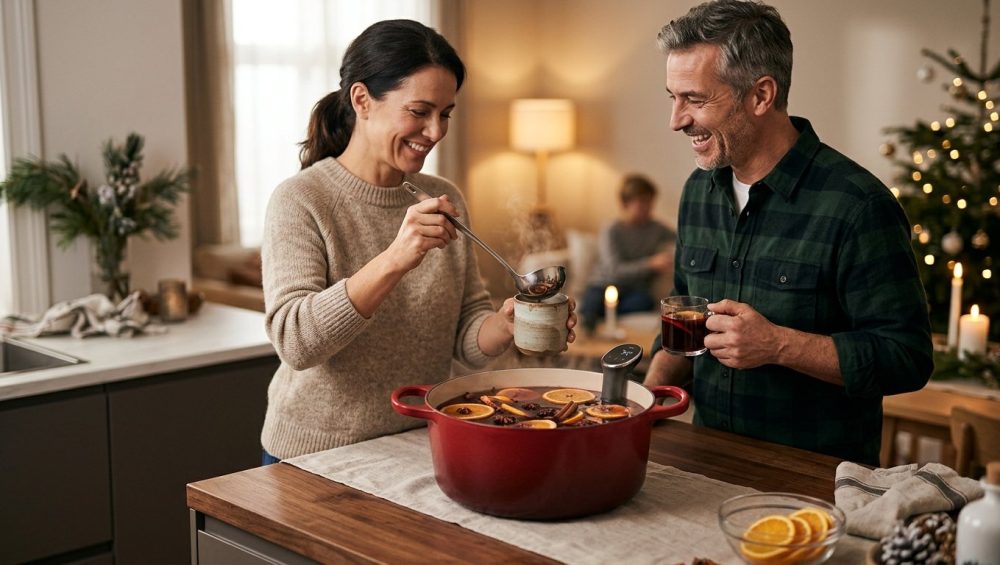
- High-Quality Enameled Cast Iron: A premium enameled Dutch oven is the absolute gold standard for mulled wine. The glass-enamel coating is completely inert and non-reactive, meaning it will not leach any metallic flavors or toxins into your acidic wine. Furthermore, the heavy cast iron core provides unparalleled thermal mass. It heats slowly and evenly, preventing hot spots that could accidentally boil the wine at the bottom of the pot.
- Fully Clad Stainless Steel: A heavy-bottomed, multi-ply stainless steel stockpot is an excellent, safe alternative. High-grade stainless steel is non-reactive and incredibly durable. Avoid cheap, thin stainless steel pots with single-layer bottoms, as they are prone to scorching.
- A Modern, Certified Lead-Free Slow Cooker: If you want to use a slow cooker for the holding phase, ensure it is a modern model from a reputable brand that explicitly certifies its ceramic inserts as lead-free and cadmium-free.
Never use bare cast iron, unlined copper, or aluminum pots for mulled wine. The acid will react violently with these metals, stripping the seasoning off your cast iron, leaching toxic levels of copper, and turning your wine a murky, metallic-tasting gray.
The Masterclass Method: The Two-Stage Syrup Technique
Now that we understand the science and have secured a safe, non-toxic vessel, let’s talk technique.
The biggest mistake people make is dumping the wine and the spices into the pot at the exact same time. As we established, heating wine for a long time ruins it, but spices need time and heat to release their flavor compounds. If you heat them together, you are caught in a thermodynamic catch-22.
The solution is a brilliant, time-saving workaround utilized by professional bartenders and smart German grandmothers alike: The Two-Stage Syrup Technique.
By creating a concentrated, highly-flavored base liquid first, you can boil the living daylights out of the spices to extract their essential oils without ever putting your precious wine at risk.
Stage 1: The Flavor Extraction
Start by creating your base. You need a non-alcoholic liquid to act as your extraction solvent. Water works, but for a richer flavor, use fresh-squeezed orange juice or a high-quality, unsweetened grape juice.
In your enameled Dutch oven or stainless steel pot, combine your base liquid, your sweetener (sugar, honey, or maple syrup), your whole spices, and your citrus peels.
Turn the heat to medium-high and bring this mixture to a rolling boil. Because there is no alcohol in the pot yet, you do not need to worry about evaporation or burning off ethanol. Let this mixture boil aggressively for about 5 to 10 minutes, then reduce the heat and let it simmer until it reduces into a thick, incredibly fragrant, syrupy concentrate.
This high-heat phase rapidly breaks down the cellular walls of the cinnamon, cloves, and star anise, forcing them to release their aromatic oils into the sugar syrup. The sugar actually helps stabilize the volatile flavor compounds, capturing them in the syrup matrix.
Stage 2: The Gentle Integration
Once your kitchen smells like a winter wonderland and your syrup is thick and dark, turn the heat down to the absolute lowest setting on your stove.
Now, and only now, do you pour in your wine.
Because the heat is already turned down, the wine will gently warm up as it mixes with the hot syrup. Clip your thermometer to the side of the pot and monitor the temperature. You want to slowly bring the entire mixture up to that magical 70 °C (158 °F) mark.
Once it hits 70 °C, turn the burner off completely or move the pot to a dedicated warming element. Let the flavors meld together for at least 15 to 30 minutes before serving.
Before your guests arrive, use a slotted spoon to fish out the whole spices and the citrus peels. If you leave them in the hot wine indefinitely, they will eventually begin to release those bitter, astringent tannins we talked about earlier. The syrup phase already extracted all the good flavors; you do not need the physical spices floating around and turning your drink bitter.
Selecting the Right Ingredients: Quality Over Quantity
The Two-Stage Syrup Technique is foolproof, but it cannot save terrible ingredients. You do not need to spend a fortune, but you do need to be intentional about what goes into your pot. Having the right ingredients on hand is one of the essential kitchen tools for success.
The Wine
Do not use a $50 bottle of delicate Pinot Noir. The nuanced terroir and subtle notes of expensive wine will be completely obliterated by the sugar and spices. However, do not use the cheapest, most aggressively tannic bottom-shelf swill you can find, either. The heat will only amplify its flaws.
Look for a mid-range, dry, fruit-forward red wine with naturally low tannins. Good options include:
- Merlot: Plummy, soft, and naturally low in astringent tannins.
- Zinfandel: Jammy, bold, and fruit-forward, which pairs beautifully with winter spices.
- Garnacha (Grenache): Bright, red-fruit flavors with very soft tannins.
Avoid heavily oaked Cabernet Sauvignons or Nebbiolos. The high tannin content and aggressive oak flavors will clash horribly with the spices, resulting in a bitter, astringent mess.
The Spices
I cannot stress this enough: never use ground spices for mulled wine.
Ground cinnamon and ground cloves will not dissolve in the liquid. Instead, they will remain suspended in the wine, creating a gritty, muddy texture that coats the mouth like sand. Furthermore, ground spices have a massive surface area, meaning they will over-extract almost instantly, turning your wine incredibly bitter.
Always use whole spices. A classic German Glühwein blend typically includes:
- Cinnamon Sticks: The backbone of the flavor profile.
- Whole Cloves: Pungent and spicy. Use these sparingly, as eugenol (the primary flavor compound in cloves) can easily overpower a drink and make it taste like a dentist’s office.
- Star Anise: Adds a beautiful, subtle licorice note.
- Cardamom Pods: Optional, but they add a gorgeous, complex floral aroma.
If you are used to cooking with raw spices in savory dishes, you know that heat wakes them up. The boiling syrup phase achieves exactly this, unlocking their full aromatic potential without ruining the texture of the drink.
The Citrus and Sweetener
Fresh citrus is non-negotiable. It provides the necessary acidity to cut through the heavy sweetness of the sugar and the rich body of the wine. Balancing flavors with acid is a fundamental culinary rule that applies just as much to beverages as it does to pan sauces.
However, you must use organic citrus. Because you are boiling the peels in the syrup to extract the citrus oils, any pesticides or wax sprayed on conventional citrus will end up directly in your drink. Wash your organic oranges and lemons thoroughly, peel them carefully (avoiding the bitter white pith), and toss the peels into the syrup.
For the sweetener, granulated sugar is traditional and works perfectly to create the base syrup. If you want a richer flavor, you can substitute half of the sugar with high-quality honey or real maple syrup.
The Holding Phase: Staging for Maximum Mingling
You have successfully executed the chemistry. You have a pot of perfectly balanced, non-toxic, 70 °C (158 °F) mulled wine. Now, how do you serve it without being chained to the stove all night?
This is where proper thermal holding techniques come into play.
If you used a heavy enameled cast iron Dutch oven, the thermal mass of the pot itself will keep the wine warm for a surprisingly long time off the heat. However, for a party that lasts several hours, you need a gentle, consistent heat source.
Option 1: The Slow Cooker
If you have a modern, lead-free slow cooker, this is its time to shine. Transfer the finished, strained wine from your stovetop pot into the slow cooker. Set it to the “Keep Warm” setting (never “Low” or “High,” as these can exceed the 80 °C / 176 °F danger zone over time). The slow cooker will effortlessly maintain the ideal serving temperature, allowing you to completely ignore it for the rest of the evening.
Option 2: The Induction Burner
If you want a more elegant presentation, place your beautiful enameled Dutch oven on a portable, high-quality induction burner on your serving buffet. Set the induction burner to its lowest possible warming setting (many modern units have a specific temperature control feature that you can set exactly to 70 °C).
Creating the Self-Serve Station
Do not pour the drinks for your guests. You are a host, not a hired bartender. Set up a beautiful, intuitive self-serve station.
Place your warming vessel at the center of the station. Surround it with heavy, heat-safe mugs. Glass mugs look beautiful, but ensure they are tempered or insulated double-walled glass so they do not shatter from thermal shock or burn your guests’ hands.
Provide a high-quality stainless steel ladle with a pouring lip to prevent drips.
Finally, set out small bowls of fresh garnishes. While you removed the spent spices from the cooking process to prevent bitterness, fresh garnishes add a beautiful visual element and a final hit of aroma to the individual mugs. Offer fresh orange half-moons, fresh cinnamon sticks, and perhaps a small bottle of brandy or amaretto for guests who want to “spike” their individual mugs with a little extra heat.
Final Thoughts from the Sassy Sous-Chef
Hosting a winter gathering should not induce a panic attack, and it certainly shouldn’t require you to serve boiled, bitter, alcohol-free grape juice to your friends.
By respecting the thermodynamics of ethanol, understanding the bitter reality of tannin extraction, and utilizing the Two-Stage Syrup Technique, you elevate a humble holiday drink into a scientifically perfected masterpiece. You protect your expensive ingredients, you protect your guests from toxic cookware, and most importantly, you protect your own sanity.
So, this weekend, leave the chaotic boiling cauldrons to the amateurs. Take a breath, grab your thermometer, and let the science do the heavy lifting. Your guests will be blown away by the complex, perfectly balanced flavors, and you will actually be able to sit down, sip your own mug of Glühwein, and enjoy the party you worked so hard to put together. Cheers to cooking smarter, not harder.