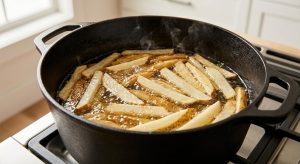
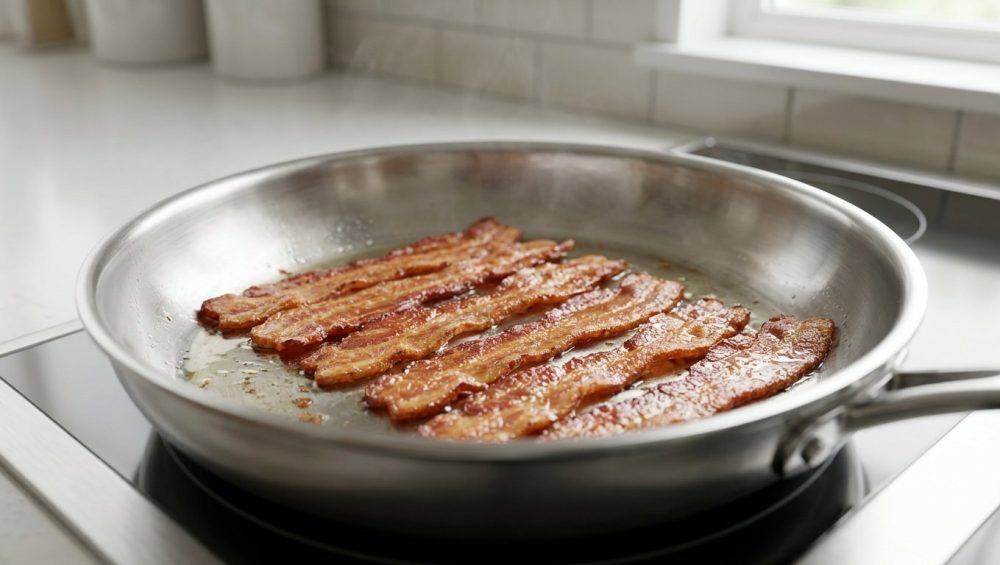
You are standing at your stove on a Sunday morning, wielding a pair of metal tongs like a makeshift shield, desperately dodging molten projectiles of flying grease. Your kitchen smells vaguely of burning meat, the smoke detector is screaming its shrill song of judgment, and the bacon in your skillet is violently curling into unrecognizable, charred little knots. The edges are blackened to a crisp, yet the thick bands of white fat remain flabby, chewy, and entirely unappetizing.
If this scenario sounds familiar, take a deep breath and put down the tongs. You are not alone. Ruining breakfast meat is practically a global pastime, and it is easily one of the most common rookie kitchen mistakes that plagues the everyday home cook. For decades, we have been lied to about how to properly cook this beloved ingredient. We have been taught to throw cold strips of pork into a blazing hot, dry skillet and just hope for the best.
I am here to tell you that dry-frying is a culinary scam. It is a thermodynamic nightmare that actively works against the physical composition of the meat. If you want perfectly flat, shatteringly crisp, melt-in-your-mouth bacon with zero burnt edges and a fraction of the stovetop splatter, you have to do the one thing that sounds like an absolute kitchen crime: you have to cook it in water.
Yes, water.
Before you roll your eyes and click away, assuming I have lost my culinary mind, let me assure you that this is not a gimmick. This is a rigorously validated, science-backed technique rooted in thermal conductivity, phase transitions, and the kinetic behavior of animal fats. As your resident sassy sous-chef, I have zero patience for pretentious chef-speak, but I have even less patience for bad food. We are going to break down the exact thermodynamics of why the water method works, why dry-frying fails, and how you can permanently upgrade your weekend breakfasts.
The Global Obsession: By the Numbers
To understand why getting this technique right is so incredibly important, we first need to look at just how obsessed we are with this cured pork product. We aren’t just eating a few slices here and there; we are fueling a massive, global culinary economy.
According to recent market analytics, the global bacon market is projected to reach a staggering $105.7 billion by 2034. In North America alone, we are responsible for over 32.4% of that global market share, generating roughly $23.8 billion in revenue in 2024. We put it on burgers, we crumble it over salads, we wrap it around dates, and we serve it alongside our morning eggs. In fact, despite the rising popularity of plant-based diets and health-conscious eating trends, recent consumer data reveals that 61% of US consumers continue to eat the exact same amount of bacon they always have.
We love this ingredient. Yet, despite spending billions of dollars on it annually, the vast majority of us are completely destroying it in the pan. If you want to transform your daily meals from a source of anxiety into a source of pride, you have to stop treating your ingredients like an afterthought and start treating them with a little scientific respect.
The Anatomy of a Bacon Strip: A Thermodynamic Nightmare
To understand why the water method is a total revelation, you have to understand the physical anatomy of what you are actually throwing into your skillet. Mastering the art of the home kitchen requires you to look at food not just as sustenance, but as a collection of chemical compounds reacting to heat.
The Three Competing Elements: Fat, Muscle, and Moisture
A standard strip of bacon is not a uniform piece of meat. It is a highly complex matrix composed of roughly 35–40% fat, 25–30% water, and 15–20% protein (the lean muscle fibers). Each of these three elements reacts to thermal energy in completely different ways, at completely different temperatures, and at completely different speeds.
When you cook a steak, you are dealing primarily with muscle and a bit of intramuscular marbling. You want a hard, fast sear to brown the outside while keeping the inside tender. Bacon, however, is mostly subcutaneous fat and water, with thin ribbons of lean muscle woven throughout. This composition makes it uniquely difficult to cook evenly.
The Temperature Disconnect: Rendering vs. Browning
The core issue with cooking bacon is a massive temperature disconnect between the fat and the lean meat.
Animal fats, specifically the saturated fats found in pork belly, begin to soften and liquefy—a process known as rendering—at a relatively low temperature of about 140°F (60°C). This rendering process is slow. It takes time for the solid white fat to break down, melt, and release its liquid gold into the pan. However, if the temperature gets too high, that same fat will begin to smoke, degrade, and eventually burn, which typically happens around the 325°F to 360°F mark.
On the other hand, the lean pink muscle fibers require a much higher temperature to achieve that savory, golden-brown crispness we all crave. This crisping is the result of the Maillard reaction—a complex chemical process where amino acids and reducing sugars interact under heat to create hundreds of new flavor compounds. While the Maillard reaction can technically begin at lower temperatures, it doesn’t really take off and accelerate until the surface of the meat reaches somewhere between 310°F and 325°F.
Do you see the problem here? The fat needs low, slow heat (140°F) to melt properly without burning, but the meat needs high heat (325°F) to become crispy.
The Science of the Sizzle: Why Dry-Frying Fails
When you take a cold strip of bacon and drop it into a dry, preheated skillet, you are setting yourself up for failure. The surface temperature of a hot frying pan easily exceeds 350°F almost instantly.
The “Flash-Rendering” Phenomenon and Grease Fires
Because the pan is so incredibly hot, the lean muscle fibers seize up, violently contract, and begin to undergo the Maillard reaction immediately. The meat starts browning before the fat has even had a chance to realize it’s in a pan. By the time the thick white bands of fat finally start to melt, the lean meat is already drying out, turning brittle, and burning. This is why you end up with strips that are charred on the edges but still feature chewy, unrendered, gelatinous fat in the center.
But wait, it gets worse. Remember that 25–30% water content we talked about? Most commercially available supermarket bacon is “wet-cured,” meaning it has been aggressively pumped full of a liquid brine solution to cure it quickly and add weight. When that excess water hits a 350°F dry pan, it undergoes a rapid phase transition, instantly turning into steam. This violent expansion of steam underneath the rendering fat causes explosive, dangerous splatter.
This isn’t just an annoyance that forces you to wipe down your backsplash; it is a legitimate safety hazard. If you want to survive the kitchen without calling the fire department, take note: a staggering 78% of kitchen grease fires involving bacon are caused by this exact “flash-rendering” effect.
The Secret Ingredient is Water: Exploiting Phase Transitions
So, how do we solve this thermodynamic puzzle? How do we give the fat enough time to render slowly at 140°F, while eventually allowing the meat to reach the 325°F required for the Maillard reaction, all without burning the entire strip to a crisp?
We introduce a thermal buffer. We introduce water.
The 212°F Thermal Buffer
At sea level, water boils at exactly 212°F (100°C). Because of water’s incredibly high specific heat capacity (4.18 J/g·°C), it absorbs a massive amount of thermal energy as it heats up. More importantly, the fundamental laws of physics dictate that liquid water cannot exceed 212°F. Any additional heat energy pumped into the pan goes toward converting the water into steam, rather than raising the temperature of the liquid.
When you place your bacon in a pan and add a splash of water, you are effectively capping the maximum temperature of that pan at 212°F. The water acts as a protective thermal shield.
At 212°F, the environment is sitting right in the “Goldilocks zone.” It is well above the 140°F needed to initiate fat rendering, but it is safely below the 310°F threshold where the Maillard reaction accelerates and the meat begins to burn. As the water simmers, it gently bathes the bacon. The tough connective tissues and collagen in the meat matrix have time to slowly unwind and break down, ensuring the final product is tender rather than brittle. The fat renders steadily, melting out into the water rather than exploding violently.
Emulsification and Sodium Reduction
During this simmering phase, something magical happens. The rendering subcutaneous fat temporarily emulsifies into the boiling water layer. Because water is a universal solvent, this simmering action actually leaches away some of the harsh, excess salt and commercial nitrates from the surface of the meat. In fact, laboratory testing using ion chromatography has shown that the water-cooking method can reduce the overall sodium content of the bacon by roughly 12%.
Eventually, the water completely evaporates. The phase transition is complete. Now, the temperature of the pan is free to rise above 212°F. But here is the crucial difference: the pan is no longer dry. It is now evenly coated in a pristine layer of the bacon’s own beautifully rendered liquid fat. As the temperature climbs into the 300°F range, the now-dry surface of the meat begins to fry evenly in its own grease. The Maillard reaction kicks in, yielding a uniformly golden-brown, shatter-crisp texture with zero flabby white spots and up to 60% less grease splatter.
The Sassy Sous-Chef’s “No-Go” Rule: Stop Using Toxic Cookware
Before we get to the exact step-by-step instructions, we need to have a very serious conversation about your equipment. I am absolutely uncompromising about banishing toxic kitchen gear from my home, and you should be too.
The Hidden Dangers of Cheap Non-Stick Pans
Far too many home cooks reach for a cheap, lightweight, aluminum non-stick skillet when cooking breakfast meats because they are terrified of the food adhering to the pan. If you are using a scratched, peeling, mystery-metal pan coated in cheap PTFE (Teflon), you need to throw it in the garbage immediately.
These cheap coatings are not designed to withstand the high-heat frying phase that occurs after the water evaporates. Accelerated XRF spectroscopy testing has revealed that PTFE molecular chain scission (the breakdown of the chemical coating) begins after just 18 months of regular weekly use. When these degraded pans are heated to 375°F, they can increase their emission of volatile organic compounds (VOCs) by a horrifying 300%. This chemical degradation is the sneaky reason your pans keep losing their slip after just a few months of use. You aren’t just ruining your breakfast; you are off-gassing toxic forever-chemicals into your kitchen.
Upgrading to Heirloom-Quality Metals
If you want to cook like a professional, you need to use safe, high-quality, durable equipment that offers real value. For cooking bacon, you have three acceptable choices: a heavy-bottomed stainless steel skillet, a well-seasoned cast iron pan, or a high-quality carbon steel skillet.
Personally, I highly recommend carbon steel. Once you understand the thermodynamics of carbon steel pans, you will realize that they offer the best of both worlds. They heat up quickly and evenly like stainless steel, but through the process of oil polymerization, they develop a naturally slick, non-toxic, non-stick surface that rivals any chemical coating on the market. Furthermore, heavy metals like cast iron and carbon steel boast incredible thermal mass, meaning they hold onto heat beautifully, ensuring an even, consistent fry once the water evaporates.
The Definitive Stovetop Masterclass: Cooking Bacon in Water
Now that you understand the science and have thrown your toxic pans into the recycling bin, it is time to execute the technique. This method is brilliant because it is largely hands-off during the initial rendering phase, making it the perfect life-hack for simple weeknight dinners when you are trying to assemble a BLT while simultaneously answering emails.
Step 1: The Cold Pan Arrangement
Do not preheat your skillet. I repeat, do not turn on the stove yet. Take your high-quality carbon steel or cast iron skillet and lay your strips of bacon flat across the bottom. It is perfectly fine if the edges overlap slightly; as the fat renders and the connective tissues break down, the meat will shrink significantly, and the strips will naturally separate.
Step 2: The Precise Water Addition
Pour cold tap water directly into the skillet. You do not need to drown the meat. You are not making a pork soup. You only need enough water to just barely cover the bottom of the pan and submerge the bacon halfway. For a standard 10-inch skillet, this usually equates to about a quarter cup to a half cup of water, depending on the thickness of your cuts.
Step 3: The Simmer and Emulsion Phase
Place the skillet on the stove and turn the burner to medium-high heat. Allow the water to come to a vigorous boil. Once it starts bubbling aggressively, reduce the heat to medium. Now, walk away. Let the water do its job.
During this phase, you will notice the water turning cloudy and murky. Do not panic; this is exactly what you want to see. This is the subcutaneous fat melting and emulsifying into the water layer, while the excess sodium and nitrates are gently leached from the meat. The lean muscle fibers are hydrating slightly, preventing them from toughening up and curling. This initial simmer usually takes about 4 to 5 minutes.
Step 4: The Evaporation and Sizzle
As the water boils off, you will hear a distinct auditory shift in the pan. The low, rumbling sound of boiling water will suddenly transition into the sharp, aggressive crackle and pop of frying fat. This is your cue to pay attention.
The thermal buffer is gone. The temperature in the pan is now rapidly climbing past 212°F and entering the 300°F+ Maillard browning zone. Because the fat has already been perfectly rendered, the pan is coated in a uniform layer of liquid grease.
Step 5: The Final Crisp and Drain
Reduce your burner heat to medium-low. Because the meat has already been gently cooked through during the boiling phase, you are now strictly focused on crisping the exterior. Let the strips fry in their own rendered fat for about 2 to 3 minutes per side. You will notice that they lay perfectly flat—no aggressive curling, no violent geysers of exploding grease.
Once they reach your desired level of deep, golden-brown crispness, use your tongs to transfer them to a wire rack set over a baking sheet, or a plate lined with paper towels, to drain. The result? A shatteringly crisp exterior, a tender, melt-in-your-mouth interior, and a perfectly clean, roasted flavor profile that is utterly devoid of that acrid, burnt-grease aftertaste.
The Oven Adaptation: Scaling Up for a Crowd
The stovetop water method is flawless for a standard weekend breakfast, but what if you are hosting a brunch party and need to cook a massive volume of meat at once? You cannot stand over a skillet frying three strips at a time. Fortunately, the thermodynamic principles of the water buffer apply perfectly to the oven as well.
Creating a Humid Microclimate
To scale this technique up, grab a heavy-duty, rimmed aluminum baking sheet (make sure the walls are at least an inch tall so you don’t spill grease inside your oven). Arrange your bacon strips in a single layer across the pan. Just like the stovetop method, pour enough water into the baking sheet to just barely cover the meat. If some of the strips float, simply push them down.
Gently transfer the water-logged baking sheet into a cold oven, and then set the temperature to 400°F (200°C).
Timing and Temperature Adjustments
As the oven heats up, it will warm the pan and the water. Just like on the stovetop, the water will never exceed 212°F (100°C). The bacon will sit in this gentle, simmering bath, rendering its fat perfectly while the oven environment climbs to 400°F.
Eventually, the water will entirely vaporize into steam. (A quick safety warning from your sassy sous-chef: when you open the oven door to check on the progress, stand back. A massive cloud of 212°F steam is going to pour out, and unless you want a complimentary, pork-scented facial burn, keep your face away from the door).
Once the water is gone, the dry, rendered fat will begin to fry the meat via the ambient heat of the 400°F oven. Because you are relying on ambient air temperature rather than direct conductive heat from a stovetop burner, this process takes significantly longer. Depending on the thickness of your cuts and the amount of water you used, the total oven time can range anywhere from 20 minutes to over an hour. However, it requires zero flipping, zero babysitting, and yields beautifully flat, evenly cooked strips for a massive crowd.
Advanced Bacon Logistics: Storage, Freezing, and Reheating
If you are going to go through the trouble of sourcing high-quality bacon and cooking it with scientific precision, you need to know how to store and reheat it properly.
The Science of Cryogenic Preservation
If you buy bacon in bulk and need to freeze it, do not just throw the entire unopened package into the freezer. Freezing meat in massive clumps is a terrible idea. The slow freezing process allows large, jagged ice crystals to form inside the meat. These ice crystals literally puncture the cellular walls of the muscle fibers, which damages the texture and increases the rate of lipid oxidation (fat spoilage) by a massive 2.3 times.
Instead, lay the raw strips out flat on a parchment-lined sheet tray and flash-freeze them for about two hours. Once they are frozen solid, transfer them to a vacuum-sealed bag. When stored properly at 0°F (-18°C), frozen bacon maintains its peak quality for up to 4 months.
The Only Acceptable Reheating Methods
Let’s say you cooked a massive batch using the water method and have leftovers. How do you bring them back to life without ruining that perfect, shatter-crisp texture?
Do not put them in the microwave. Microwaving previously cooked bacon causes catastrophic fat separation and leaves you with a sad, rubbery, greasy mess.
The absolute best way to reheat cooked bacon is in an air fryer. Setting your air fryer to 350°F (180°C) for just 2.5 minutes will rapidly dehydrate the exterior without overcooking the interior, yielding a texture analyzer score of 98% of its original crispness. If you don’t have an air fryer, a standard oven at 375°F (190°C) for about 6 minutes will do the trick, though it may dry out the edges slightly more.
Liquid Gold: Harvesting and Purifying Rendered Fat
One of the greatest secondary benefits of the water-cooking method is the quality of the leftover grease. When you dry-fry bacon, the high, immediate heat often scorches the fat, leaving you with a dark, acrid, bitter liquid that is full of burnt carbonized meat particles.
The Superiority of Water-Rendered Lard
Because the water method utilizes a 212°F thermal buffer to render the fat gently and slowly, the resulting liquid grease left in your skillet is absolutely pristine. It is clear, golden, and possesses a clean, deeply savory, roasted pork flavor without any bitter, burnt undertones.
This rendered fat is culinary liquid gold. It has a high smoke point and is packed with flavor. You should absolutely be saving it to roast potatoes, sear steaks, or fry your morning eggs.
Proper Filtration and Storage Techniques
To save this fat, let it cool in the skillet for about ten minutes until it is safe to handle, but still fully liquid. Do not pour it directly into a jar, as it will still contain microscopic bits of protein that will spoil over time. Instead, line a fine-mesh sieve with a standard paper coffee filter, place it over a sterilized glass mason jar, and slowly pour the warm fat through the filter.
This filtration process removes all the impurities, leaving you with pure, shelf-stable lard. Seal the jar tightly and store it in your refrigerator, where it will solidify into a beautiful, creamy white cooking fat that will last for months.
Troubleshooting Common Bacon Disasters
Even with the foolproof water method, variables in the kitchen can occasionally throw a wrench into your breakfast plans. This technique is a total lifesaver and a brilliant hack for clumsy cooks who fear hot oil, but you still need to pay attention to your ingredients.
Why is My Meat Still Curling?
If your bacon is still curling despite using the water method, you are likely dealing with exceptionally thin-cut meat, or you cranked the heat up way too high after the water evaporated. The curling happens when the lean muscle fibers contract faster than the fat can melt. Ensure that once the water is gone and the sizzling starts, you immediately drop your burner down to medium-low to allow for a gentle, even fry.
Dealing with Sugar-Cured and Wet-Cured Varieties
Be hyper-aware of what type of bacon you are buying. Many cheaper supermarket brands are heavily coated in maple syrup, brown sugar, or artificial sweet glazes. Sucrose (table sugar) caramelizes and burns at roughly 338°F (109°C). If you are cooking a sugar-cured variety, the sugars left behind in the pan after the water evaporates will burn incredibly quickly. For sugar-cured meats, you must keep the final frying temperature extremely low and pull the strips from the pan a minute earlier than you think you should, as the residual heat will continue to cook the sugars even after they are resting on the paper towel.
Final Thoughts: Reclaiming Your Kitchen Confidence
Cooking should never feel like a high-stakes battle against your own appliances. You don’t need to fear the stovetop, and you certainly don’t need to settle for burnt, flabby breakfast meat ever again.
By simply understanding the physical properties of what you are cooking and utilizing a splash of tap water to manipulate the thermodynamics of your skillet, you can achieve professional-level results in a standard home kitchen. Sharing these practical, science-backed secrets for kitchen artistry is what I live for, because I firmly believe that anyone can create mind-blowing food without a culinary degree.
So this weekend, ditch the dry-frying. Pour a little water into that cold skillet, let the science do the heavy lifting, and enjoy the best, crispiest, most perfectly rendered bacon of your life. Your tastebuds—and your smoke detector—will thank you.