Listen up, weekend culinary hobbyists. We need to have a serious chat about what is happening in your salad bowls. You spend your hard-earned money on gorgeous, vibrant, organic produce at the local farmer’s market. You carefully wash it, painstakingly chop it, and arrange it like a masterpiece. You whip up a beautiful, highly stable emulsified vinaigrette completely from scratch. And then, right before your guests arrive, you toss the whole thing together, season it generously, and let it sit on the counter. Twenty minutes later, you are serving a soggy, depressing pile of limp weeds swimming in a watery puddle of diluted, broken dressing.
It is a culinary tragedy, and the worst part is that it is entirely preventable. You have fallen victim to one of the most common rookie kitchen mistakes out there.
The culprit isn’t your dressing-to-greens ratio. It isn’t the specific type of heirloom lettuce you bought. The absolute, undeniable reason your salads are consistently turning into a swampy, unappetizing mess is that you are adding your salt way too early.
As a busy professional who has survived enough kitchen disasters to write a multi-volume encyclopedia on them, I am here to tell you that you do not need an expensive culinary degree to understand why this happens. You just need a basic, no-nonsense crash course in cellular biology. Yes, we are going to talk about science today, but I promise to keep it highly practical, completely devoid of pretentious chef-speak, and immediately applicable to your next meal. By the time we are done, you will understand exactly how salt interacts with fresh produce on a microscopic level, and you will never serve a sad, wilted salad to your friends or family ever again.
The Biology of the Bite: Turgor Pressure Explained
To truly understand why premature salting destroys your expensive greens, we first have to understand what makes them crispy in the first place. This brings us to a foundational botanical concept called turgor pressure.
The Cellular Architecture of Crunch
Imagine a tightly sealed water balloon stuffed inside a rigid cardboard box. If the balloon is pumped completely full of water, it presses tightly against the inside of the box, making the whole structure feel incredibly sturdy, heavy, and unyielding. If you were to let some water out of the balloon, it would shrink, and the cardboard box would suddenly feel flimsy, hollow, and prone to collapsing under its own weight.
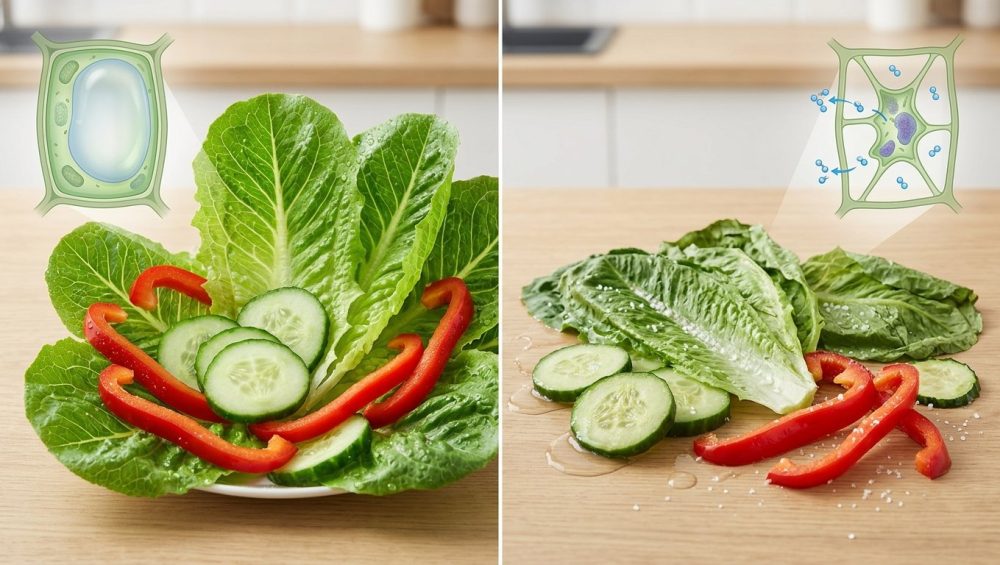
Plant cells operate exactly like this. Every single microscopic cell in a leaf of romaine lettuce, a slice of cucumber, or a wedge of tomato has a rigid outer layer called a cell wall (the cardboard box), and an internal sac called a central vacuole (the water balloon). When a vegetable is fresh, healthy, and perfectly hydrated, those vacuoles are absolutely brimming with water. They push outward against the cell walls with immense force. This internal water force is turgor pressure, and it is the sole reason your vegetables snap, crunch, and hold their three-dimensional shape.
The Water Balloon Analogy in Action
When you take a bite of a perfectly crisp piece of iceberg lettuce, you are literally shearing through and bursting millions of those microscopic, high-pressure water balloons simultaneously. That is the satisfying crunch you hear reverberating in your skull, and it is the refreshing burst of hydration you feel on your palate. It is a structural masterpiece engineered by nature.
However, turgor pressure is incredibly fragile. It relies entirely on the plant’s ability to hold onto its internal water supply. The moment that water is compromised, the structural integrity of the entire plant fails. And unfortunately for your side dishes, the quickest way to compromise that water supply is to introduce the most common seasoning in your pantry.
The Villain of the Salad Bowl: Osmosis
Enter salt. Sodium chloride is a magical, indispensable, flavor-enhancing compound that makes food worth eating, but it is also highly hydrophilic, meaning it absolutely loves water and will aggressively seek it out. When you sprinkle salt onto the surface of a raw vegetable, you are setting off a ruthless, microscopic chain reaction known as osmosis.
The Hydrophilic Nature of Salt
Osmosis is the biological movement of water across a semi-permeable membrane from an area of low solute concentration to an area of high solute concentration. In plain, non-scientific English: water will always travel toward the salt in a desperate attempt to dilute it.
When you aggressively salt your salad greens in the mixing bowl, you create an environment on the outside of the leaves that is heavily concentrated with sodium. The pure water trapped inside the plant cells (where the internal concentration of salt is practically zero) immediately wants to rush out to balance and dilute the heavy salt concentration on the surface. The plant’s cell membranes allow the water to pass through freely, and within minutes, the internal water balloons begin to rapidly deflate.
The Irreversible Collapse
As the water escapes the cells and pools on the surface of the leaf, the turgor pressure drops to zero. The cell walls, no longer supported by the internal pressure of the vacuoles, physically collapse. The crisp, rigid structure of the leaf is completely compromised, leaving you with a flaccid, wilted, translucent mess.
Because this process is purely chemical and structural, it is completely irreversible. Once you have sucked the moisture out of your greens through osmotic pressure, no amount of ice water baths, frantic spinning, or wishful thinking is going to bring them back to life. The damage is permanently done, and your salad is officially ruined.
The Anatomy of a Ruined Salad
The destruction caused by early salting doesn’t just ruin the physical texture of your greens; it actively destroys the flavor profile, the visual appeal, and the chemical balance of your entire dish. Let’s break down the tragic anatomy of a ruined salad.
The Dressing Dilution Effect
First, we have the Dressing Dilution Effect. Remember all that cellular water that the salt just dragged out of your vegetables? It has to go somewhere. It doesn’t just evaporate into thin air; it ends up pooling at the absolute bottom of your salad bowl, mixing directly with your carefully crafted vinaigrette.
A proper vinaigrette is an emulsion—a temporary, fragile peace treaty between two mortal enemies: oil and water. When you use a chemical emulsifier like Dijon mustard or an egg yolk, the lecithin acts as a microscopic bridge, holding the hydrophobic oil and hydrophilic water together in a creamy, cohesive suspension. But emulsions have their limits. When osmosis drags tablespoons of pure, unadulterated vegetable water out of your cucumbers and dumps it straight into your dressing, that delicate chemical balance is instantly shattered. The emulsion breaks. Your rich, clingy, flavorful dressing transforms into a thin, greasy, watery broth that completely refuses to coat the leaves, leaving your greens tasting like nothing, while all the flavor pools uselessly at the bottom of the bowl.
The Condensation Catastrophe
Second, we have the Condensation Catastrophe, which is the absolute bane of meal-preppers everywhere. If you are trying to be efficient and you salt your salad before sealing it in an airtight plastic container for tomorrow’s lunch, you are creating a biological nightmare.
The extracted water from the salted vegetables will evaporate slightly and then condense on the lid of the container. This creates a highly humid, swampy microclimate inside the sealed box. This excess moisture not only further contributes to the mushiness of the greens, but it also creates the perfect breeding ground for bacteria, causing your expensive organic greens to decompose, rot, and spoil in record time. What was supposed to be a healthy Tuesday lunch becomes a slimy, inedible biohazard. It is the quickest way to guarantee a chaotic cooking routine where you end up throwing away half of the groceries you buy.
The Shocking Water Content of Your Veggies
To truly grasp the magnitude of the osmosis problem and understand why it happens so fast, you need to understand just how much water is hiding inside your favorite salad ingredients. You might look at a cucumber and see a solid, dense object, but from a biological standpoint, you are essentially looking at a crunchy glass of water.
According to extensive nutritional data, cucumbers and iceberg lettuce are composed of approximately 96% water by weight. Zucchini, radishes, and celery sit right behind them at a staggering 95% water. Tomatoes are roughly 94% water, and even dense, heavy, seemingly dry vegetables like green cabbage and bell peppers are around 92% to 93% water.
When you realize that your salad is essentially 95% pure liquid held together by microscopic walls of fragile cellulose, it becomes glaringly obvious why drawing that water out is so disastrous. A single teaspoon of salt can extract multiple tablespoons of liquid from a bowl of chopped cucumbers and tomatoes within ten minutes. If you are adding salt early, you are quite literally juicing your salad. And nobody wants to eat lettuce juice.
The Salt Spectrum: Choosing the Right Crystal
Before we discuss the exact timing of when to salt, we need to discuss what you are salting with. Not all salts are created equal, and the physical shape of the salt crystal dictates how aggressively it will attack your vegetables.
Table Salt: The Aggressive Attacker
Standard table salt is essentially pulverized kitchen sand. It is incredibly dense, heavily processed, and often contains anti-caking agents like calcium silicate to prevent clumping. Because the grains are so microscopic, they have an immense amount of surface area relative to their size. When they make contact with a wet lettuce leaf, they dissolve almost instantaneously. This means the osmotic reaction happens at warp speed, attacking the cell walls before the salad even makes it to the dining room table. You should never use standard table salt to finish a delicate salad.
Kosher Salt: The Chef’s Standard
Kosher salt (such as Diamond Crystal or Morton) is the undisputed darling of the professional kitchen. It has a jagged, rough, irregular geometric structure. Because the flakes are larger and less dense than table salt, they dissolve slightly slower. More importantly, the coarse texture gives you, the cook, much better tactile control. You can physically feel how much salt you are grabbing, allowing for an even, controlled distribution over your greens. It is excellent for seasoning the dressing itself, or for pre-salting hearty vegetables.
Flaky Sea Salt: The Finisher
Flaky sea salt (like Maldon) is the ultimate secret weapon for salads. These salts consist of large, hollow, delicate pyramids. Because of their massive size, they dissolve very slowly on the surface of the food. When you use flaky sea salt on a salad at the last minute, you get a beautiful, satisfying crunch and a massive burst of flavor on the palate before the salt has time to melt and initiate osmosis. This is how high-end restaurants achieve perfectly seasoned, yet perfectly crisp salads.
The Golden Rules of Salad Seasoning: Timing is Everything
So, if salt destroys greens, should we stop salting our salads altogether? Absolutely not. A salad without salt is a bland, grassy, deeply disappointing experience. Salt is absolutely essential for making the natural flavors of the produce pop, reducing the inherent bitterness of leafy greens, and balancing the sharp acidity of your vinaigrette.
The secret isn’t eliminating the salt; the secret is precision timing. Here are the golden rules of salad seasoning that will save your meals and elevate your culinary game.
Rule 1: For Delicate Greens, Salt at the Literal Last Second
If your salad is built on a foundation of delicate, fragile greens—spring mix, baby arugula, butter lettuce, spinach, or mesclun—you must treat your salt shaker like a ticking time bomb. You should not add salt to the bowl until your guests are sitting at the table, holding their forks, and actively waiting for the food.
The technique is simple: Toss the greens with your dressing first. The oil in the dressing will lightly coat the leaves, creating a temporary, microscopic lipid barrier that offers a tiny bit of protection against moisture loss. Then, right before you serve, sprinkle your flaky sea salt or kosher salt over the top and give it one final, incredibly gentle toss. The salt will hit the tongue and enhance the flavor beautifully, but you will consume the salad before osmosis has the time to destroy the turgor pressure.
Rule 2: The Hearty Greens Exception
As with all rules in the culinary world, there is a notable exception. If you are making a salad with incredibly tough, fibrous greens—like curly kale, mature collard greens, or shredded raw cabbage—you actually want to salt them early.
These specific greens have cell walls that are so thick, dense, and rigid that they are practically unchewable and highly bitter in their raw state. By adding salt and an acidic dressing 20 to 30 minutes before serving, you intentionally trigger osmosis to break down those tough cell walls, physically softening the greens and making them palatable and tender. This chemical softening process is exactly why traditional coleslaw tastes significantly better on the second day, and why massaged kale salads have become a staple of modern meal-prep. You will quickly learn why your dinner needs acid and salt to tame these aggressive, fibrous vegetables.
Rule 3: The Tomato and Cucumber Pre-Drain
What about watery vegetables like tomatoes, cucumbers, and radishes? If you are adding them to a delicate lettuce salad, their 95% water content poses a massive threat to your dressing emulsion.
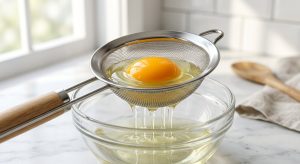
The professional technique here is to salt them separately, ahead of time, to intentionally draw out their excess moisture before they ever touch your pristine lettuce. Chop your tomatoes and cucumbers, place them in a fine-mesh wire strainer set over a mixing bowl, and toss them with a generous pinch of kosher salt. Let them sit undisturbed for 15 to 30 minutes. You will be absolutely shocked by how much water drips into the bowl below. Discard the extracted water (or save it to use as a flavorful base for a bloody mary or a vinaigrette), and add the newly concentrated, deeply flavored, structurally sound vegetables to your salad.
The “No-Go” Gear: Stop Bruising Your Greens
Now, before we get to the step-by-step masterclass on building the perfect salad, I need to go on a brief, highly justified rant about your kitchen equipment. As you know, I have a strict, uncompromising “no-go” rule when it comes to toxic, poorly manufactured kitchenware, and salad preparation is an area where home cooks are constantly swindled by terrible products.
The Plastic Spinner Epidemic
If you are washing your gorgeous farmer’s market greens and throwing them into a cheap, flimsy plastic salad spinner that you bought for ten dollars at a big-box store, you are actively sabotaging your meals. Those cheap spinners warp in the dishwasher, the pull-cord mechanisms break after a month of use, and worse, the cheap plastic often contains questionable chemicals that can leach into your food over time.
Furthermore, the aggressive, unbalanced, violent spinning action of cheap models physically bruises the delicate cell walls of your lettuce. You are essentially pre-crushing the turgor pressure out of the leaves, causing them to wilt, oxidize, and turn brown before you even add the salt. You need to be actively banishing toxic kitchen gear from your home if you want to see real improvements in your cooking.
Choosing the Right Bowl Material
The vessel you mix your salad in matters immensely. Cheap plastic bowls are highly porous. They hold onto old garlic smells, trap greasy residues from past dressings, and look terrible after a few washes. They also have absolutely terrible thermal mass, meaning they cannot retain cold temperatures.
You should be using a heavy-duty, commercial-grade stainless steel mixing bowl, or a thick, durable borosilicate glass bowl. These materials are non-reactive, completely non-toxic, and incredibly easy to clean. Quality tools are an investment in your health and your sanity, and they are essential beginner kitchen tools for any functional setup.
Pro Tip: Chill your stainless steel or glass bowl in the refrigerator for twenty minutes before you build your salad. Cold temperatures help maintain the turgor pressure of the plant cells, keeping your greens crisper for a longer period of time.
Step-by-Step Masterclass: Building the Perfect Salad
Let’s put all of this cellular biology, equipment theory, and timing strategy into practice. Here is your definitive, foolproof method for building a restaurant-quality salad in a standard home kitchen, completely conquering weeknight cooking anxiety in the process.
Phase 1: The Wash and the Absolute Dry
Water is the ultimate enemy of a good salad. If your greens are wet from the sink, your oil-based dressing will slide right off the water droplets, pooling sadly at the bottom of the bowl.
Wash your greens thoroughly in a large basin of cold water to remove dirt and grit. Then, you must dry them obsessively. Use a high-quality, stainless-steel-basin salad spinner with a smooth, pump-action mechanism that gently but effectively uses centrifugal force to remove water without crushing the leaves. If you don’t have a good spinner, lay the greens out flat on clean, lint-free kitchen towels, roll them up loosely, and gently pat them dry. They must be bone dry before they see a single drop of oil.
Phase 2: The Emulsion and the Fat Barrier
Never pour your dressing directly over a mountain of naked greens in the center of the bowl. The heavy liquid will crush the leaves at the top and leave the leaves at the bottom completely dry.
Instead, spoon your emulsified dressing around the outer perimeter of your large, chilled mixing bowl. Add your perfectly dry greens to the center. Using your hands (clean hands are the best, most gentle salad tongs in the world), gently lift and fold the greens from the center out toward the edges, wiping the dressing off the sides of the bowl. This technique ensures an even, whisper-light coating rather than drowning the leaves.
When you toss the dry greens in the dressing, the oil acts as a protective shield. It coats the leaves and provides a microscopic, hydrophobic barrier against the salt and acid you are about to add. Ensure every single leaf is glossy, but not dripping.
Phase 3: The Final Seasoning and Plating
Your guests are seated. The wine is poured. The main course is ready. Now, and only now, do you reach for the salt.
Sprinkle a generous pinch of flaky sea salt or coarse kosher salt from a height of about ten inches above the bowl. Salting from high up ensures an even, scattered distribution, preventing heavily concentrated clumps of salt from attacking one specific area of the salad. Give the greens one final, incredibly gentle toss to distribute the crystals.
Plate the salad immediately. If you want to elevate the presentation and impress your guests, this is where mastering the art of food plating comes into play. Do not just dump the greens onto a flat plate. Build the salad vertically. Use your hands to gently stack the leaves, creating volume, height, and negative space. A tall, airy salad looks infinitely more appetizing and professional than a flat, compressed pile.
Beyond the Bowl: How Osmosis Affects Other Vegetable Prep
Once you truly understand the power of osmosis and turgor pressure, you will start seeing its effects everywhere in your kitchen. This fundamental scientific principle doesn’t just apply to raw salads; it dictates how you should handle vegetables in almost every single cooking scenario.
Roasting and Sweating
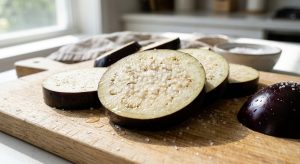
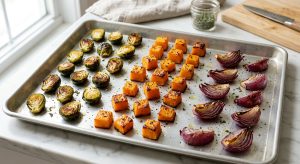
Think about roasting high-water vegetables like zucchini, eggplant, or mushrooms. If you chop these vegetables and throw them straight into a hot oven, the heat will rapidly break down their cell walls, releasing their internal water. Because they are sitting in a puddle of their own juices, they will steam rather than roast, turning mushy, grey, and completely unappetizing.
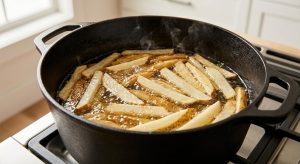
But if you apply the salad-drain technique—salting them generously on a wire rack for 30 minutes before roasting—you draw out the excess moisture through osmosis. You can then pat them completely dry and roast them. The result? Deeply caramelized, beautifully browned, structurally sound roasted vegetables with an incredibly concentrated flavor.
Conversely, think about when you want vegetables to release their water rapidly. When you are sweating a mirepoix (onions, celery, and carrots) in a skillet for a soup base, you should add salt immediately. The salt draws the moisture out of the aromatics via osmosis, allowing them to soften quickly and release their natural sugars into the pan without browning or burning too fast.
The Acid Factor
And let’s not forget the crucial role of acidity. Many home cooks don’t realize that acid (like lemon juice, lime juice, or vinegar) can also rapidly break down plant cell walls and cause severe wilting. If your vinaigrette is highly acidic, it will attack the structural integrity of your greens almost as fast as the salt does. This means that dressing your salad too early is just as much of a culinary crime as salting it too early. Both the salt and the acid must be applied at the final hour.
Escaping the Kitchen Chaos
Cooking is not magic; it is applied science. But you do not need to wear a white lab coat or own a centrifuge to make an incredible dinner. You just need to understand the basic, underlying rules of engagement between your ingredients.
By mastering these small, scientific details, you are actively transforming your daily cooking from a stressful, unpredictable chore into a highly rewarding, consistent hobby. You are learning to respect your ingredients, optimize your prep time, and produce food that is genuinely exceptional. You stop blindly following recipes and start actually cooking, reacting to the food in front of you with confidence and intuition.
So, the next time you are standing over a beautiful, vibrant bowl of fresh greens, salt shaker in hand, I want you to pause. Step away from the bowl. Let the turgor pressure do its job. Wait until the absolute last possible second to season those leaves. Your palate, your guests, and your cellular biology will thank you. Now go make a salad, and for the love of all things culinary, keep your salt to yourself until it is time to eat. Simple weeknight dinners don’t have to be boring, and they certainly don’t have to be soggy.