Listen, I get it. It is 6:30 PM on a Tuesday. You are staring into the cold, unforgiving abyss of your refrigerator, desperately hoping that a fully plated, Michelin-star meal will spontaneously manifest next to that half-empty jar of questionable mayonnaise. When it inevitably does not, your thumb muscle memory kicks in. Before you even realize what is happening, you are dropping another $35 on lukewarm Pad Thai that will arrive in 45 minutes, leaving you feeling financially drained and entirely unsatisfied.
You are not alone in this cycle. If you rely heavily on delivery apps and takeout containers to survive the workweek, you are participating in a massive, expensive, and frankly exhausting modern trend. But here is the brutal truth that the restaurant industry does not want you to know: you do not need a culinary degree, a trust fund, or an extra four hours in your day to feed yourself like a functional, thriving adult. You just need a system, a little bit of tough love, and the willingness to learn a few basic techniques.
Cooking is not magic. It is just applied heat, a few chemical reactions, and knowing when to take the pan off the stove. My mission is to advocate for the everyday home cook and prove that professional-level results are completely achievable in a standard, cramped apartment kitchen. We are going to strip away the pretentious chef-speak, optimize your weeknight routine because time is money, and transform you from a takeout-addicted novice into a confident kitchen powerhouse. Grab a beverage, roll up your sleeves, and let us get to work.
The Reality Check: Why You Hate Cooking (And Why It’s Not Your Fault)
If the mere thought of chopping an onion sends you into a spiral of dread, we need to address the root of the problem. You do not actually hate cooking; you hate the chaotic, stressful, and messy version of cooking that you have been attempting.
The Takeout Trap and the Myth of “No Time”
We live in an era of unprecedented convenience, but that convenience is bleeding our wallets dry and wrecking our health. In 2024, the average American spent roughly $191 per month just dining out, and by recent estimates, over 55% of our food dollars are now spent away from home. If you are part of Gen Z, the statistics are even starker—nearly 69% prefer delivery over dining in, making them the most delivery-focused generation to date.
The primary excuse? A perceived lack of time. Surveys show that around half of young adults feel they have less than 30 minutes on a normal weeknight to prepare a meal. Meanwhile, the average daily time spent cooking among those who do cook hovers around 50 minutes for men and 71 minutes for women. The irony is that scrolling through a delivery app, waiting for the driver to navigate your apartment complex, and plating your soggy fries often takes longer than cooking a brilliant meal from scratch. You have the time; what you lack is an efficient workflow.
The Social Media Illusion
Your cooking anxiety is also fueled by the relentless barrage of aesthetic social media chefs. You are led to believe that a “simple weeknight dinner” involves making a 12-hour bone broth, hand-rolling artisanal pasta, and foraging for wild mushrooms. This is absolute nonsense. Real weeknight cooking is about survival, efficiency, and flavor. It is about knowing how to decode pretentious recipe jargon so you can skip the unnecessary steps and get straight to the eating part. We are leaving the performative cooking online and bringing ruthless practicality back into your kitchen.
The Weeknight Arsenal: Equipment That Doesn’t Poison You
Before we even talk about food, we need to talk about your gear. If your kitchen cabinets are a graveyard of cheap, peeling, scratched, mystery-metal pans, we are going to have a serious problem. I have zero patience for toxic kitchenware, and neither should you.
The “No-Go” Rule: Purging the Toxic Wasteland
I will scream this from the rooftops until I lose my voice: throw away your scratched non-stick pans. I do not care if it was a gift. I do not care if it was on sale. You must banish toxic kitchen gear from your home immediately.
Despite growing public awareness, the market is still flooded with hazardous materials. A recent study by the Ecology Center revealed that a staggering 79% of tested nonstick cooking pans were coated with PTFE (polytetrafluoroethylene)—the polymer form of PFAS, commonly known as “forever chemicals”. Furthermore, research indicates that a single scratch on a Teflon-coated pan can release thousands of toxic microplastic particles directly into your food.
These forever chemicals do not break down in the environment or your body. They have been linked to weakened immune systems, elevated cholesterol, liver disease, and even certain types of cancer. With a 2024 analysis showing that nearly half the U.S. population already has detectable PFAS in their tap water, it is absolute madness to willingly cook your dinner on a chemical slick. Stop buying disposable $15 pans that poison you and end up in a landfill every eight months.
The Holy Trinity of Pans
You do not need a massive 24-piece cookware set to cook like an expert. You only need three high-quality, safe, and durable vessels. These are the only beginner kitchen tools you truly require for stovetop mastery:
- The Cast Iron Skillet (10 or 12-inch): This is your immortal workhorse. A cast iron skillet retains heat beautifully, making it the ultimate tool for searing a steak, blistering vegetables, or baking a skillet cookie. Yes, it requires a tiny bit of maintenance (washing it by hand and rubbing it with oil), but it will outlive you and your grandchildren.
- The Stainless Steel Sauté Pan (3-quart): This is your fond creator. “Fond” is the culinary term for those delicious, caramelized brown bits that stick to the bottom of the pan when you sear meat. You cannot build a proper pan sauce without fond, and you cannot get good fond in a non-stick pan. Stainless steel is virtually indestructible and handles acidic ingredients like tomatoes and wine perfectly.
- The Enameled Dutch Oven (5 to 7-quart): This heavy, ceramic-coated beast is your slow-cooking champion. It is perfect for boiling pasta, simmering Sunday stews, braising tough cuts of meat, and deep-frying. It distributes heat evenly and is entirely non-toxic.
The Sharpest Tool in the Shed: Your Knife
The fastest way to hate cooking is to use a dull, flimsy knife. You do not need a massive wooden block of serrated blades taking up counter space. You need exactly one high-quality, 8-inch chef’s knife. Keep it honed, wash it by hand, and never put it in the dishwasher. Pair it with a heavy wooden or thick plastic cutting board (never glass, unless you want to ruin your blade and your sanity). Investing in a proper knife will instantly speed up your prep time and help you build a beautifully organized dream kitchen that actually functions.
The Blueprint: Building a Foolproof Weeknight Pantry
If you open your pantry and only see half a bag of stale tortilla chips and a jar of peanut butter, of course you are going to order takeout. The secret to effortless weeknight dinners is having a stocked arsenal of ingredients that can be transformed into a meal at a moment’s notice.
Flavor Bombs: The Secret to “Chef-y” Food
Why does restaurant food taste so much better than yours? They use copious amounts of fat, they season aggressively with salt at every stage of cooking, and they understand the power of acid and umami. Stock your pantry with these flavor bombs, and your food will instantly elevate:
- Acids: Lemon juice, lime juice, apple cider vinegar, balsamic vinegar, and rice vinegar. If you taste your soup or sauce and think, “This is missing something,” 90% of the time, it is missing acid. Acid brightens heavy dishes and cuts through rich fats.
- Umami: This is the savory, meaty “fifth taste.” Keep soy sauce, fish sauce, tomato paste, Worcestershire sauce, and Parmesan cheese in your fridge. A splash of soy sauce in a beef stew or a dollop of tomato paste in a pan sauce adds incredible depth.
- Fats: Extra virgin olive oil (for finishing and salad dressings), a neutral high-heat oil like avocado or canola oil (for searing), and real, high-quality butter.
- Spices that Matter: Throw away the dusty, five-year-old pre-mixed spice blends. Buy kosher salt (Diamond Crystal is the industry standard), whole black peppercorns with a grinder, smoked paprika, cumin, garlic powder, and crushed red pepper flakes.
The Emergency Carb Stash
You should always have a foundation ready to soak up your sauces. Keep a variety of dried pasta shapes (long noodles like linguine for oil-based sauces, tubular shapes like penne for thick ragùs). Stock up on Jasmine or Basmati rice, quinoa, and canned beans (chickpeas and black beans are mandatory). With these carbs on standby, you are never more than 20 minutes away from a filling meal.
The Master Method: The “Formula” Over the Recipe
Beginners fail because they become slaves to recipes. They measure a quarter teaspoon of oregano with surgical precision and panic when they run out of shallots. To master weeknight cooking, you must stop relying on rigid recipes and start learning adaptable formulas. Once you understand the mechanics of a dish, you can cure your cooking anxiety and cook with whatever happens to be in your fridge.
The Sheet Pan Miracle
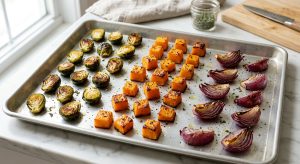
The sheet pan dinner is the holy grail of weeknight cooking. The formula is brilliantly simple: Protein + Hearty Vegetable + Fat + Seasoning + High Heat.
The secret here is the Maillard reaction—a chemical reaction between amino acids and reducing sugars that gives browned food its distinctive, complex flavor. To achieve this, your oven needs to be hot (usually 400°F to 425°F).
The Execution: Toss chopped chicken thighs, broccoli florets, and cubed sweet potatoes in olive oil, kosher salt, pepper, and smoked paprika. Spread them out evenly on a heavy-duty stainless steel baking sheet. Do not crowd the pan, or the vegetables will steam in their own juices instead of roasting and browning. Bake for 25 minutes. You now have a complete, nutritious meal with exactly one pan to wash.
The One-Pot Wonder
Whether it is a hearty stew, a quick curry, or a braise, the one-pot formula is a weekday lifesaver.
The Execution:
- Sauté Aromatics: Heat oil in your Dutch oven and cook diced onions, carrots, and celery until soft. Add minced garlic for the last 30 seconds so it doesn’t burn.
- Brown the Protein: Push the veggies aside, turn up the heat, and sear your meat. Let it develop a crust.
- Deglaze: Pour in a splash of broth, wine, or water, and use a wooden spoon to scrape up all that beautiful fond from the bottom of the pot.
- Simmer: Add your liquid base (crushed tomatoes, coconut milk, or stock), toss in your emergency carbs (like lentils or pasta), cover, and let it simmer until cooked through.
The “Grain Bowl” Assembly Line
If you are cooking for one or two people, the grain bowl is your best friend. Instead of cooking a cohesive “dish,” you are simply prepping components that can be mixed and matched.
The Execution: Make a large batch of quinoa on Sunday. On a Wednesday night, throw a scoop of that cold quinoa into a bowl. Top it with some canned chickpeas, a handful of raw spinach, half a sliced avocado, and a fried egg. Drizzle the entire thing with a quick dressing made of olive oil, lemon juice, and a spoonful of Dijon mustard. It takes five minutes, it is wildly healthy, and you can practice the art of food plating by arranging the ingredients beautifully to trick your brain into thinking you are at a $20-a-bowl hipster café.
Time is Money: Ruthless Efficiency Hacks for the Weekday Cook
When you are exhausted after a ten-hour workday, every minute counts. Professional kitchens operate at lightning speed because they utilize systems. You can implement these same systems at home to drastically cut down your kitchen time.
Prep Like a Pro (Mise en Place for Mere Mortals)
“Mise en place” is a French culinary phrase meaning “putting in place.” It means gathering, measuring, and chopping all of your ingredients before you even think about turning on the stove.
If you try to chop garlic while your onions are already sizzling in the pan, you are going to panic, the onions will burn, and you will end up ordering pizza. Take five minutes to prep everything into little bowls. It makes the actual cooking process incredibly fast and entirely stress-free. For instance, if you are making pan-seared salmon and asparagus, having your fish patted dry, your asparagus trimmed, and your lemon wedges cut before the pan gets hot is the difference between a delicate sear and a smoky, burnt disaster.
Clean As You Go
This is the golden rule of kitchen sanity. The reason people hate cooking is not the cooking itself; it is the nightmare of facing a sink full of crusty, greasy pots after eating.
While your sheet pan is in the oven, or your pasta water is coming to a boil, wash your cutting board. Wipe down the counter. Load the dishwasher. By the time your dinner is ready to be plated, your kitchen should be nearly spotless.
The Freezer is Your Best Friend
Stop letting your fresh produce rot in the crisper drawer. If you buy a bunch of fresh ginger, peel it, chop it into chunks, and freeze it; you can grate it directly from frozen into your stir-fries. If you open a can of tomato paste and only use one tablespoon, freeze the rest in an ice cube tray. Batch-cook brown rice and freeze it in flat, portion-sized ziplock bags. When you need a quick side, you can microwave it in two minutes, saving you the 45 minutes it takes to cook from scratch.
Surviving the Inevitable Disasters
You are going to mess up. You are going to burn things, over-salt things, and undercook things. It happens to literally everyone, including professionals. The hallmark of a good cook is not perfection; it is knowing how to pivot and fix rookie kitchen mistakes on the fly.
The Over-Salted Catastrophe
If you accidentally dump too much salt into your soup or sauce, do not panic, and please ignore the old wives’ tale about adding a raw potato (it does not work). Instead, you need to balance the flavors. Add a splash of acid (like vinegar or lemon juice) or a pinch of sugar. If it is a liquid dish, simply dilute it with a bit more unsalted broth or water.
The Burnt Bottom
You left the heat on too high, and now the bottom of your chili is scorched. Whatever you do, do not scrape the bottom of the pot! If you scrape the burnt bits, you will distribute that acrid, ashy flavor throughout the entire dish. Immediately remove the pot from the heat. Carefully ladle the unburnt top portion of the food into a clean pot, leaving the scorched disaster behind. You can easily survive common kitchen disasters if you just stay calm and refuse to stir the ashes.
The Undercooked Nightmare
If you slice into your chicken breast and it is still pink in the middle, do not throw it back into the frying pan whole—it will dry out on the outside before the inside cooks. Instead, slice the chicken into thin strips, toss those strips back into the pan with a little bit of oil or butter, and sauté them for two minutes until they are cooked through. If your rice is crunchy but the water is gone, add a quarter cup of boiling water, put the lid back on tightly, and turn the heat to the lowest possible setting for five more minutes. Knowing how to save your ruined meals will give you the confidence to experiment without the fear of wasting money.
Conclusion: Your New Kitchen Reality
Mastering simple weeknight dinners when you have zero cooking skills is not about transforming into a television chef overnight. It is about taking back control of your time, your health, and your bank account. It is about refusing to settle for overpriced, lukewarm delivery food when you are entirely capable of roasting a pan of vegetables and searing a piece of protein in half the time.
Purge the toxic gear from your cabinets. Invest in a heavy cast iron skillet and a sharp knife. Stock your pantry with the acids and umami bombs that make food taste alive. Stop blindly following recipes and start internalizing the flexible formulas that allow you to cook intuitively.
The kitchen is not a torture chamber; it is a workshop. Yes, you will set off the smoke detector a few times. Yes, you will chop an onion too slowly at first. But with a little bit of practice, some ruthless efficiency, and a healthy dose of snark, you will soon realize that you are completely capable of feeding yourself beautifully. Now, put down your phone, close the delivery app, and go turn on your stove. You’ve got this.