You’ve been standing over the stove for an hour. You’ve followed the recipe to the letter. You’ve meticulously chopped, you’ve patiently sautéed, and you’ve carefully simmered. But when you finally dip your wooden tasting spoon into the pot and take a tentative sip, you are met with overwhelming, soul-crushing mediocrity. It’s not bad, exactly. It’s just… boring. It’s flat. It’s a one-note song played on a kazoo when you were expecting a grand symphony.
What do you do? If you’re like the vast majority of weekend culinary hobbyists, you reach for the salt shaker. You sprinkle a little. Taste again. Still boring. You sprinkle a little more. Now it’s just boring and salty. Panic sets in. You start desperately throwing things from the spice cabinet at it—a dash of garlic powder, a sprinkle of smoked paprika, maybe a panicked splash of hot sauce. Congratulations, you’ve now created a salty, confused, muddy mess of a dinner, and you still don’t want to eat it.
Put down the salt shaker. Step away from the spice rack. The problem isn’t a lack of sodium, and it certainly isn’t a lack of effort. You are missing the single most crucial, transformative, and scientifically magical element in the culinary universe: Acid.
Yes, acid. A simple, humble squeeze of fresh lemon juice, a splash of vinegar, or a dollop of cultured dairy. It is the secret weapon of every professional chef, the unsung hero of the restaurant kitchen, and the exact reason why your favorite takeout always tastes so much more vibrant than your home cooking. But here is the beautiful truth: you do not need a culinary degree, a Michelin star, or a pretentious, monogrammed chef’s coat to master this. You just need to understand a little bit of basic food chemistry and learn to trust your own palate.
In this comprehensive, no-nonsense masterclass, we are going to tear down the myths of flavor building. We are going to explore the literal science of why a splash of citrus can resurrect a dead dish, why your expensive cookware might be secretly sabotaging your acidic ingredients, and how you can permanently elevate your weeknight dinners from “barely edible” to “mind-blowing” using ingredients you already have sitting in your fridge door.
Grab a glass of wine, pull up a stool, and let’s talk about the absolute magic of a lemon squeeze.
The Salt Myth: Why You’re Fixing the Wrong Problem
The Endless Shaker Cycle
Let me paint a picture that is probably uncomfortably familiar to you. You’re making a rich, hearty beef stew, a creamy pasta sauce, or perhaps a slow-braised pork shoulder. You taste the simmering liquid, and it feels overwhelmingly heavy. It coats your tongue like a wet wool blanket. Your brain, conditioned by years of mediocre dietary advice and fast-food consumption, immediately sends a distress signal: Needs salt.
Here is the brutal, honest truth: salt is a flavor enhancer, not a flavor creator. Salt makes things taste more like themselves. If your dish tastes like a heavy, monotonous blob of fat and starch, adding salt is just going to give you a very well-seasoned, heavy, monotonous blob.
The endless shaker cycle is one of the most common beginner cooking mistakes I see in home kitchens. We over-salt our food because we are desperately searching for “brightness”—a culinary term that essentially means a flavor that wakes up your palate, cuts through the richness, and makes you actually want to take another bite. Salt cannot provide brightness. Only acid can do that.
When you find yourself adding salt, tasting, and feeling like the dish is still missing a mysterious je ne sais quoi, you have hit the salt ceiling. Any more sodium, and you’re going to dehydrate your dinner guests and ruin the meal. This is the exact moment you need to pivot away from the salt cellar and look toward acidity.
What “Flat” Actually Means on Your Palate
To understand why acid is the cure, we first need to understand the disease. What does it actually mean, biologically speaking, when a dish tastes “flat”?
In culinary science, a “flat” flavor profile usually means there is a massive imbalance of fat and umami without any high, sharp notes to contrast them. Imagine listening to a song where the bassist and the drummer are playing as loudly as possible, but the lead guitarist and the singer have gone home. It’s just a heavy, thudding, exhausting rhythm. That is what a heavy cream sauce or a buttery mashed potato tastes like without acid.
Fat coats the tongue. It literally creates a physical lipid barrier over your taste buds, dulling your perception of other flavors. Umami (the deep, savory note found in roasted meats, mushrooms, and soy sauce) provides incredible depth, but without contrast, it can quickly become exhausting to eat. Your palate gets fatigued. This psychological and physiological phenomenon is called “sensory-specific satiety.” After a few bites of a heavy, rich, flat dish, your brain gets bored of the monotony and tells you to stop eating.
Acidity acts as the lead singer. It provides the high notes. It physically cleanses the palate, breaking through that lipid barrier and resetting your taste buds so that every single bite tastes as exciting and vibrant as the very first one. It is the ultimate palate cleanser, built right into the recipe itself.
The Chemistry of a Lemon Squeeze: Why Acid Works
I promised you we wouldn’t get bogged down in pretentious chef-speak, but we absolutely do need to talk about the actual, literal science of what happens in your mouth when you introduce acid to a dish. Because once you understand the why, the how becomes incredibly intuitive.
Cutting Through the Fat (Literally)
We’ve established that fat coats the tongue and dulls flavor. But how does acid “cut” through it? It’s not just a poetic culinary metaphor; it is a measurable chemical reaction.
Acids (like citric acid in lemons or acetic acid in vinegar) lower the pH of the food. When you introduce a low-pH liquid to a high-fat environment, it thins out the perception of the fat. Just as versatile kitchen bench scrapers physically lift stubborn dough off a counter, acid physically lifts heavy fat molecules away from your taste receptors.
Think about a classic vinaigrette dressing. Olive oil is heavy, viscous, and coats the inside of the mouth. Vinegar is sharp, watery, and astringent. When you whisk them together, the vinegar breaks up the sluggish monotony of the oil, creating a balanced emulsion that makes a pile of boring lettuce taste vibrant and alive. The exact same principle applies to finishing a rich, butter-basted steak with a squeeze of lemon, or adding a splash of apple cider vinegar to a heavy pork ragu. The acid doesn’t necessarily make the dish taste sour; it makes it taste lighter and more dynamic.
Masking the Bitter Truth
Here is a fascinating piece of food science that completely blew my mind when I first learned it: acid physically alters how your tongue perceives bitterness.
Let’s say you’re cooking some dark, leafy greens—kale, Swiss chard, or broccoli rabe. These vegetables are packed with phenolic compounds (like quercetin and catechins) that register as highly bitter on our taste receptors (specifically the TAS2Rs receptors, if you want to get nerdy about it). For a lot of people, this intense bitterness makes these incredibly healthy vegetables totally unpalatable.
If you try to mask that bitterness with salt, you will fail. If you try to mask it with fat (like drowning it in a stick of butter), you will just have greasy, bitter greens. But if you hit those greens with a squeeze of fresh lemon juice? Absolute magic happens.
The low pH of the lemon juice introduces an abundance of protons (hydrogen ions) to the environment. These protons actually bind to the phenolic compounds, a process called protonation. This lowers the solubility of the bitter compounds, meaning they literally cannot bind to your bitter taste receptors as effectively. The acid doesn’t just distract your brain from the bitterness; it chemically suppresses your tongue’s ability to taste it. This is why a balancing flavors with acidity approach is vastly superior to just dumping salt on your veggies and hoping for the best.
The Salivation Factor
Let’s talk about spit. I know, it’s not the most appetizing topic to discuss while we’re talking about dinner, but saliva is the unsung biological hero of flavor perception.
You cannot taste food unless it is dissolved in liquid. If you were to completely dry off your tongue and place a crystal of salt or sugar on it, you wouldn’t taste a thing until your mouth produced enough saliva to dissolve it. Saliva carries the flavor molecules into the deep channels of your taste buds. Furthermore, as you chew and swallow, the physical act of salivating forces volatile aroma compounds up into your nasal passages. Since up to 80% of what we perceive as “flavor” is actually smell, saliva is absolutely critical to experiencing the full profile of your food.
Here is the kicker: nothing stimulates saliva production quite like acid.
When your brain detects a sharp drop in pH, it sends a panic signal to your salivary glands: Incoming acid! Dilute it immediately to protect our tooth enamel! Your mouth instantly floods with saliva. This sudden rush of fluid dissolves more food molecules, releases more aromatic compounds into your nose, and physically washes your palate.
This is exactly why a squeeze of lemon makes a dish “pop.” It is literally forcing your body’s sensory equipment into overdrive. You are tasting more of the food because your mouth is working harder to process it.
A Snarky Guide to Your Acid Arsenal
Alright, so acid is magic. But not all acids are created equal. You cannot just dump a cup of cheap white distilled vinegar into a delicate cream sauce and expect a Michelin-star result. You need to know your weapons. As someone who actively advocates for peaceful daily cooking habits, I promise that keeping a well-stocked, diverse acid arsenal is the easiest way to make weeknight cooking totally stress-free.
Citrus: The Weekday Warriors
Citrus fruits are the undisputed kings of finishing acids. They are fresh, they are vibrant, and they bring a distinct floral aroma that fermented vinegar simply cannot match.
- Lemons: The absolute MVP of the kitchen. Lemon juice has a pH of around 2.0 to 2.6, making it highly acidic, but it is backed by complex volatile compounds (terpenoids like limonene) that give it a bright, sunny aroma. Lemon plays beautifully with almost everything: delicate fish, roasted chicken, root vegetables, pasta, and rich, buttery sauces.
- Limes: Sharper, more aggressive, and slightly more bitter than lemons. Limes are absolutely essential for Mexican, Thai, and Vietnamese cuisines. They have a punchy tropical edge that cuts flawlessly through the intense heat of chilies and the heavy richness of coconut milk.
- Oranges: Much sweeter and far less acidic than lemons or limes. Orange juice is great for marinades or for deglazing a pan when you want a subtle sweetness alongside a mild acidity. It pairs beautifully with rich meats like pork and duck.
- Grapefruit: The wildcard of the citrus family. Grapefruit brings a distinct, sharp bitterness along with its acidity. It’s brilliant in cold salads with rich, fatty components like avocado or toasted nuts, but use it sparingly in hot dishes, as the bitterness can intensify aggressively when heated.
Vinegars: The Pantry Powerhouses
If citrus is the fresh, bright top note, vinegar is the deep, complex bassline. Vinegars are made by fermenting alcohol into acetic acid. Because they are shelf-stable and last forever, they are the ultimate pantry staple.
- Apple Cider Vinegar (ACV): Fruity, slightly funky, and robust. ACV is brilliant in homemade barbecue sauces, braised pork dishes, and hearty winter vegetable roasts. It has a rustic, earthy quality that stands up perfectly to heavy, smoky flavors.
- White Wine & Red Wine Vinegar: The reliable workhorses of European cooking. White wine vinegar is sharp and clean, perfect for delicate vinaigrettes or finishing a quick chicken pan sauce. Red wine vinegar is punchier and more robust, ideal for beef stews, marinades, and hearty, leafy salads.
- Balsamic Vinegar: The diva of the vinegar world. True, aged balsamic is sweet, syrupy, and incredibly complex. It is not a cooking acid; it is a finishing syrup. Drizzle it over fresh heirloom tomatoes, strawberries, or a wedge of hard Parmesan cheese. Do not dump it into a boiling pot of soup; you will completely destroy its delicate nuances.
- Rice Vinegar: Mild, slightly sweet, and incredibly gentle. Rice vinegar is essential for Asian cooking. It provides a soft, rounded acidity that doesn’t overpower delicate ingredients like sushi rice, light stir-fries, or cucumber salads.
- Sherry Vinegar: The secret weapon of restaurant chefs everywhere. Sherry vinegar has a nutty, complex, almost savory flavor profile. If your tomato sauce or French onion soup tastes flat, a few drops of sherry vinegar will make it taste like it simmered on a stove for three days.
The Weird and Wonderful: Cultured Dairy and Ferments
Acid doesn’t just come in the form of squeezed juice or bottled vinegar. Lactic acid, produced by the fermentation of sugars by beneficial bacteria, offers a creamy, tangy profile that adds incredible depth to food.
- Cultured Dairy: Yogurt, sour cream, buttermilk, and crème fraîche. These ingredients provide acidity wrapped in a luxurious blanket of fat. They are perfect for finishing pureed soups, marinating meats (the lactic acid gently tenderizes proteins without turning them to mush), or creating rich but perfectly balanced sauces.
- Ferments: Kimchi juice, sauerkraut brine, and pickle juice. Do not throw these liquids down the drain! They are liquid gold. A splash of pickle juice in a potato salad, or a spoonful of kimchi brine in a bowl of ramen, adds a complex, salty, umami-rich acidity that completely transforms the dish from boring to brilliant.
How to Actually Use Acid Without Ruining Dinner
Okay, you have your lemons and your vinegars lined up on the counter. Now, how do you use them without turning your dinner into a sour, curdled disaster? This is where proper technique comes in.
Timing is Everything: When to Squeeze
Here is a crucial piece of food science that most home cooks get entirely wrong: heat destroys the most beautiful parts of acid.
Let’s look at lemon juice. The bright, floral, unmistakable aroma of a fresh lemon comes from volatile compounds, primarily a terpenoid called limonene. These compounds are highly unstable. If you squeeze fresh lemon juice into a pot of soup and then boil it for twenty minutes, the heat will completely vaporize those volatile compounds, meaning you lose the aroma.
Furthermore, prolonged boiling actually degrades citric acid into a completely inactive compound called aconitic acid within about 90 seconds. You will lose the brightness, you will lose the aroma, and you will be left with a dull, vaguely sour background note that does nothing for your food.
The Golden Rule of Acid: Acid is a finishing touch.
You should be adding your fresh citrus juice or your delicate vinegars at the very end of the cooking process, right before serving. Take the pot completely off the heat. Stir in the acid. Taste it. Serve it immediately. This preserves the volatile aromas and ensures that the sharp, palate-cleansing properties of the acid remain perfectly intact.
The Heat Factor: Don’t Cook the Life Out of It
There are exceptions to the finishing rule, of course. If you are using acid as a tenderizer in a marinade, or if you are reducing a cup of wine to build the base of a pan sauce, you are intentionally cooking the acid. In these cases, you are looking for the structural changes the acid brings (like breaking down tough meat fibers or concentrating savory notes) rather than the bright, fresh finish.
But for finishing? Keep it far away from the rolling boil.
Balancing the Scales: Acid vs. Fat vs. Salt
Cooking is a constant, delicate balancing act between salt, fat, acid, and heat. When you are adjusting a dish, you need to think of these elements as a set of scales.
- Too salty? You cannot “remove” salt, but you can distract the palate by adding a splash of acid and a touch of fat (like a swirl of unsalted butter).
- Too rich/heavy? Add acid to cut through the fat and lighten the profile.
- Too sour? If you accidentally went overboard with the lemon juice, you need to balance it by adding a little bit of fat (cream, butter, olive oil) or a touch of sweetness (sugar, honey, maple syrup) to round out the sharp edges.
You must taste your food constantly. Add a few drops of acid, stir, and taste. You are looking for the exact moment when the flavors suddenly sharpen and come into focus. It’s like twisting the lens on a camera; suddenly, everything is crisp, clear, and perfectly defined.
The Gear Rant: Squeezers, Zesters, and Toxic Pans to Avoid
You know I cannot write a masterclass without a brutally honest rant about kitchen equipment. As a firm believer in having only the essential tools for beginners, I have absolutely zero patience for kitchen clutter, and even less patience for toxic garbage that ruins your food.
When you start cooking with high-acid ingredients, your choice of cookware becomes incredibly important. Acid is corrosive. It reacts aggressively with its environment. If you are using the wrong gear, you are going to ruin your dinner and potentially poison yourself.
The Tools You Actually Need (And What to Trash)
First, let’s talk about extraction. If you are still squeezing lemons by hand and letting the seeds fall into your sauce, stop it immediately. You need exactly two tools to handle citrus:
- A Handheld Citrus Press (The Enameled Kind): Do not buy the cheap plastic ones that snap in half, and do not buy the bare aluminum ones. You want a heavy-duty, enameled cast-aluminum or stainless steel citrus press. It extracts every drop of juice, catches the seeds, and flips the rind inside out. It takes two seconds and saves you endless frustration.
- A Microplane Zester: The zest (the brightly colored outer layer of the citrus peel) contains all the essential oils and zero of the sour juice. It is pure, unadulterated flavor. A microplane allows you to shave off the zest without hitting the bitter, spongy white pith underneath. If you are baking a cake or making a marinade, the zest is where the magic lives.
What should you trash? Those ridiculous wooden citrus reamers that just mash the fruit into a pulpy mess, and any plastic squeezer that flexes when you apply pressure. You also might want to reconsider those soapy tasting silicone spatulas that have absorbed old odors; high-acid foods will strip those foul, lingering tastes right out of the cheap silicone and directly into your dinner. Upgrade to solid core, high-grade silicone or classic wood.
The Danger of Reactive Metals and Peeling Non-Stick
Now, pay attention, because this is where home cooks accidentally ruin their food.
Acid reacts violently with certain metals. If you simmer a highly acidic tomato sauce or a lemon-heavy braise in an unlined aluminum or copper pot, the acid will literally dissolve the metal. This chemical reaction creates soluble aluminum or copper salts (like copper citrate) that will leach directly into your food. Your beautiful sauce will turn a hideous, muddy grey-green color, and it will taste like a mouthful of dirty pennies. More importantly, consuming these heavy metals is toxic. Never, ever cook acidic foods in reactive metals.
You must use non-reactive cookware for acidic dishes. This means stainless steel, enameled cast iron (like a Le Creuset Dutch oven), or glass.
However, there is a massive caveat with stainless steel. While standard 18/10 stainless steel is highly resistant to corrosion, fresh lemon juice has a pH of around 2.0 to 2.6. At this extreme level of acidity, it can actually etch the chromium oxide layer of cheap stainless steel if left to sit for hours. This creates micro-pits that trap bacteria and ruin the finish of your pan. Don’t leave highly acidic marinades sitting in a stainless steel bowl overnight. Use glass.
And finally, my ultimate nemesis: cheap, peeling non-stick pans. I absolutely despise them. I have written extensively about the dangers of toxic kitchenware, and acid is the mortal enemy of cheap Teflon. Exposure to high-acid environments (especially above pH 2.0) accelerates the hydrolytic degradation of cheap PTFE and ceramic coatings. This is exactly why you find your pans losing their non-stick properties so quickly. The acid eats the coating, the pan flakes toxic plastic into your food, and you end up throwing it in a landfill every six months.
Invest in a high-quality stainless steel or carbon steel skillet, learn how to properly control your heat, and stop poisoning your family with flaking mystery metals.
Real-World Rescue Missions: Fixing Your Sad Weeknight Meals
Theory is great, but let’s apply this to the real world. You are tired, it is a Tuesday night, and you are trying to salvage a meal that has gone horribly wrong. Here are three incredibly common scenarios where acid will save your life.
The Heavy Cream Sauce Disaster
The Situation: You attempted to make a luxurious Fettuccine Alfredo or a creamy mushroom pan sauce. You followed the recipe, adding heavy cream, butter, and a mountain of Parmesan cheese. You sit down to eat, take one bite, and feel like you’ve just swallowed a heavy brick of solid dairy. It’s overwhelmingly rich, cloying, and exhausting to eat.
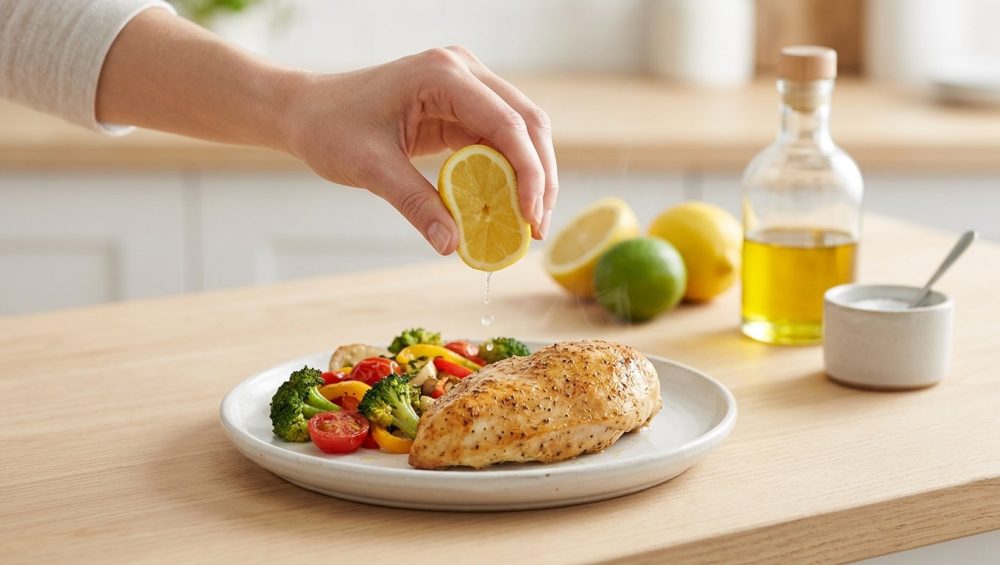
The Rescue: Do not add more salt. Do not add black pepper. Take the pan off the heat immediately. Cut a fresh lemon in half and squeeze about a teaspoon of juice directly into the sauce. Stir vigorously.
The Science: The citric acid immediately cuts through the lipid barrier created by the butter and cream. It physically thins the perception of the sauce on your tongue. The sharp, bright notes of the lemon provide a stark contrast to the heavy, savory umami of the Parmesan cheese. Suddenly, the sauce doesn’t taste like a mistake; it tastes like a sophisticated, restaurant-quality dish.
The Boring Roasted Vegetables
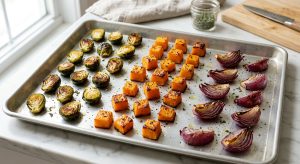
The Situation: You chopped up some broccoli, carrots, and Brussels sprouts. You tossed them in olive oil, sprinkled them with salt, and roasted them until they were brown and crispy. But when you eat them, they just taste… earthy. Muddy. A little bit bitter. You find yourself reaching for a bottle of hidden ranch dressing just to make them palatable.
The Rescue: Leave the ranch dressing in the fridge. While the vegetables are still piping hot, fresh out of the oven, hit them with a splash of apple cider vinegar or a generous squeeze of fresh lemon juice. Toss them well. And if you want to ensure an even roast while preventing warped baking sheets, always use heavy-gauge aluminized steel for high-heat roasting.
The Science: As we discussed earlier, the acid protonates the phenolic compounds in the cruciferous vegetables, instantly masking their inherent bitterness. Furthermore, the residual heat of the vegetables will cause the volatile aromas of the vinegar or citrus to bloom, creating a cloud of bright, appetizing fragrance. The acid acts as a flavor amplifier, making the roasted, caramelized notes of the vegetables taste sweeter and more pronounced.
The Store-Bought Rotisserie Chicken
The Situation: You had absolutely no time to cook, so you grabbed a rotisserie chicken from the supermarket on your way home. It’s fine. It’s edible. But the breast meat is dry, the skin is flabby, and the overall flavor is just aggressively salty and completely one-dimensional. It is the definition of a sad weeknight dinner.
The Rescue: Carve the chicken and arrange it on a platter. In a small bowl, whisk together a tablespoon of really good olive oil, a tablespoon of red wine vinegar (or fresh lemon juice), a pinch of red pepper flakes, and some chopped fresh herbs (parsley, cilantro, or basil). Drizzle this highly acidic, punchy vinaigrette directly over the sliced chicken right before serving.
The Science: The acid in the vinaigrette performs a culinary miracle. First, it distracts your palate from the dry, chalky texture of the overcooked meat. (Though, if you want to avoid this entirely when cooking your own birds, you should look into rescuing terribly dry chicken through proper brining techniques). Second, the sharp vinegar cuts through the greasy, industrially-seasoned skin. Third, the fresh, bright aromatics trick your brain into thinking you are eating a freshly prepared, vibrant meal, rather than something that sat under a supermarket heat lamp for four hours. It is the ultimate shortcut to deliciousness.
Conclusion: Trust Your Tongue, Ditch the Pretension
Cooking is not about blindly following a strict list of instructions. It is not about buying the most expensive imported ingredients or owning a three-hundred-dollar chef’s knife. Cooking is about observation, adjustment, and understanding the basic building blocks of flavor.
When you finally grasp the power of acidity, you unlock a completely new level of culinary freedom. You stop being a slave to the recipe. You stop panicking when a dish doesn’t taste quite right. Instead, you taste, you assess, and you confidently reach for the lemon.
You realize that a flat, boring soup just needs a splash of sherry vinegar to wake it up. You discover that a heavy, greasy stir-fry is instantly cured by a squeeze of fresh lime. You learn that ditching your takeout habit is actually incredibly easy when you know how to make your home cooking taste vibrant and alive.
So, this weekend, I challenge you to experiment. Make a simple pan sauce. Roast some root vegetables. Build a hearty stew. And before you desperately reach for the salt shaker, reach for the acid. Trust your tongue. Trust the chemistry. And never, ever settle for a boring dinner again.
Now, go clean your kitchen. And throw away that peeling non-stick pan while you’re at it.